


Original Pen Landscape Art
Original pen landscape art brings direct hand-drawn topography into a room, offering immediate connection to nineteenth-century and twentieth-century rural scenes.
Original Pen Landscape Art
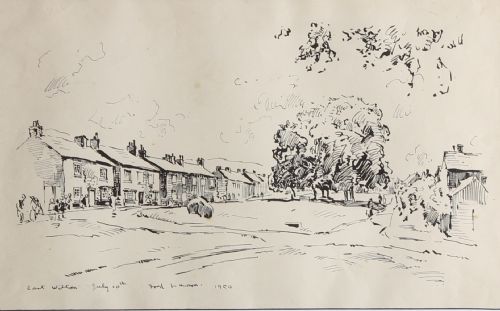
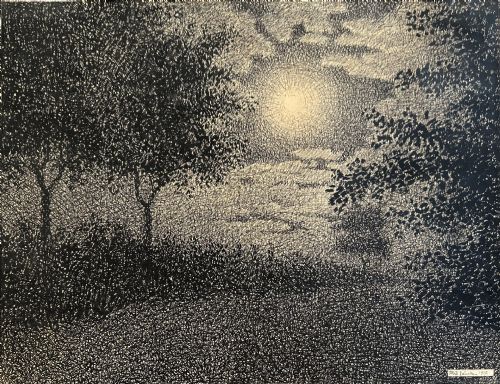
Original pen landscape art encompasses works on paper, drawings, and framed artwork created by artists working across the nineteenth century and twentieth century. These pieces record British and Scottish scenery, depicting village views, castles, churches, and moonlight settings through direct hand-drawn lines.
Buyers encountering this selection will most frequently find twentieth-century British pieces alongside earlier nineteenth-century examples. The inventory spans named artists and anonymous schools, capturing specific topography from Yorkshire settings to Venetian canals.
Works on paper form the core of these offerings, often presented within wood, gilded wood, or glass frames. Each drawing relies on ink marks, sometimes augmented with watercolour, gouache, or pastel, to establish depth and atmosphere across the paper surface.
Materials and methods
Artists create these landscapes using ink applied directly to paper supports, establishing distinct lines for architectural elements and natural terrain. Many works combine this primary ink drawing with watercolour, gouache, or pastel to introduce colour and tonal variation.
Finished works are typically housed in frames constructed from wood or gilded wood, frequently protected behind glass. These traditional mountings preserve the delicate paper supports while providing structural rigidity for wall display.
Listings feature works spanning the nineteenth century through the 1960s, executed in ink, watercolour, and pastel on paper.
Assessing quality and execution
The sophistication of the ink handling separates simpler topographical sketches from more accomplished graphic works. Controlled linework, confident hatching, and precise spatial composition indicate a skilled hand guiding the pen.
The integration of secondary media such as watercolour or gouache influences the visual depth of the landscape. Superior examples balance the crispness of the initial pen drawing harmoniously with washes of colour rather than allowing pigments to obscure the foundational lines.
Fred Lawson·Arthur Henry Graham Hoggarth RBA·Will Henderson
The Original Pen Landscape Art Glossary
- Works on Paper
- A category encompassing drawings, sketches, and paintings executed on paper supports rather than canvas or panel. This designation highlights the delicate nature of the primary medium.
- Gouache
- An opaque water-based paint that provides solid areas of colour and highlights in mixed media drawings. It sits on the surface of the paper rather than staining the fibres.
- Gilded Wood
- A wooden framing material treated with a thin layer of gold leaf or metallic gilt. This finish adds a reflective border around the artwork.
- Impressionist
- A style focusing on the visual impression of a moment, captured through short brushstrokes or marks and attention to changing light. It appears within twentieth-century British contexts.
Original Pen Landscape Art: Frequently Asked Questions
What is original pen landscape art?
Original pen landscape art consists of unique hand-drawn topographical works created using ink on paper. These pieces range from nineteenth-century churchyard sketches to twentieth-century views of Yorkshire villages and castles.
Artists frequently combined ink lines with watercolour, pastel, or gouache to render rural scenery and architectural subjects. Each item is a one-off drawing rather than a mechanical reproduction.
How should these framed drawings be displayed?
These works require hanging away from direct sunlight to prevent the ink and any accompanying watercolour or pastel from fading. Glass protects the delicate paper surface from dust and atmospheric moisture.
Stable indoor humidity levels ensure the paper support and wooden or gilded frames remain in sound condition over time. Wall placement should avoid damp exterior walls or areas subject to rapid temperature fluctuations.
How are different periods identified?
Periods are recognised through paper characteristics, framing styles, and the aesthetic conventions of the associated art movement. Nineteenth-century pieces often feature heavier paper stocks and traditional gilt frames.
Twentieth-century works, particularly those from the mid-century modern British or Scottish Arts and Crafts traditions, reflect changing approaches to line and composition. Signatures, inscriptions, and dated artist books also provide direct chronological evidence.
What subjects do these landscapes depict?
The subjects focus primarily on British topography, recording rural villages, hills, mills, and coastal scenes. Specific locations range from Yorkshire settings like Bolton Castle and Aysgarth to Venetian canals.
Compositions also capture atmospheric conditions, including moonlight scenes and rural farm buildings. These topographical records offer a window into past landscapes and historic architecture.