
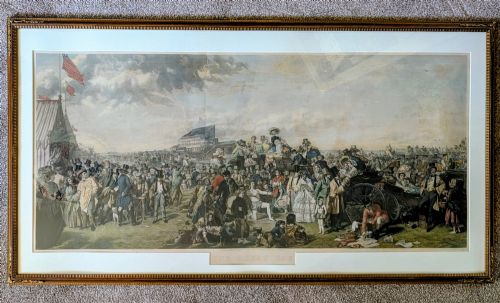
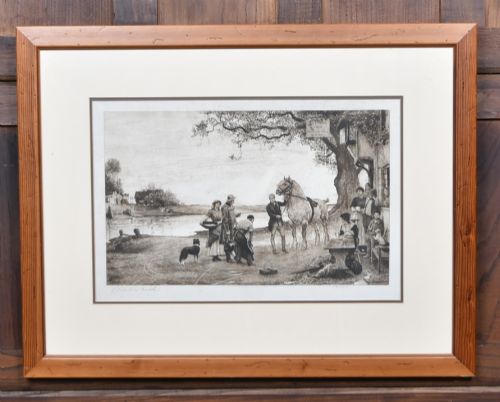
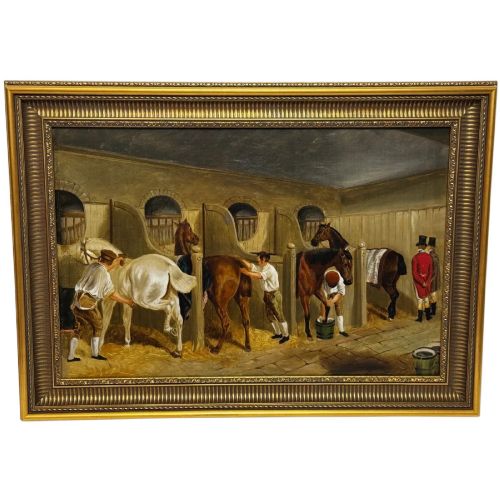
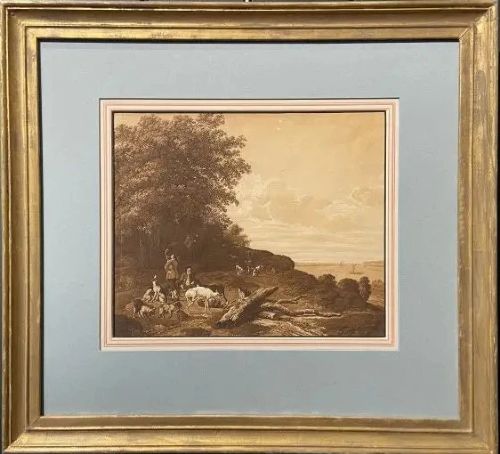
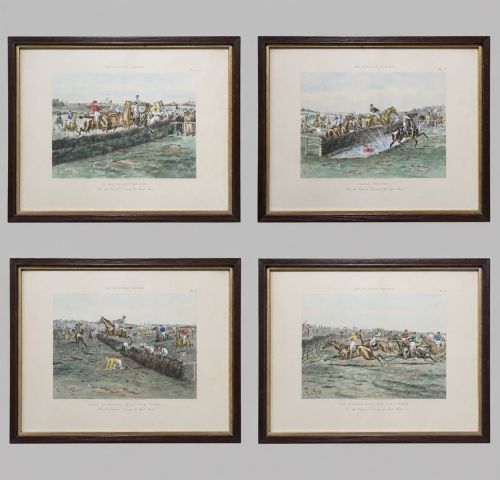
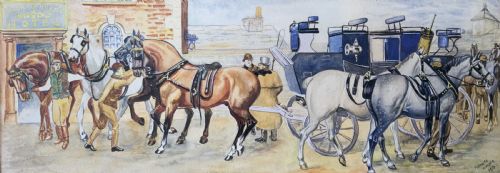
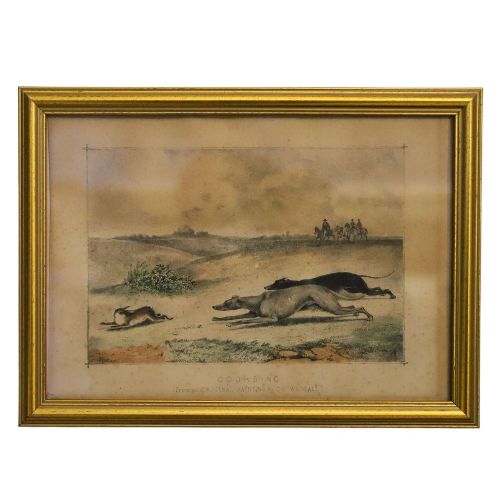
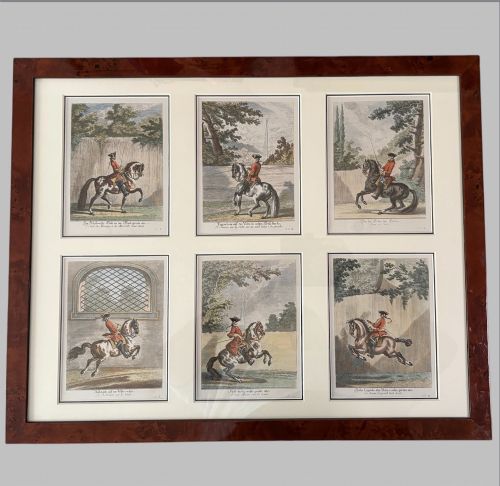
Framed Equestrian Print
A framed equestrian print brings the dynamic energy of horse racing, hunting, and portraiture directly to your wall.
Framed Equestrian Print
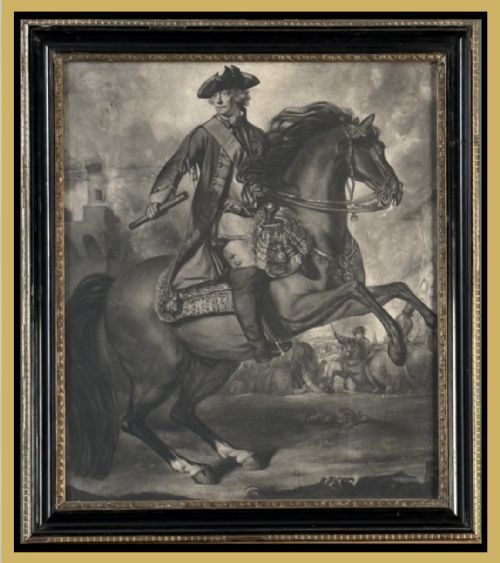
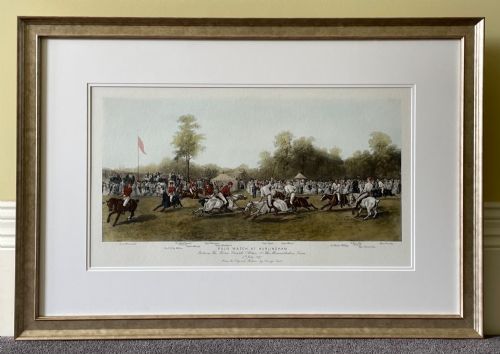
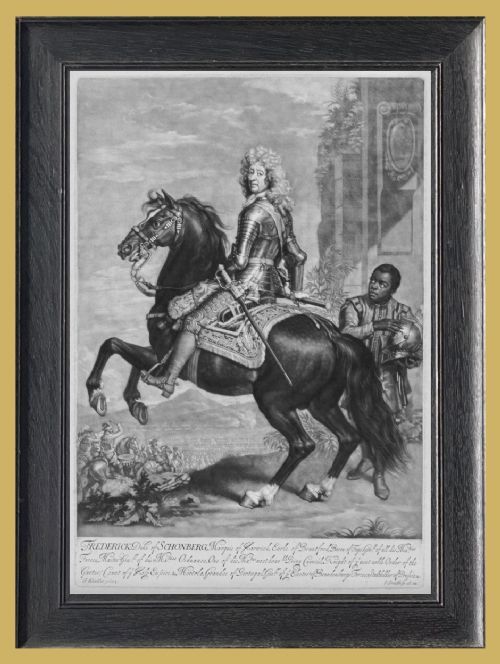
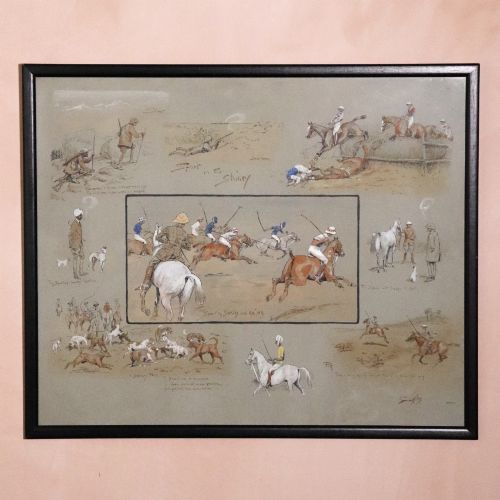
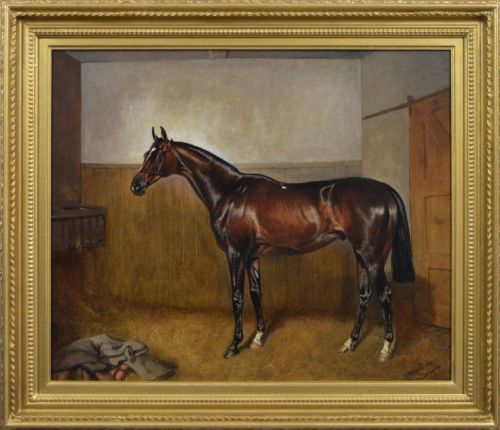
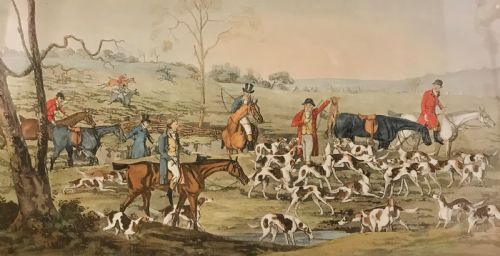
When you search for a framed equestrian print, you encounter a diverse array of historic imagery documenting horses, riders, and rural sporting life. The selections span centuries of artistic production, encompassing formal portraits of famous racehorses alongside lively depictions of polo matches, steeplechases, and fox hunting scenes.
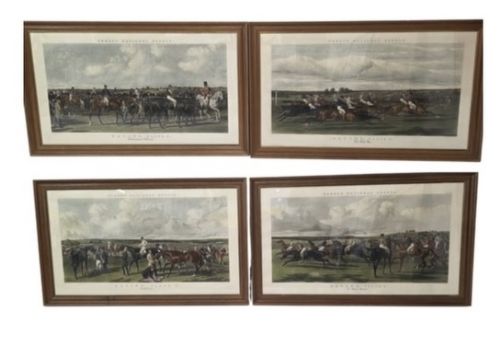
You are most likely to meet 19th-century and Victorian interpretations on this page, including hand-coloured engravings, lithographs, and chromolithographs housed in traditional wood and gilt frames. These pieces vary widely in scale, from intimate watercolours to large sets of matching racing scenes intended for country house libraries.
The category bridges fine art and sporting illustration, capturing both the anatomical majesty of the animal and the social pageantry of equestrian events. Makers and artists range from celebrated Victorian sporting painters to skilled reproductive engravers working after masters like George Stubbs and John Frederick Herring.
Materials and Technique
These works rely on traditional graphic techniques executed on paper, utilising copper engraving, etching, lithography, and watercolour to achieve fine detail. Many early examples feature delicate hand-colouring applied over black ink impressions to bring jackets, landscapes, and mounts to vivid life.
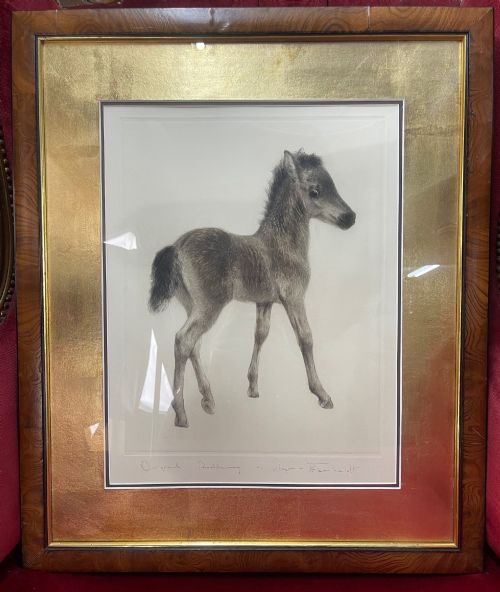
Original oil paintings and drypoints sit alongside mass-produced Victorian prints, showcasing the evolution of printmaking technology from 18th-century copperplates to mid-20th-century processes. Glazed protection and wooden frames - frequently enhanced with gilt mouldings or eglomise glass borders - preserve the delicate paper surfaces from atmospheric damage.
Framed Equestrian Print Retail Price Guide 2026
Typical asking prices for framed equestrian print among the pieces listed under this phrase on Sellingantiques today, from the lower quarter to the upper quarter. They describe what is for sale here now, not the wider market.
Several grumpy hunters and victorious jockeys stare down viewers across three centuries of unchanging equestrian obsession.
Judging Quality
Quality rests upon the crispness of the impression, the fidelity of the hand-colouring, and the integrity of the original framing materials. Early impressions pulled directly from fresh plates exhibit sharp lines and deep ink saturation, whereas later restrikes often lose the subtle muscular definition of the horse and rider.
The prestige of the original artist and the skill of the engraver dictate the desirability of a piece. Complete sets in matching frames command greater attention than isolated plates, especially when accompanied by contemporary mounts and well-preserved period frames.
Edward Fisher·John Smith·Kurt Meyer-Eberhardt·Robert W. Macbeth·George Finch Mason·C. H. Weigall·Ridinger·John Alfred Wheeler·Edwin Henry Landseer·Dame Laura Knight·John Frederick Herring Snr·Herbert Dicksee·John Rattenbury Skeaping·Anne Goldthwaite·Gabriel Dauchot·Abraham Cooper·Alken·Charles Faulkner·Alfred Wheeler
The Framed Equestrian Print Glossary
- Mezzotint
- A printmaking process where the copper plate is roughened to produce rich dark tones and subtle tonal gradations. This technique allows for velvety backgrounds and smooth portraits.
- Lithograph
- A planographic printing method using stone or metal plates based on the antipathy of oil and water. It became the dominant medium for colourful Victorian sporting prints.
- Eglomise
- The technique of applying gold leaf and painting on the reverse side of glass. It creates a reflective, decorative border often found on antique picture surrounds.
- Drypoint
- An intaglio printmaking technique where an image is scratched directly onto a metal plate with a sharp needle. This creates a distinctive velvety burr along the lines.
- Chromolithograph
- A multicolour planographic print produced by using separate stones for each individual ink colour. This method achieved vibrant, painting-like reproductions without manual watercolour washes.
Framed Equestrian Print: Frequently Asked Questions
How do I identify a reproduction print?
Examine the surface under magnification to check for tiny mechanical dot patterns characteristic of modern photographic printing.
Original antique prints display plate marks, irregular ink distribution, and authentic paper ageing consistent with their stated century.
Are these prints hand-coloured?
Many Victorian and Georgian examples feature delicate watercolour washes applied by hand over an engraved or etched base line.
Closer inspection reveals subtle brushstrokes and slight variations in pigment density across the surface.
How should I frame antique paper?
Use acid-free mounts and UV-protective glass to prevent the paper from yellowing and fading under ambient light.
Ensure there is a small gap between the glass and the artwork to avoid moisture trapping.
What subjects are most common?
Horse racing, fox hunting, and polo dominate the traditional sporting categories alongside formal equine portraits.
Scenes often depict famous 19th-century steeplechases, rural meets, and specific champion racehorses with their jockeys.