
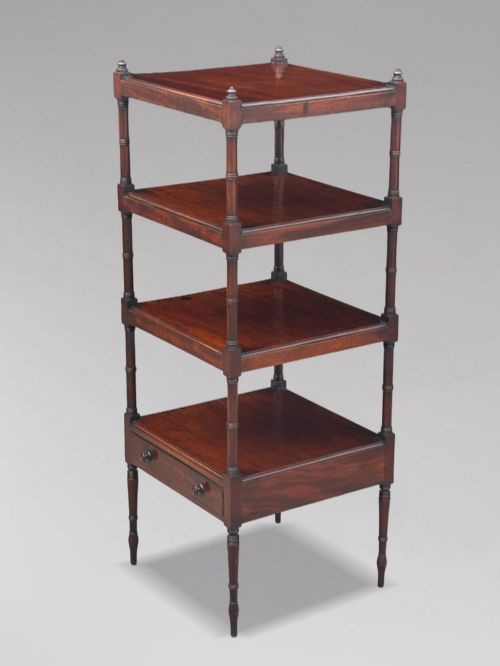
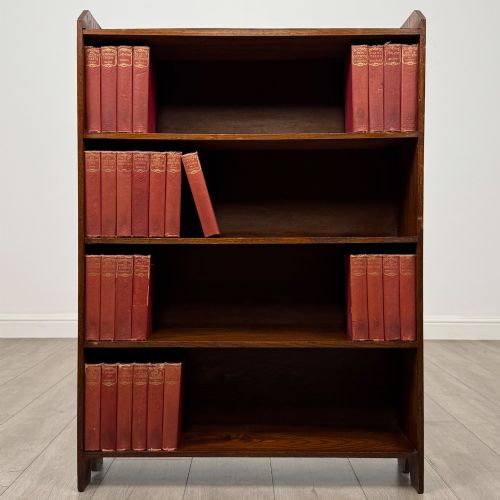
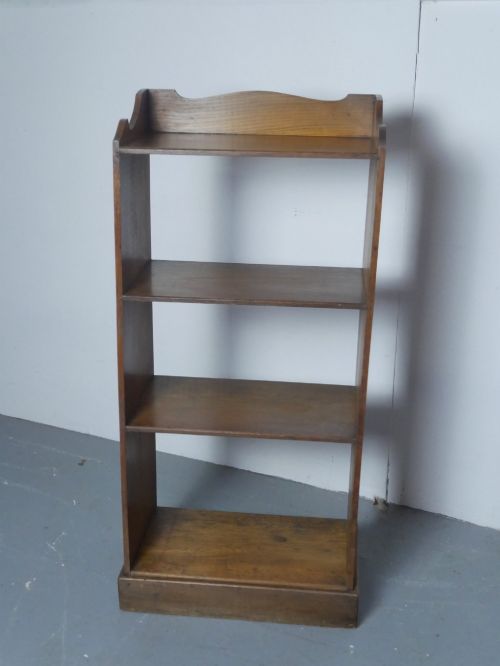
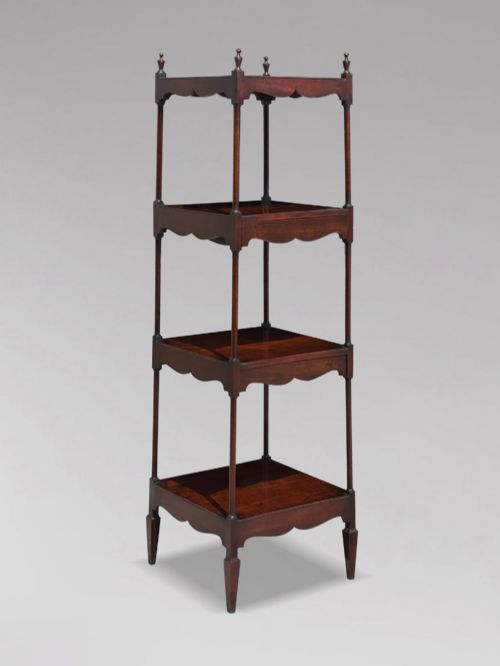
Four Tier Stand
A four tier stand offers tiered shelving for books and display, spanning Georgian craftsmanship through to Edwardian utility.
Four Tier Stand
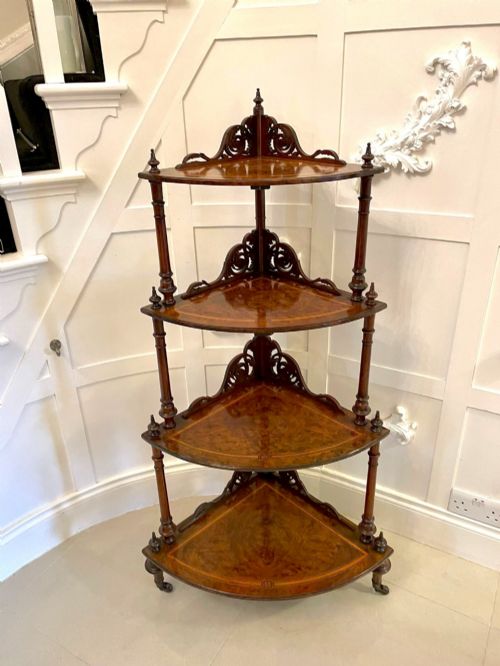
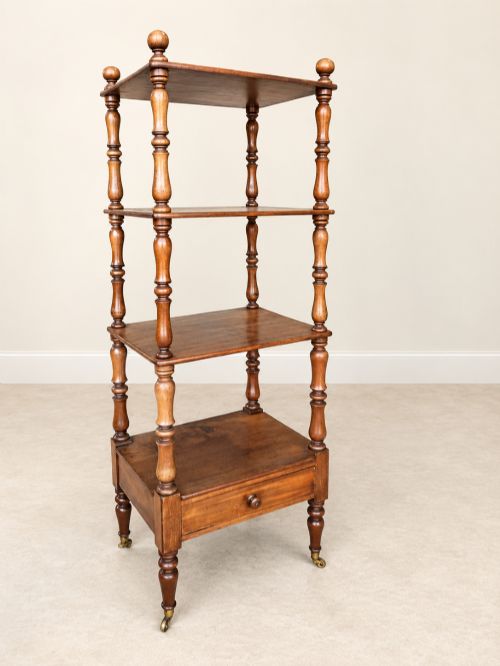
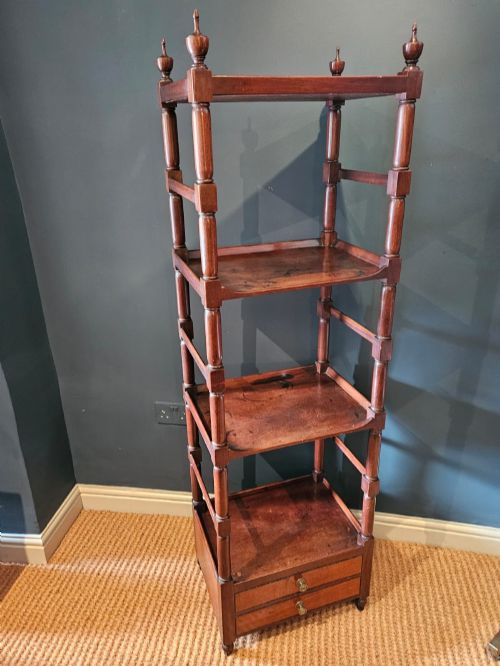
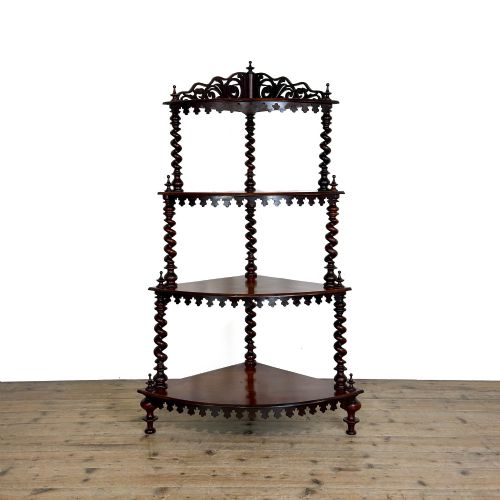
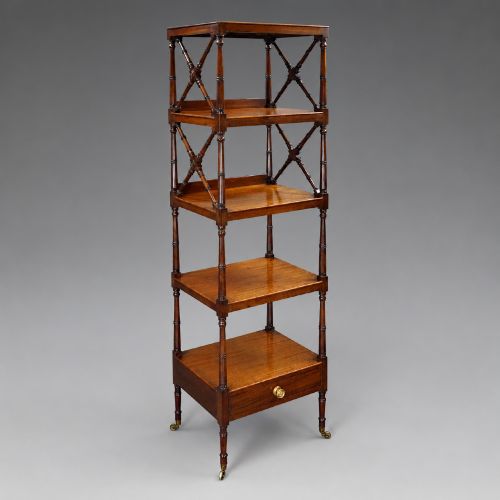
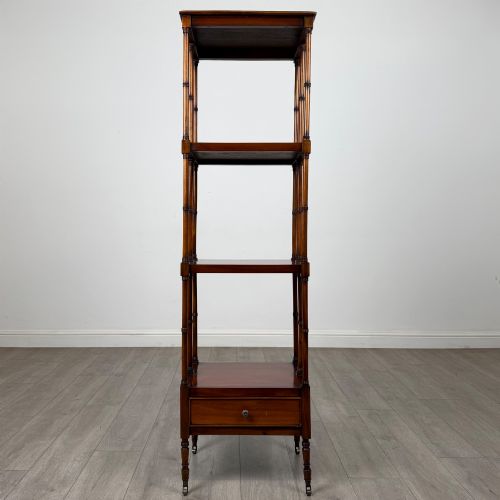
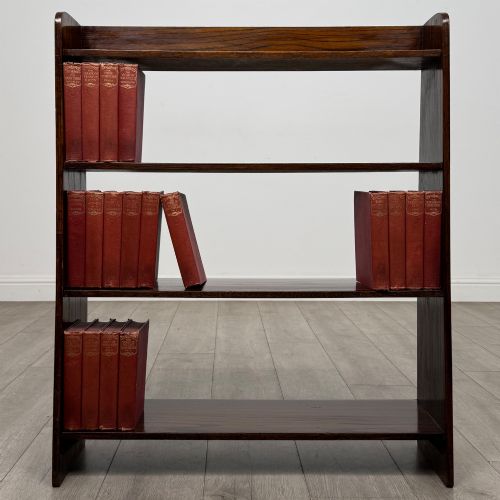
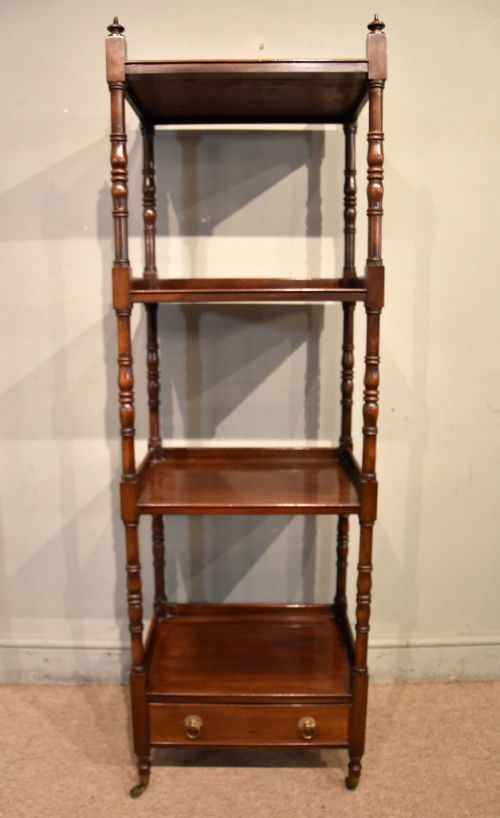
A four tier stand generally takes the form of a whatnot, etagere, or open bookcase, designed to hold books, music, and decorative items across ascending shelves.
The version most commonly encountered on this page is the mahogany or rosewood whatnot from the Regency and Victorian periods, often constructed with freestanding or corner placement in mind.
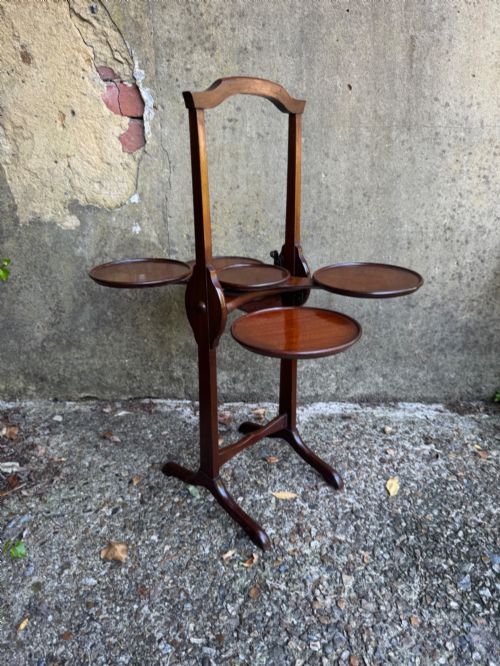
Pieces span eras from the Georgian and George III periods through the Victorian and Edwardian decades, including specialised forms like music stands, revolving bookcases, and cake stands.
Materials and construction
Makers utilised timber such as mahogany, walnut, burr walnut, rosewood, oak, teak, and pine, frequently selecting fine hardwoods for visible surfaces and display tiers.
Construction methods range from classical joinery on Georgian and Regency pieces to later turned supports and framing seen in Victorian and Edwardian examples.
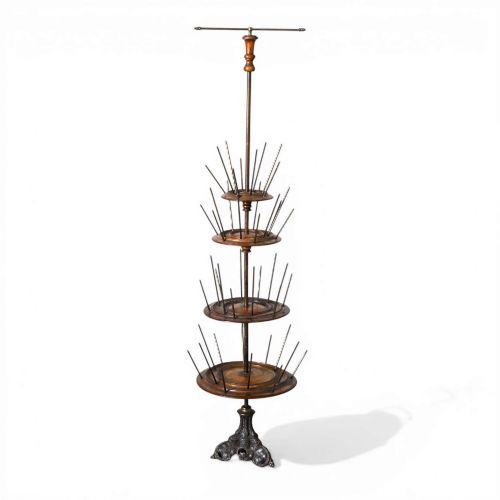
Some Victorian examples doubled as cotton reel display trees for shop fittings before finding a second life in domestic parlours.
Distinctions in standard
Quality separates pieces through the selection of timber figures, such as burr walnut or figured mahogany, and the refinement of turned or carved supports.
The integration of secondary functions, including adjustable reading stands, music racks, or intricate inlays, distinguishes standard items from superior examples.
Gillows
The Four Tier Stand Glossary
- Whatnot
- A piece of furniture with multiple tiers of shelves used for displaying ornaments, books, or small objects. It originated in the 18th century and became widespread during the Regency and Victorian periods.
- Etagere
- A French term for a piece of furniture with open shelves for display. It is closely related to the whatnot.
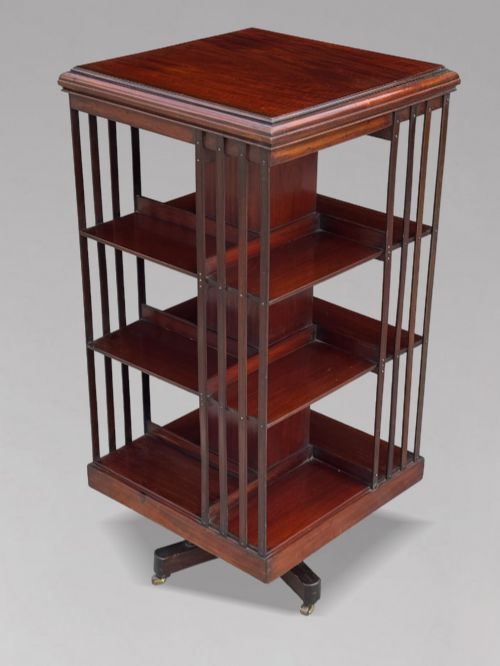
- Revolving bookcase
- A freestanding bookcase designed to rotate on a central pivot for ease of access. They appear in mahogany, oak, and walnut during the Victorian and Edwardian periods.
- Corner whatnot
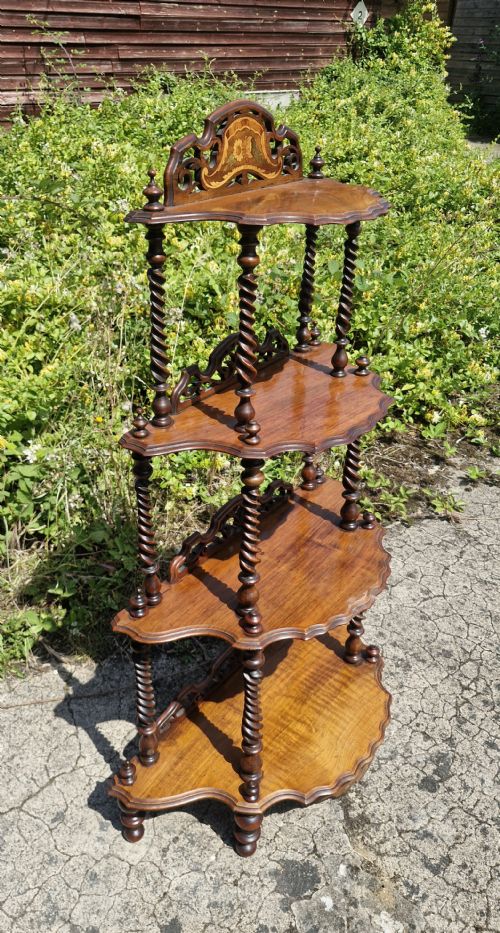
- A specialised tiered shelving unit designed to fit neatly into the corner of a room. These save floor space while providing multiple display levels.
Four Tier Stand: Frequently Asked Questions
What is a four tier stand used for?
These pieces served historically for holding books, sheet music, tea wares, or ornaments in principal rooms. Their multiple tiers maximised vertical storage without dominating the floor space.
Today, they function well in modern interiors for displaying collections, plants, or books in living spaces and hallways.
How do I distinguish a Regency piece from a Victorian one?
Regency and Georgian pieces often display restrained classical lines, tapered uprights, and premium mahogany or rosewood veneers. Cabinetmakers of this era favoured architectural proportions and delicate turning.
Victorian examples frequently introduce richer timbers like burr walnut, heavier turnings, and decorative inlays or fretwork reflecting the tastes of the later 19th century.
Were these stands made for corners?
Many examples on record are specifically built as corner whatnots, constructed with triangular shelves to fit room angles. These were popular in both Georgian and Victorian homes for utilising awkward spaces.
Freestanding rectangular versions were equally common, designed to sit against flat walls or stand centrally in a room.
What is the difference between a whatnot and an etagere?
The terms are often used interchangeably in the trade to describe multi-tiered shelving units. Etagere leans toward the French influence and lighter decorative display, while whatnot describes English utility furniture.
Both forms rely on open tiers supported by slender uprights or columns.