


Standing Tier Display
A standing tier display offers structured vertical surface area for books and objects, bringing period timber and tiered shelving into domestic rooms.
Standing Tier Display
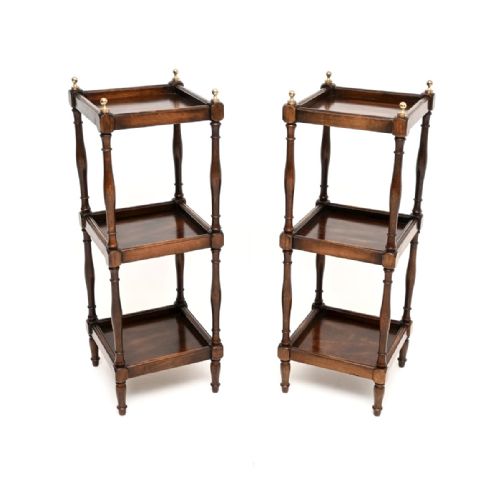
A standing tier display brings together multistoried furniture forms designed to hold objects, books or plants across multiple levels. When you search for a standing tier display, you encounter pieces that originate from the Georgian, Victorian and Edwardian eras, spanning styles from Regency to Arts and Crafts.
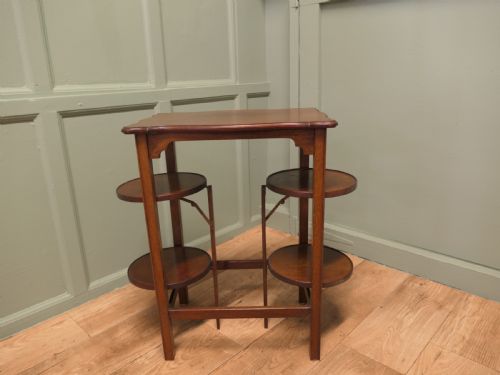
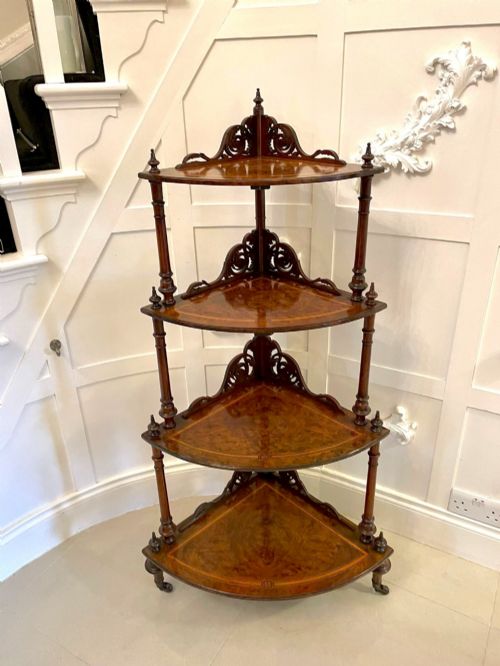
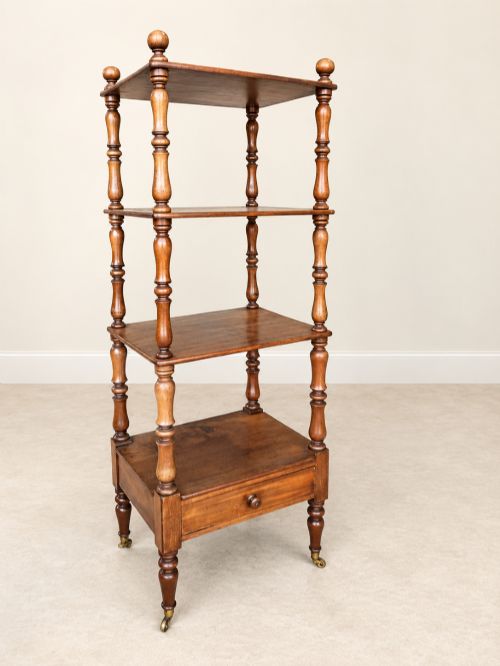
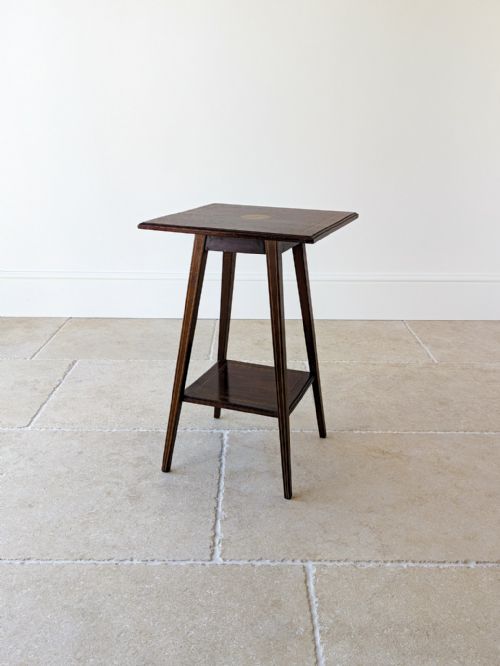
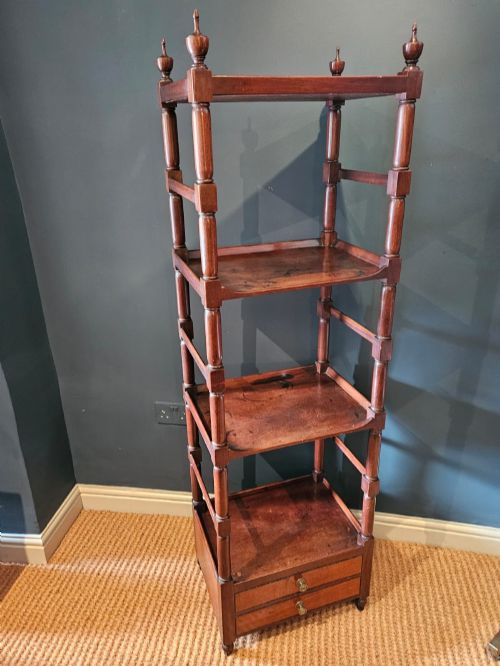
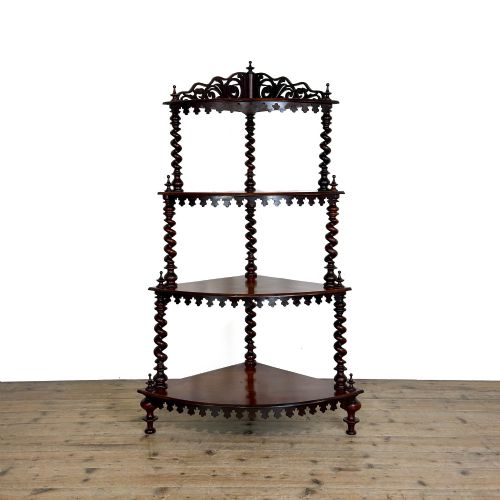
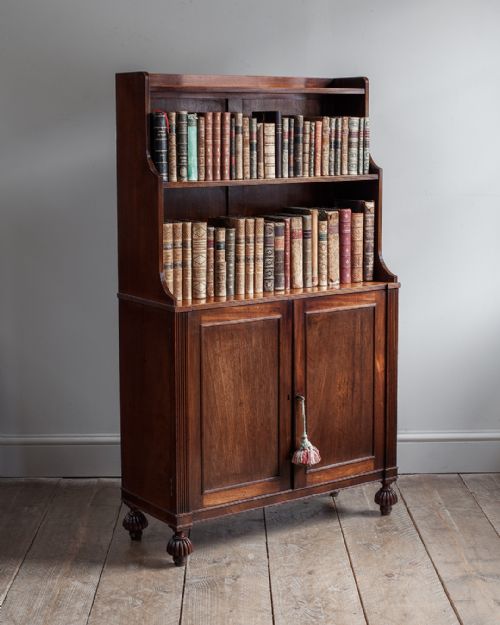
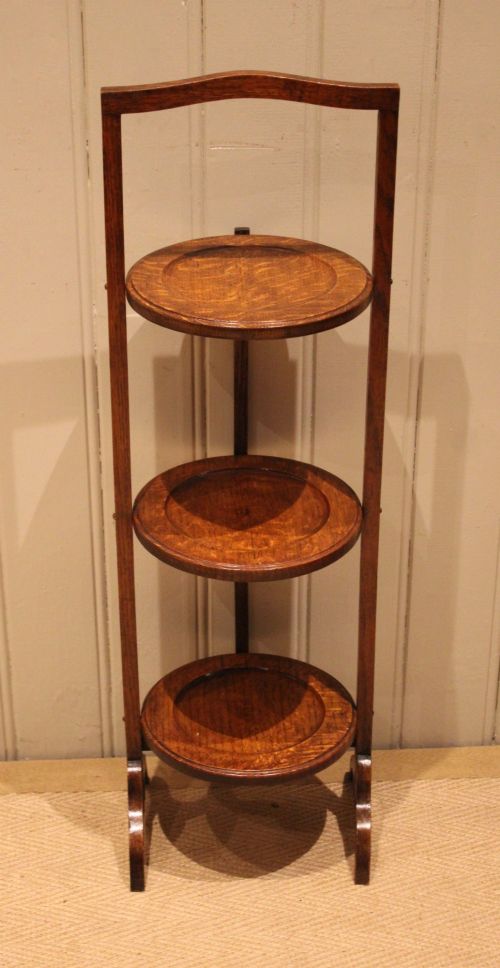
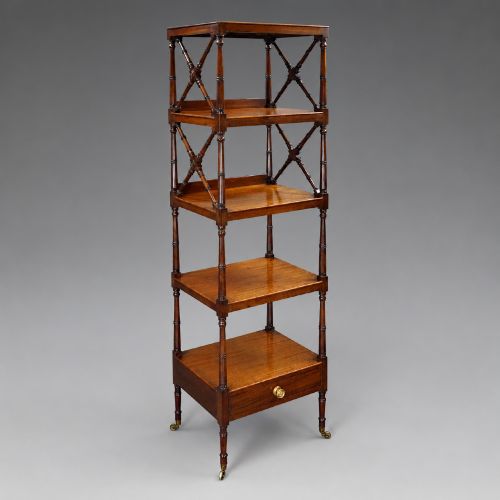
The versions you meet most frequently on this page take the form of whatnots, etageres, waterfall bookcases and side tables with multiple levels. These pieces serve to maximise vertical storage and display space without occupying a large floor footprint in a room.
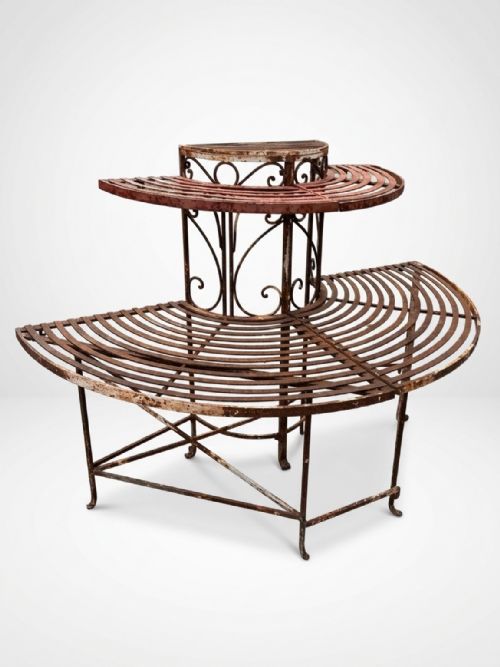
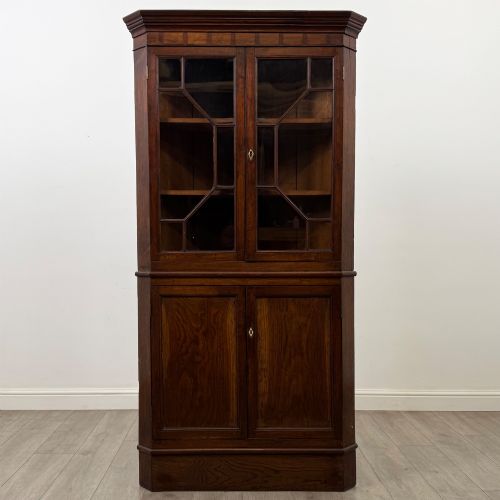
Makers constructed these tiered stands in various configurations, including corner designs, open shelving units, and pieces fitted with lower cupboards or drawers. Each form reflects the domestic requirements of its period, from the elegant display shelves of the nineteenth century to Edwardian plant stands and cake stands.
Materials and construction
Cabinetmakers built these tiered pieces using solid timbers and decorative veneers such as mahogany, walnut, burr walnut, oak and rosewood. Brass hardware, glazing, and applied lacquered or painted finishes appear across the selection.
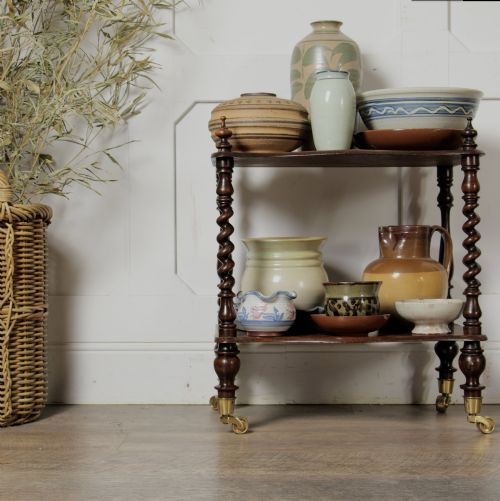
Construction techniques involve joining multiple horizontal tiers to vertical supports, often utilising turned columns, barley twist legs or delicate uprights. More elaborate examples incorporate inlaid details, carved elements or parcel gilding to accentuate the tiered silhouette.
Even bamboo finds its moment among the timber tiers, offering a breezy Victorian botanical look.
Distinctions in quality
Quality reveals itself in the selection of timber veneers, where highly figured burr walnut or rich mahogany figure denotes superior ambition. The crispness of carved details, turned uprights and joinery finish separates standard utility items from pieces designed with finer proportions.
The handling of secondary woods and the structural stability of the stacked tiers indicate the maker's competence. Pieces that maintain balanced weight distribution and refined edge moulding across every level demonstrate greater craftsmanship.
The Standing Tier Display Glossary
- Whatnot
- A piece of furniture consisting of a set of open shelves for displaying small objects or books. These originated in the eighteenth century and gained immense popularity throughout the Victorian era.
- Etagere
- A piece of furniture with a set of open shelves for displaying ornaments. They often feature delicate supports and multiple tiers.
- Waterfall bookcase
- A standing set of open shelves where each tier steps back progressively from the bottom to the top. The profile resembles the cascading steps of a waterfall.
- Barley twist
- A type of turned wooden leg or column resembling a twisted rope. This technique appears frequently on Victorian supports.
- Astragal glazed
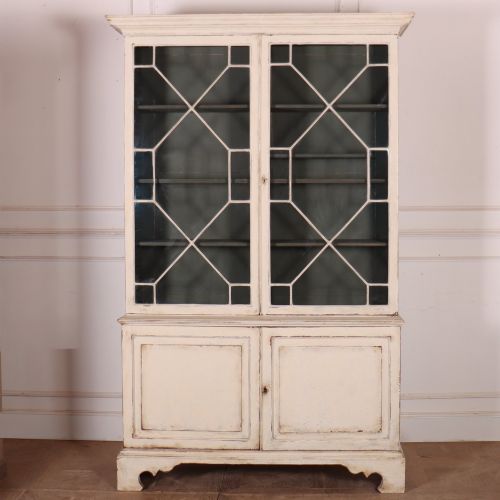
- A glass door or panel divided into smaller panes by slender wooden glazing bars. This method is common on eighteenth and nineteenth century cabinets.
Standing Tier Display: Frequently Asked Questions
What is a whatnot?
A whatnot is a multi-tiered piece of freestanding furniture designed specifically to hold and display ornaments, books or collections. It provides several open shelves arranged vertically.
These pieces became staples in nineteenth-century drawing rooms where homeowners displayed porcelain, small silver items and bound volumes.
Where should I place an etagere?
An etagere suits corners, alcoves or spaces against flat walls where vertical display space is needed without blocking light. Their open shelf construction keeps rooms feeling airy.
They function well in living rooms, hallways or bedrooms for holding decorative objects, small plants and curated collections.
How do I identify a Victorian whatnot?
Victorian whatnots typically feature turned uprights, richly figured timbers like mahogany or burr walnut, and occasionally barley twist supports. They date from the mid to late nineteenth century.
Construction details, timber patination and the presence of makers' conventions from that period help confirm the era.
Are these tier displays sturdy?
Tiered display furniture relies on secure vertical supports and sound joints between shelves to maintain stability. Most pieces are designed for ornaments, books and lighter decorative items.
Distributing heavier items on the lower tiers helps preserve balance and prevents the structure from becoming top-heavy.