



Standing Cake Tier
A standing cake tier offers multiple levels for display, bringing upright practicality and traditional elegance to afternoon tea service.
Standing Cake Tier
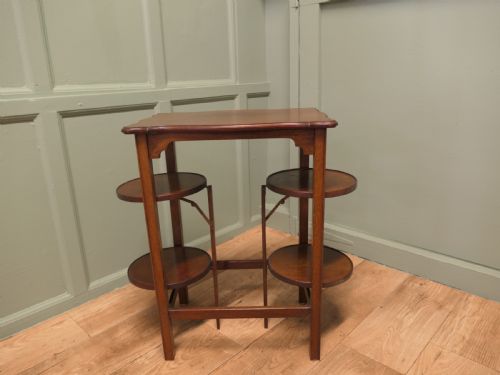
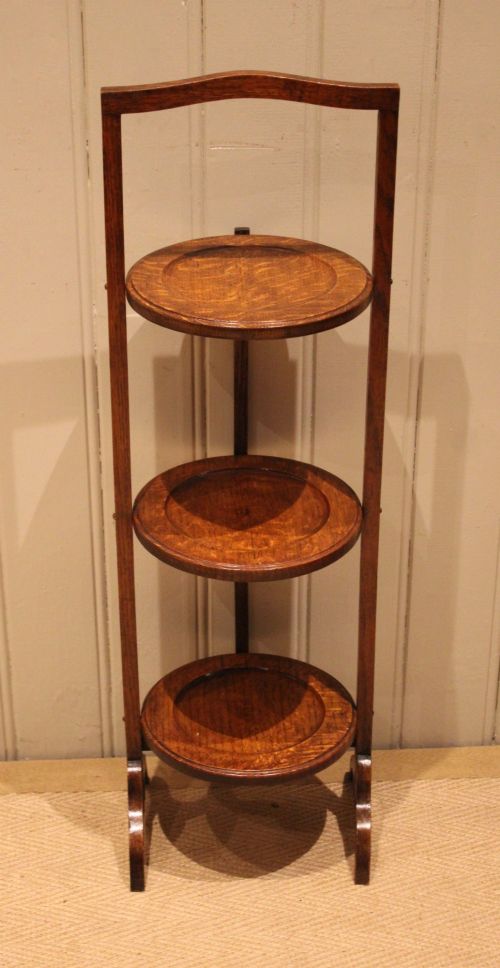
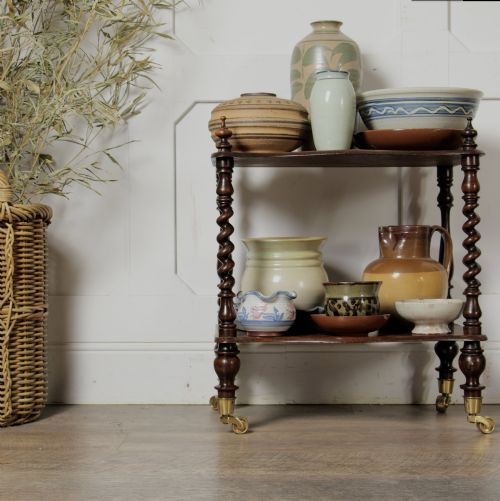
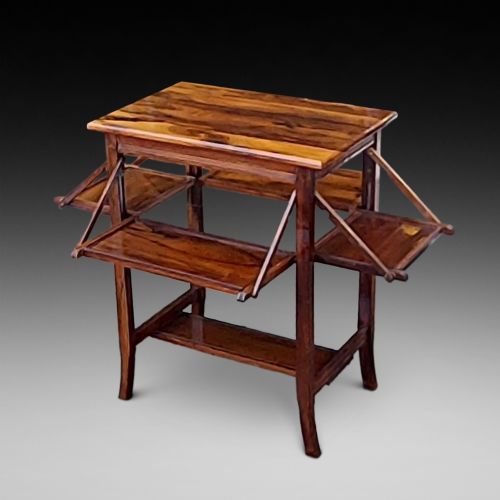
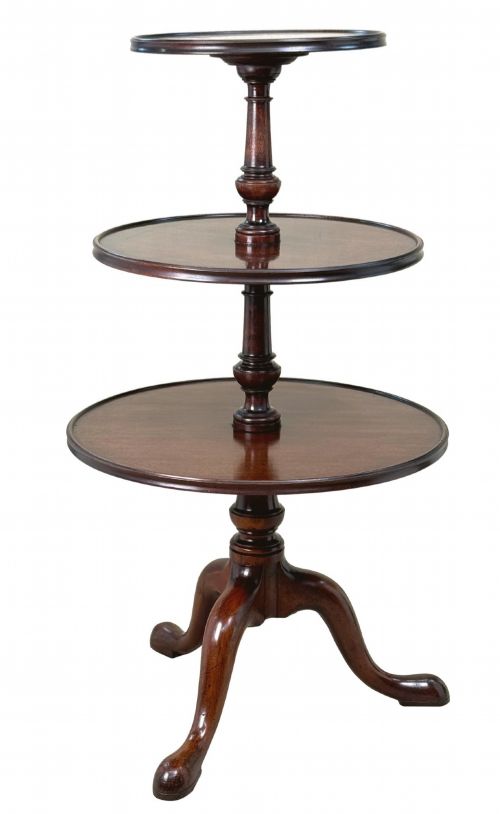
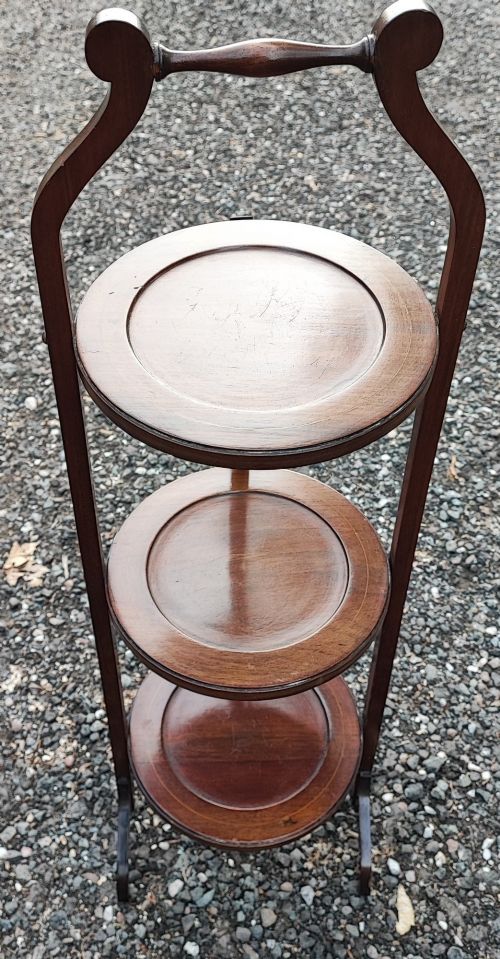
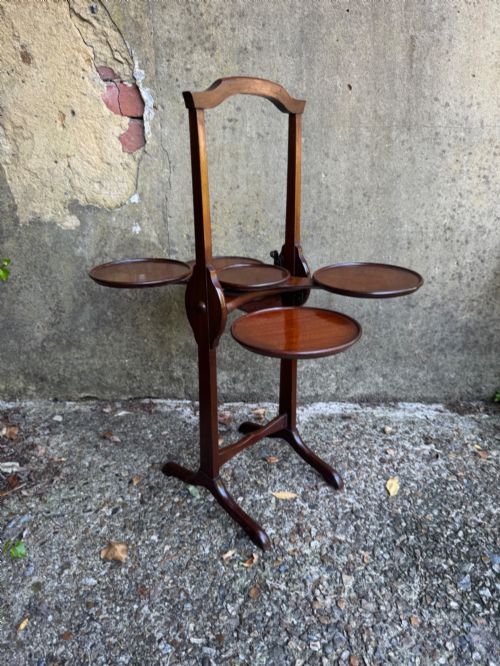
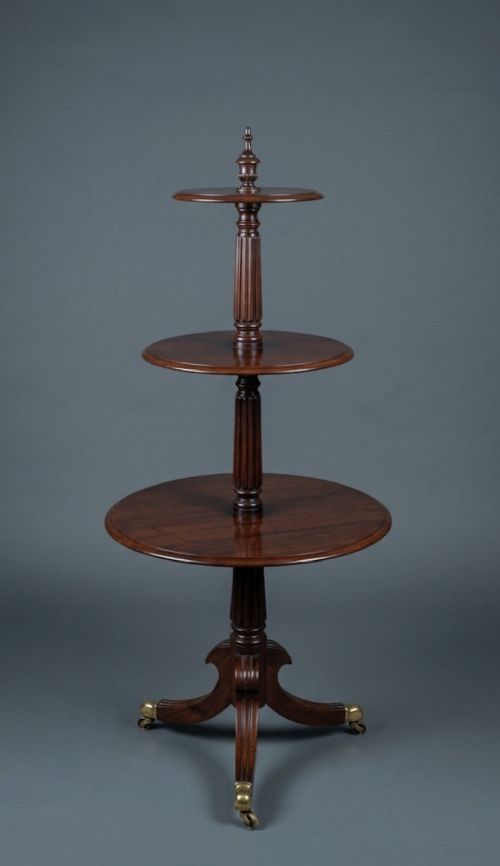
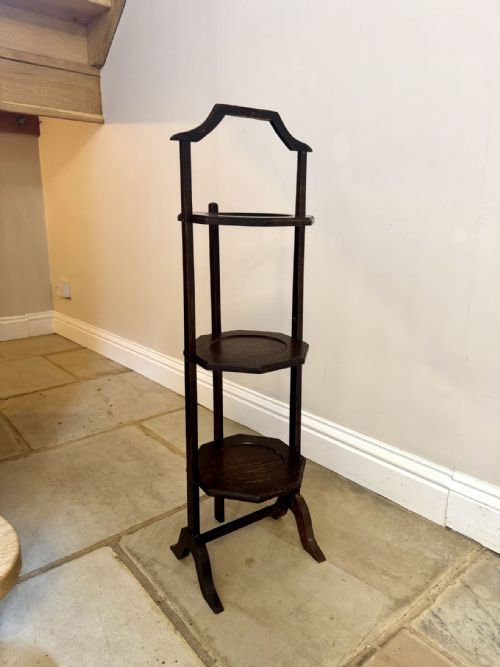
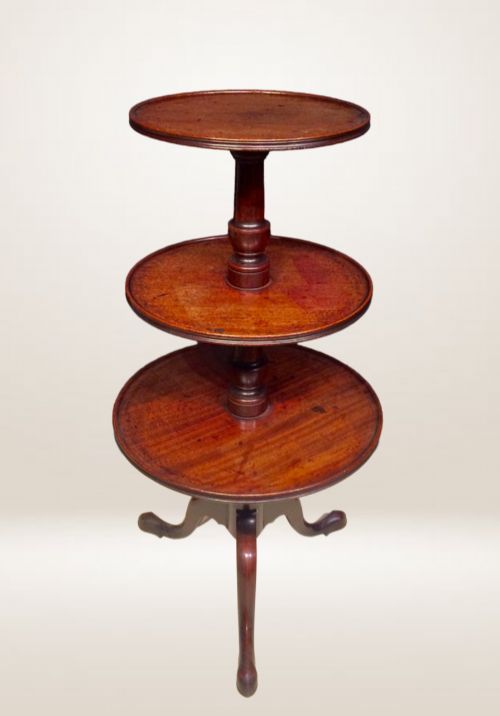
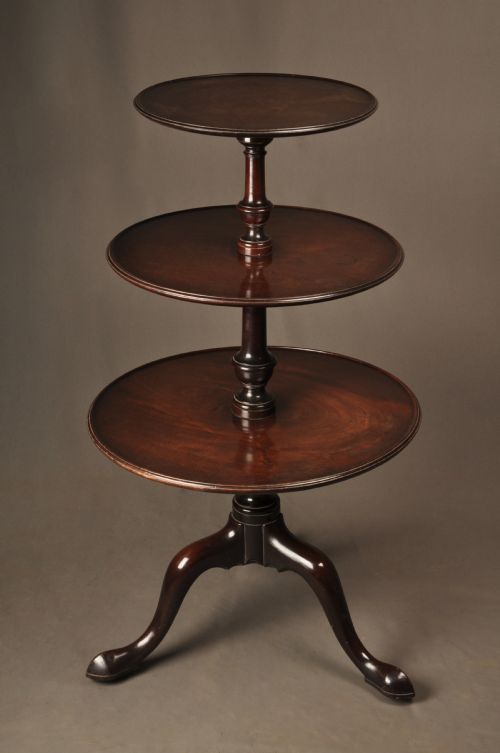
A standing cake tier provides tiered platforms arranged vertically to hold baked goods or afternoon tea items without cluttering the main table. When you examine a standing cake tier, you will frequently encounter Edwardian folding examples alongside heavier Georgian and Victorian dumb waiters.
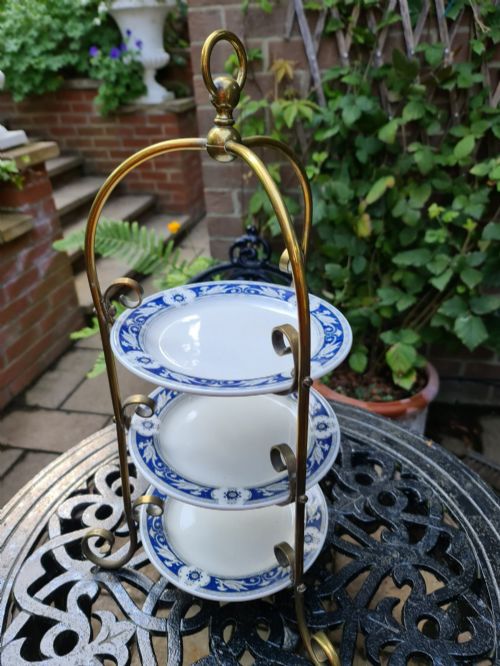
The selections span several centuries of British cabinetmaking, ranging from simple 1900s folding wood models to revolving mahogany tripod pieces. Most examples utilise traditional three-tier configurations, though two-tier and four-tier variations appear across the Edwardian and Victorian periods.
Makers utilised diverse forms, including occasional tables, etagere stands, and specialised tea serving furniture. The domestic purpose remains consistent across these variations: presenting food or small items efficiently within a compact footprint.
Materials and construction methods
Cabinetmakers relied heavily on mahogany, oak, and rosewood to build these vertical serving pieces, often incorporating satinwood inlay for decorative contrast. Brass hardware facilitates the folding mechanisms on Edwardian and 1910s designs, while earlier Georgian examples utilise sturdy tripod pedestal bases.
Construction techniques balanced stability with portability, particularly in the folding models designed to collapse when not in use. Turning, joinery, and veneering define the woodwork, while revolving tiers on dumb waiters rely on central spindle joints.
Some folding stands collapse flat enough to hide behind a pantry door when the tea party finishes.
Judging execution and material depth
Quality rests upon the selection of timber and the precision of the folding or revolving mechanisms. Fine grain patterns in mahogany and rosewood elevate an ordinary utility piece into accomplished cabinetwork.
The crispness of satinwood inlay and the stability of the central column dictate the standing cake tier status. Superior examples maintain rigid alignment across every tier without excessive play in the hinges or joints.
Gillows·Meissen
The Standing Cake Tier Glossary
- Dumb waiter
- A multi-tiered freestanding piece designed to hold food or tableware near a dining table without requiring servant attendance. These sturdy revolving or stationary stands date back to the Georgian era.
- Etagere
- A set of open shelves supported by small columns, used for displaying small objects or serving afternoon tea. They provide lightweight vertical storage across multiple levels.
- Barley twist
- A decorative turning technique resembling a spiralling rope, frequently found on Victorian upright supports. This characteristic profile adds tactile texture to structural columns.
- Tripod base
- A three-legged support structure commonly employed on round pedestal tables and revolving dumb waiters. This design ensures stability on uneven floor surfaces.
Standing Cake Tier: Frequently Asked Questions
What is a standing cake tier?
A standing cake tier is a freestanding piece of furniture featuring multiple horizontal surfaces arranged vertically to present food or display items.
These pieces range from collapsible Edwardian wooden stands to revolving Georgian dumb waiters designed for dining rooms.
How were dumb waiters used?
Dumb waiters held dishes, desserts, and tea service items beside the dining table to reduce the need for servants during meals.
Guests or hosts could easily reach the revolving or stationary tiers to serve themselves.
How do I date a folding cake stand?
Dating relies on timber choices, hardware style, and inlay patterns typical of specific eras like the Edwardian period or the 1920s.
Edwardian and 1910s models frequently feature lighter oak or mahogany with simple folding brass hinges.
Can I use these stands for afternoon tea?
These historical stands function well for serving cakes, pastries, and small plates during modern gatherings.
Their tiered design saves table space while presenting food at varying heights.