


Traditional Dumbwaiter
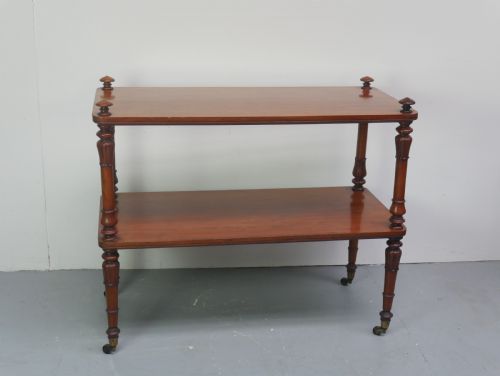
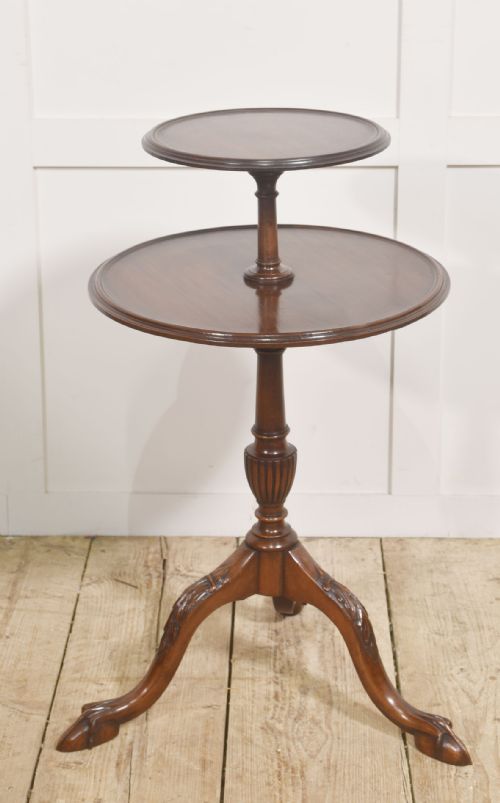
A traditional dumbwaiter brings tiered serving grace to a dining room, offering multiple rotating or stationary surfaces for food and display.
Traditional Dumbwaiter
When you search for a traditional dumbwaiter, you encounter multi-tiered serving furniture designed to hold dishes or display items without crowding the main dining table. These pieces span periods from the Georgian era through the Victorian and Edwardian periods up to nineteen-twenty.
Beyond standard dining service, the listings show variations such as cake stands, occasional tables, and brass and glass tiered display stands. Each version serves the fundamental domestic purpose of tiered organisation, whether in mahogany, walnut, or burr walnut veneer.
How they were made
Timbers such as mahogany and walnut form the structural core of these tiered pieces, often finished with polished surfaces and burr walnut veneer. Brass hardware provides functional joints and secure fastenings for folding mechanisms and tiered columns.
Glass and metal appear in specific twentieth-century iterations, creating polished brass and glass tiered display stands alongside traditional wooden cake stands and side tables. Joinery techniques allow multi-tier frames to fold or rotate smoothly while maintaining rigid support.
Listings for this phrase include pieces from the Georgian era, Victorian period, and Edwardian times, alongside nineteen-ten and nineteen-twenty items.
What varies in quality
The distinction between standard and superior pieces rests on the choice of timber and the precision of the tiered assembly. Richly figured mahogany and burr walnut veneer indicate a higher grade of material selection by the cabinetmaker.
Engineering of the folding mechanisms and the smoothness of rotating trays dictate the functional excellence of each stand. Solid brass fittings and carefully turned wooden columns demonstrate superior craftsmanship compared to simpler utilitarian builds.
The Traditional Dumbwaiter Glossary
- Dumb waiter
- A multi-tiered piece of furniture designed to hold food or tableware near a dining table. These stands feature stacked platforms supported by a central column or folding frame.
- Lazy Susan
- A revolving tray placed on a table or stand to allow easy sharing of dishes. This rotating device facilitates self-service during meals.
- Burr walnut veneer
- Thin slices of highly figured walnut wood applied to a primary timber base. This decorative technique creates rich, swirling patterns across the surface of the furniture.
- Tiered display stand
- A multi-level structure utilised for presenting objects or food items at varying heights. These stands combine materials such as brass and glass or polished wood.
Traditional Dumbwaiter: Frequently Asked Questions
What is a traditional dumbwaiter?
A traditional dumbwaiter is a multi-tiered piece of serving furniture designed to hold plates, dishes, or food during meals. These stands lift items off the main dining table to save space.
They appear in various forms across different eras, ranging from folding wooden structures to revolving trays and tiered side tables.
How were dumbwaiters used?
These pieces served dining rooms by holding secondary courses, condiments, and tableware within arm's reach of diners. They reduced the need for servants to constantly attend the table.
Over time, similar tiered designs transitioned into domestic roles as cake stands, occasional tables, and display pieces for ornaments.
What materials are used?
Mahogany and walnut dominate the construction of these pieces, often enhanced by burr walnut veneer and polished finishes. Brass fittings provide structural support and functional movement for folding tiers.
Some twentieth-century variations incorporate metal and glass to create transparent display surfaces while maintaining the tiered format.
How do I date a piece?
Dating relies on stylistic clues and construction methods associated with periods such as Georgian, Victorian, Edwardian, and the early twentieth century. Georgian and George III style pieces exhibit classical proportions and traditional mahogany craftsmanship.
Later Victorian and Edwardian examples introduce varied folding mechanisms, while nineteen-twenty items occasionally incorporate brass and glass combinations.