




Four Panel Draught Screen
A four panel draught screen divides a room with folding panels of wood, leather or canvas, offering privacy and traditional style.
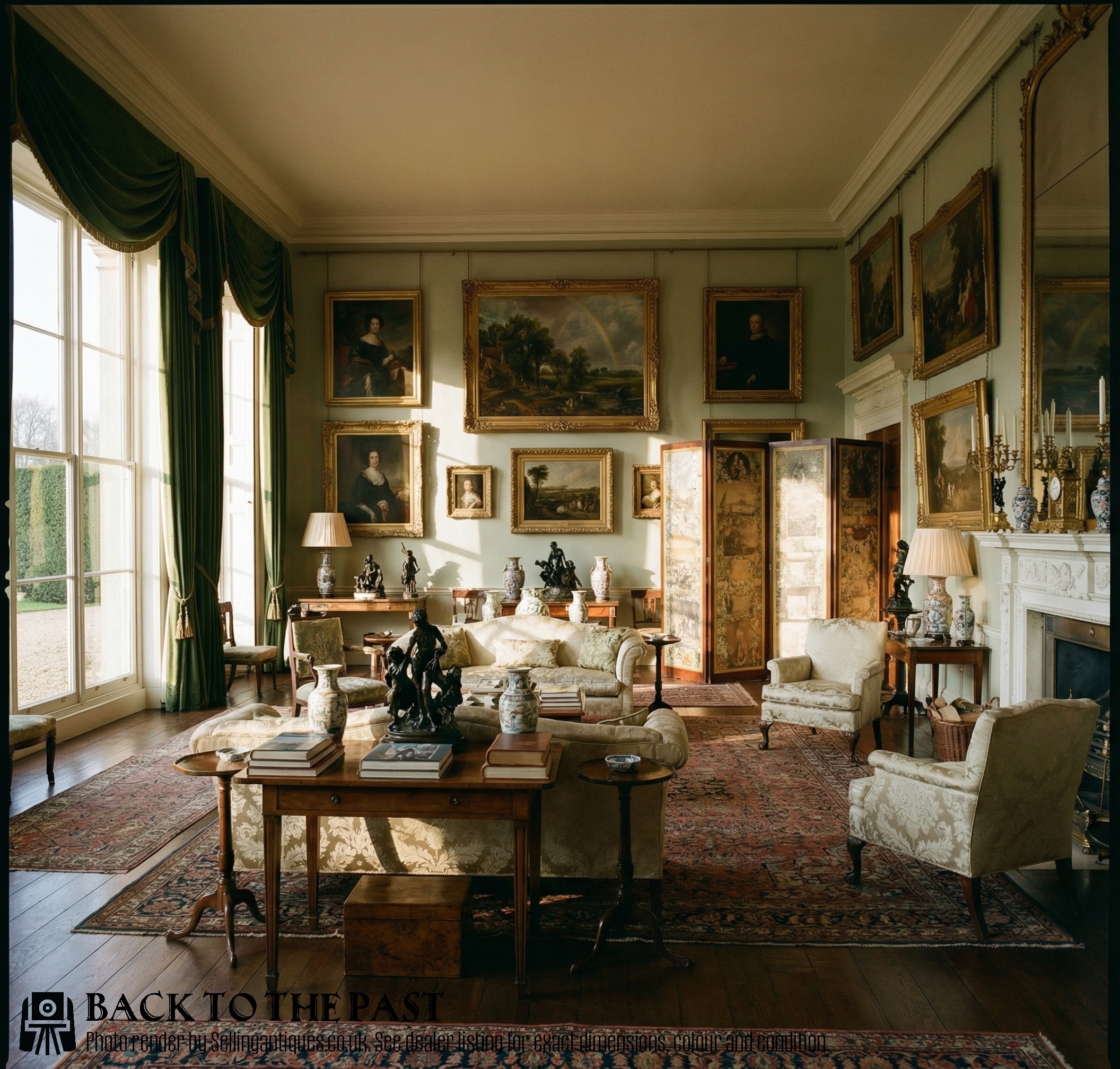
Four Panel Draught Screen
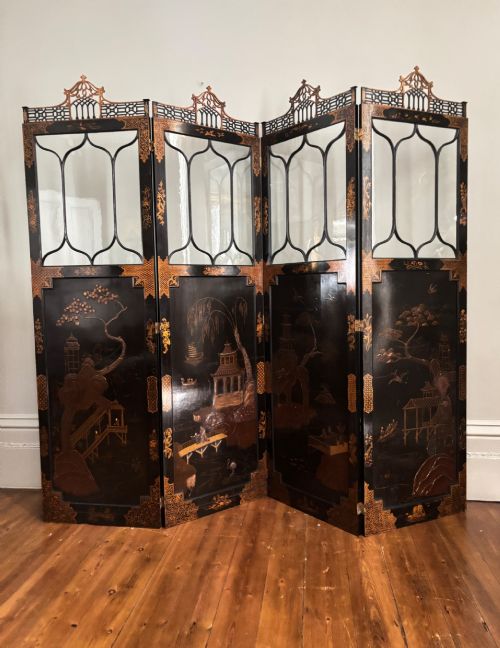
A four panel draught screen provides a substantial room divider that folds across four distinct sections to block air movement and create private spaces. These folding partitions appear in various forms, from large country house designs to ornate decorative pieces.
The selections span multiple periods, including 18th century examples, Victorian pieces, and later Arts and Crafts interpretations. Common regional styles encompass Chinese Chippendale, Chinoiserie, French work, and traditional English country house furnishings.
Materials and construction
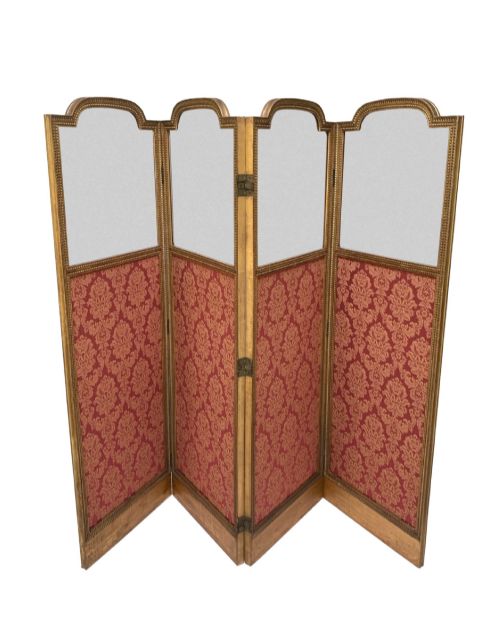
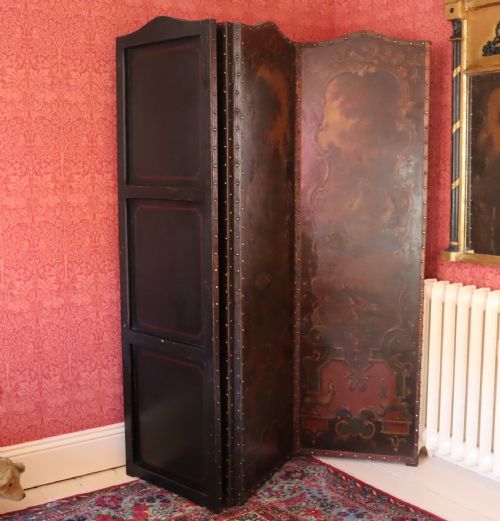
Makers utilised timber frames of mahogany, oak, or giltwood to support the folding leaves. Panels incorporated leather, canvas, silk, and glass, often held together with brass hinges.
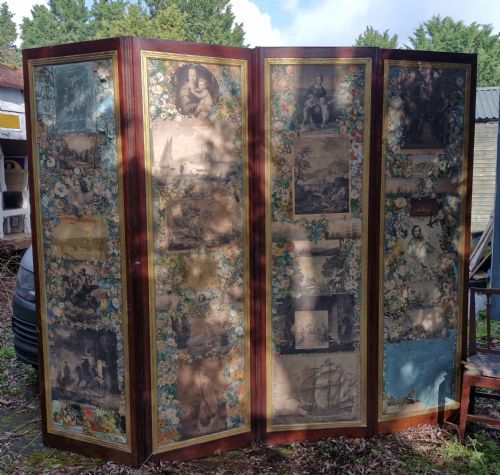
Surface decoration involved hand painting, gilt embossing, lacquer work, needlepoint, and scrap work collages. Fretwork details appear in specific Indian and Chinese Chippendale inspired designs.
Victorian makers occasionally covered entire folding frames in layered paper scrap work, creating chaotic collages of Victorian ephemera.
Distinctions in quality
The distinction between screens rests upon the execution of the surface art and the integrity of the timber framing. Hand painted leather, intricate lacquering, and detailed needlepoint separate superior examples from plain painted surfaces.
Original brass hardware and sturdy hinges that support four heavy folds without sagging indicate higher manufacturing standards. Finer pieces maintain crisp carving and intact giltwork across all panels.
Paul Sormani·William Morris
The Four Panel Draught Screen Glossary
- Coromandel
- A dense dark timber often used for fine Chinese folding screens. It provides a heavy, durable frame for intricate carving.
- Giltwood
- Timber treated with gold leaf or gold paint to create a lustrous decorative surface. This finish appears frequently on formal Victorian and French screens.
- Chinoiserie
- European decorative art imitating Chinese artistic styles. These screens typically feature painted landscapes, figures, and motifs on leather or canvas.
- Scrap work
- A technique involving paper cutouts applied to a surface and sealed with varnish. Victorian screens often utilised this method for whimsical multi-layered imagery.
- Needlepoint
- Stitched textile work stretched across screen panels. It offers a tactile, patterned surface for traditional room dividers.
Four Panel Draught Screen: Frequently Asked Questions
How are four panel draught screens used?
These screens partition large rooms, block cold air currents from doors and windows, and create private dressing areas.
Their folding nature allows owners to adjust the angle of the panels to fit different floor spaces or fold them flat for storage.
What materials make up these screens?
Makers constructed the primary frames from timbers such as mahogany, oak, and ebonised wood.
The infill panels consist of painted leather, canvas, silk, needlepoint, and decorated lacquer supported by brass hardware.
How do I care for antique leather screens?
Painted and gilt embossed leather requires protection from direct sunlight and excessive heat to prevent cracking.
Dust the surface gently with a dry cloth and avoid harsh cleaning products that might damage the historic pigments.
How can I tell the period of a screen?
Stylistic clues such as Victorian scrap work, Arts and Crafts ebonised oak, or 18th century Chinoiserie painting indicate the era of manufacture.
Examination of the hinges, joinery, and underlying materials also helps determine the age of the piece.