


Carved Wood Privacy Screen
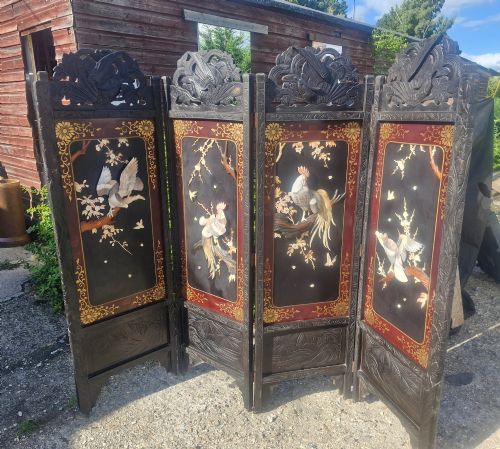
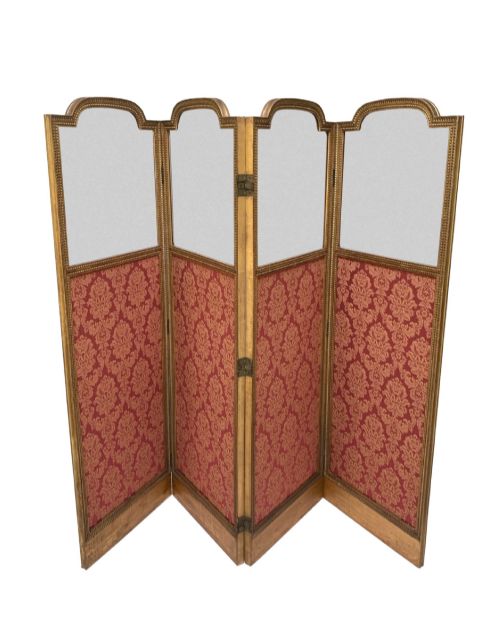
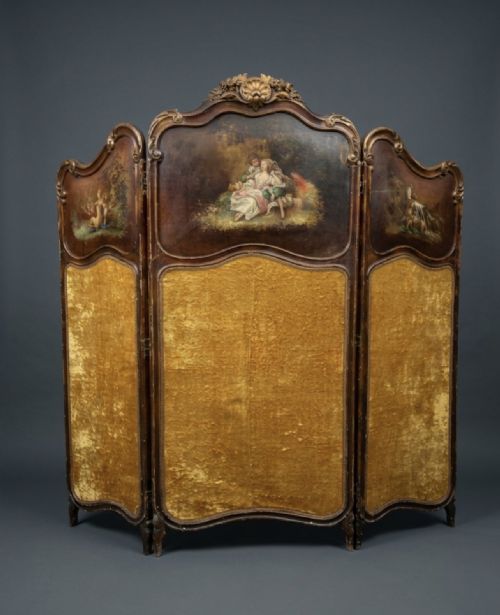
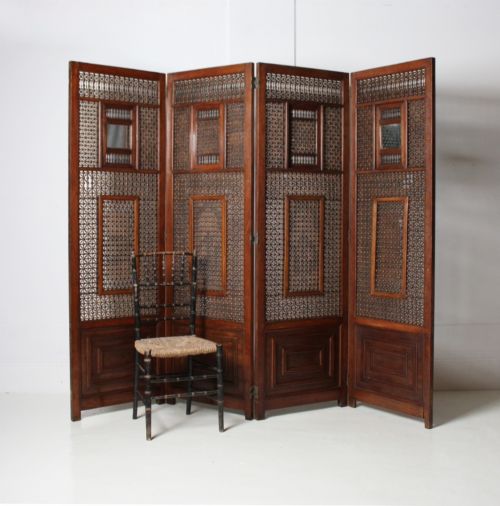
A carved wood privacy screen partitions a room with intricate joinery and folding panels, offering both division and decorative presence.
Carved Wood Privacy Screen
A carved wood privacy screen operates as a functional room divider or modesty panel, historically utilised to partition interior spaces or conceal specific areas. These pieces range from multi-panel folding screens to smaller vanity and photographic prop variants.
The selections encountered here span multiple cultural traditions and periods, including Victorian, Regency, Anglo-Indian, Chinese, and Japanese designs. Folding screens dominate the available forms, often utilising between three and six hinged panels.
Makers employed diverse decorative techniques, incorporating fretwork, painted panels, lacquered surfaces, and deep-carved bone figures into the wooden frames. Each regional style brings distinct aesthetic priorities, from French Rococo Revival curves to traditional Chinese dragon carvings.
Construction and materials
Wood serves as the primary structural foundation, frequently augmented by hardwood and giltwood frames that support the multi-fold hinges. Artisans combined these timber structures with specialised infill materials such as lacquered panels, damask textile, silk cotton, and glass.
Surface ornamentation involved intricate hand-carving techniques, as seen in the deep relief work on bone figures and dragon motifs. Additional embellishments include delicate fretwork, needlepoint inserts, and painted panels executed on fabric or wood.
Listings feature hardwood, giltwood, and lacquered surfaces spanning the nineteenth and twentieth centuries, alongside textiles like damask and silk cotton.
Assessing quality and craftsmanship
Quality rests upon the precision of the joinery and the depth and clarity of the carving across the panels. Superior examples display crisp, hand-executed details in the wood and bone elements rather than shallow or mechanical stamping.
The integrity of the original hinges and the stability of the folding mechanism dictate the structural success of a divider. Furthermore, the preservation of original painted, lacquered, or textile panels significantly influences the standing of an individual piece.
The Carved Wood Privacy Screen Glossary
- Folding screen
- A piece of furniture consisting of two or more panels that are connected by hinges and can be folded in and out. They are used to divide a room or provide privacy.
- Mashrabiya
- An architectural element of projecting oriel window enclosed with carved wood latticework, which also inspires freestanding room dividers. This technique provides ventilation while maintaining visual seclusion.
- Giltwood
- Wood that has been treated with gold leaf or gold paint to give a decorative metallic finish. It appears frequently on European revival panels.
- Fretwork
- Ornamental work consisting of interlaced or perforated designs executed in wood. This technique creates openwork patterns within the screen panels.
- Modesty screen
- A small screen historically placed to shield a person from view or drafts, often utilised as a vanity or photographic prop.
Carved Wood Privacy Screen: Frequently Asked Questions
How do I use a folding screen at home?
These screens function effectively to divide open-plan living areas, create dressing spaces, or serve as decorative architectural backdrops against a wall.
Position the panels at slight angles to ensure stability when standing freely on the floor without wall supports.
What periods do these room dividers come from?
The listings encompass nineteenth-century Victorian and Regency examples alongside early twentieth-century pieces from Chinese, Japanese, and Burmese workshops.
Stylistic indicators such as giltwood finish, fretwork, or painted panels help distinguish European revival pieces from Asian traditional craft.
How are multi-fold panels connected?
Individual sections join via metal or fabric hinges that allow the panels to fold in both directions for flexible arrangement.
Checking the alignment of these hinges ensures the screen folds flat and stands securely in position.
Are these screens suitable for blocking light?
Solid wood and lacquered panels block light completely, whereas open fretwork and mashrabiya designs permit filtered light to pass through.
Consider the specific panel infill - such as silk cotton, needlepoint, or glass - when deciding where to place the screen in relation to windows.