






Folk Art Rug
These folk art rug examples span regional kilims, tribal embroideries and heavy textiles that bring distinct domestic character into modern spaces.
Folk Art Rug
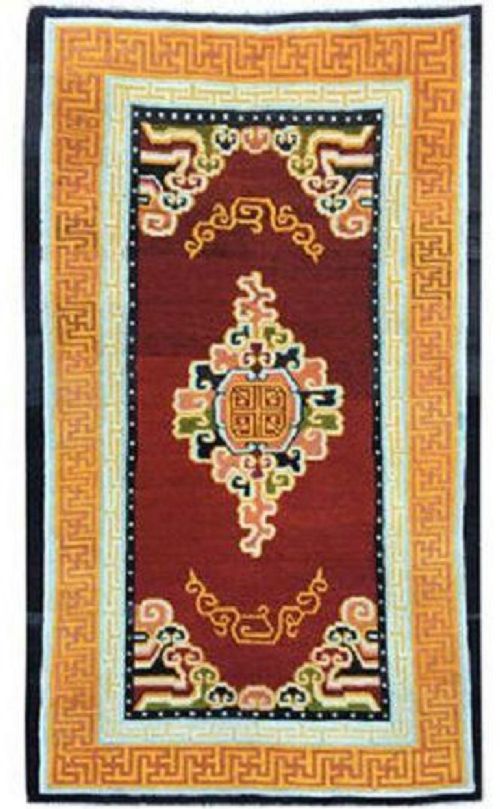
When you search for a folk art rug, you encounter hand-woven flatweaves, embroidered wall hangings, and heavy textiles originating from nineteenth and early twentieth-century communities. These pieces emerge from Persian, Caucasian, Central Asian, and Eastern European traditions, reflecting local vernacular designs rather than formal court workshops.
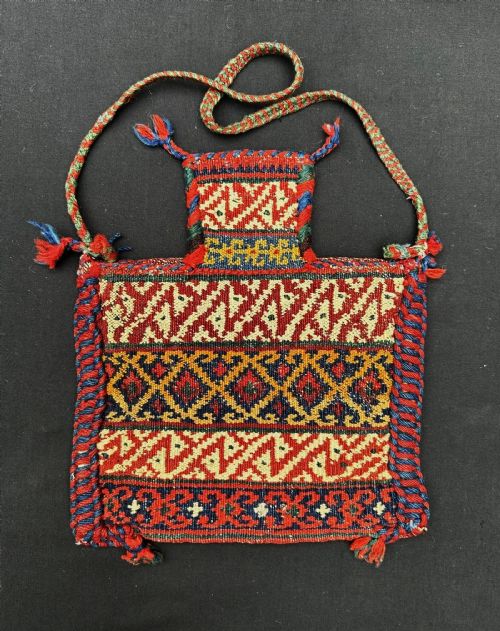
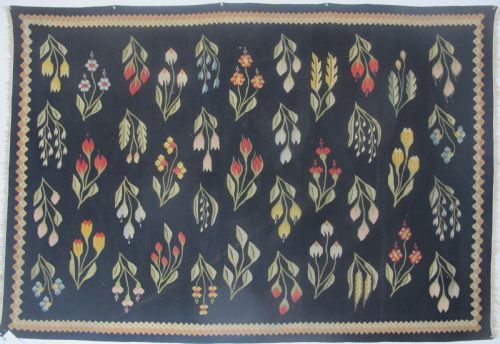
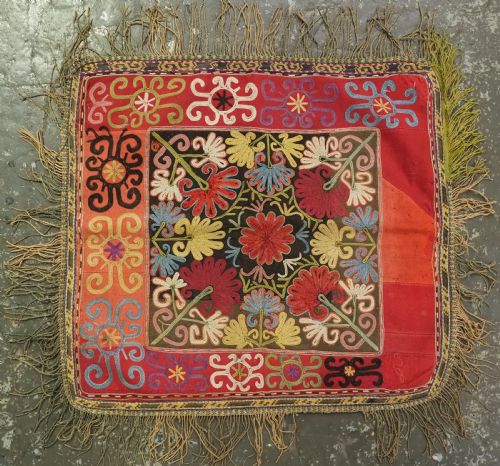
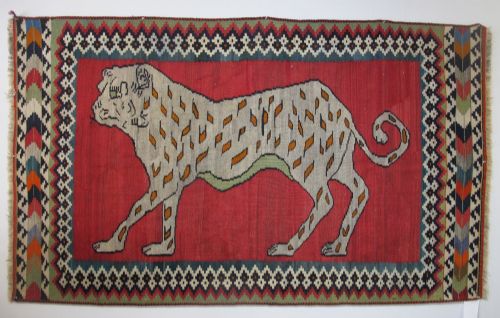
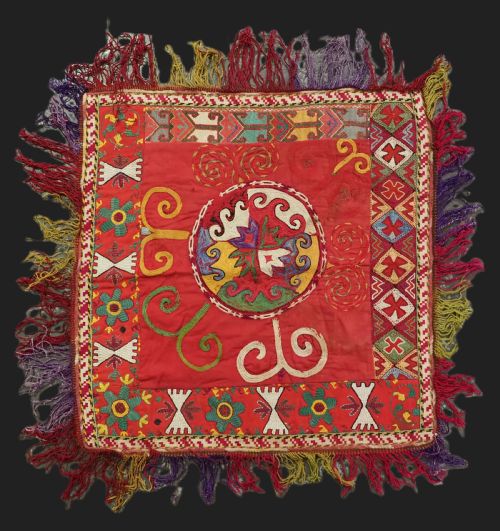
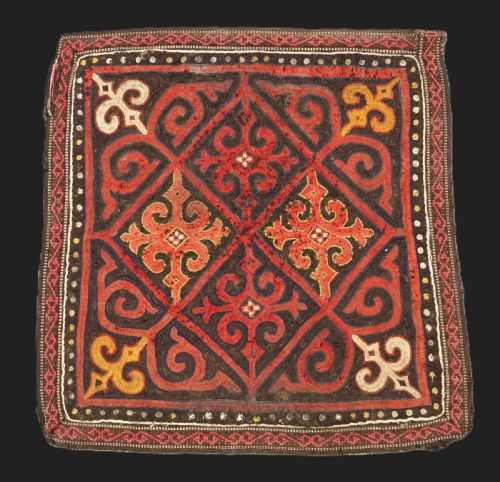
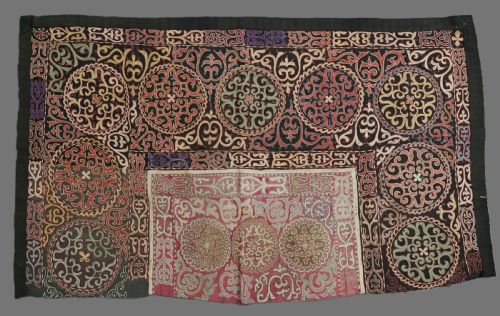
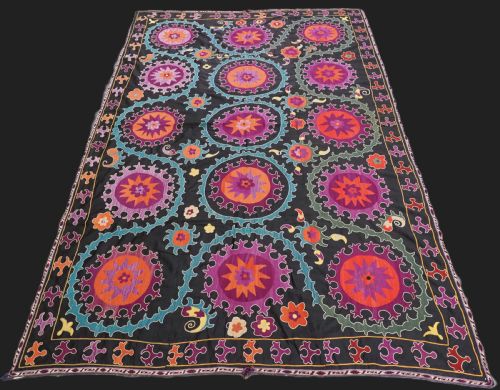
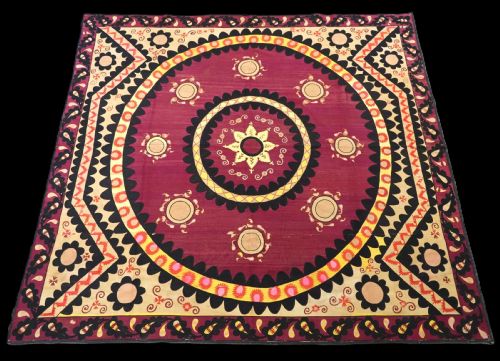
The most common formats on this page include flatwoven kilims from Bessarabia and the Balkans, embroidered felt panels from the Kyrgyz, and detailed Suzani wall hangings from Uzbekistan. Regional domestic pieces such as bread sofreh and tobacco bags also appear under this broad heading.
Makers ranged from nomadic tribal groups to village weavers utilising traditional motifs like horses, human figures, and bold floral arrangements. Each piece serves as a record of regional identity, created for daily domestic use or ceremonial dowries rather than export markets.
Materials and construction
Weavers relied principally on natural wool, cotton, and linen foundations, frequently augmented by silk thread for detailed embroidery work. Felt and burlap also provide the base structure for specific nomadic panels.
Natural dyes impart the muted or saturated tones seen across these textiles, extracted from local plants and minerals. Artisans combined flatweaving techniques, pile knots, and needlepoint embroidery depending on the regional tradition.
Certain nineteenth-century nomadic rugs secretly hide tiny human and animal figures woven directly into the geometric fields to ward off bad luck.
Distinctions in quality
Quality rests upon the fineness of the weave, the complexity of the design, and the integrity of the natural dyes. Tightly constructed kilims and densely embroidered panels demonstrate superior craftsmanship compared to coarser domestic utilities.
The sophistication of the pictorial layout - such as well-rendered animal or human figures in Caucasian and Persian pieces - separates standard village items from exceptional examples.
The Folk Art Rug Glossary
- Kilim
- A flatwoven carpet or rug produced without a pile, common in Eastern Europe, the Balkans, and the Near East. These textiles feature sharp geometric patterns created by the slit-weave technique.
- Suzani
- A type of embroidered and decorative tribal textile made in Tajikistan, Uzbekistan, and other Central Asian nations. They typically display large floral discs on cotton or linen grounds.
- Sofreh
- A Persian cloth traditionally used for spreading meals or handling bread dough, often possessing strong geometric folk designs. They function as portable dining spaces for nomadic or village households.
- Rya
- A traditional Scandinavian piled rug characterised by a deep, thick nap. Originally utilised as sea-cloaks or bedcovers, they evolved into decorative floor coverings.
Folk Art Rug: Frequently Asked Questions
Where were these textiles made?
The pieces originate across a wide geographic expanse, including Persia, the Caucasus, Central Asia, and Eastern European regions like Bessarabia and Romania.
Different nomadic tribes and village communities developed distinct weaving and embroidery styles based on local materials and cultural traditions.
How do I hang a textile on the wall?
Many pieces such as Suzanis,ilgich panels, and tapestry fragments work well mounted on walls rather than placed on floors. Conservation framing or custom fabric sleeves sewn to the reverse distribute the weight evenly.
Avoid direct sunlight to protect natural dye colours from fading over time.
What is the difference between a kilim and a rug?
A kilim is a flatwoven textile possessing no pile, created by interlocking warp and weft threads together tightly. Standard rugs frequently feature a knotted pile that creates a raised surface texture.
Both categories appear under broader folk art designations depending on their regional origin.
How do I care for antique wool textiles?
Regular gentle vacuuming without a rotating brush attachment removes surface dust and prevents fibre degradation. Professional textile conservators should handle deep cleaning or major repairs.
Keeping pieces away from damp environments prevents mould growth in natural wool and cotton fibres.