


Green Floral Rug
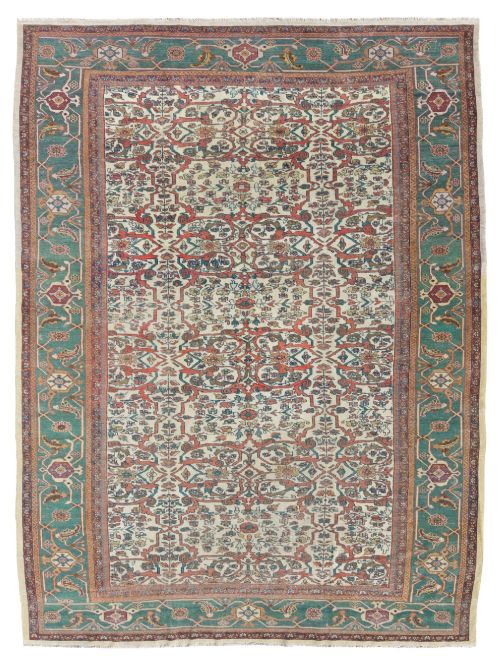
A green floral rug brings botanical warmth to a room, offering botanical motifs set against verdant grounds.
Green Floral Rug
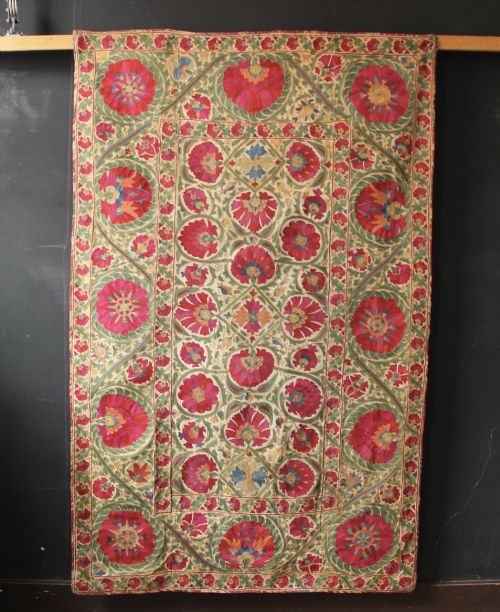
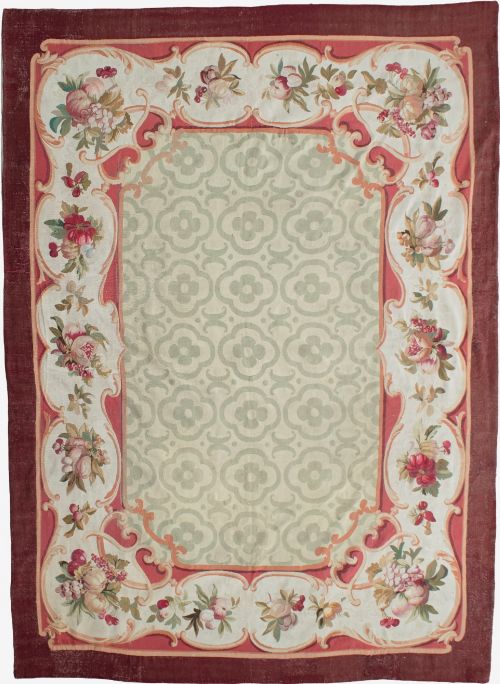
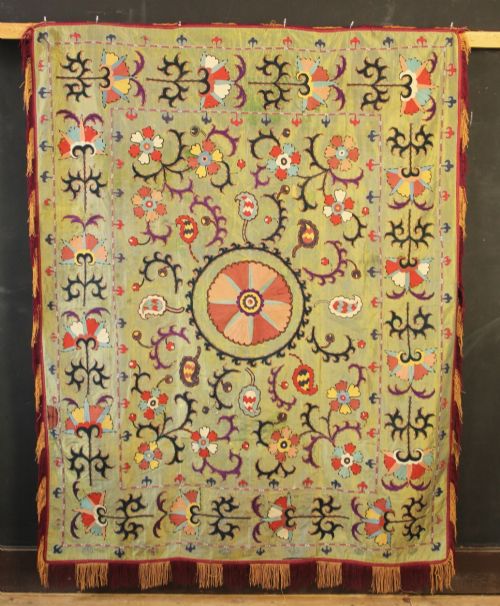
When you search for a green floral rug, you encounter hand-knotted carpets, flatweaves, and embroidered textiles originating from Persian, Turkish, Central Asian, and European traditions. These pieces combine botanical patterns with verdant ground colours, ranging from large room-size carpets to smaller area rugs.
The green floral rug category spans diverse workshops and nomadic traditions, including Ushak, Mahal, Sultanabad, and Kashan weaving centres. Many examples date from the nineteenth and early twentieth centuries, featuring wool pile, silk, or needlework execution.
Buyers most frequently meet nineteenth-century Persian and Anatolian room-size carpets alongside Central Asian tribal embroideries and kilims on this page. Each piece reflects the specific dyeing methods and regional motifs of its origin.
How they were made
The construction relies predominantly on wool pile knotted onto cotton or wool foundations, supplemented by silk, linen, jute, and canvas in specific regional types. Needlepoint and chain stitch examples utilise wool or silk thread worked on canvas or linen backings.
Dyers employed natural and early aniline dyes to achieve various shades of green, combining them with secondary tones for floral sprays, vines, and medallions. Weavers executed designs using asymmetric or symmetric knots, flatweave techniques, or surface embroidery depending on the provenance.
Some nineteenth-century weavers hid tiny rogue blooms inside geometric borders just to test if anyone was paying attention.
What varies in quality
Quality separates through the fineness of the knot density or needlework execution, which dictates the sharpness and complexity of the floral drawing. Tighter foundations and superior wool preparation yield greater resilience and longevity.
The depth and nuance of the green ground colour, alongside the harmonious balance of the secondary floral tones, distinguish finer artistic achievements from standard production. Artisanal precision in outlining stems, leaves, and blossoms governs the visual impact.
The Green Floral Rug Glossary
- Pile
- The upright yarn loops or tufts that form the usable surface of a knotted rug. Pile height and density influence how the green field and floral details wear over time.
- Kilim
- A flatwoven textile produced without a pile by tightly interweaving warp and weft threads. These pieces offer geometric and floral interpretations in a lightweight format.
- Suzani
- An embroidered decorative textile originating from Central Asia, often worked in silk thread on a cotton or linen ground. They frequently incorporate floral sprays and prayer arch formats.
- Warp
- The stationary vertical threads stretched upon a loom that provide the foundational structure for knotted rugs. The integrity of the warp supports the entire textile.
- Weft
- The horizontal threads passed through the warp yarns to secure the knots in place. Weft tension contributes to the structural stability of the carpet.
Green Floral Rug: Frequently Asked Questions
How do I clean a green floral rug?
Professional textile washing is essential for antique knotted rugs and embroideries to protect natural dyes and fragile foundations. Avoid aggressive household scrubbing.
Regular gentle vacuuming without a rotating power head prevents dust accumulation in the wool pile.
Can I place these rugs in high traffic areas?
Sturdier wool-pile carpets handle moderate walking paths when supported by a quality underlay. Finer silk pieces and delicate embroideries suit low-traffic rooms or wall hanging.
Rotating the carpet periodically ensures even wear across the green field and floral borders.
How do I identify the origin of a rug?
Regional attributions depend on specific knotting structures, colour palettes, and characteristic floral motifs unique to workshops like Ushak or Kashan. Border designs provide additional clues.
Comparing structural details against documented examples helps confirm whether a piece is Persian, Anatolian, or Central Asian.
Why do green ground colours vary so much?
Dyers utilised different plant-derived ingredients and mordants across nineteenth-century workshops to produce green hues. Subsequent dye formulations introduced new tones.
Light exposure and natural ageing over decades also shift the original shade towards softer patinas.