
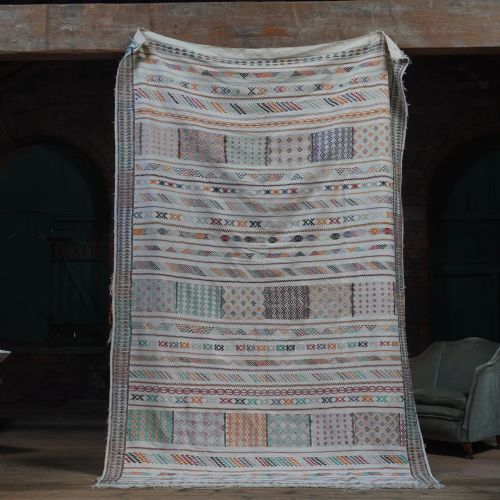


Flatweave Embroidered Rug
These flatweave embroidered rug pieces bring textured character and pattern to a floor or wall, offering a tangible link to traditional textile arts.
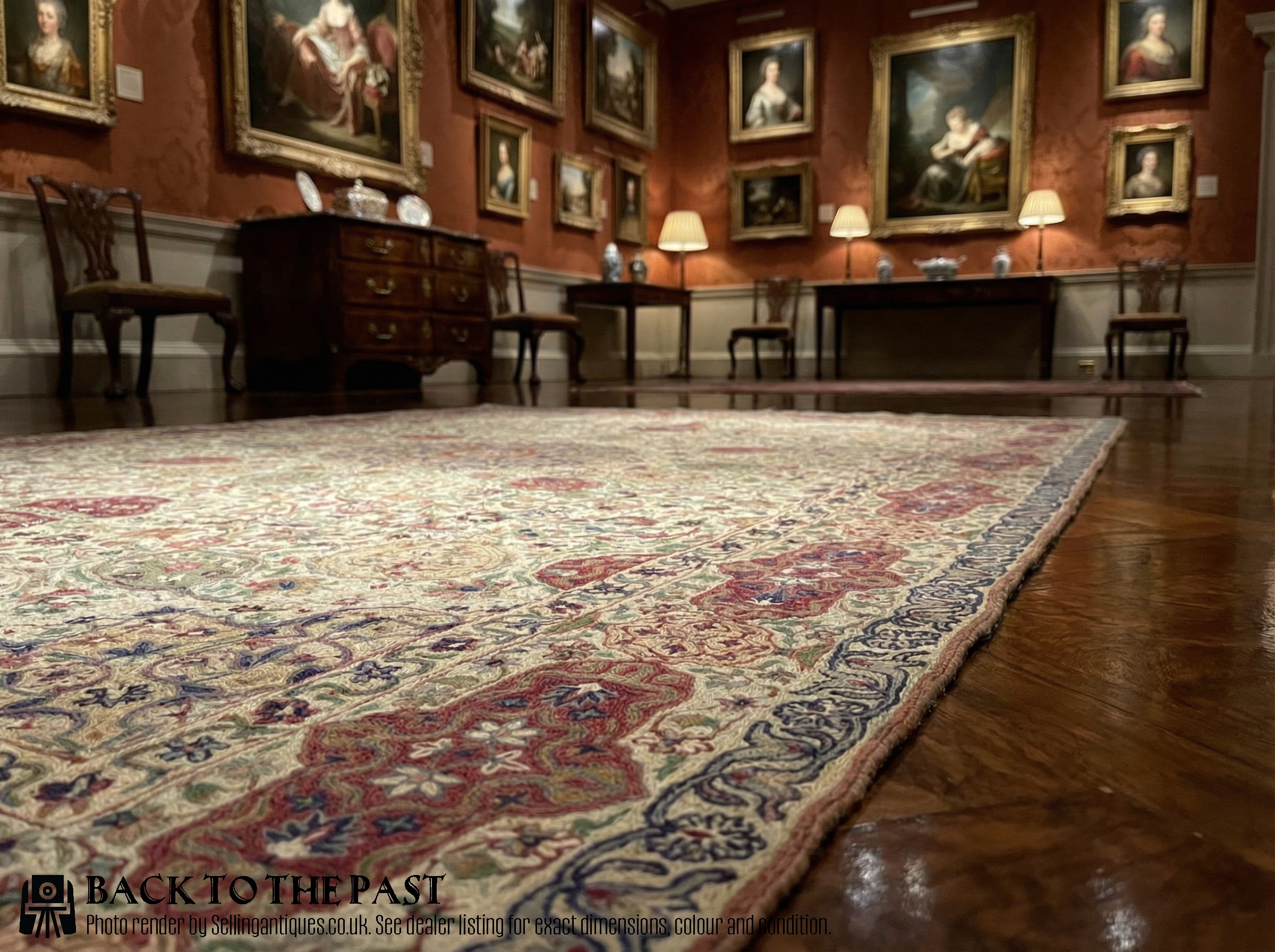
Flatweave Embroidered Rug
A flatweave embroidered rug combines flat-woven foundations with surface needlework, creating textiles that function both on the floor and as wall hangings. These pieces span from the late nineteenth century through to the middle of the twentieth century, originating from diverse traditions across Central Asia, North Africa, the Middle East, and Europe.
The selections available here range from Central Asian tribal kilims and Suzanis to Portuguese needlepoints, French Chateau styles, and Moroccan Sabra cactus silk work. Buyers frequently encounter versatile runner rugs, wall hangings, and traditional kilims displaying distinct regional motifs and needlecraft techniques.
How they were made
These textiles rely on natural foundations, utilising wool, hand-spun wool, cotton, canvas, and camel hair for the primary structure of the rugs and covers. Artisans then applied intricate surface needlework using wool and silk threads, including chain stitch, crewelwork, and needlepoint.
Specialised regional techniques define the construction, such as the flat-woven cicim and kilim foundations embellished with supplementary embroidery. Sabra fibre and cactus silk also appear in North African pieces, providing a distinct texture distinct from standard woollen textiles.
Listings feature materials including wool, cotton, canvas, camel hair, and Sabra cactus fibre across periods from the nineteenth century to the mid-twentieth century.
What varies in quality
Quality rests in the precision of the needlework and the integrity of the underlying flatweave foundation. Finer pieces demonstrate dense, even stitching that holds firm against the background material, alongside well-balanced natural dye palettes.
The sophistication of the design layout and the scarcity of specific regional patterns also influence the distinction between standard examples and exceptional specimens. Original ground materials, such as genuine camel hair or hand-spun wool, further elevate the character of a piece.
The Flatweave Embroidered Rug Glossary
- Flatweave
- A textile produced without knotted piles, created by interweaving warp and weft threads directly on a loom. This results in a thinner, lighter fabric suitable for floors or walls.
- Suzani
- A type of embroidered tribal textile originating from Central Asia, traditionally worked in silk or wool on a cotton or linen ground. They often feature bold medallion or repeat botanical motifs.
- Chain stitch
- An embroidery technique where loops of thread are linked in a continuous chain to form flowing linear designs. It provides high texture and durability on rugs and wall hangings.
- Cicim
- A decorative embroidery technique applied to a flat-woven foundation, common in Turkish tribal weaving. Extra threads are floated or brocaded across the front during or after the weaving process.
- Needlepoint
- A form of counted thread embroidery stitched onto an open-weave canvas foundation. It completely covers the ground fabric to create a dense, durable pictorial surface.
Flatweave Embroidered Rug: Frequently Asked Questions
Can I use a flatweave embroidered rug on the floor?
Many of these pieces are sturdy enough for floor use, particularly wool flatweaves and heavier carpets. Using a quality underlay helps prevent slipping and reduces friction on the fibres.
Lighter textiles or delicate wall hangings benefit from being displayed off the floor to protect the embroidery threads from heavy foot traffic.
How do I hang a textile on the wall?
Wall hangings can be displayed by attaching a fabric sleeve to the reverse and sliding a slim wooden or metal rod through it. This distributes the weight evenly across the top edge without damaging the original material.
Avoid using direct pins or nails through the textile itself, as this stresses the antique foundation threads and causes permanent tears.
How do I care for wool and silk embroidery?
Gentle surface cleaning and regular low-suction vacuuming without a rotating brush bar keep dust from settling into the weave. Professional textile conservators should handle any deep cleaning or stain removal.
Keeping the piece out of direct sunlight prevents the natural dyes in the wool and silk from fading over time.
How do I identify a tribal origin?
Regional styles reveal themselves through specific colour combinations, geometric motifs, and structural weaving methods. Central Asian pieces often display bold repeat patterns, while European examples favour floral needlepoint designs.
Comparing the ground materials, such as camel hair or hand-spun wool, helps narrow down the geographical source of the textile.