





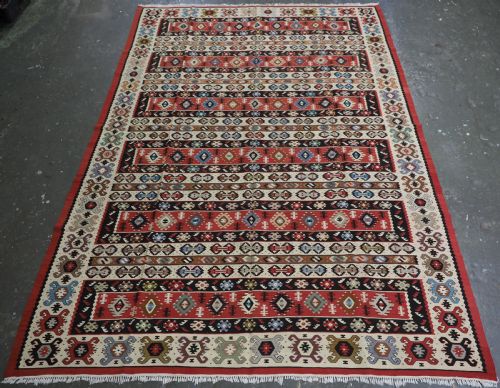

1920s Flatweave Rug
A 1920s flatweave rug brings distinctive tribal and folk designs into a room, offering durability and flat surfaces.
1920s Flatweave Rug
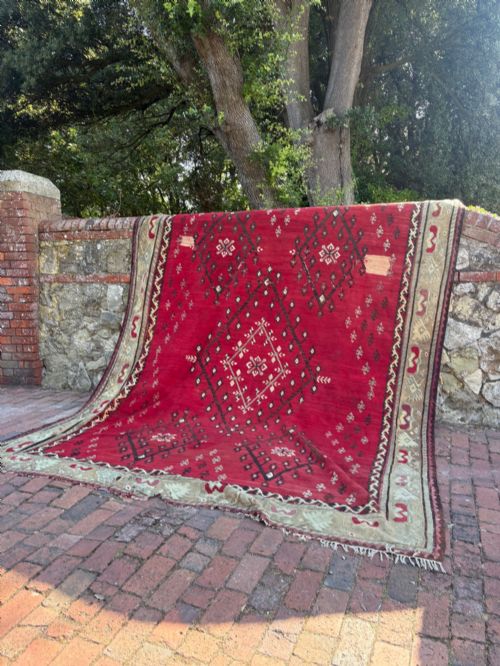
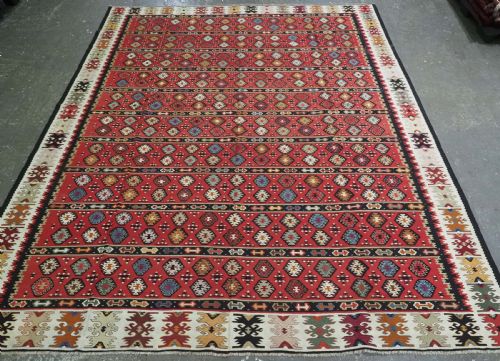
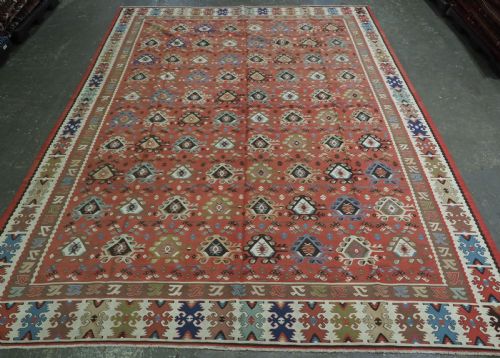
A 1920s flatweave rug encompasses various regional styles, most notably Pirot, Sharkoy, Baluch, and Anatolian tribal textiles. These pieces function primarily as floor coverings, runners, and tent bands, created without pile.
The selections on this page lean heavily towards Balkan traditional and folkloric formats, alongside Persian and Central Asian tribal variations. Buyers encounter large room-sized carpets as well as smaller formats and narrow runners.
Makers in regions such as Pirot and Sarkoy utilised classic repeat medallions, lattice patterns, and flowering tree motifs. Each piece reflects the specific weaving traditions of its origin.
Geometric arrangements and banded chevron designs dominate the aesthetic, providing bold patterns suitable for contemporary and traditional interiors alike.
Materials and construction
These textiles rely on wool and cotton as primary materials, spun and dyed by hand to create durable floor coverings. The absence of a knotted pile distinguishes them from traditional carpets.
Weavers employed slit-tapestry and related flatweaving techniques to build sharp geometric motifs and complex colour transitions. Some larger formats required weaving in two distinct parts before joining.
The structure allows the fabric to remain relatively light while retaining structural integrity under foot traffic. Natural fibres absorb dye in ways that yield deep, variegated tones over decades of use.
Nomadic weavers sometimes hid tiny intentional irregularities in their geometric bands to appease unseen spirits.
Assessing quality and character
Quality in these textiles depends heavily on the crispness of the geometric design and the richness of the dye palette. Finer examples display meticulous control over symmetry and intricate repeat patterns.
The condition of the weave and the presence of original selvedges influence the desirability of a piece. Historical textiles often bear timeworn repairs, which reflect their practical working life.
Format scale alters the character, with large room-sized carpets requiring sustained planning by the weaver compared to narrow runners or tent bands.
The 1920s Flatweave Rug Glossary
- Kilim
- A flatwoven textile produced without a pile, used across parts of Southeast Europe, Anatolia, and the Middle East. These pieces function as floor rugs, wall hangings, and functional covers.
- Pirot
- A traditional style of kilim originating from the Balkans, known for precise geometric motifs and balanced compositions. These rugs often feature classic repeat designs and flowering trees.
- Chevron
- A V-shaped pattern frequently utilised in banded tribal designs. This motif provides directional movement across the surface of the textile.
- Tent band
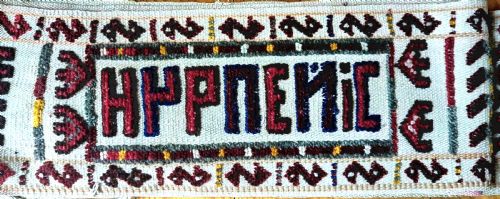
- A long, narrow woven textile used structurally or decoratively within nomadic encampments. These items display dense geometric patterning due to their restricted width.
- Medallion
- A central decorative motif placed within the field of the rug. Repeat variations of this shape create rhythm across larger formats.
1920s Flatweave Rug: Frequently Asked Questions
What is a flatweave rug?
A flatweave rug is constructed without knotted pile by interweaving warp and weft threads together directly. This produces a flat, durable textile that functions well on floors and as a wall hanging.
Such pieces include kilims, runners, and tent bands originating from Balkan, Anatolian, and Persian tribal traditions.
How do I care for a vintage kilim?
Regular gentle vacuuming without a rotating brush roll helps remove grit from the wool fibres. Professional cleaning tailored to antique textiles preserves the structure and dyes.
Underlays help prevent slipping and reduce friction against hard flooring surfaces.
Where were these textiles made?
The pieces originate from various weaving centres across the Balkans, Anatolia, and Central Asia. Regions such as Pirot, Sarkoy, and areas inhabited by Baluch and Turkoman tribes produced distinct local designs.
Each region developed specific palettes and geometric vocabularies passed down through generations.
What does woven in two parts mean?
Some large floor coverings required looms narrower than the intended final width. Weavers produced two separate panels and stitched them together down the centre.
This technique allowed nomadic and village workshops to create substantial room-sized carpets on portable or standard local looms.