




Cream Flatweave Carpet
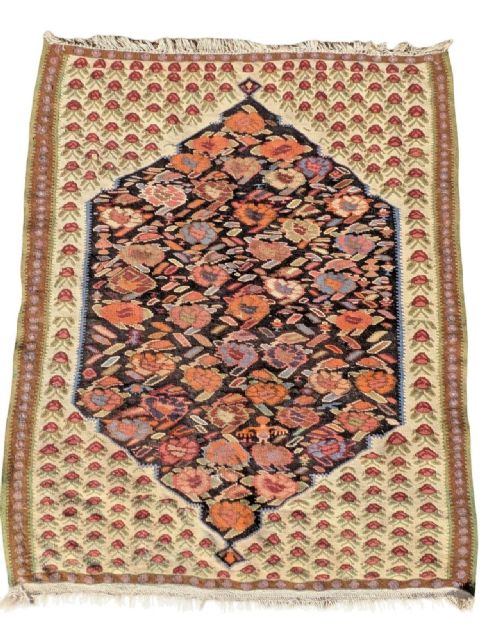
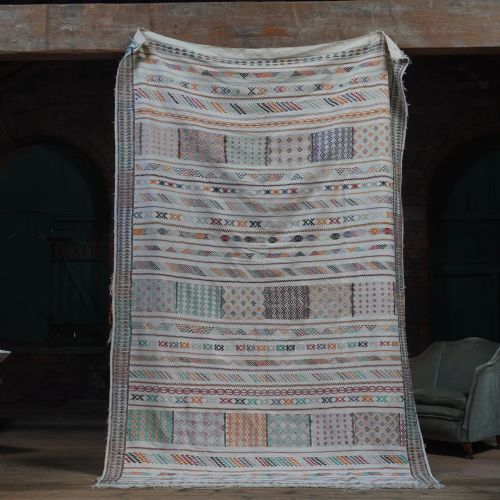
A cream flatweave carpet brings texture and heritage to a room, spanning styles from Bessarabian kilims to French needlepoints.
Cream Flatweave Carpet
When you search for a cream flatweave carpet, you enter a diverse field of floor coverings and textiles spanning the nineteenth and twentieth centuries. The selection encompasses kilims, dhurries, needlepoints, and Aubusson rugs originating from diverse regions including Central Asia, Eastern Europe, France, Portugal, and India.
You are most likely to meet flatweave pieces from the early twentieth century, particularly Bessarabian and Balkan folk art kilims alongside Moroccan sabra fibre items. These textiles function effectively as area rugs, runner rugs, and wall hangings, bringing distinct regional patterns into modern interiors.
How they were made
The construction relies predominantly on wool, cotton, and canvas, frequently incorporating natural dyes to achieve enduring colour palettes across the various traditions. Artisans employed specific weaving and stitching methods, such as needlepoint work, chain stitch embroidery, and flatweave tapestry techniques without pile.
Specialised materials like cactus silk and sabra fibre also appear in Moroccan pieces, adding a distinct lustre to the textile surface. These traditional methods ensure the rugs remain durable while maintaining a flat profile suited to high-traffic spaces.
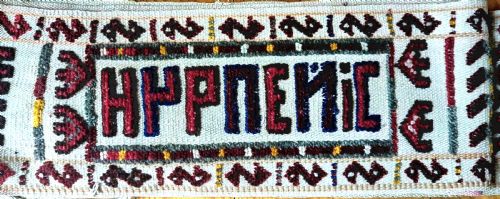
Some nineteenth-century nomadic tent bands found a second life keeping twentieth-century floors remarkably stylish.
What varies in quality
The standard of a flatweave textile is determined by the tightness of the weave, the clarity of the regional design, and the integrity of the natural dyes. Pieces executed with finer wool or precise needlework display greater structural resilience and more intricate detail.
Preservation of the original edges and the complexity of the specific tribal or traditional pattern distinguish superior examples. The harmonious interaction of natural dyes over decades further elevates the character of the piece.
The Cream Flatweave Carpet Glossary
- Kilim
- A flatwoven carpet or rug produced in countries of the former Ottoman Empire, Persia, and Central Asia. They contain no pile and rely on tightly woven warp and weft threads to form geometric patterns.
- Dhurrie
- A traditional thick flatweave rug or carpet originating from India. They are typically woven from cotton or wool and serve utilitarian and decorative functions.
- Needlepoint
- A type of canvas work embroidery where yarn is stitched through a mesh canvas grid to create dense pictorial or floral designs. Portuguese examples feature prominently in this category.
- Crewelwork
- A type of surface embroidery using wool yarn on a heavy linen or cotton canvas ground. It is frequently applied to wall hangings and decorative carpets.
- Aubusson
- A style of French carpet and tapestry traditionally woven in the town of Aubusson. These pieces often exhibit classical floral designs derived from European decorative arts.
Cream Flatweave Carpet: Frequently Asked Questions
How do I clean a flatweave carpet?
Regular gentle vacuuming without a rotating brush helps remove embedded dust and debris from the flat surface.
For deeper cleaning, professional textile restoration is recommended to protect natural dyes and delicate wool or silk fibres.
Can these rugs be placed in high traffic areas?
Many flatweave carpets, such as cotton dhurries and sturdy wool kilims, were built for daily use and endure regular footfall well.
More delicate needlepoint or antique silk pieces are better suited to lighter traffic zones or wall display.
What is the difference between a kilim and an Aubusson?
A kilim is a flatwoven textile originating from regions like Central Asia and Eastern Europe, featuring characteristic geometric or tribal motifs.
An Aubusson is a French woven style that typically showcases European floral and architectural designs.
How do I date an antique flatweave rug?
Dating relies on examining the specific wool types, the chemical composition of the natural dyes, and regional weaving characteristics.
Comparing structural motifs to documented examples from periods like the nineteenth or early twentieth century provides further chronological context.