







Antique Pirot Rug
An antique pirot rug brings flat-woven Balkan folk art into a room with striking geometric patterns and traditional motifs.
Antique Pirot Rug
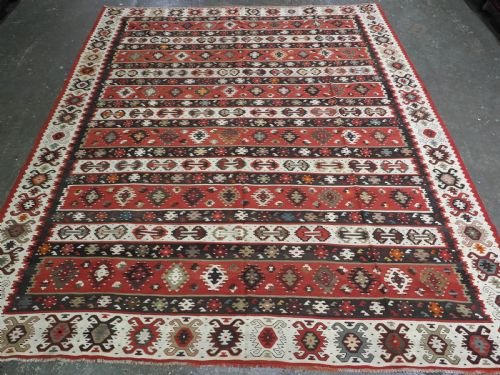
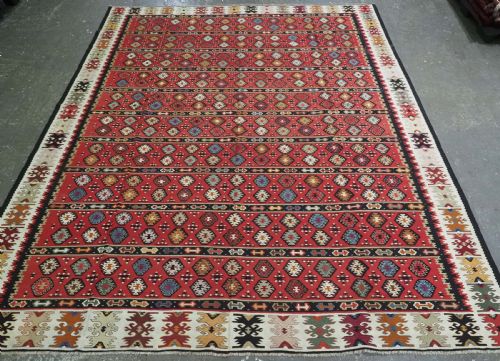
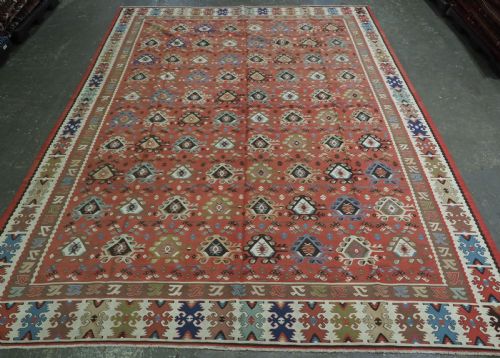
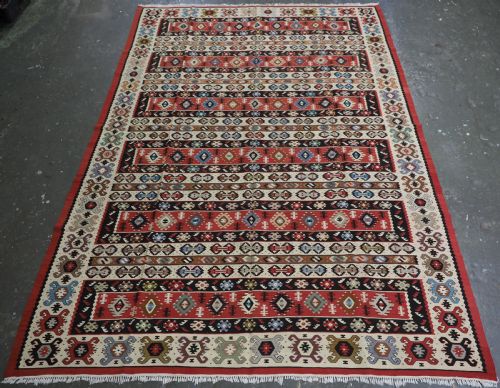
An antique pirot rug is a flat-woven textile originating from the Balkan region, often shared in designation with Sarkoy kilims. These floor coverings display rich traditions of Balkan folk art, executed in styles ranging from tribal patterns to classic Ottoman-influenced designs. You will encounter pieces featuring flowering trees, repeat medallions, lattice patterns, and fine banded arrangements.
The pieces available here date across the early decades of the twentieth century, specifically spanning from nineteen ten to nineteen thirty. The format typically takes the form of area rugs and larger room-size carpets suited for traditional interiors. These flat-weaves hold a distinct place in European textile history through their specific regional craftsmanship.
How these rugs were made
These textiles are constructed using traditional flat-weave techniques without a knotted pile, relying instead on interlocking weft threads to build crisp geometric patterns. The weavers utilised wool for the structural body and design elements, yielding a durable textile surface. Cotton frequently appears alongside wool within the structural composition of these regional floor coverings.
The construction method allows both sides of the rug to display the pattern clearly, a characteristic feature of quality kilim production. Natural dyeing methods contributed the warm and varied colours seen across the banded and repeat medallion designs.
Some weavers cleverly incorporated hidden tree branches into geometric borders, turning simple stripes into secret forests.
What varies in quality
Quality in these flat-weaves depends largely on the precision of the geometric execution and the complexity of the chosen pattern. Classic designs and scarce lattice or flowering tree motifs demonstrate superior visual ambition compared to simpler repeat compositions. The handling of scale, particularly in large room-size examples, determines the visual impact of the piece.
Colour retention and subtlety also distinguish finer examples, where warm soft tones or outstanding contrasts remain intact across the wool surface. The tightness of the flat-weave structure contributes directly to the longevity and structural integrity of the individual carpet.
The Antique Pirot Rug Glossary
- Kilim
- A flat-woven carpet or rug produced in the Balkans, Anatolia, and the Middle East. These textiles are made without pile by tightly interweaving warp and weft strands.
- Balkan Folk Art
- Artistic traditions and craft methods originating from southeastern Europe. This aesthetic forms the decorative foundation of pirot and sharkoy weavings.
- Medallion
- A central ornamental motif set within the field of a rug. Repeat medallion designs feature multiple instances of these focal shapes across the textile.
- Banded Design
- A pattern arrangement characterised by horizontal stripes or bands running across the width of the rug. These bands frequently contain geometric motifs or floral elements.
Antique Pirot Rug: Frequently Asked Questions
Where were antique pirot rugs made?
These flat-weaves originated in the Balkan region, specifically associated with the town of Pirot and related weaving traditions in neighbouring districts. The style bridges Balkan folk art and Ottoman decorative influences.
Production centres in this region utilised local wool and traditional flat-weaving techniques passed down through generations of artisans.
How do I style a large room-size kilim?
Large room-size flat-weaves provide a durable and flat surface that functions well under dining tables or in open seating areas. Their lack of pile makes them practical for high-traffic rooms where chairs need to move easily.
Pairing these textiles with wooden floors allows the banded and repeat medallion patterns to anchor the surrounding furniture.
What is the difference between a Pirot and a Sarkoy kilim?
The terms are frequently used interchangeably in the trade to describe flat-woven textiles from the Balkan sphere. Both types share similar wool materials, flat-weave construction, and regional design vocabulary.
Distinctions usually rest on specific variations in local motif handling rather than fundamental differences in technique.
How do I care for a flat-woven wool rug?
Regular gentle vacuuming without a rotating brush helps prevent dust accumulation within the tight weave. Professional cleaning is recommended for wool textiles to preserve the natural dyes.
Avoiding prolonged direct sunlight protects the warm and soft colour palette from fading over time.