
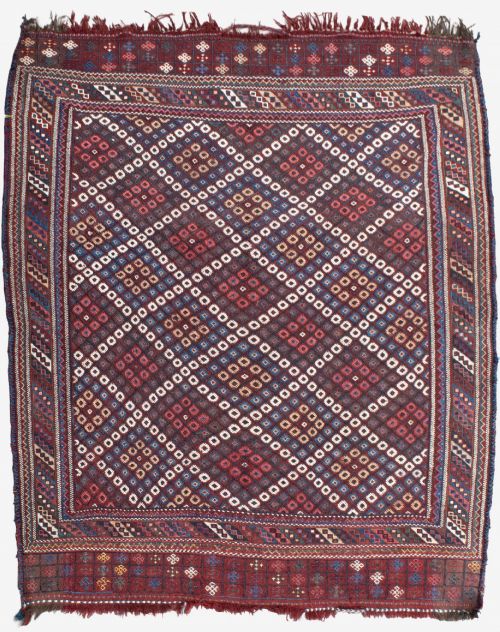


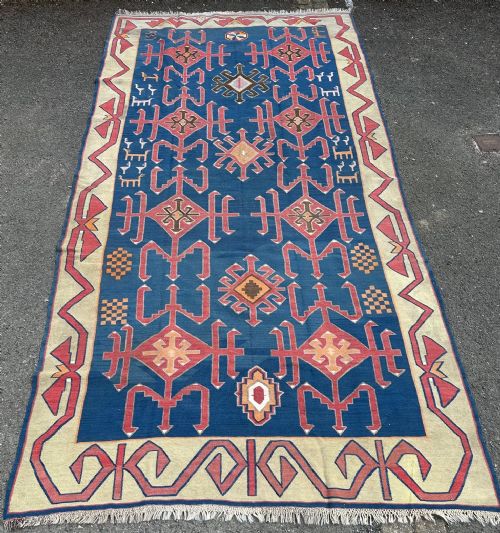


Vintage Woven Kilim
Vintage woven kilim textiles bring rich geometric patterns and flat-woven textures into a room through historical rugs, cushions, and utilitarian bread cloths.
Vintage Woven Kilim
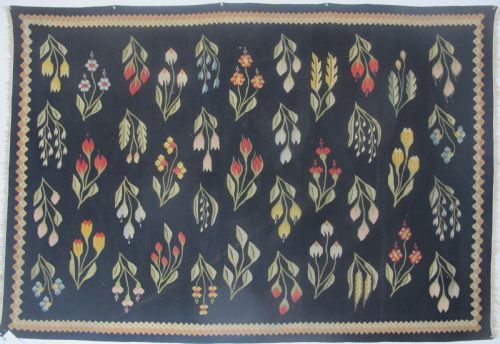
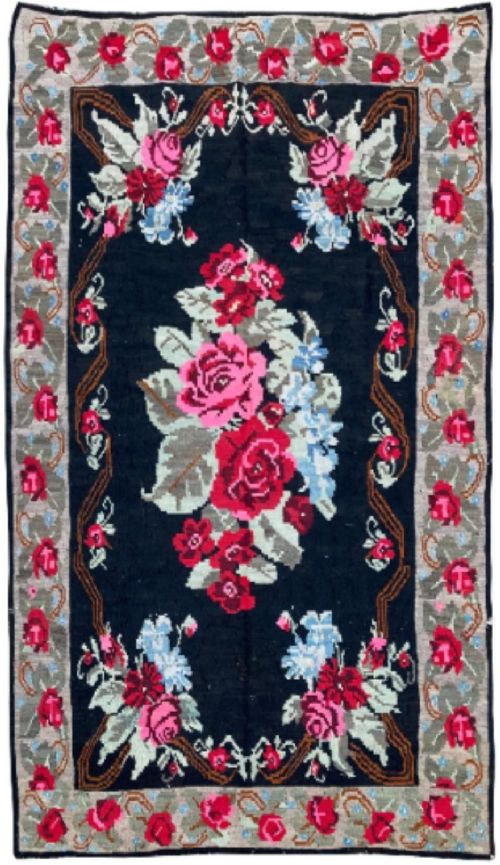
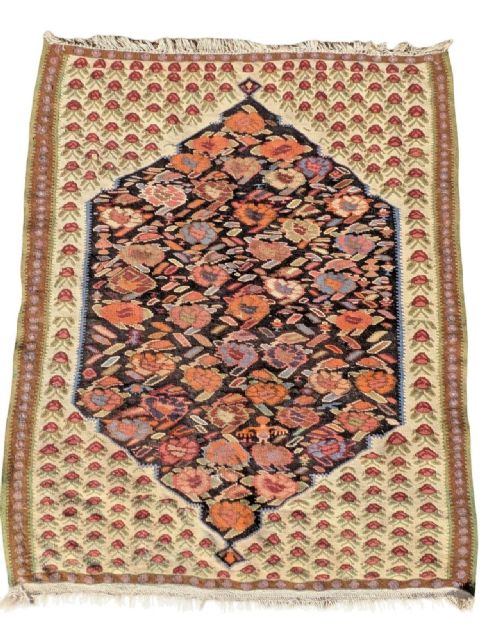
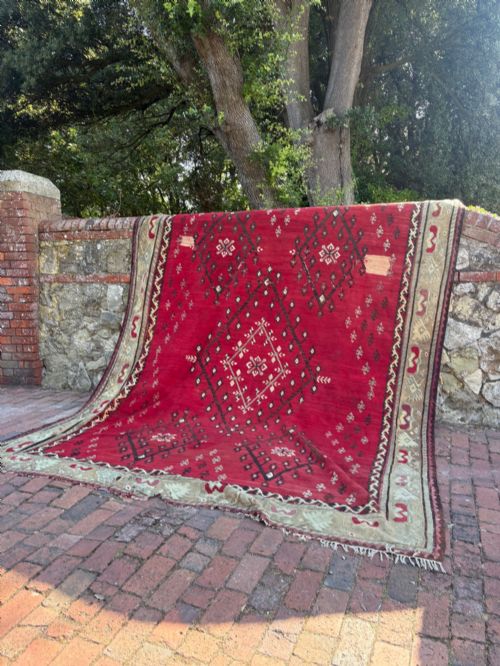
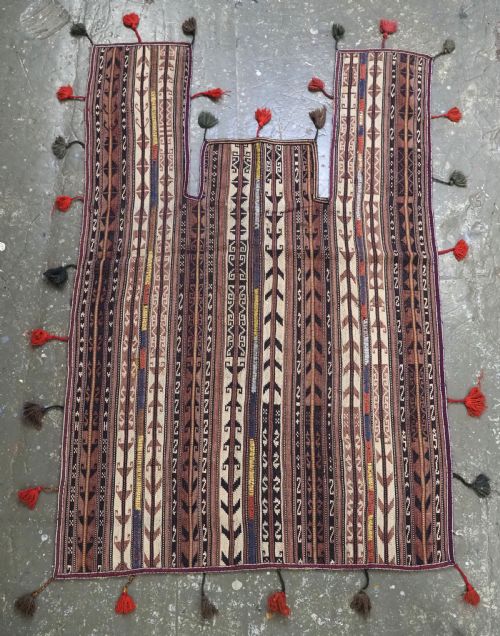
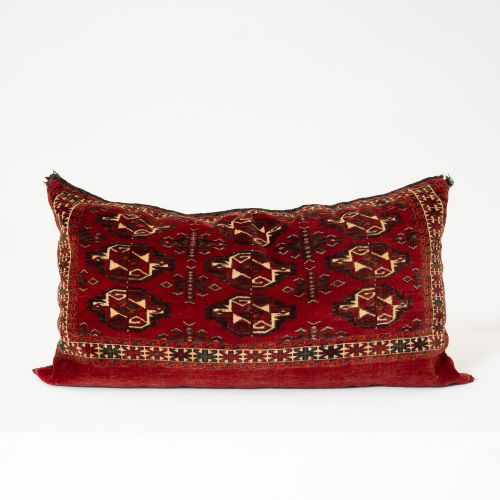
A vintage woven kilim is a flat-weave textile originating from tribal and regional weaving traditions across Anatolia, Persia, the Caucasus, and Central Asia. These items encompass floor rugs, large carpets, runners, and smaller domestic objects such as bread sofrehs, storage bags, and decorative cushions.
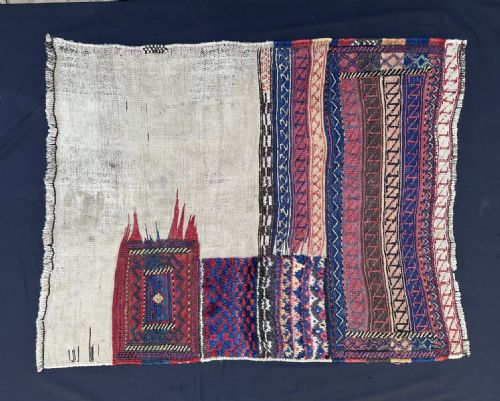
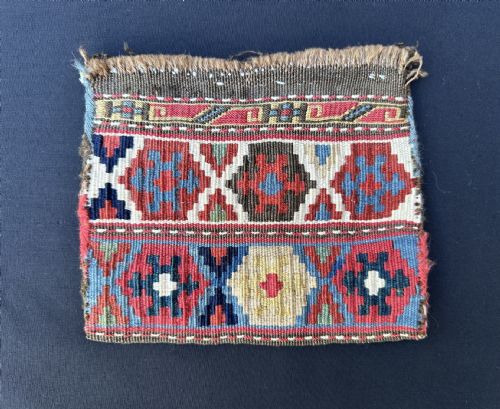
Buyers browsing this selection will frequently encounter room-sized carpets alongside smaller tribal rugs and converted storage pieces like mafrashes and torbas. The forms reflect nomadic and village origins where flat-weaving served practical household functions.
The materials and designs draw upon regional aesthetics spanning the nineteenth and early twentieth centuries, offering distinctive patterns without pile. Each piece represents a specific community's weaving vocabulary, from Caucasian geometric layouts to Persian tribal motifs.
Materials and construction
These textiles are constructed primarily from hand-spun wool, often supported by cotton foundations or incorporating goat hair for added durability. Natural dyes provide the underlying palette, yielding earthy tones and saturated hues that age gradually.
The technique relies on slit-tapery flat-weaving, where the weft threads are beaten down tightly to obscure the warp and form sharp geometric contours. This interlocking method allows weavers to produce crisp colour changes and intricate patterns without knotted piles.
Listings span production periods from the eighteen-fifties through the nineteen-forties, using wool, cotton, and natural dyes.
Judging quality in flat-weaves
Quality rests upon the tightness of the weave and the precision of the geometric execution. Tighter flat-weaves utilise finer yarns that hold structural integrity over decades of floor use.
The integrity of the natural dyes and the consistency of the wool spinning dictate visual depth. Examples with well-preserved natural dye variations show greater tonal complexity across the surface.
The Vintage Woven Kilim Glossary
- Sofreh
- A utilitarian woven cloth used traditionally for spreading meals or handling bread dough. These flat-weaves often feature striking field designs tailored for functional domestic gatherings.
- Mafrash
- A rectangular storage chest panel or container face woven by nomadic groups. These pieces typically display bold banded flatweave patterns.
- Flat-weave
- A textile constructed without a pile by interlacing warp and weft threads directly. This technique creates a lightweight, reversible cloth.
- Natural Dyes
- Colourants derived from plant, insect, or mineral sources prior to synthetic alternatives. These dyes interact with wool fibres to create nuanced patination over time.
- Warp
- The stationary vertical threads stretched across a loom that form the structural foundation of the textile. The weft threads are woven horizontally through these structural elements.
Vintage Woven Kilim: Frequently Asked Questions
How do I care for a kilim rug?
Vacuum gently using suction attachments without rotating brushes to remove embedded dust. Professional textile cleaning is recommended when deeper maintenance becomes necessary.
Avoid placing these flat-weaves in areas with constant direct sunlight to protect the natural dyes from fading over time.
Can I use these textiles as floor coverings?
Many larger kilims and carpets were designed specifically for domestic flooring and handle moderate foot traffic well. Utilising a quality underlay prevents slipping and cushions the flat-weave against hard floors.
Smaller formats like sofrehs or bag faces function better as wall hangings, table covers, or decorative cushions.
How can I tell regional styles apart?
Caucasian pieces tend to display stark geometric medallions and crisp primary colours. Persian and Anatolian tribal weavings often incorporate intricate borders and earthy red or blue tones.
Examining the specific wool texture and fringe construction provides further clues to the producing tribe or region.
What is the difference between a kilim and a carpet?
Kilims are constructed entirely through flat-weaving techniques without any raised pile. Traditional carpets feature knotted pile fibres that create a plush, three-dimensional surface texture.
This structural difference makes flat-weaves thinner, lighter, and fully reversible.