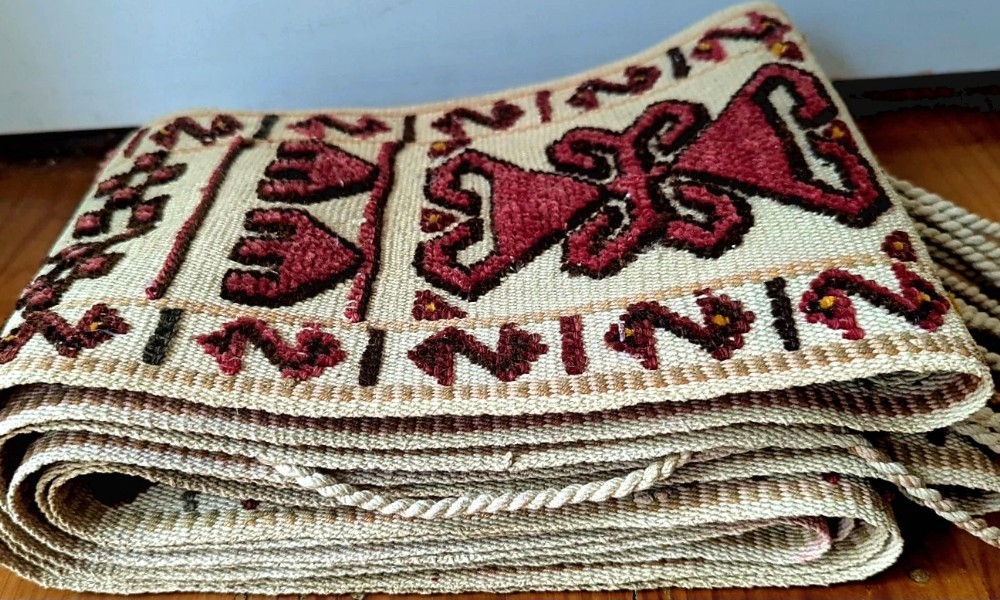
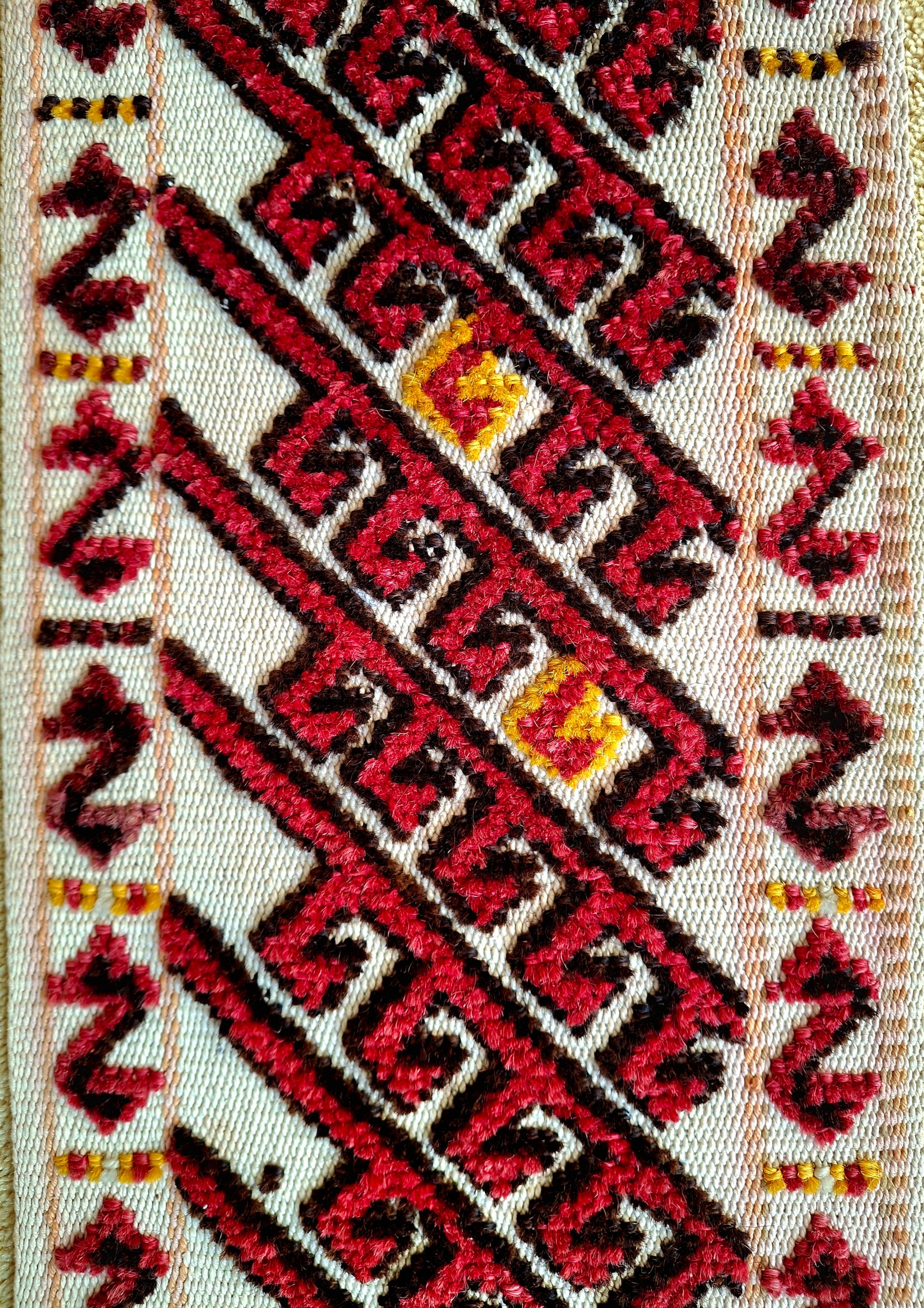
Dragoncharger Antiques has dated this Antique Turkoman Tent Band to the 1920s.
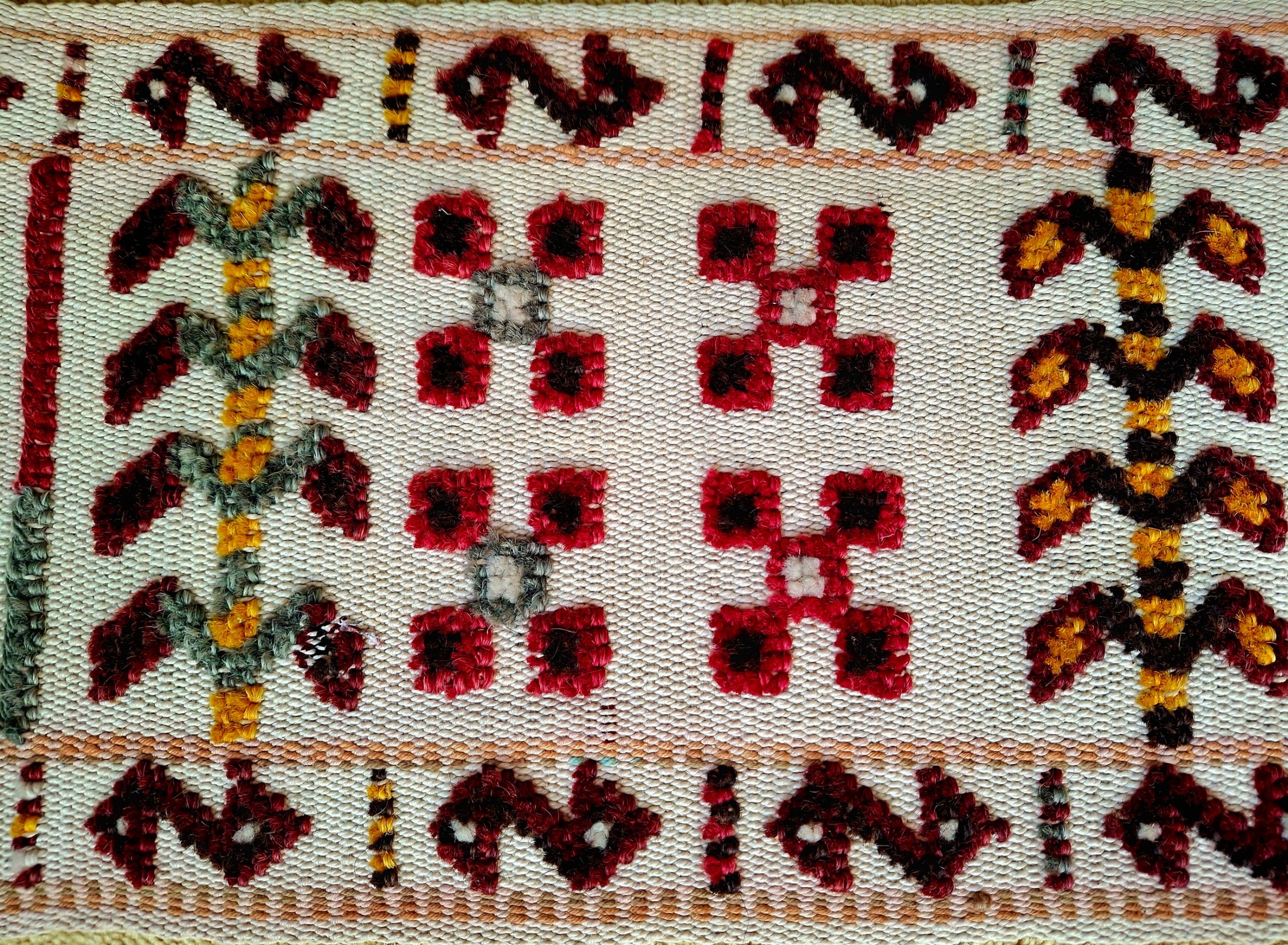
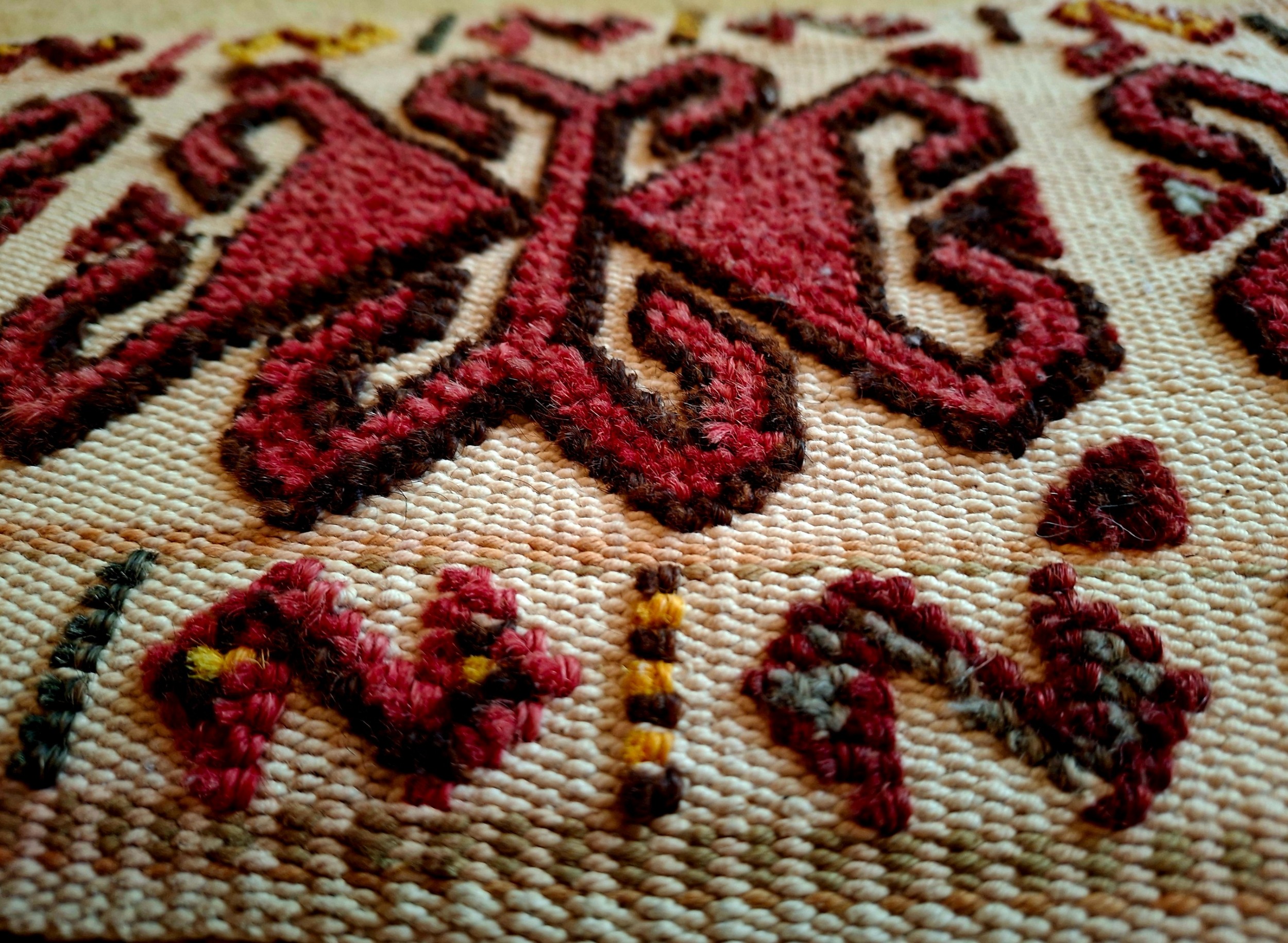
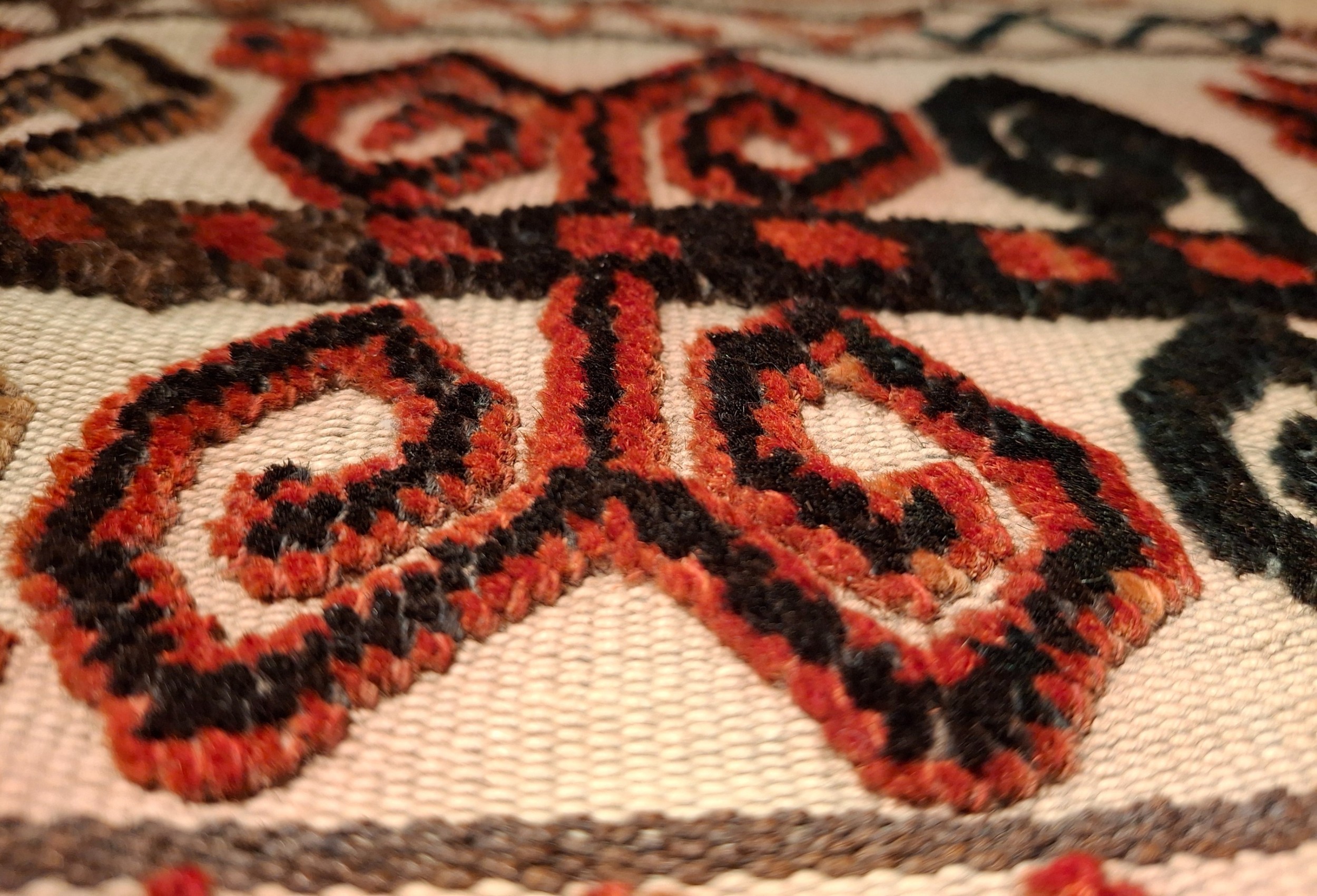
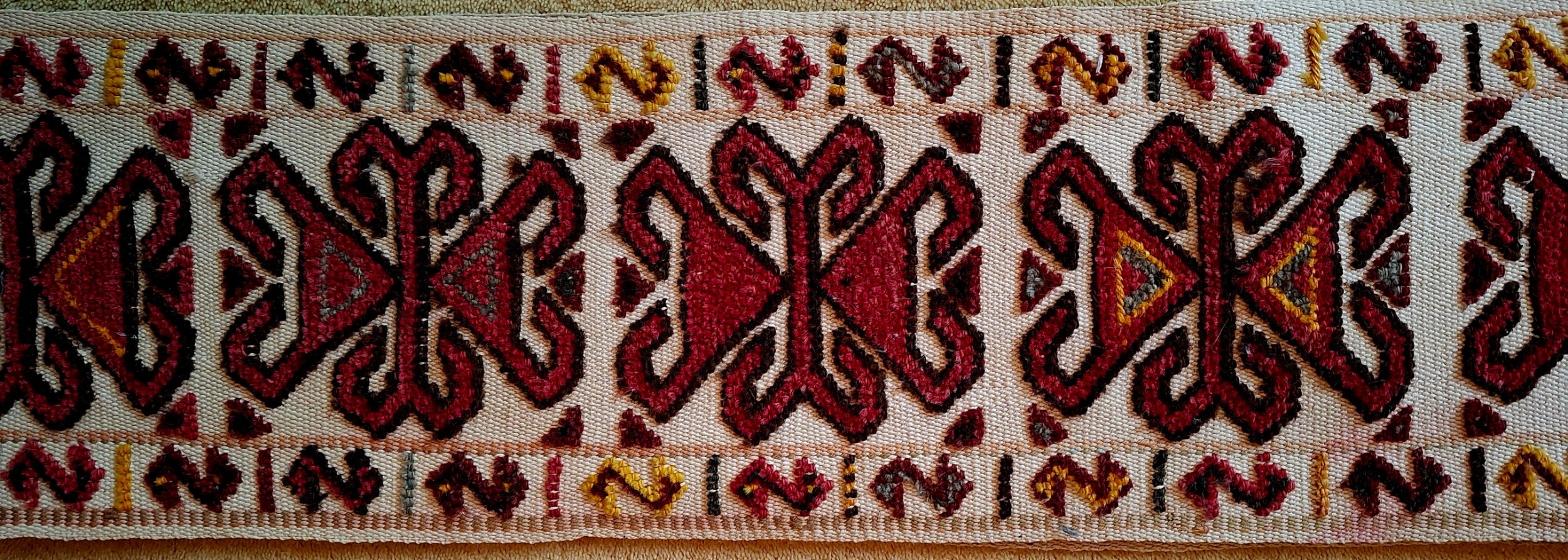
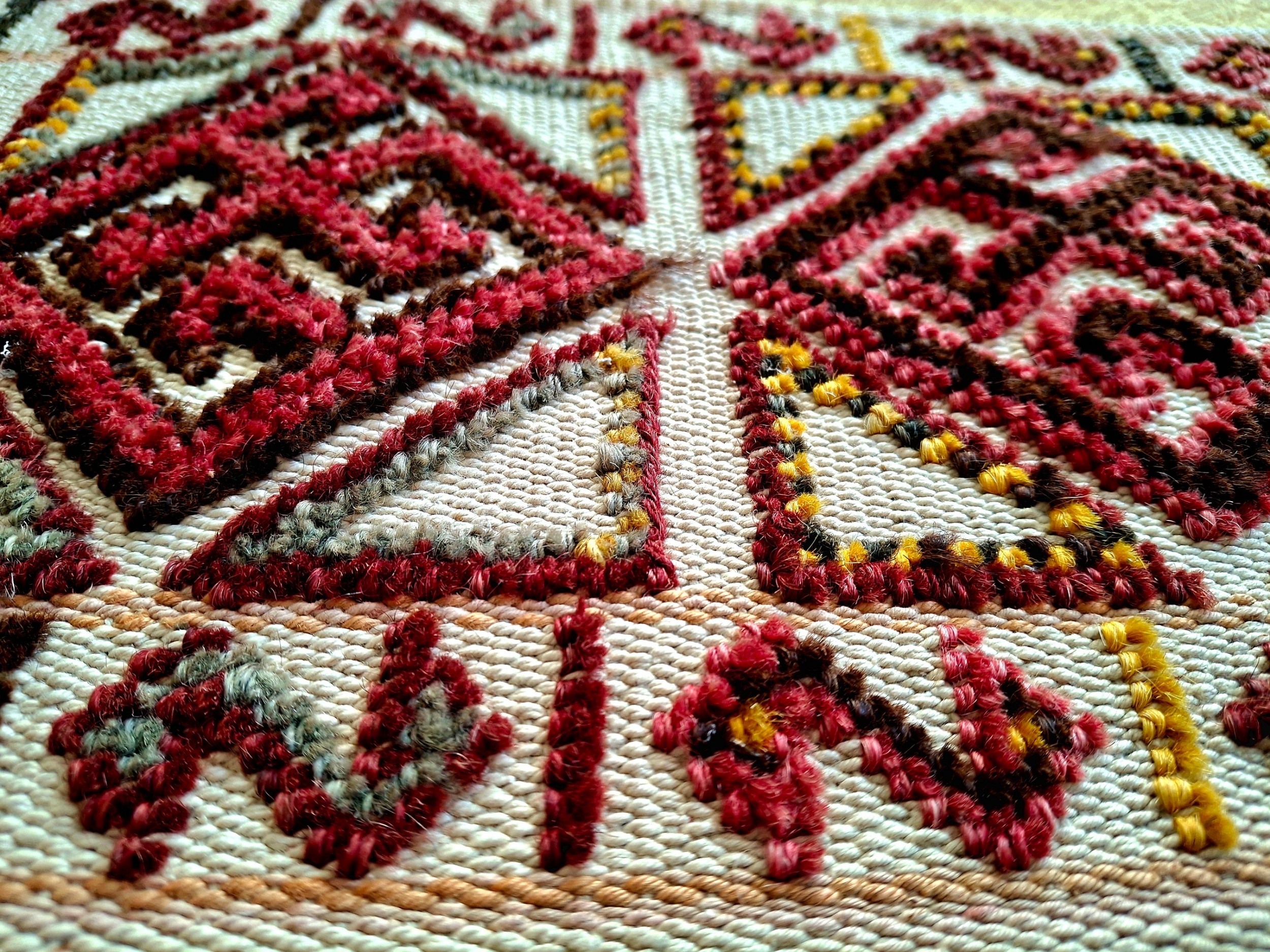
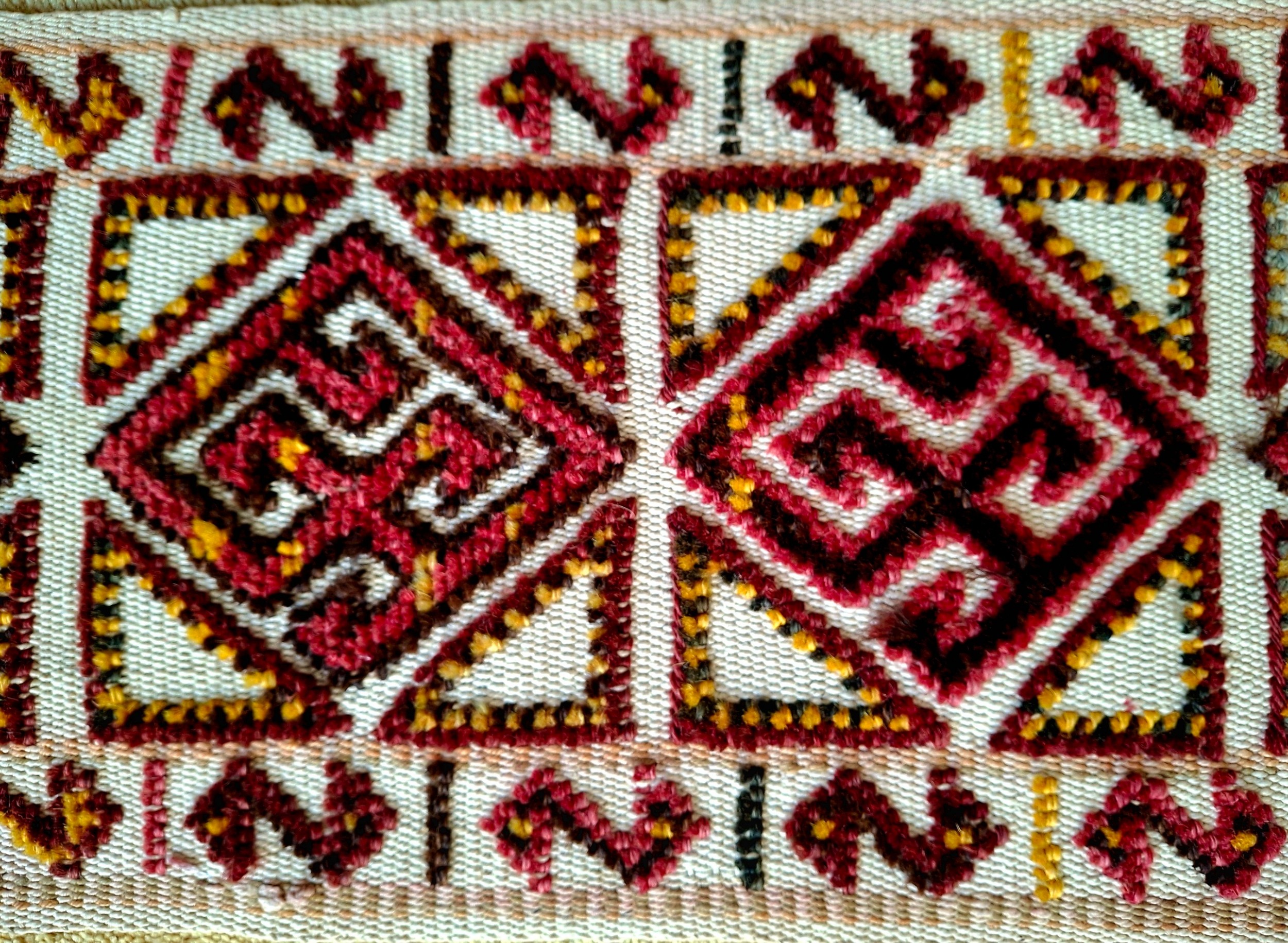
Hand knotted with geometric designs on a plain cotton white warp-faced (plain flat-weave ground).
The vibrant colors used are primarily magenta and brown, with grey and golden yellow highlights, reflecting the country's rich cultural heritage, most likely Karakalpak material culture.
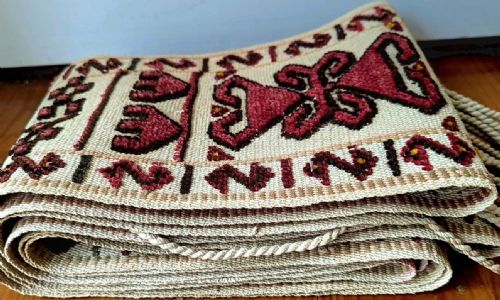
Condition: Hand-spun wool in excellent condition with original intact tassles (on one end).
Dimensions:
Length = 500cm (approx 15 ft)
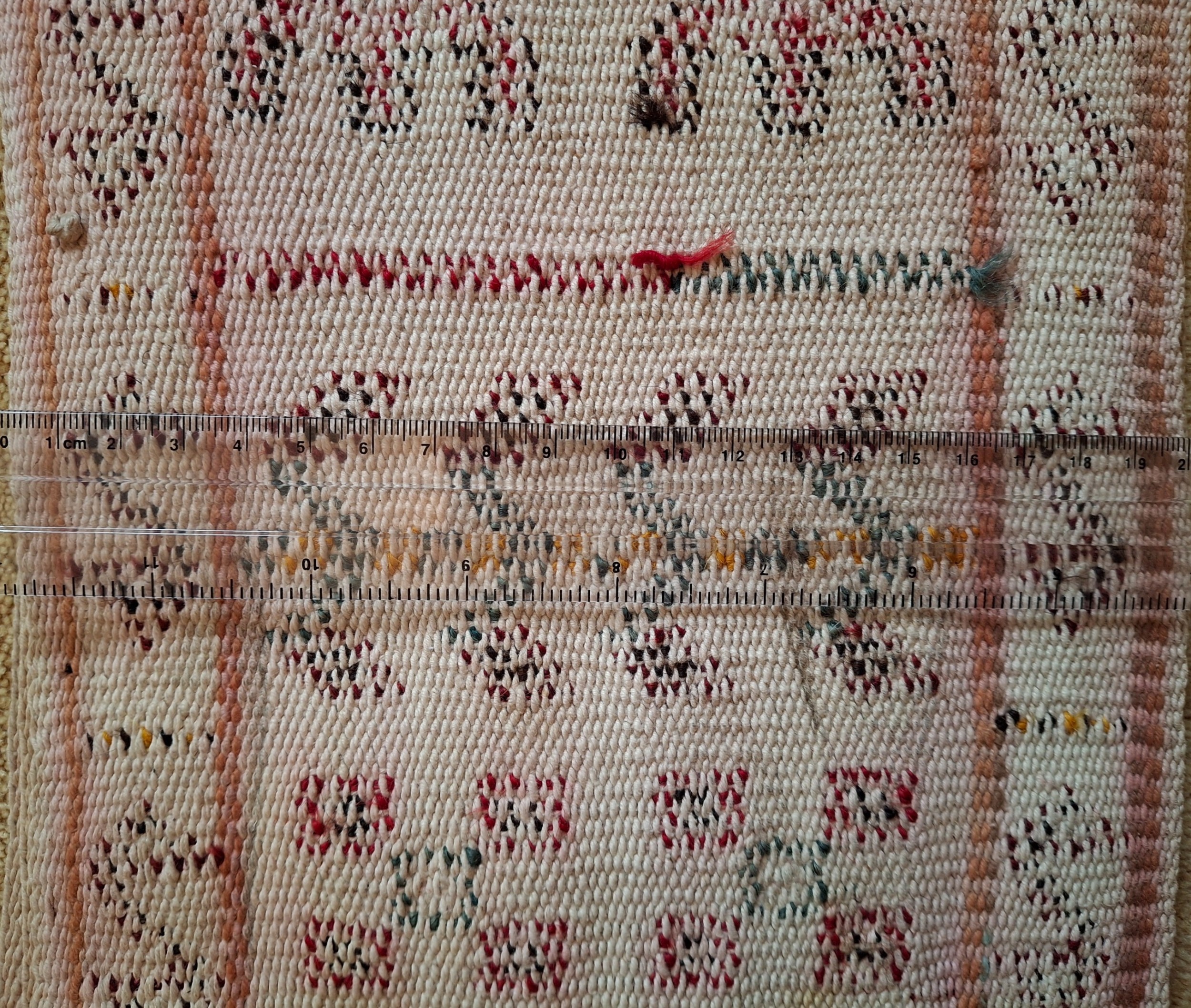
Width = 20cm
The Karakalpaks made a range of decorative tent bands to join, support and decorate the wooden frame of the yurt. The largest (and widest) was the qizil basqur, which constrained the base of the yurt roof. This was made from a mixture of natural goat hair and red sheep's wool. The smallest bands were the short lengths of dizbe, used to tie the qanats and other wooden components of the yurt together. In between were other bands, such as the ishki beldew, and the numerous qizil qur and aq qur, which together fasten the felt roof parts to the frame. The qizil qur holds down the front roof section while the aq qur hold down the rear roof section.
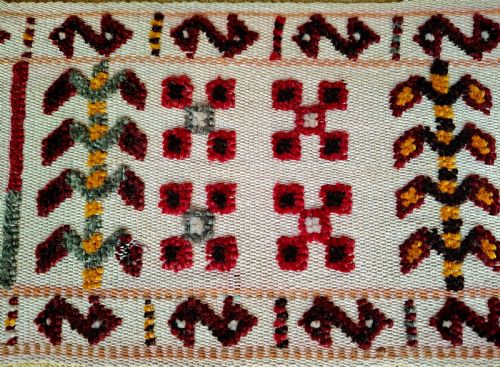
The bands were decorated with a knotted pile that only partially covered the cotton ground of the tent band. The main colours used were magenta, brown, beige, and salmon pink, while secondary colours included black, blue, pistachio green, and golden yellow. In combination technique the knot cannot be tied across adjacent warps, as with a normal all-piled carpet. This is because the tight packing of the warps does not leave sufficient space for normal knotting. Instead the weaver uses just half of the available warps, forming the shed and then tying a knot on only the raised set of warps. The knot is therefore tied across a warp and its neighbour but one. This can only be done using a symmetric knot. After inserting the cotton weft the shed is changed and knots can be tied on the other set of warps. The two rows of knots are offset by one warp. In this technique the spare warps must float behind the knot, concealing its underneath from view. As a consequence, combination technique tent bands appear to have a plain cotton back.
Dragoncharger Antiques has dated this Antique Turkoman Tent Band to the 1920s.
Specialising in early japanese cloisonne, edo enamel artisan period.
You can view the stock and full dealer information on the Dragoncharger Antiques Profile Page
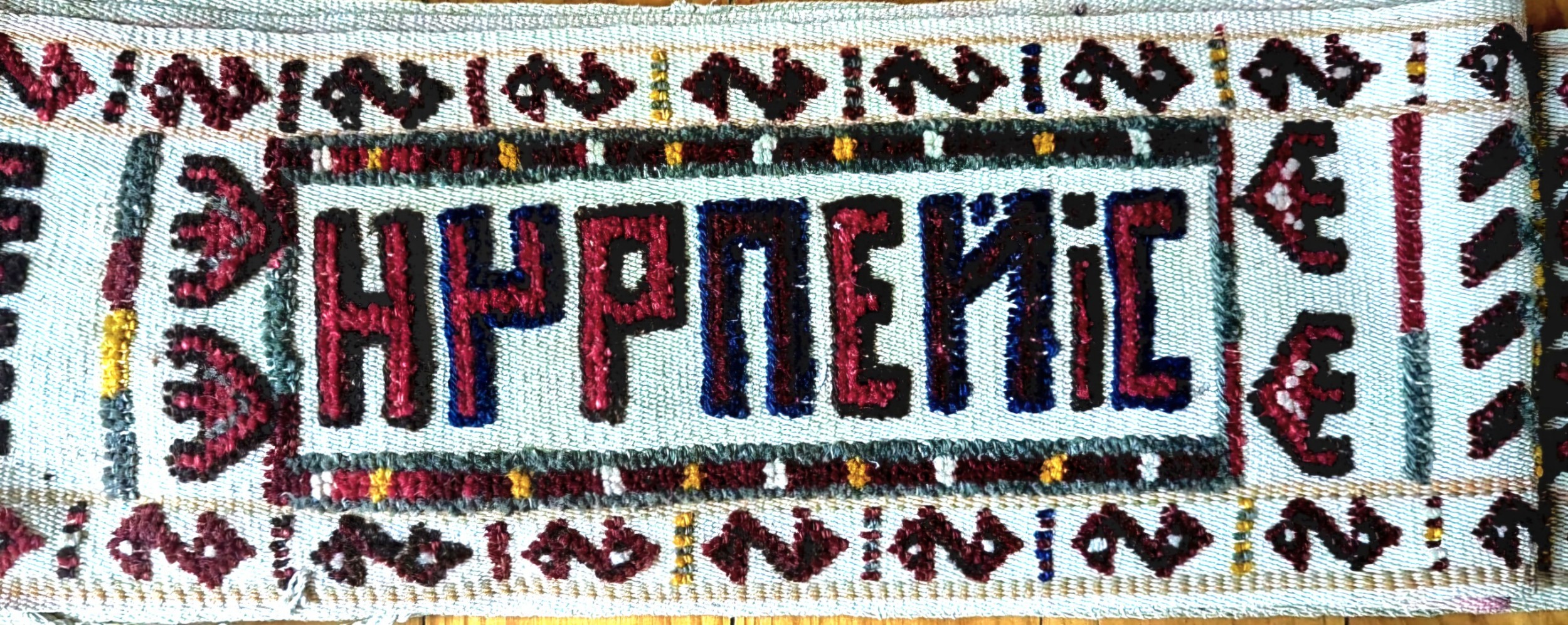
Turkoman Tent Band. Circa 1920.