
Fold Over Top Console Table
A fold over top console table doubles its surface when guests arrive, moving easily from a slim wall console to a full gaming or tea setup.
Fold Over Top Console Table
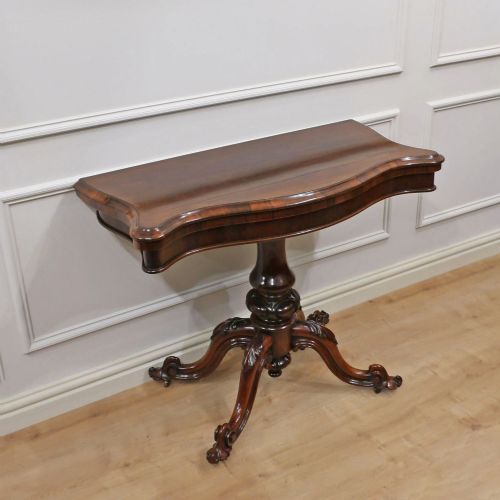
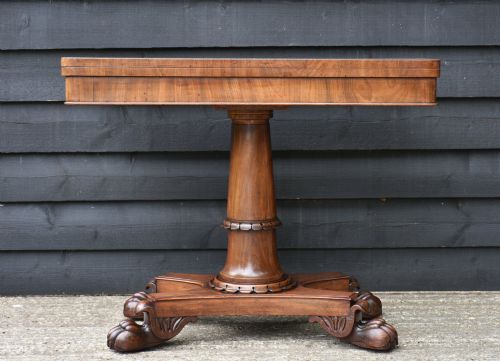
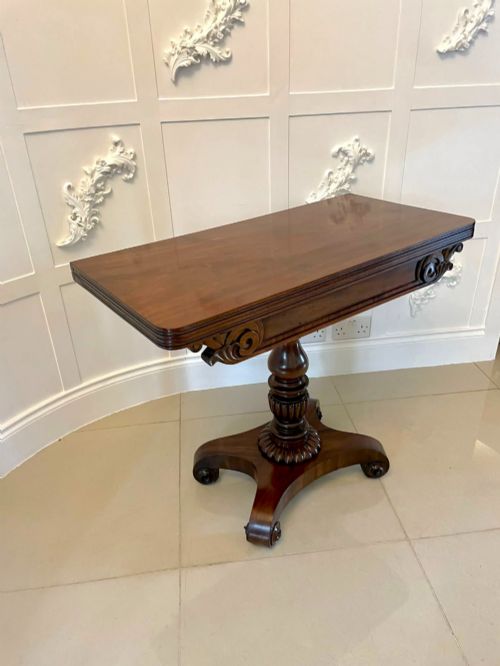
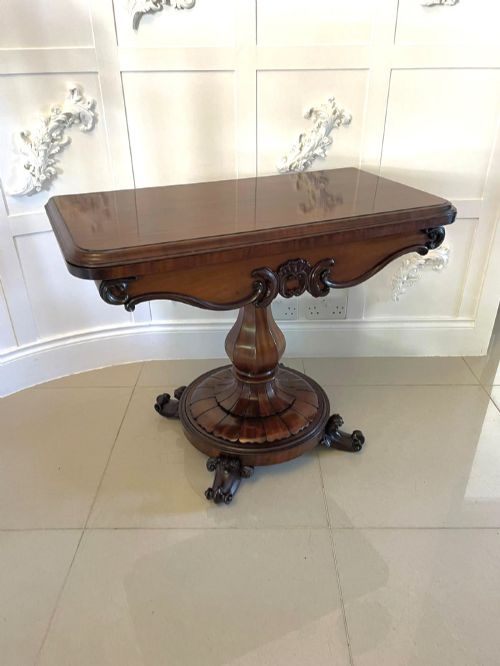
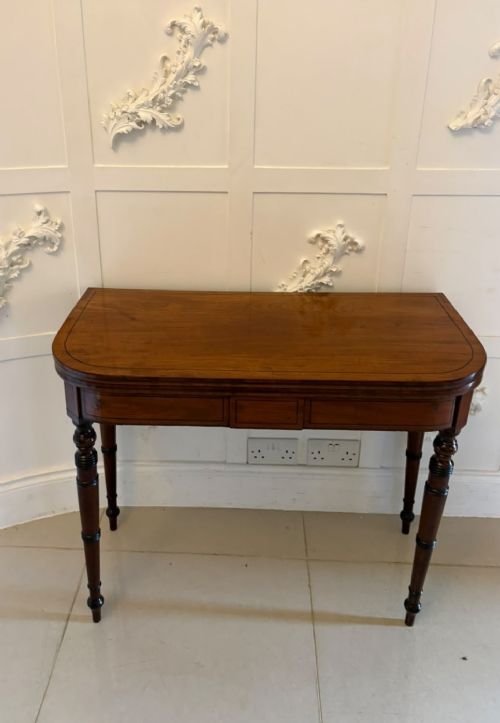
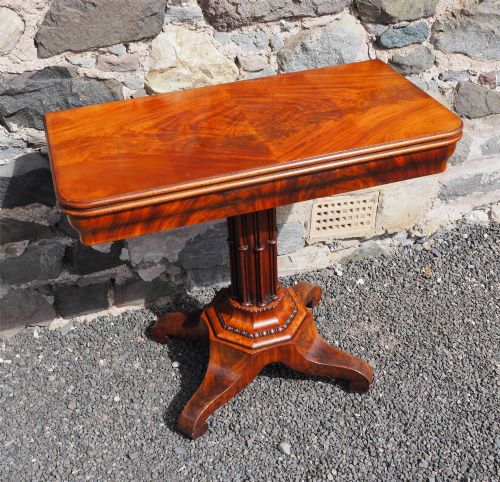
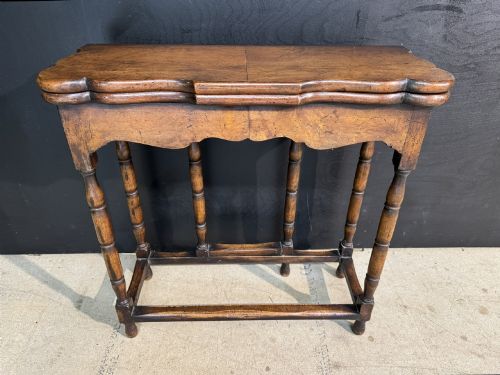
A fold over top console table sits against a wall until the hinged leaf swings open to reveal a baize-lined surface for cards, tea, or general use. These versatile pieces cross several periods, with Georgian, Regency, and Victorian examples forming the backbone of what you find here.
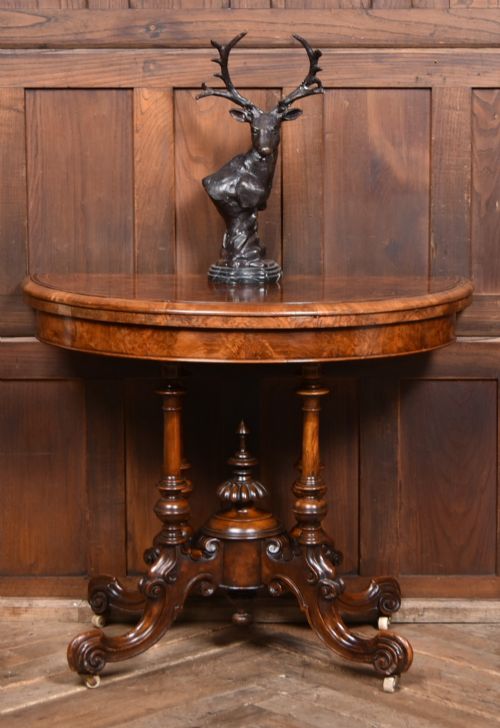
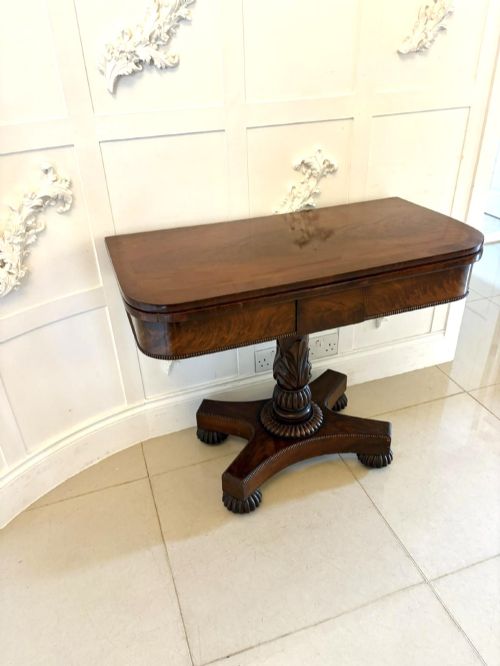
The form appears in various guises across the listings, frequently serving as a card table, tea table, or games table. You meet them most often in rich timbers with clever pivoting mechanisms that support the opened leaf securely.
Materials and construction
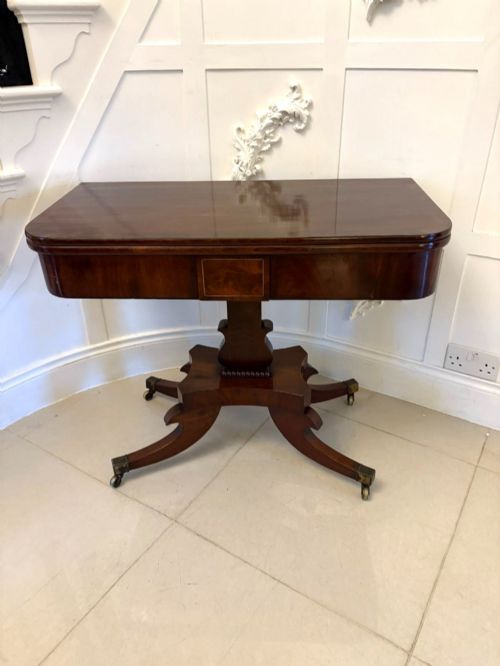
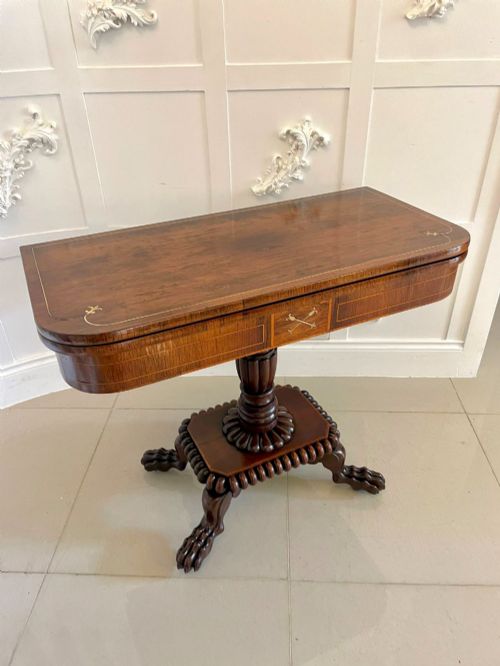
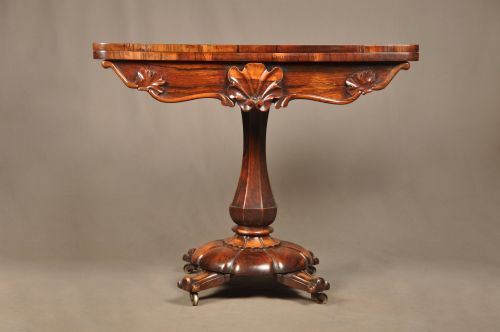
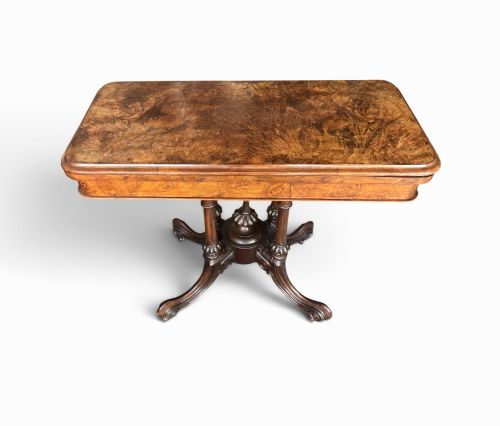
Cabinet makers built these pieces using solid timbers and decorative veneers like mahogany, rosewood, and walnut, often accenting them with boxwood, satinwood, and brass inlay. Figured mahogany and burr walnut supply the striking grain patterns seen across the tops.
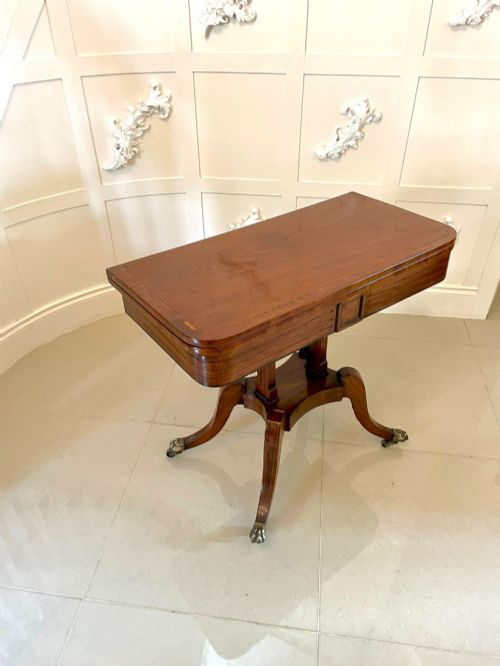
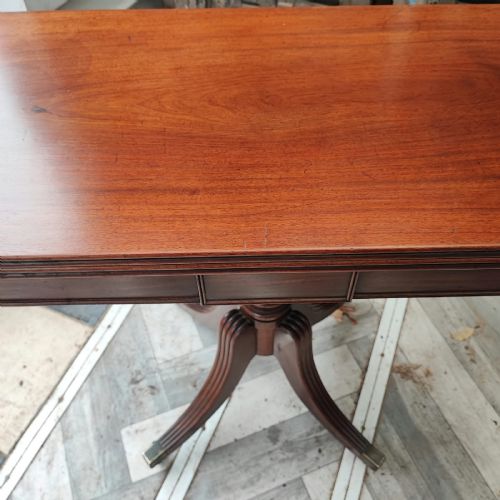
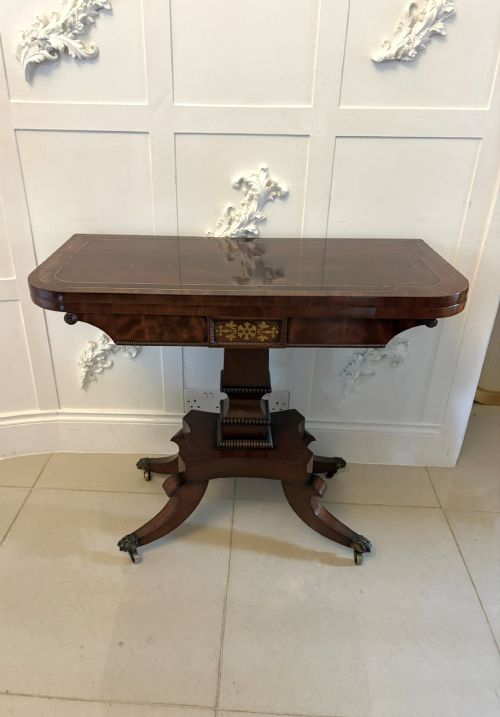
Structural integrity relies on sturdy pedestals, sabre legs, or tapering supports designed to swing out and bear the weight of the unfolded leaf. Brass hinges and castors complete the functional elements beneath the polished wood.
Mahogany and rosewood dominate the listings, frequently paired with brass inlay across Georgian and Regency eras.
What sets examples apart
The choice of timber grain defines the visual impact, with deeply figured flame mahogany and richly contrasted rosewood elevating certain pieces above plain stock. Subtle additions like satinwood crossbanding and precise brass inlay show the hand of a more accomplished workshop.
Proportion and stability in the pivoting mechanism dictate daily usability. A heavier, well-balanced pedestal base prevents wobbling when the top opens, maintaining the elegance of the silhouette in either position.
Gillows
The Fold Over Top Console Table Glossary
- Crossbanding
- A strip of veneer laid perpendicular to the grain of the main surface to create a decorative border. This technique frames the top of the table neatly.
- Demi-lune
- A half-moon shape characteristic of tables designed to hug the wall when closed. The straight edge sits flush against the plaster.
- Baize
- A woolen felt fabric traditionally used to line the playing surface of card and games tables. It provides a soft texture for handling cards.
- Turnover top
- A hinged wooden leaf that rotates and folds flat onto a matching surface to double the table area. The mechanism requires precise joinery to sit level.
Fold Over Top Console Table: Frequently Asked Questions
What were these tables originally used for?
Georgian and Regency households used these versatile items as side consoles during the day to display ornaments against a wall. When evening arrived, servants swung the tops open for tea service or card games.
Their dual nature made them essential furniture for entertaining in smaller drawing rooms where space was at a premium. They saved floor space while offering a proper surface for social gatherings.
How do I tell a Regency table from a Victorian one?
Regency examples often feature crisp brass inlay, rosewood veneers, and sabre legs or pillar-and-scroll pedestals reflecting classical Greek and Roman influences. The lines remain sharp and architectural with restrained decoration.
Victorian pieces lean towards heavier proportions, utilising figured walnut and more robust carving on the bases. The woodwork feels denser, and the turnings on pedestal columns tend to be bolder and more ornate.
Can I use a fold over console table everyday?
These tables handle daily use well as long as you treat the polished surfaces with care and avoid placing hot cups directly on the antique veneer. Keeping them away from direct sunlight and radiators prevents the timber from drying out and warping.
Use coasters and placemats to protect the finish, and occasionally wax the timber to nourish the grain. The folding mechanism remains sturdy if you support the weight properly during conversion.