
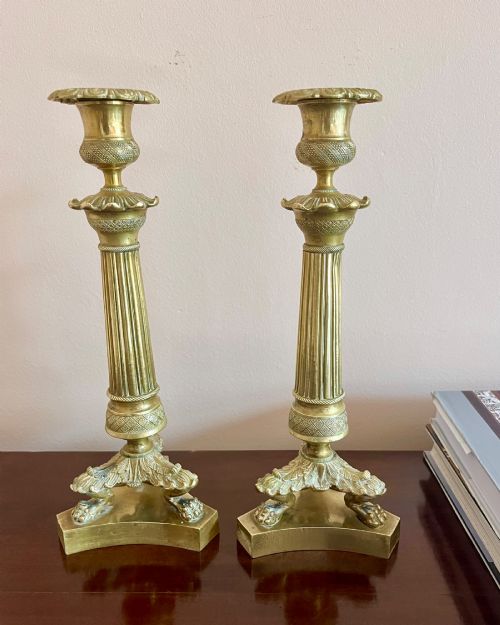
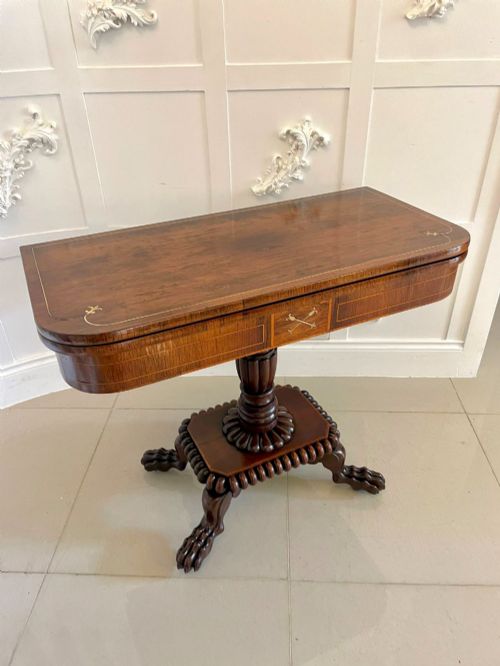
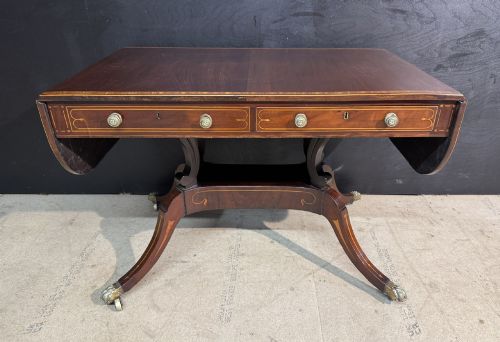
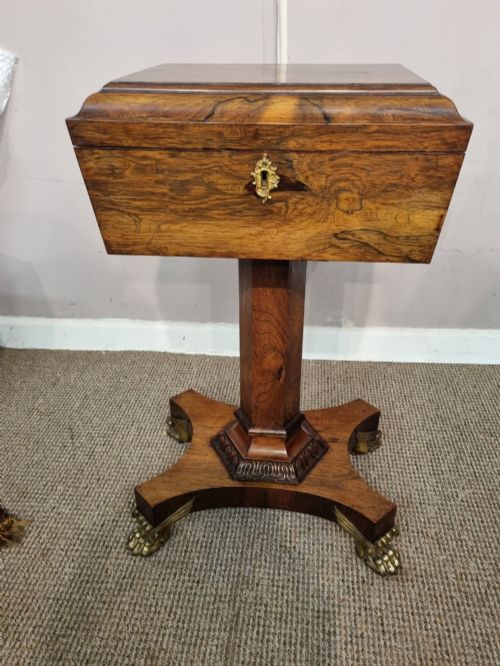
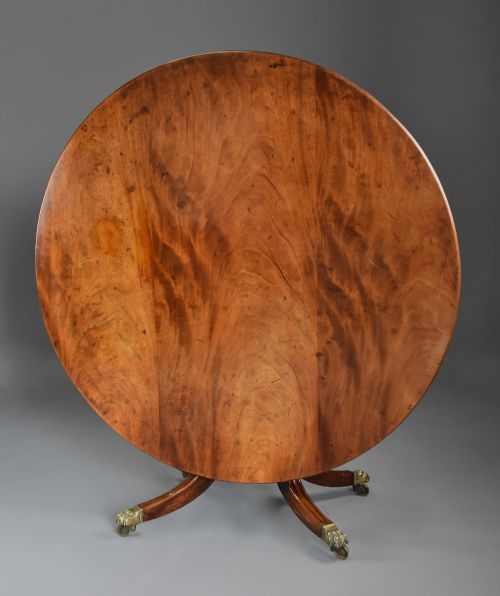
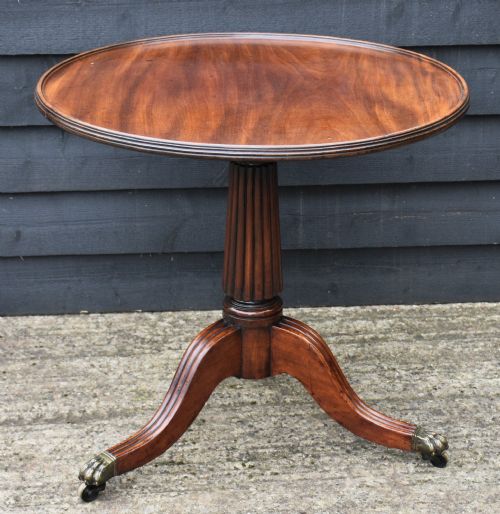
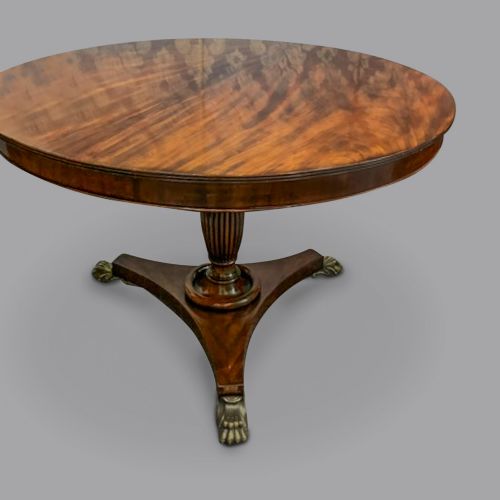
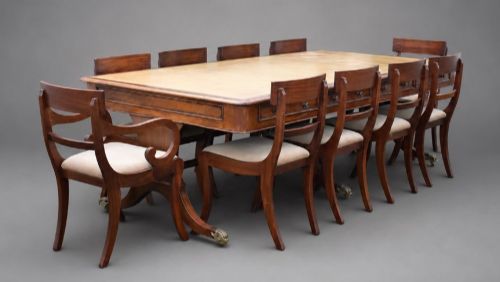
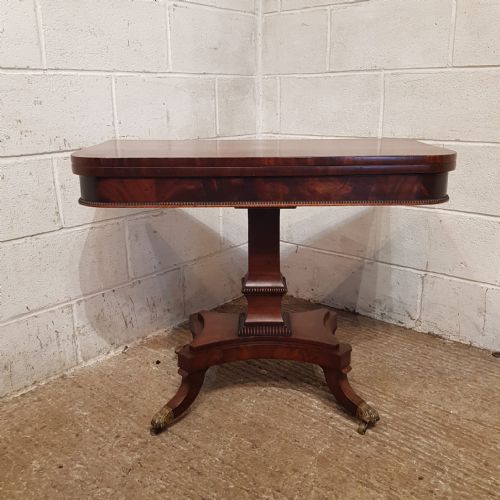
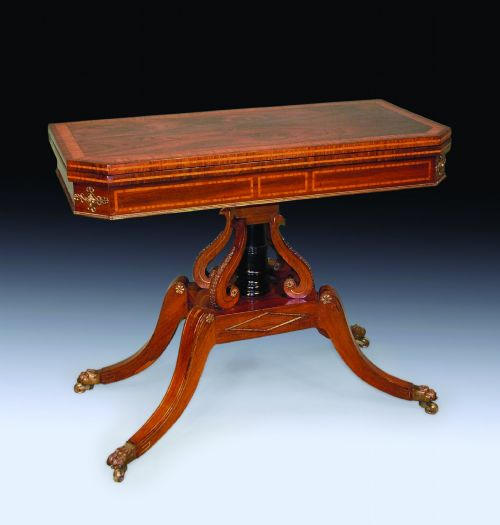
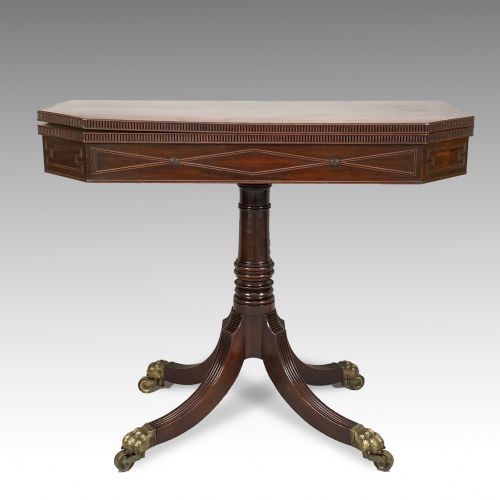


Regency Brass Paw Feet Table
A regency brass paw feet table brings together rich timbers and cast metal mounts to anchor a room.

Regency Brass Paw Feet Table
A regency brass paw feet table typically takes the form of a card table, sofa table, or centre table originating from the Regency, Georgian, and 19th Century periods.
The pieces appearing here lean heavily toward mahogany and rosewood dining, breakfast, and occasional forms shaped by Regency, George III, and Empire styles.
Buyers seeking this phrase encounter sturdy pedestal bases and end supports that ground heavy timber tops with cast metal details.
Materials and construction
Cabinet makers utilised dense native and exotic timbers such as mahogany, rosewood, satinwood, and pollard oak, often pairing them with contrasting wood inlay and ebonised sections.
Cast brass mounts, decorative stringing, and heavy paw feet anchor the legs, while leather surfaces appear on specific writing and game configurations.
Listings span the Regency, Georgian, and 19th Century eras, uniting mahogany, rosewood, and satinwood with cast brass hardware.
Distinctions in craftsmanship
The grade of a piece rests upon the crispness of its brass casting and the depth of figure in the mahogany or rosewood veneer.
Master cabinet work shows in the precise integration of wood inlay, smooth action in folding card tables, and the solid weight of the pedestal supports.
Gillows·John McLean
The Regency Brass Paw Feet Table Glossary
- Card table
- A folding table designed for evening games, featuring a hinged top that opens to a baize or polished wood surface.
- Sofa table
- A rectangular occasional table traditionally placed in front of a sofa, equipped with drop leaves and twin end pillars.
- Crossbanding
- A strip of veneer applied to the border of a table top running perpendicular to the grain of the central panel.
- Teapoy
- A small stand or box on a pillar base designed to hold tea canisters and mixing bowls in the drawing room.
- Ebonised wood
- Timber treated with a dark stain or finish to imitate ebony, popular for contrasting lighter brass mounts.
Regency Brass Paw Feet Table: Frequently Asked Questions
What rooms suit a regency brass paw feet table?
These pieces fit naturally into drawing rooms, libraries, and dining spaces where substantial timber furniture provides a formal centrepiece.
Their varied forms allow a card table to sit against a wall or a larger centre table to command the middle of a room.
How do I identify a genuine period piece?
Look for traditional cabinet construction methods, timber grain that matches the listed period, and patination accumulated through age.
Cast brass elements and hand-cut joinery offer further clues to the manufacturing date and origin.
How should I care for polished mahogany and rosewood?
Keep the timber away from direct heat sources and strong sunlight to prevent the polish and veneers from drying out.
Regular dusting with a dry cloth maintains the finish without needing heavy chemical polishes.