

Brass Mount Mahogany Table
A brass mount mahogany table brings tactile warmth and classical discipline into a room through rich timber and cast metal detailing.

Brass Mount Mahogany Table
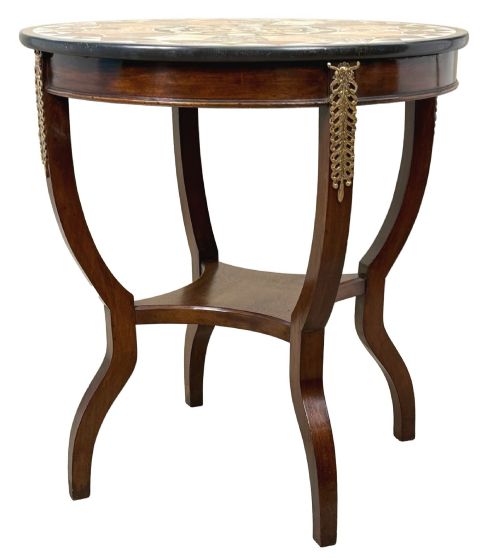
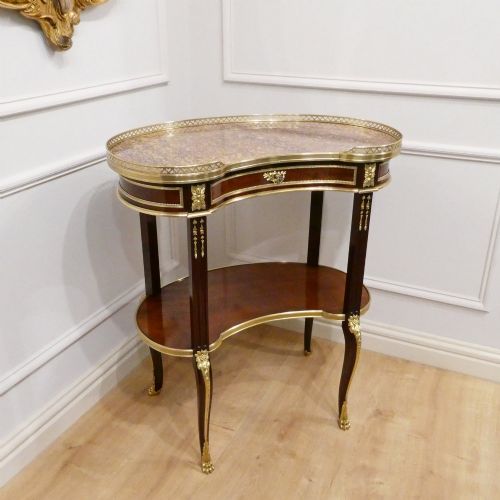
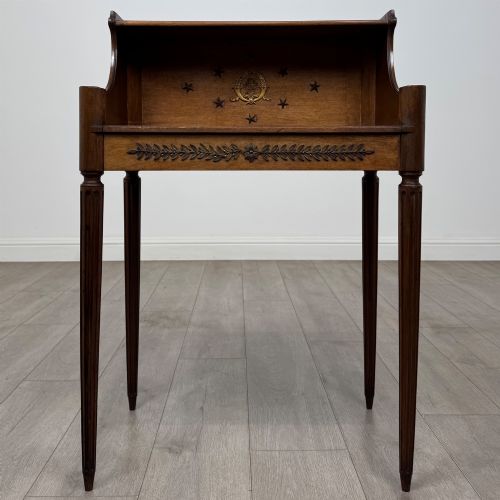
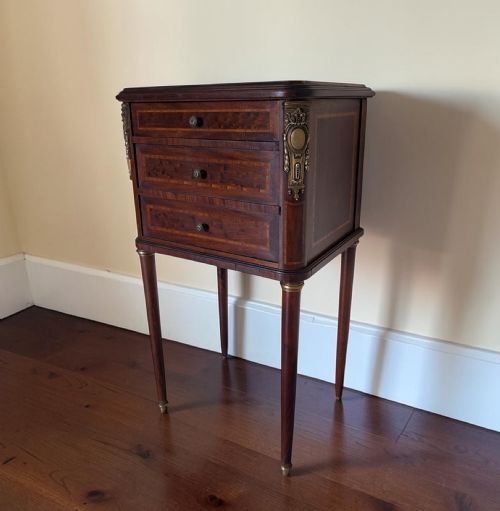
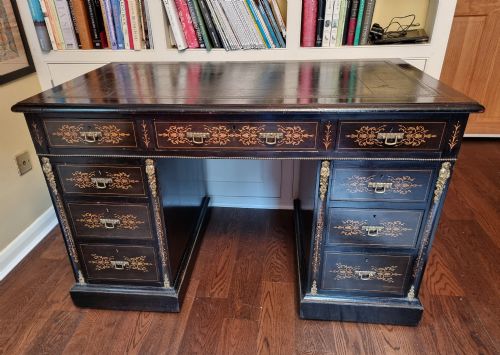
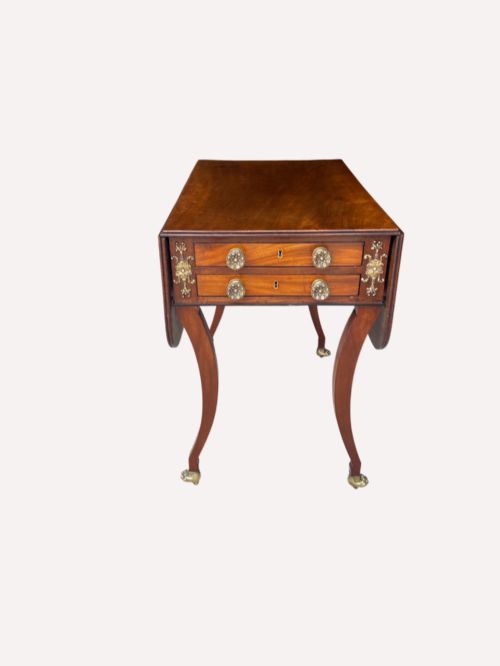
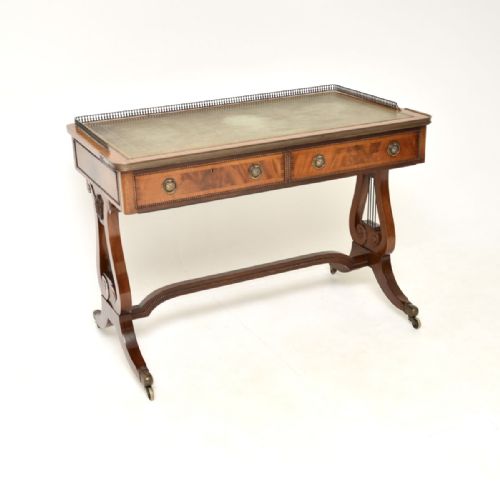
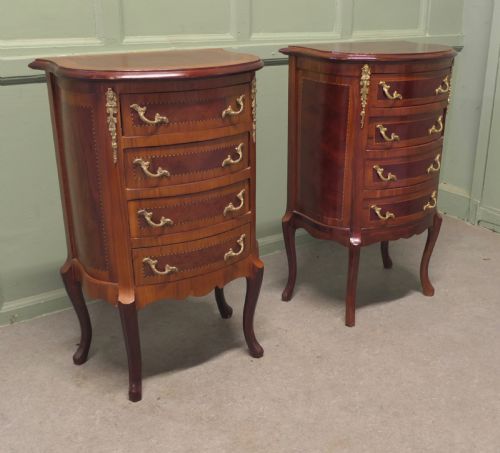
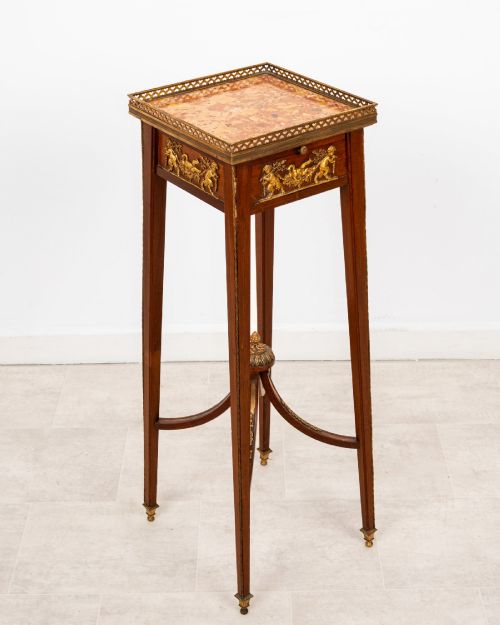
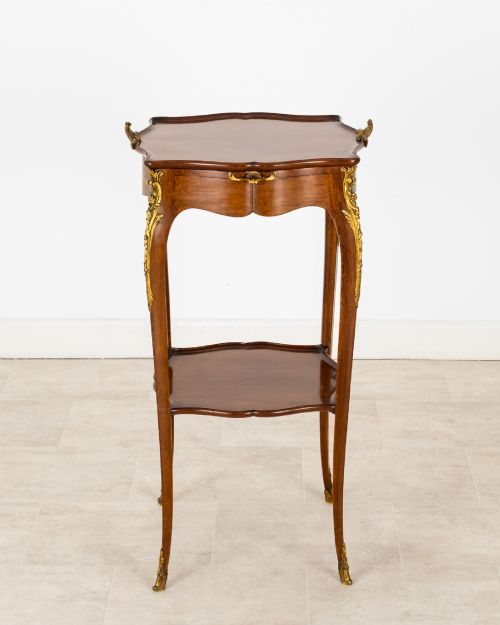
A brass mount mahogany table combines dark, figured timber with metallic enrichment, appearing in forms ranging from side tables and desks to card tables and console tables. These pieces span the Georgian, Regency, and Victorian eras, alongside later revival pieces reflecting French Louis XVI and Empire aesthetics.
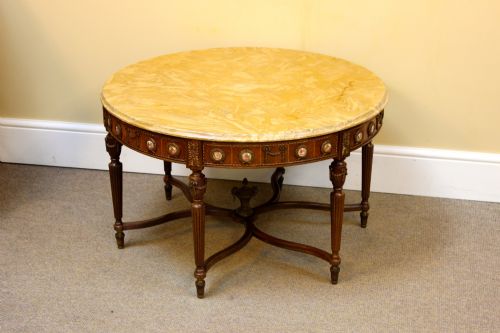
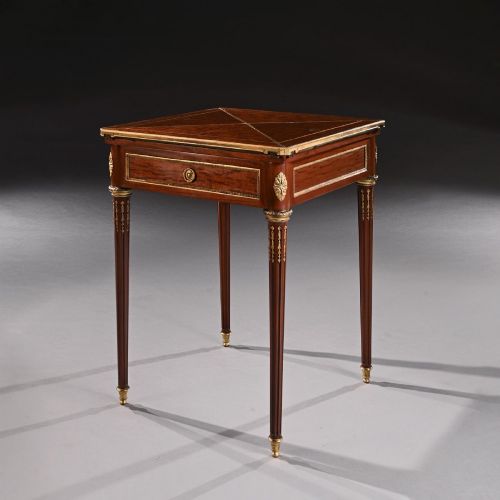
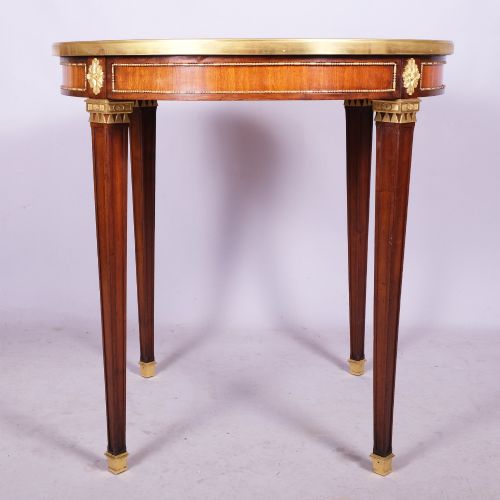
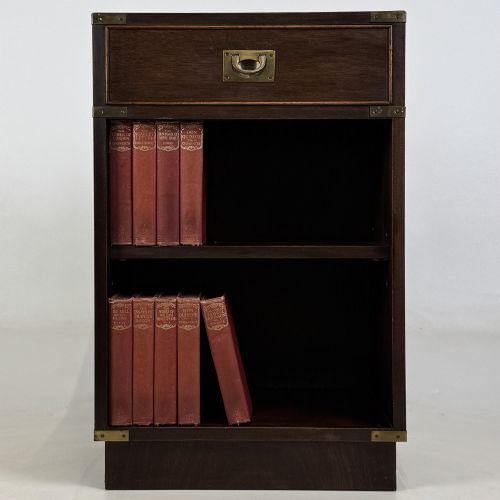
The most frequent examples on this page are French and English side tables, occasional tables, and writing desks dating from the nineteenth century. Buyers also encounter specialised forms such as marble-topped bouillotte tables, envelope card tables, and campaign furniture fitted with brass handles and corners.
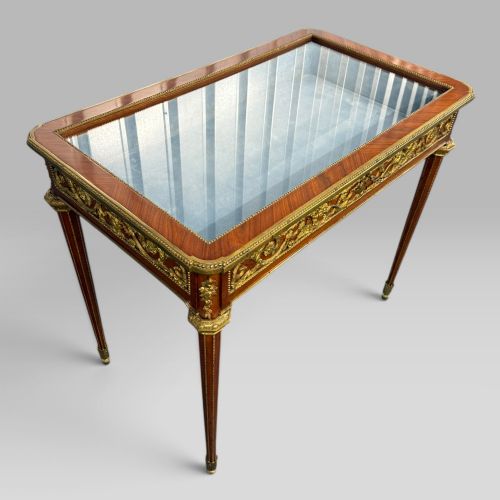
Origins stretch across English workshops and French cabinet-makers, employing styles that include French Neoclassical, Louis XVI Revival, and Regency. Console tables and lamp tables frequently incorporate inset marble tops or glass display sections alongside their metallic mounts.
Materials and construction
Makers constructed these pieces primarily using solid and veneered mahogany, selected for deep grain patterns, combined with cast brass, ormolu, and gilded bronze mounts. Secondary elements incorporate white or red specimen marble tops, leather writing surfaces, and glass panels.
Joinery techniques balance structural rigidity with decorative metalwork, utilising brass banding, inlay, and cast mounts secured to the timber frame. Campaign styles integrate flush brass corners and recessed handles for transport durability, while French pieces favor intricate gilt-bronze enrichment applied to curved aprons and legs.
Materials recorded across the inventory include solid mahogany, ormolu, specimen marble, tooled leather, and glass.
Craftsmanship and materials
Quality rests in the crispness of the brass casting and the depth of the mahogany timber figure. Finer examples display finely chased ormolu mounts that fit flush against the wood contours, whereas simpler items rely on stamped, unchased brass strips.
The integration of secondary materials defines the tier of manufacture, distinguishing standard production from pieces bearing marble tops with polished edges or finely tooled leather inserts. Structural integrity in drawer linings and the precision of brass inlay further separate standard workshops from notable makers.
James Shoolbred·Maison Millet·François Linke·Edwards and Roberts·Antoine Lampre·Thomas Jackson·Desbois and Wheeler·Gillows·Schneckenburger·Francis Perigal
The Brass Mount Mahogany Table Glossary
- Ormolu
- Gilded bronze mounts cast and chased by hand to ornament furniture surfaces. This decorative technique originated in France and is common on Empire and Louis XVI style pieces.
- Campaign table
- Portable furniture constructed for military officers, featuring recessed brass handles, corner brackets, and folding elements designed for travel. These items utilise robust mahogany for field durability.
- Bouillotte table
- A small, round occasional table featuring a raised gallery edge around a marble top, frequently equipped with small pull-out candle slides. They gained popularity in France during the eighteenth and nineteenth centuries.
- Bijouterie table
- A display table with a glass top and sides intended for showcasing small precious objects, often lined with velvet. They frequently incorporate delicate brass or gilt-bronze mounts.
- Drop flap
- Hinged table leaves that fold down to save space or lift to extend the surface area. They appear on various occasional and centre tables from the Regency period.
Brass Mount Mahogany Table: Frequently Asked Questions
How were brass mount mahogany tables used?
These tables served diverse domestic functions, acting as writing desks in libraries, card tables for evening entertainment, or serving surfaces in drawing rooms. Console tables stood against walls beneath mirrors, while bouillotte tables held lamps and cards.
Portable campaign variants accommodated travel requirements for officers, and bijouterie tables displayed collections of small valuables under glass.
How do I care for mahogany timber?
Maintain mahogany surfaces by dusting regularly with a soft, dry cloth and avoiding placement near direct heat sources or strong sunlight. Wax polish applied sparingly preserves the natural sheen of the wood without building up heavy residues.
Protect marble tops from acidic spills and lift objects rather than sliding them across the timber or stone surfaces.
How do I distinguish Regency from Victorian pieces?
Regency pieces typically display restrained classical lines influenced by Greek and Roman antiquity, utilising brass inlay, sabre legs, and architectural proportions. Mahogany from this era often exhibits deep figuring and dark patination.
Victorian furniture frequently incorporates heavier carving, varied revival styles such as Louis XVI or Gothic, and more elaborate cast ormolu mounts reflecting industrial manufacturing advances.
What is the difference between brass and ormolu?
Brass is an alloy of copper and zinc, used for structural banding, hinges, handles, and simple stamped mounts across many English and French pieces. It offers a bright metallic tone that darkens naturally over time.
Ormolu consists of gilt bronze, where mercury gilding or gold leaf is applied to a cast bronze base. This technique produces a rich, deep golden lustre characteristic of high-end French furniture.