
Fluted Leg Table
A fluted leg table brings carved vertical channels to dining rooms, libraries, and halls across Victorian, Regency, and Edwardian periods.
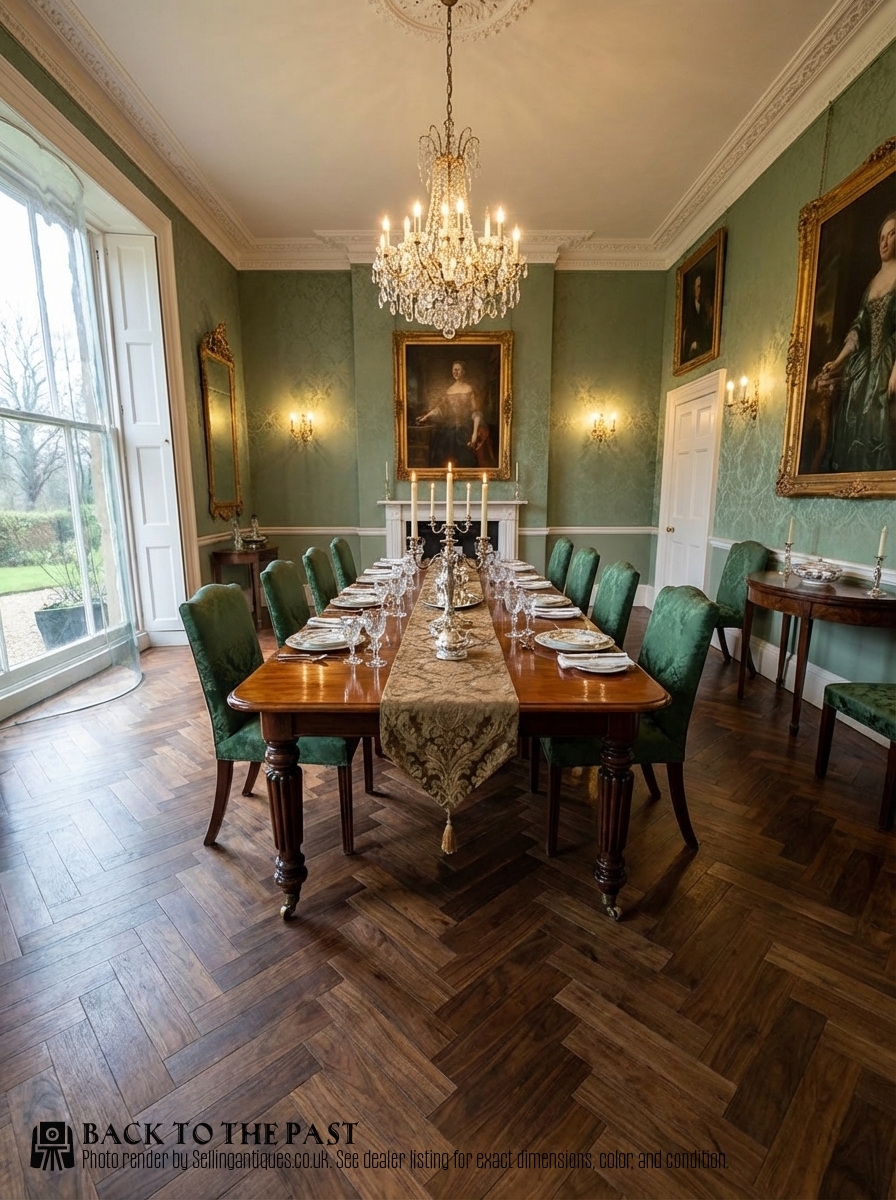
Fluted Leg Table
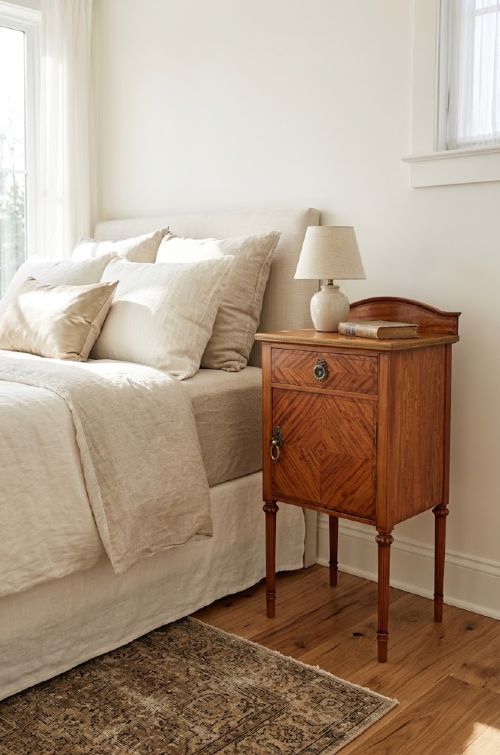
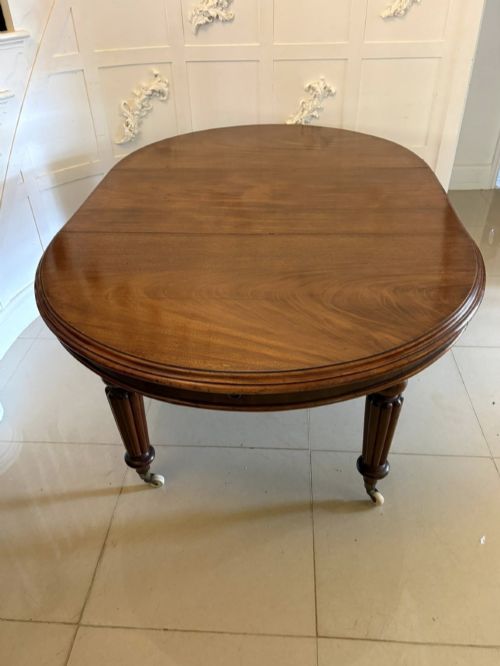
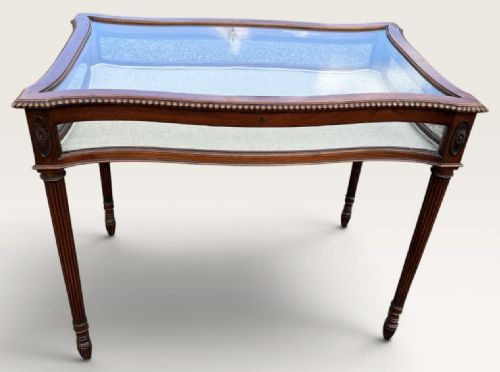
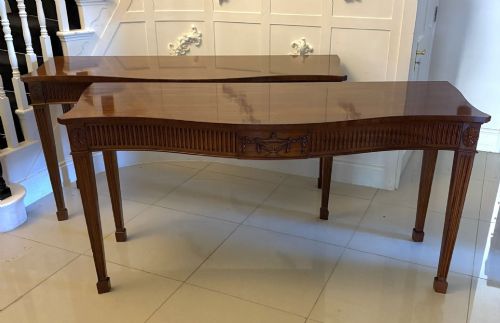
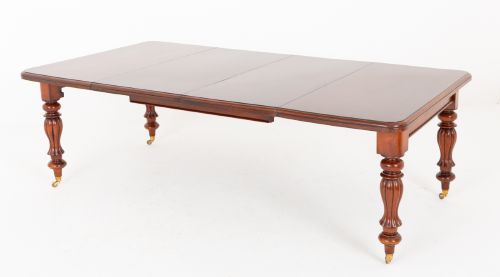
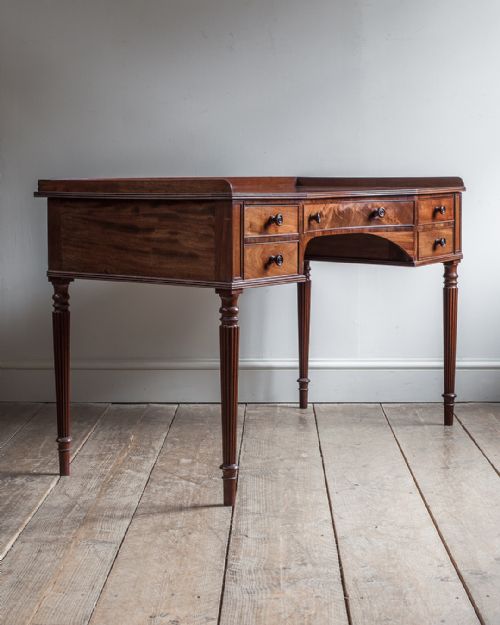
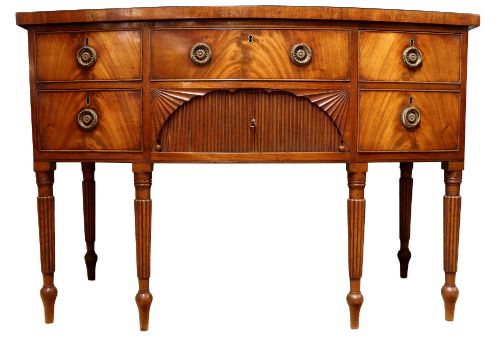
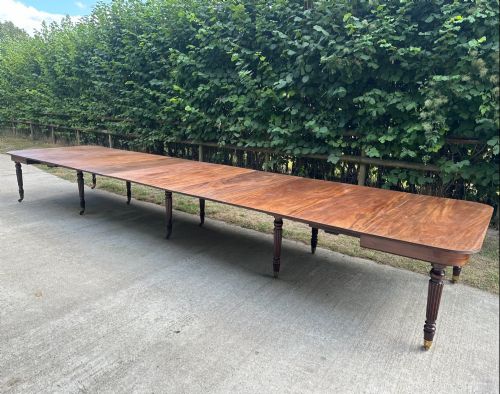
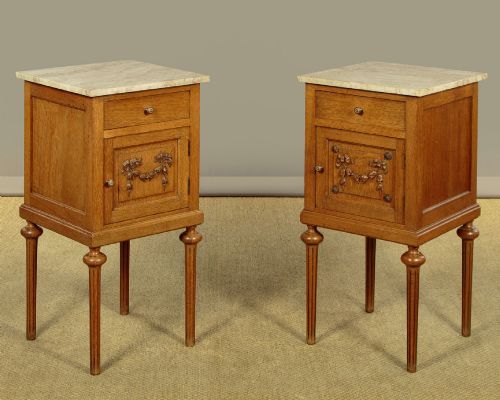
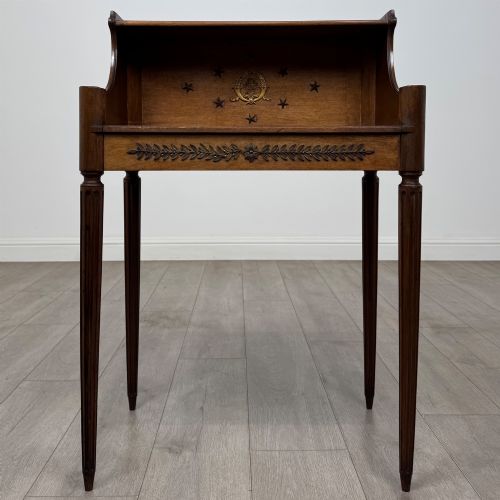
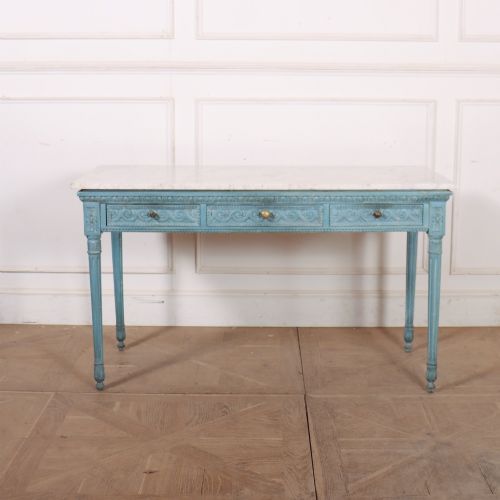
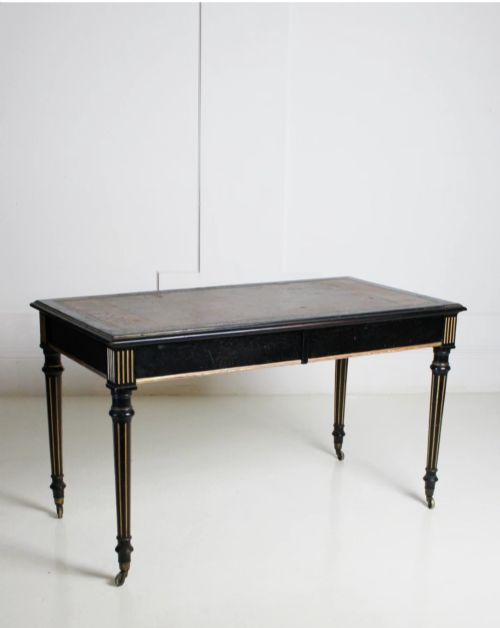
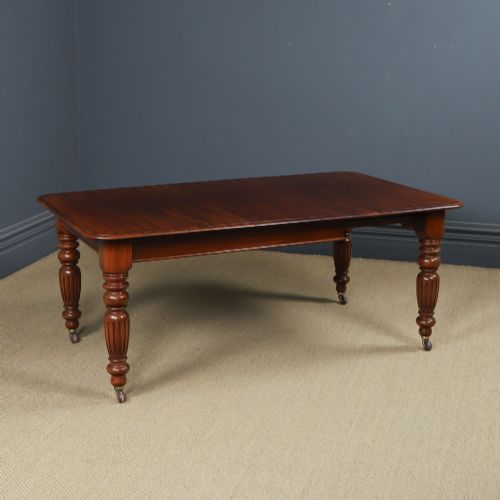
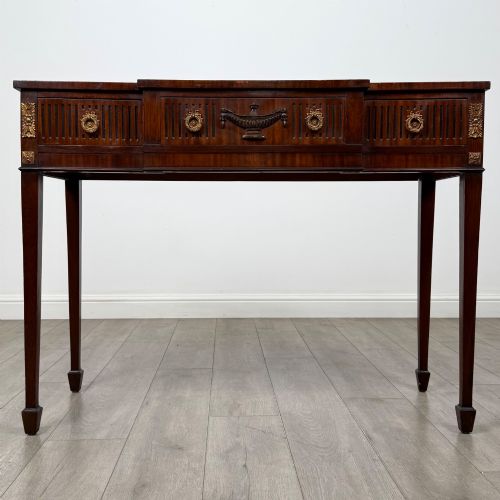
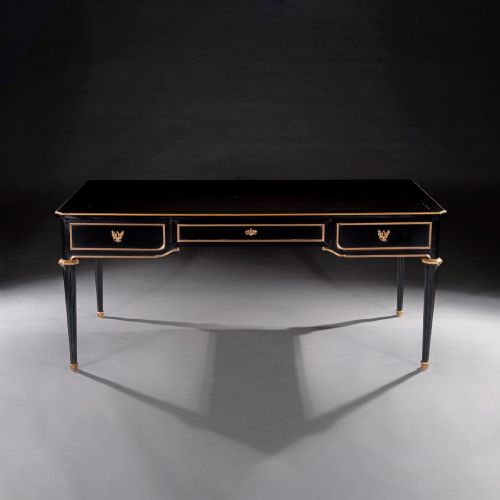
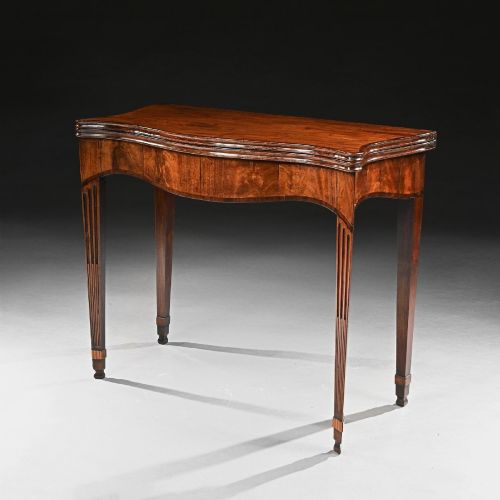
A fluted leg table appears primarily in mahogany or oak across nineteenth-century and early twentieth-century periods, taking the form of dining tables, writing desks, side tables, and console tables. These pieces draw on Regency, Victorian, Edwardian, and Louis XVI styles, where vertical carved channels bring classical order to support frames.
The buyer meets extended dining tables with wind-out mechanisms alongside smaller writing desks, card tables, and occasional pieces resting on castors. Walnut, satinwood, and rosewood join mahogany and oak in the listings, frequently paired with brass hardware or leather inserts.
Distinctions in grade and execution
Quality rests in the crispness of the carved fluting and the selection of timber grain, such as figured mahogany or crossbanded burr yew. Finer examples display detailed capitals, integrated platforms, and branded maker plaques from workshops like Gillows or Frank Giles.
Lesser pieces show softer carving wear and simpler secondary timbers, while top-tier items combine mechanical innovation, such as smooth extending dining leaves, with exceptional surface patination and matching brass hardware.
Fluted Leg Table Retail Price Guide 2026
Typical asking prices for fluted leg table among the pieces listed under this phrase on Sellingantiques today, from the lower quarter to the upper quarter. They describe what is for sale here now, not the wider market.
The inventory spans Georgian origins, Regency elegance, Victorian expansion, and Edwardian refinement.
Gillows·Gregory and Co·François Linke·Frank Giles
The Fluted Leg Table Glossary
- Flute
- A shallow vertical groove carved into a column or furniture leg. Multiple flutes run parallel down the shaft to create classical architectural enrichment.
- Capitals
- The uppermost member of a column or leg, often carved with acanthus leaves or architectural motifs. They sit immediately beneath the table frame.
- Crossbanding
- A border strip of veneer laid around the edge of a table top with the grain running perpendicular to the centre. It frames the primary timber.
- Ormolu
- Gilt bronze mounts applied to furniture edges and legs during the eighteenth and nineteenth centuries. They provide decorative contrast against dark woods.
- Wind out
- An extending dining mechanism operated by a handle that separates the leaves to insert extra sections. It allows large tables to alter in length.
Fluted Leg Table: Frequently Asked Questions
How do I date a fluted leg table?
Dating relies on timber selection, secondary woods, and stylistic cues such as Regency brass inlay or Victorian wind-out mechanisms. Periods range from eighteenth-century pieces through to Edwardian reproductions.
Changes in handle design, fixing screws, and edge moulding further help narrow the decade of manufacture alongside documented maker stamps.
Are these tables suitable for daily dining?
Extending dining variants in mahogany and oak provide sturdy surfaces for daily meals and seat multiple guests when expanded. Many include original castors for easier positioning.
Protecting polished timber tops with pads prevents heat marks and surface scratches during regular household use.
What rooms suit a console table with fluted legs?
Console and side tables fit narrow hallways, drawing rooms, and dining spaces as serving surfaces or display areas. Their shallow depth preserves floor space.
Marble-topped or gilded examples work well in reception rooms, while mahogany writing desks suit home studies.
How do I maintain leather writing inserts?
Leather top writing tables require occasional treatment with specialised leather balms to prevent drying and cracking. Avoid abrasive cleaners and excessive moisture.
Keep wooden surrounds polished with traditional wax to preserve the natural lustre of the mahogany or walnut grain.