
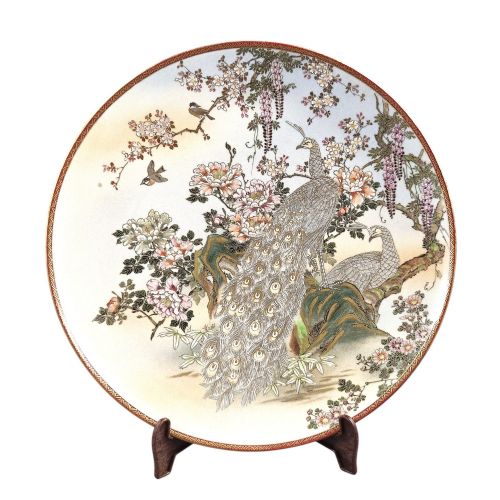


Floral Enamel Plates
These floral enamel plates bring together centuries of skilled metalwork and porcelain painting, offering striking decorative subjects for any room.
Floral Enamel Plates
When searching for floral enamel plates, buyers encounter a diverse selection ranging from Chinese export porcelain to Japanese cloisonne chargers and trays. These pieces frequently feature hand-painted or wire-inlaid botanical motifs, birds, and traditional landscapes spanning the eighteenth century to the early twentieth century.
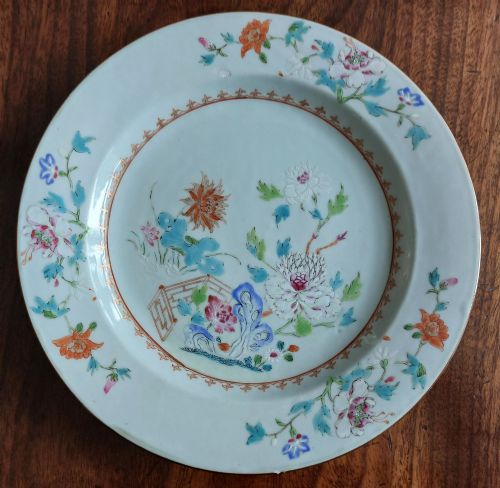
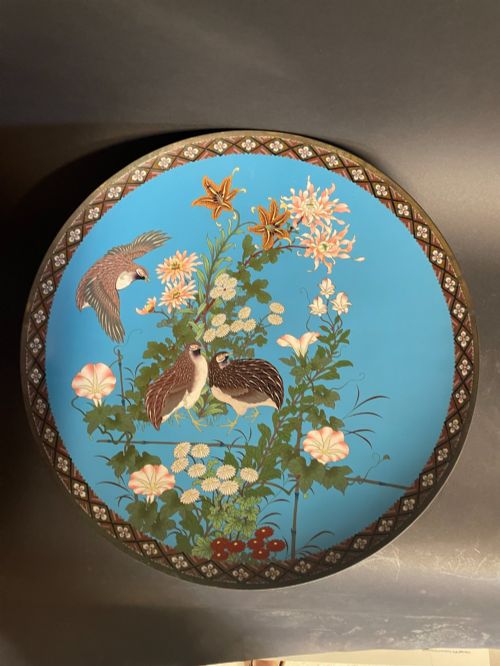
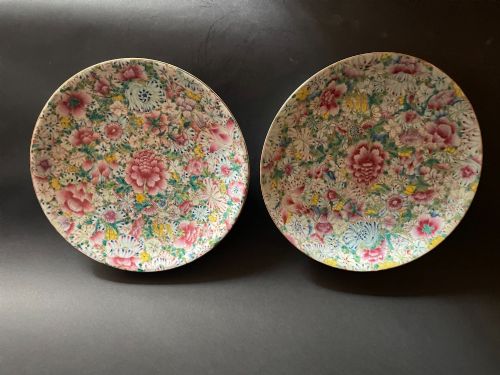
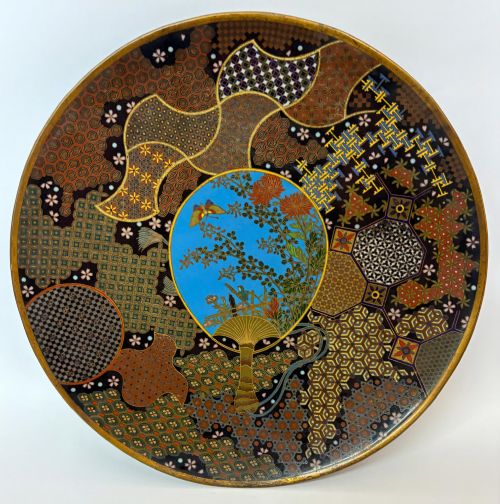
The most common examples on this page are Japanese cloisonne dishes and chargers from the Meiji period, alongside Chinese Famille Rose porcelain plates. Forms vary from medium plates and octagonal trays to large decorative chargers intended for display.
Earlier pieces include eighteenth-century Qianlong period porcelain and nineteenth-century earthenwares, while utilitarian items such as door push plates also appear among the decorative wares.
Materials and construction
Many Japanese pieces utilise cloisonne techniques, where thin metal wires form individual cells on a copper or brass base to hold coloured enamel pastes before firing. This method creates intricate boundaries around flowers, birds, and symbolic patterns.
Chinese and European pieces rely heavily on porcelain and earthenware bodies decorated with enamel paints, occasionally supplemented by gold leaf details. Artisans hand-painted these botanical designs directly onto the glazed surface prior to a final low-temperature kiln firing.
Object types on this page include shallow bowls, octagonal trays, door hardware, and large decorative chargers.
Assessing quality and execution
Quality separates through the precision of the enamel work and the complexity of the design. Finer Japanese cloisonne displays microscopic wirework and flawless enamel surfaces without pitting or clouding, whilst lesser examples show uneven cell filling and thicker wires.
On porcelain pieces, the crispness and detail of the hand-painted Famille Rose pigments distinguish superior specimens. Well-executed pieces balance negative space with dense floral arrangements, whereas simpler production wares display rushed brushwork and standardised motifs.
Kinkozan·Shozo·Minton
The Floral Enamel Plates Glossary
- Cloisonne
- A decorative metalwork technique using thin wire soldered to a metal base to create compartments for enamel paste. These wired cells prevent different coloured pastes from running together during the firing process.
- Famille Rose
- A major palette of Chinese ceramic enamels introduced in the eighteenth century, dominated by opaque pink or rose colours. This palette allowed for nuanced shading of floral petals and bird plumage.
- Charger
- A large decorative plate or dish intended primarily for display on a wall or sideboard rather than for serving food. These substantial vessels often showcase the most elaborate artistry of a workshop.
- Moriage
- A Japanese ceramic technique using raised slip decoration to create textured, three-dimensional surface patterns. Artisans apply the clay paste before glazing and firing to accentuate floral and faunal motifs.
- Meiji Period
- The era in Japanese history spanning from 1868 to 1912, marked by a surge in high-quality decorative arts exported to Western markets. Cloisonne and Satsuma wares from this period reached exceptional technical heights.
Floral Enamel Plates: Frequently Asked Questions
What are cloisonne plates made of?
These plates generally consist of a metal base made from copper or brass, decorated with soldered wire compartments filled with coloured glass enamels. The entire object undergoes firing and polishing to create a smooth, lustrous surface.
After firing, the metal wires remain visible on the surface, outlining each individual petal, leaf, or background element in thin metallic lines.
How do I date a Chinese Famille Rose plate?
Dating relies on stylistic markers, porcelain body characteristics, and the depth of the enamel colours. Eighteenth-century pieces from the Qianlong period typically show refined potting and distinct palette tones.
Later nineteenth-century and early twentieth-century interpretations often feature heavier porcelain bodies and brighter, more uniform enamel applications.
Were decorative chargers used for dining?
Large chargers and decorative plates were primarily manufactured for visual display on furniture or walls rather than for daily dining use. Their generous diameters and delicate enamel surfaces made them unsuitable for heavy functional service.
Instead, wealthy households utilised these large vessels as centrepieces or mounted them to showcase intricate artistic themes.
How should I display enamel plates at home?
Enamel and porcelain plates require secure wall brackets or dedicated plate stands designed to support their specific weight and depth. Placing them away from direct sunlight preserves the vibrancy of the enamel colours over time.
Allowing sufficient space around each piece highlights the detailed floral compositions and metalwork without crowding the display.