


Floral Delftware Plate
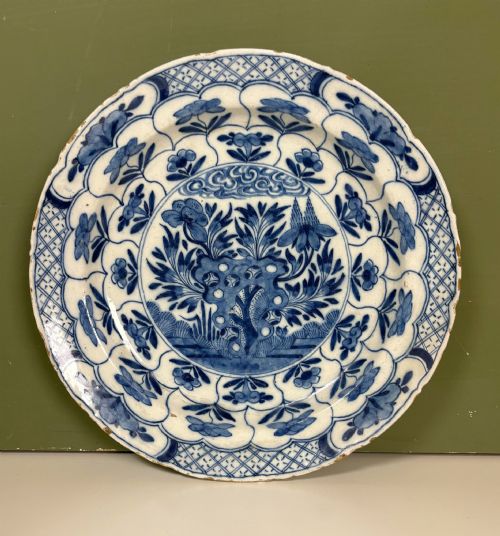
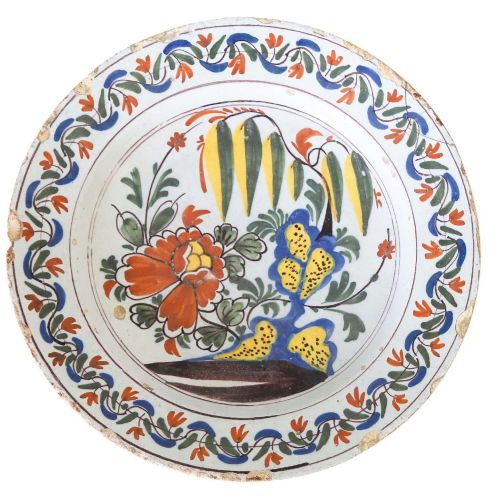
A floral delftware plate brings the painted botanical motifs of the eighteenth century onto tin-glazed earthenware.
Floral Delftware Plate
A floral delftware plate represents the tin-glazed earthenware tableware produced across the eighteenth century in both English and Dutch potteries. These pieces range from small domestic plates to large decorative chargers and platters designed for display.
The examples seen on this page span the 1700s, including items from Dutch and English origins styled in periods such as the Georgian era and Dutch Baroque. Buyers will frequently encounter both individual plates and matched pairs featuring traditional floral painting.
What varies in quality
Quality rests in the crispness of the hand-painted botanical brushwork and the consistency of the white tin-glaze across the earthenware body. Pieces featuring detailed polychrome palettes or rich manganese tones often reflect superior workshop execution.
The scale and presence of the charger or plate also define the grade, with larger display pieces demanding greater technical control during the glazing and firing stages.
Listings on this page include earthenware pieces recorded across the eighteenth century, spanning Dutch and English origins.
De Witte Ster
The Floral Delftware Plate Glossary
- Delftware
- Earthenware pottery covered in an opaque tin-glaze and painted with metallic oxides. This technique originated in the Netherlands before spreading to English kilns during the seventeenth and eighteenth centuries.
- Tin-Glaze
- A ceramic glaze made white and opaque through the addition of tin oxide. It creates the characteristic pale background required for traditional painted decoration.
- Charger
- A large decorative plate intended primarily for display on walls or sideboards rather than for dining use. These pieces often measure significantly wider than standard domestic plates.
- Grand Feu
- A high-temperature ceramic firing method used to set pigments directly into the raw glaze. This technique produces deep integration of colour and glaze.
- Polychrome
- Decoration utilising multiple distinct colours painted onto the ceramic surface. In delftware, this typically includes combinations of blues, greens, yellows, and manganese purple.
Floral Delftware Plate: Frequently Asked Questions
How were floral delftware plates used?
These pieces served both practical dining functions and decorative display roles within eighteenth-century homes. Larger chargers were typically hung on walls or stood on dressers to show off their painted botanical designs.
Smaller plates saw regular use at the table for meals, though their tin-glazed surfaces meant they required careful handling to avoid chipping.
Are these plates English or Dutch?
Delftware production flourished in both England and the Netherlands throughout the eighteenth century, sharing similar tin-glazing techniques and earthenware bodies. English potteries often produced pieces with distinct local stylistic influences.
Dutch workshops, particularly those operating during the Baroque period, exported substantial quantities of chargers and plates featuring floral and geometric motifs across Europe.
What colours appear on these plates?
Cobalt blue remains the most common pigment used for hand-painted floral decoration on these earthenware surfaces. Many examples also incorporate manganese purple and multi-coloured polychrome palettes.
The interaction between the white tin-glaze and these metallic pigments creates the bright visual contrast characteristic of eighteenth-century ceramics.
How do you display a charger?
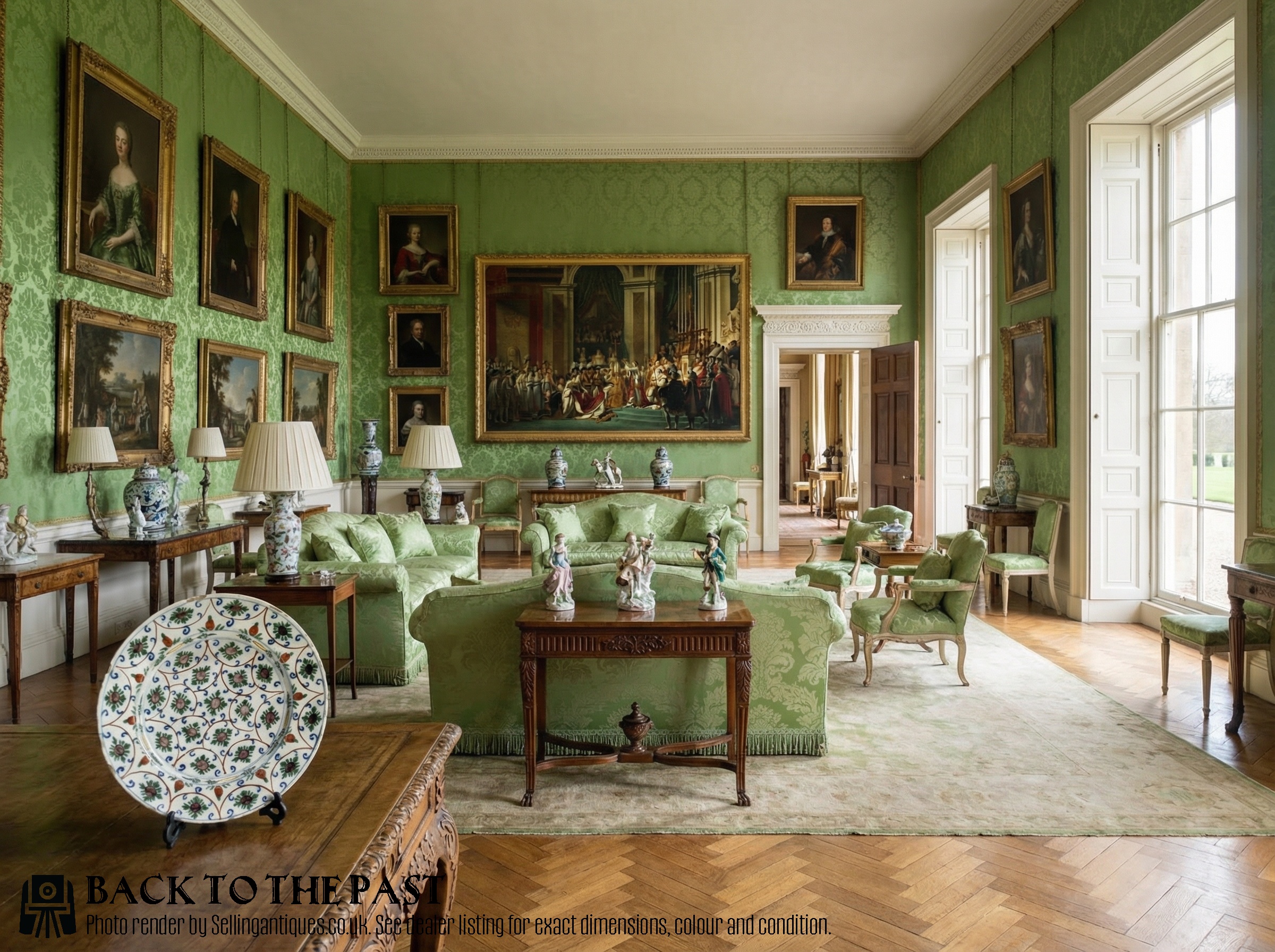
Chargers are large decorative plates designed with sufficient scale to act as focal points on walls or display furniture. Plate hangers and specialised stands provide secure support without damaging the earthenware edge.
Keeping them away from high-traffic areas protects the tin-glaze from accidental impacts.