
Floral Carved Table
A floral carved table brings botanical motifs into domestic spaces through varied woods and regional carving traditions.
Floral Carved Table
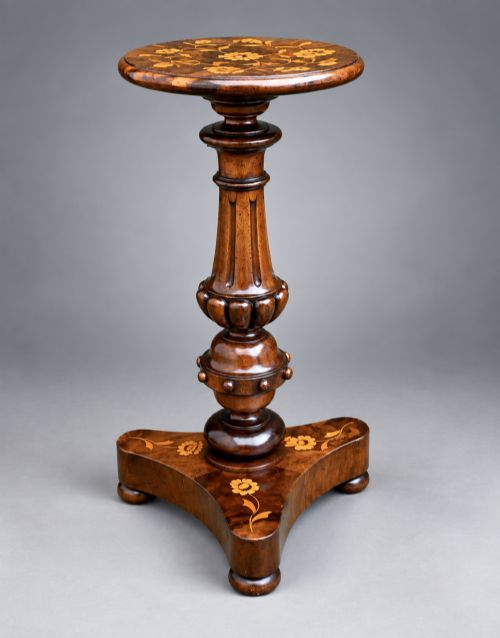
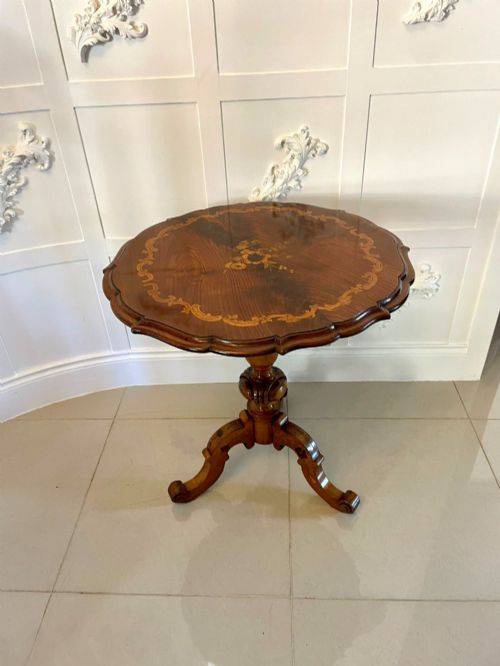
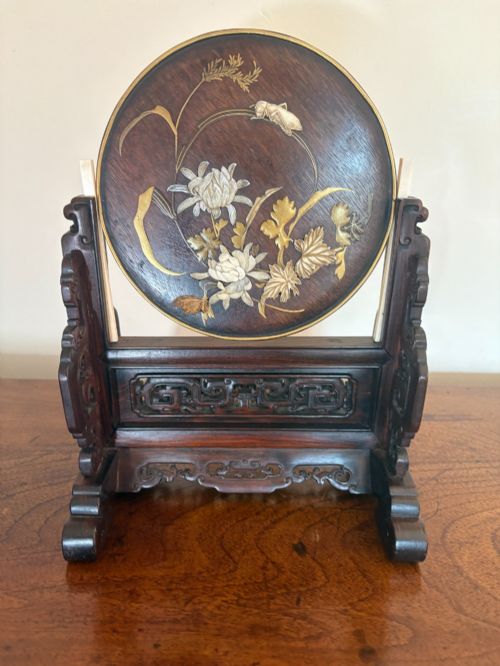
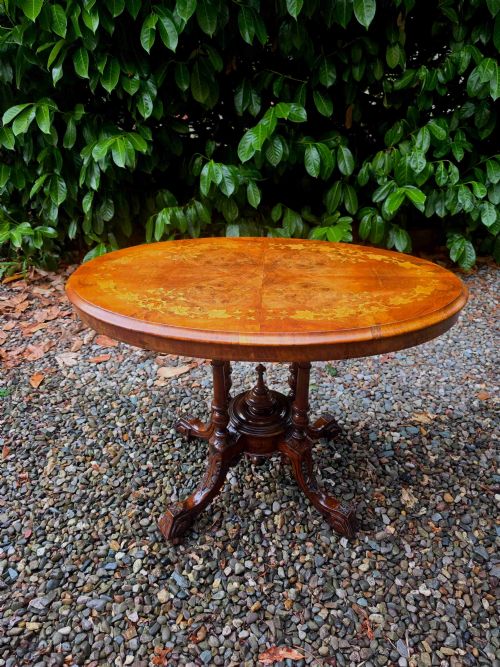
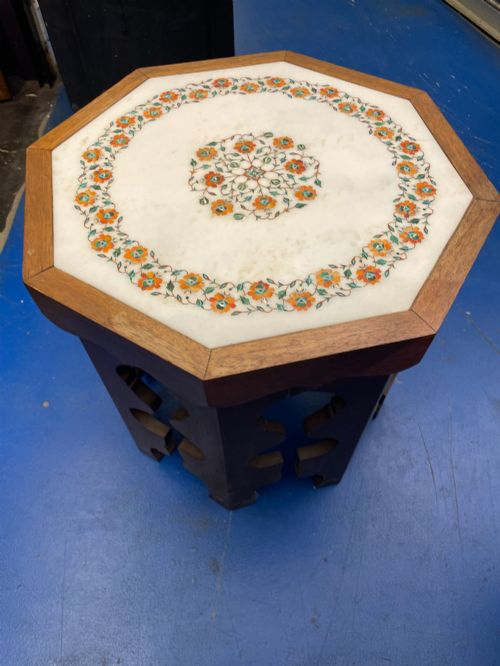
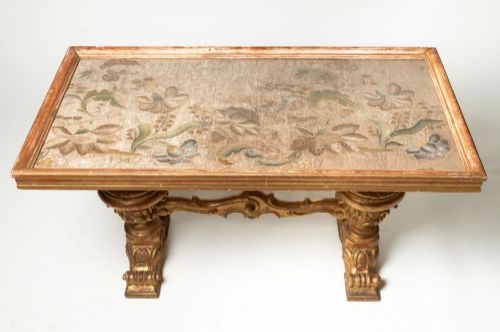
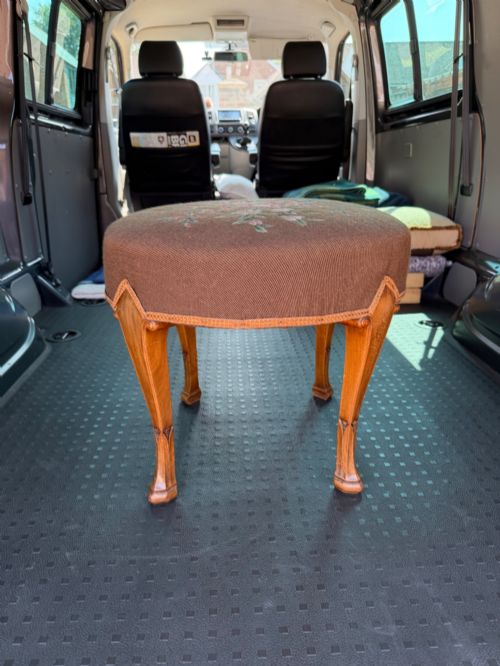
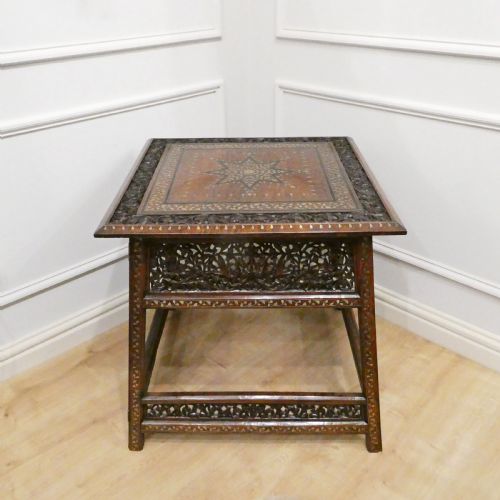
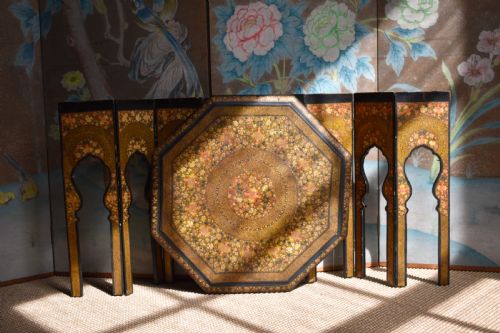
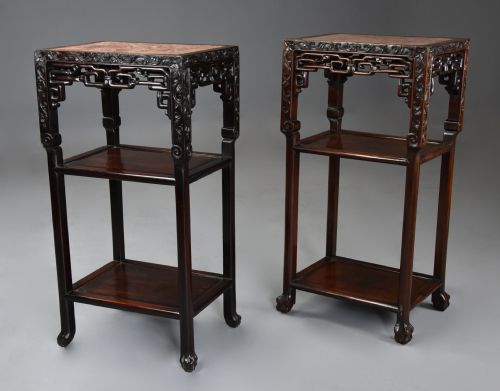
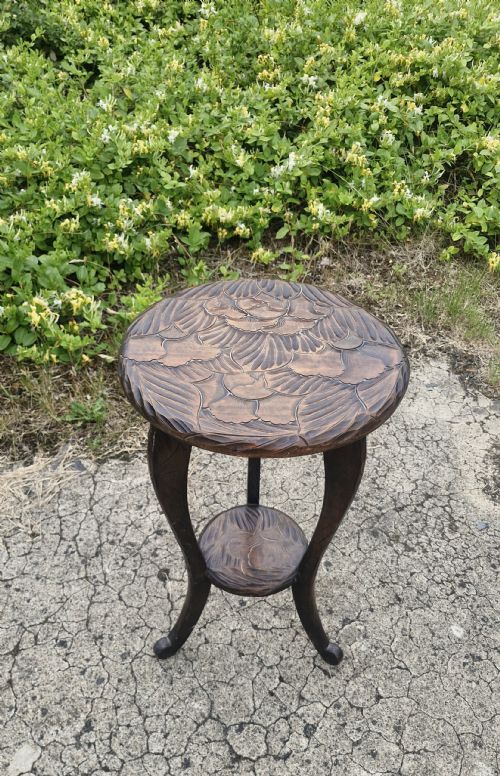
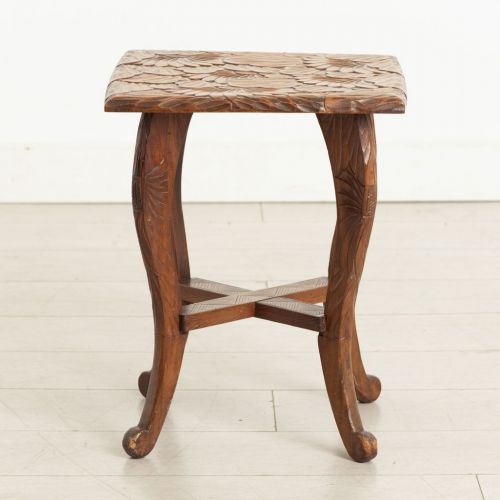
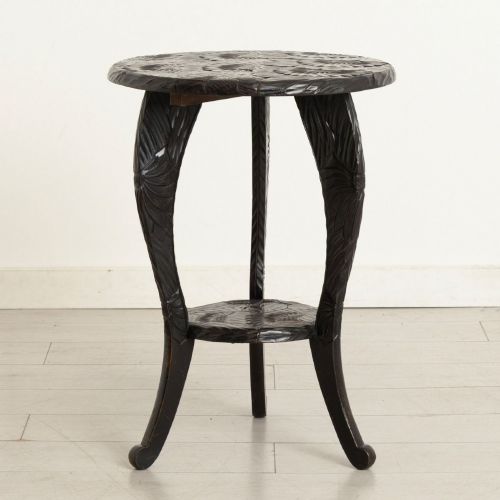
A floral carved table spans multiple forms across the nineteenth and early twentieth centuries, including centre tables, occasional pieces, side tables, and plant stands. These examples appear in domestic settings from Victorian parlours to Arts and Crafts interiors, alongside imported forms from Anglo-Indian, Kashmiri, and Chinese workshops.
The materials utilised range from walnut, burr walnut, mahogany, and oak to exotic hardwoods, rosewood, and linden wood. Surfaces often combine carved foliage with marquetry inlay, bone inlay, brass wire, or marble inserts, reflecting diverse international design movements such as the Arts and Crafts style, Italian Baroque, and Chinese Export work.
How They Were Made
Cabinetmakers constructed these tables using dense timbers like walnut, mahogany, and oak, frequently employing burr veneers to create figured grain patterns across circular and rectangular tops. Structural integrity relied on traditional joinery, pedestals, and turned legs, sometimes augmented by tilt-top mechanisms or tiered platforms.
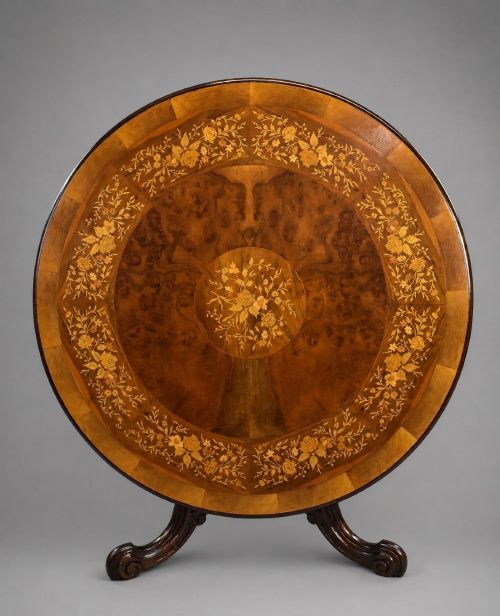
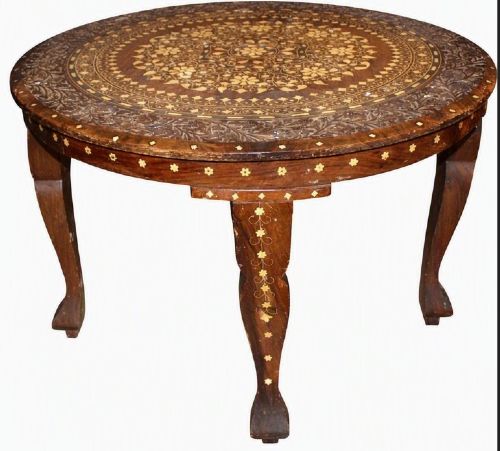
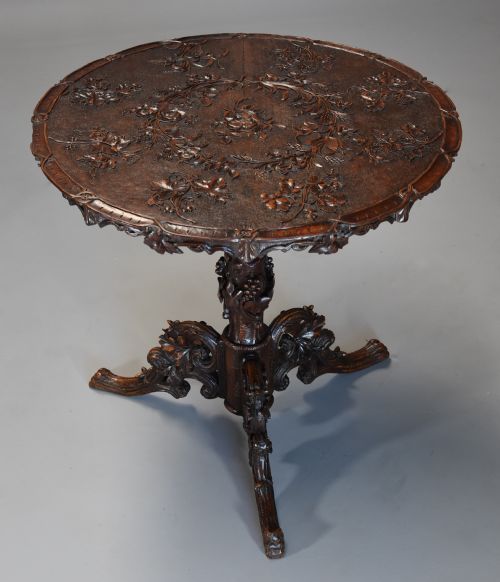
Carving and inlay techniques varied by region, ranging from the deep, profuse floral relief work of Black Forest linden wood and English oak to the intricate bone and brass inlay found on Hoshiarpur and Anglo-Indian pieces. Marquetry panels incorporated contrasting woods to depict botanical and floral motifs across Victorian centre tables.
Some tables double as rotating lazy-susans, proving that even Victorian ancestors hated passing the mustard.
What Varies in Quality
The standard of a floral carved table depends on the depth and crispness of the hand-carved detail, distinguishing sharp botanical relief from softer, mechanical execution. Choice of timber also dictates distinction, with finely figured burr walnut and dense rosewood elevating the object above standard commercial hardwoods.
Design cohesion separates ambitious pieces from simpler workshop output, seen in the harmonious integration of marquetry inlay, brass or bone embellishments, and solid structural proportions. Maker attribution, such as stamps by Liberty & Co, further influences the standing of an individual table.
Liberty & Co
The Floral Carved Table Glossary
- Marquetry
- Decorative veneer work applied in geometric or pictorial patterns using various tinted woods. This technique frequently depicts floral sprays across walnut table tops.
- Centre table
- A freestanding table designed to be viewed from all sides, placed in the middle of a room rather than against a wall. These often feature elaborate carved pedestals or inlaid tops.
- Occasional table
- A small, versatile table intended for light, intermittent use in a reception room. Examples range from two-tier occasional stands to tripod designs.
- Hoshiarpur
- A region in India known for distinctive woodwork featuring intricate brass and bone inlay depicting floral and geometric motifs. Tables from this tradition utilise dense hardwood bases.
- Tilt-top
- A hinged table mechanism allowing the top to be rotated and stored vertically against a base when not in use. This mechanism appears on nineteenth-century mahogany and walnut tripod tables.
Floral Carved Table: Frequently Asked Questions
What rooms suit a floral carved table?
These tables adapt easily to sitting rooms, hallways, and studies as centrepieces, lamp stands, or side surfaces.
Their varied dimensions and regional styles allow them to complement both traditional interiors and mixed modern schemes.
How do I care for antique wood?
Maintain timber surfaces by dusting with a dry cloth and avoiding direct sunlight or excessive heat sources.
Apply quality beeswax periodically to nourish the grain and protect vintage polishes.
Are these tables sturdy enough?
Most examples are constructed from dense hardwoods like oak, walnut, and mahogany designed for daily domestic utility.
Heavier items such as centre tables and marble-topped stands offer substantial weight and stable bases.
How can I identify the period?
Dating relies on construction methods, timber choices, and stylistic markers such as Victorian marquetry or Arts and Crafts simplicity.
Regional details like Anglo-Indian bone inlay or Black Forest linden wood carving also point to specific eras.