
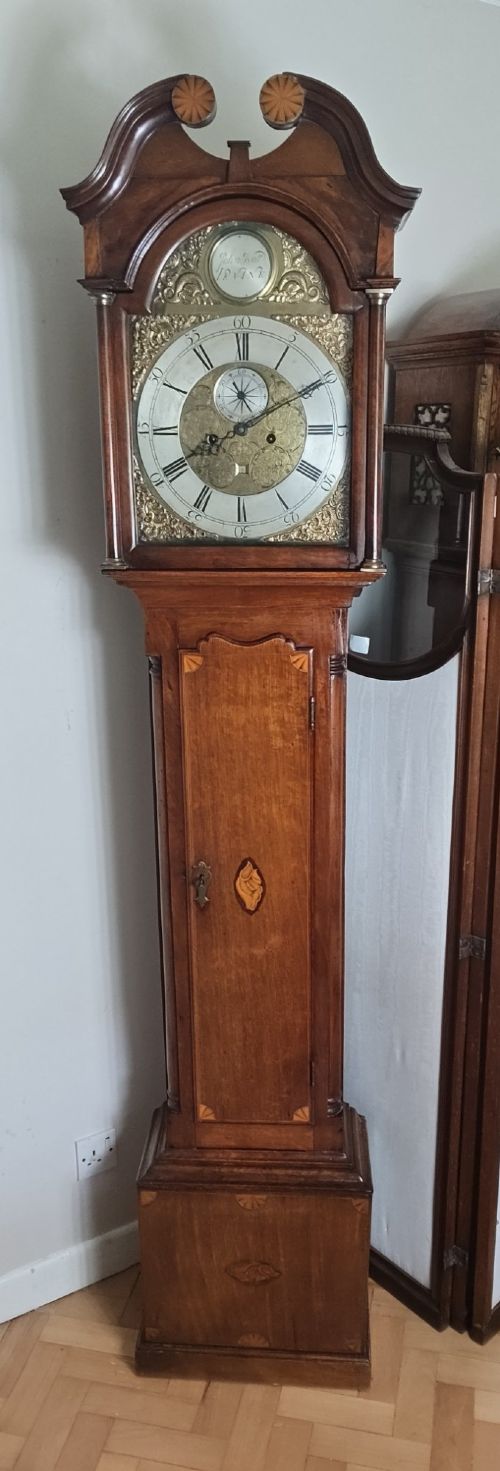
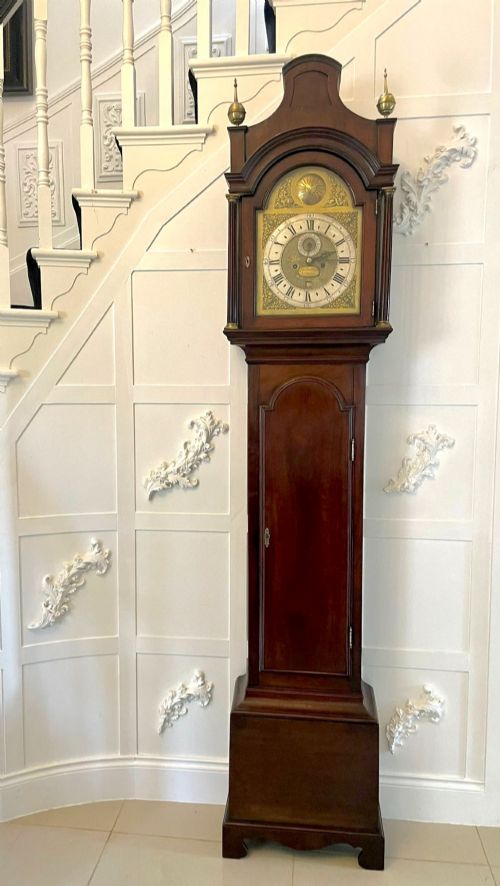
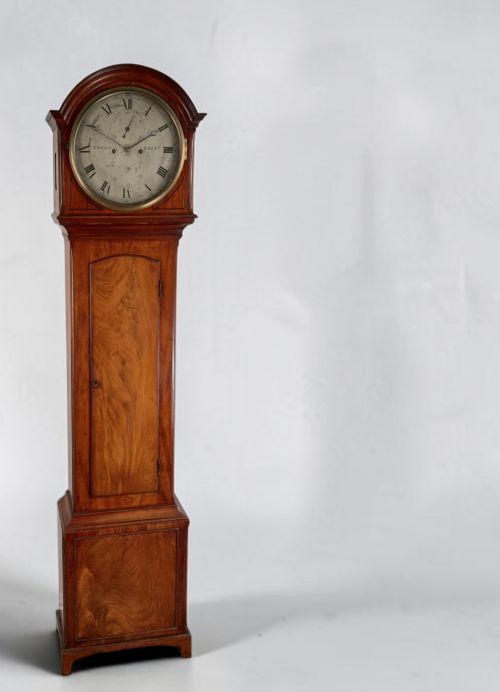
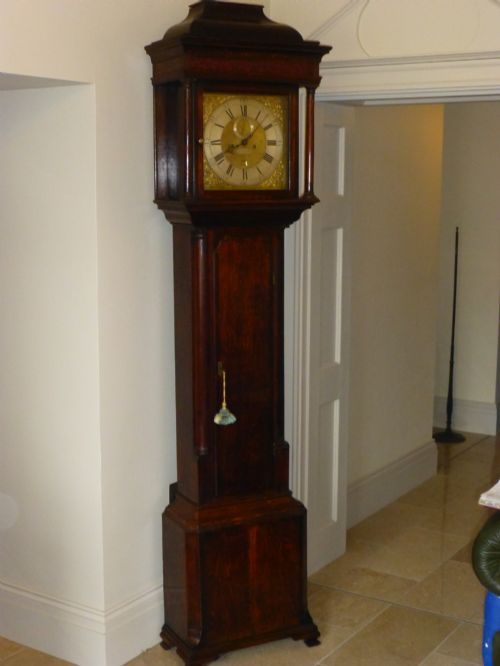
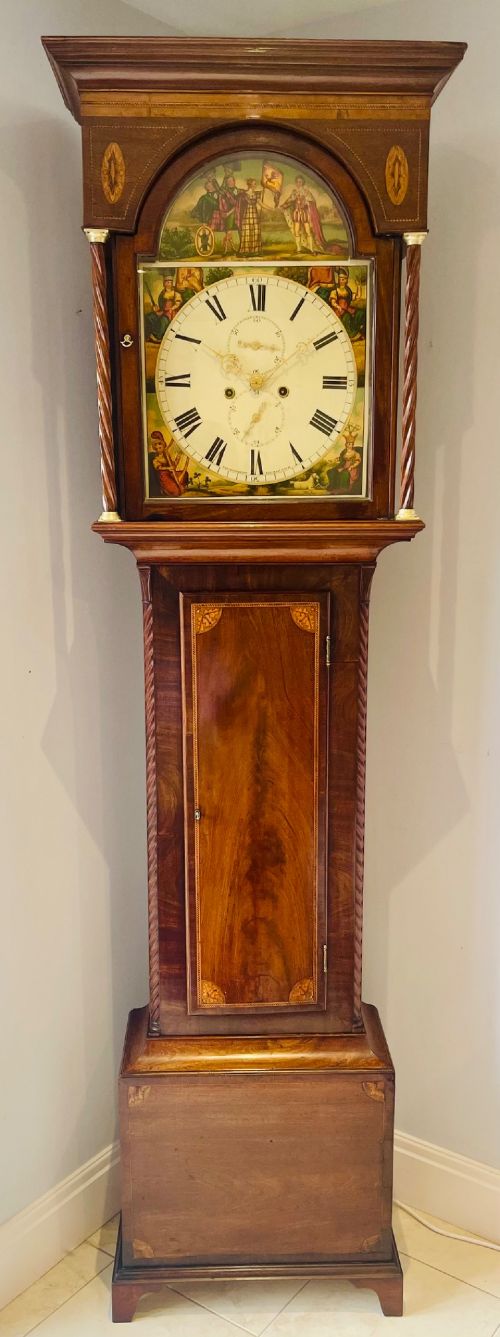
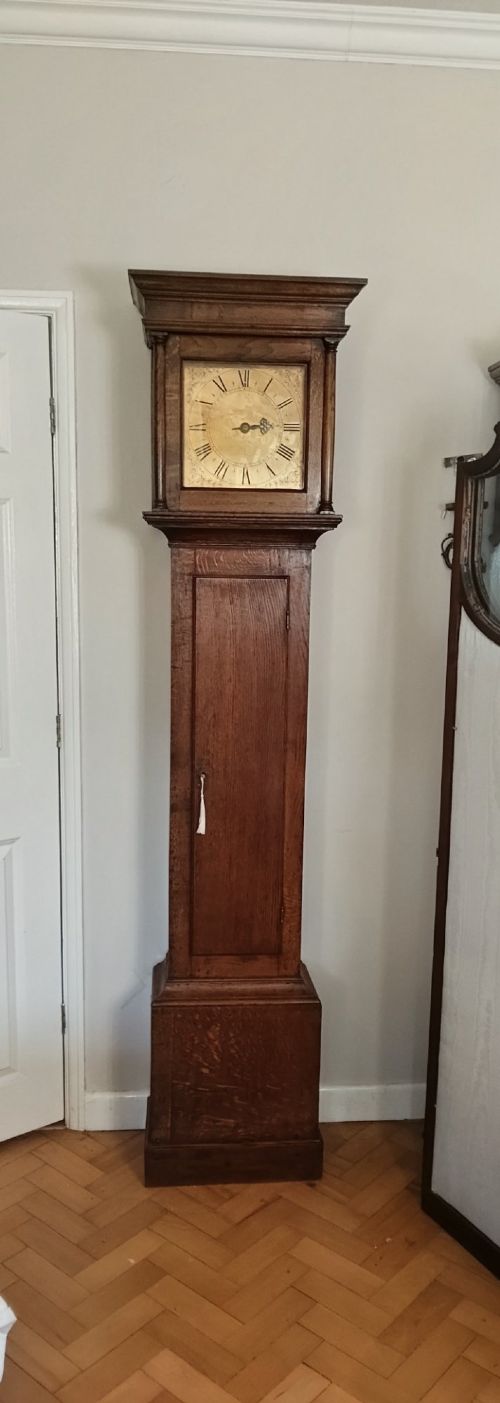
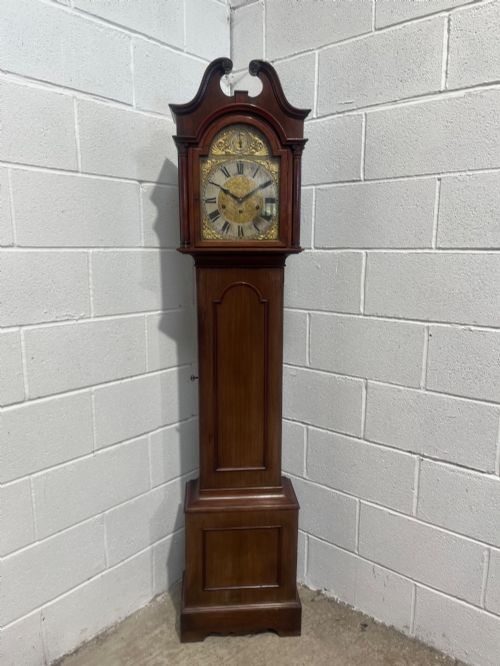
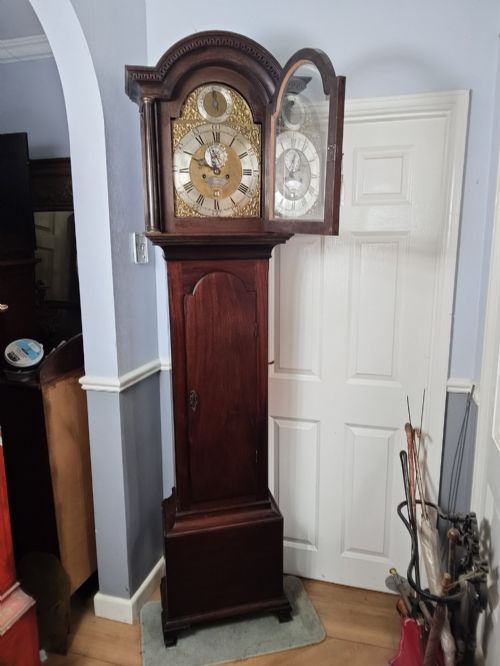
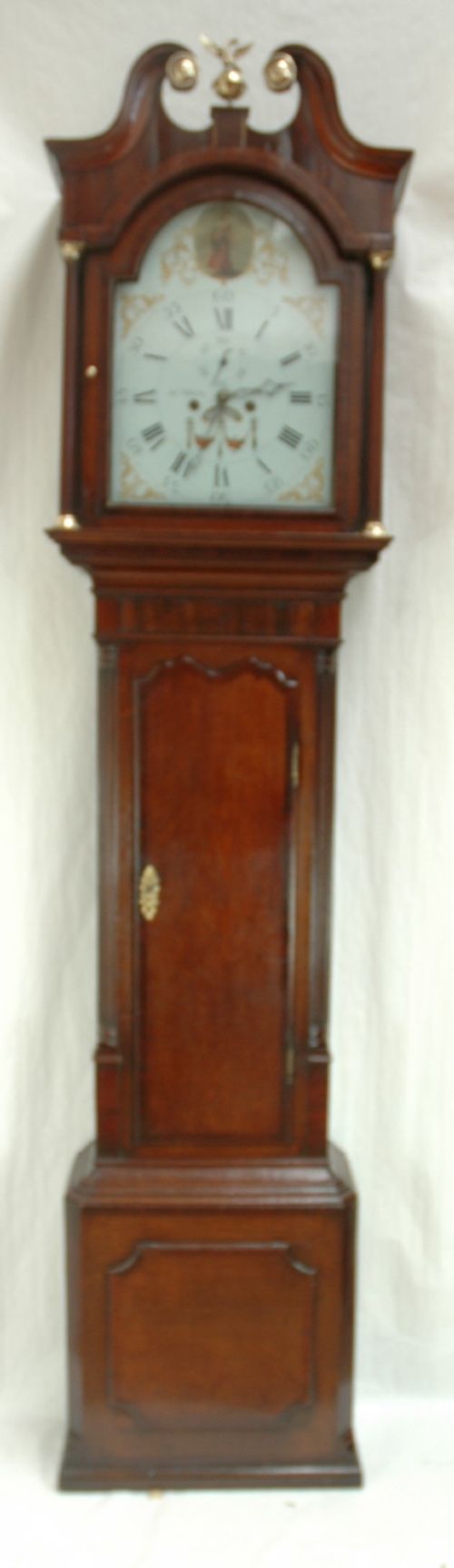
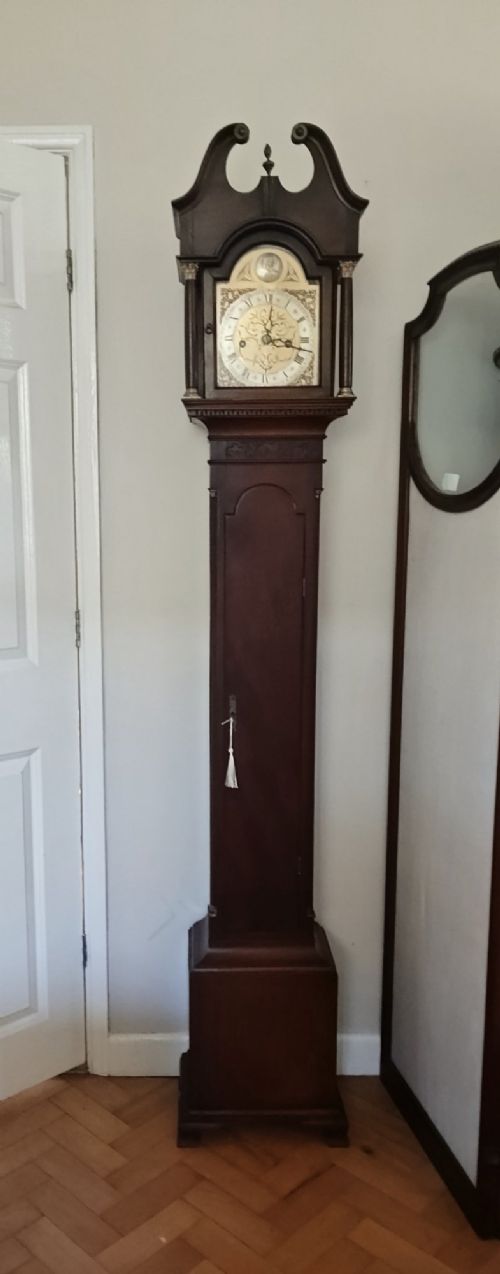
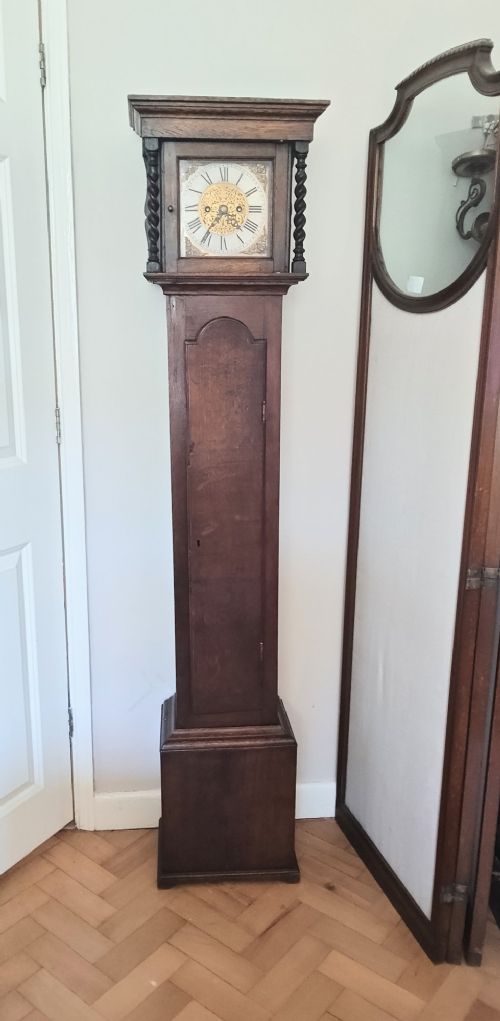
Floor Standing Pendulum Clock
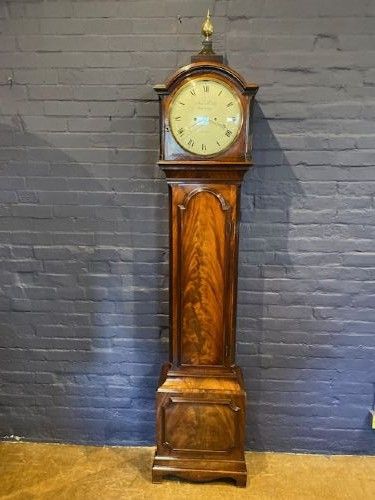
These floor standing pendulum clock examples bring the measured ticking of longcase and grandfather forms into a room.
Floor Standing Pendulum Clock
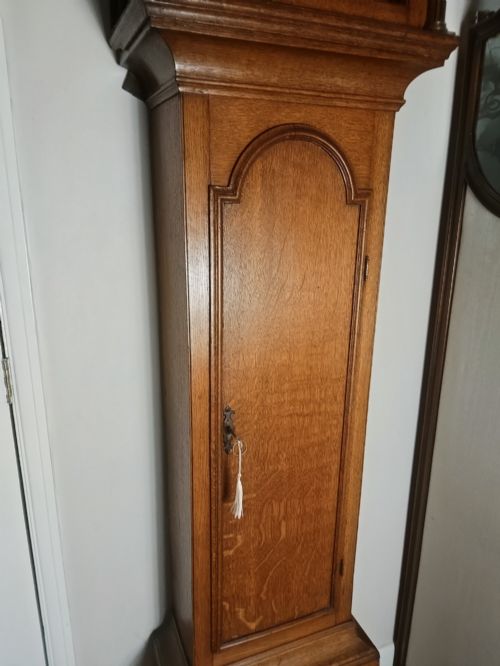
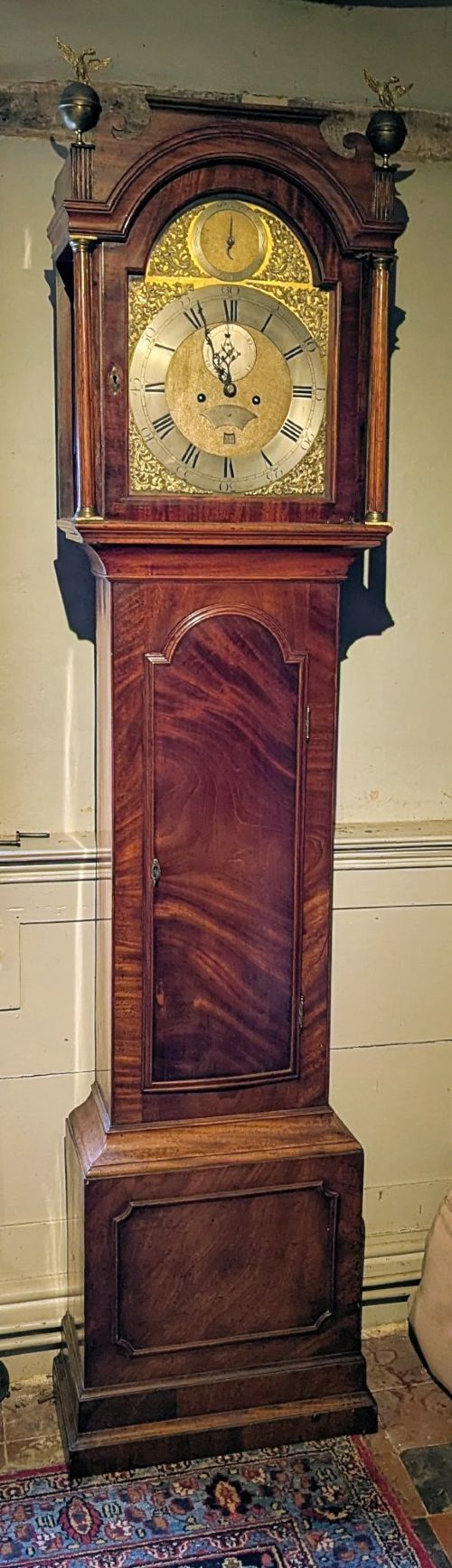
A floor standing pendulum clock stands upright, enclosing a weight-driven movement and swinging pendulum within a tall wooden case. Buyers searching for a floor standing pendulum clock encounter vernacular terms such as grandfather, grandmother, and granddaughter clocks alongside longcase varieties.
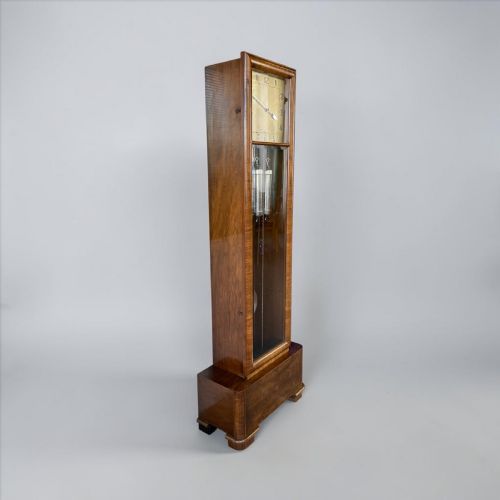
The selection spans Georgian, 18th century, Victorian, Edwardian, and 1930s periods. Oak and mahogany dominate the earlier centuries, while walnut and burr walnut appear frequently in later decades.
Regional variations emerge from English makers in London, Manchester, and Stockport, alongside Scottish examples from Edinburgh and Paisley. Dial sizes and case proportions shift from robust oak country pieces to refined London mahogany models.
Materials and construction
Cabinetmakers constructed the tall cases using solid timbers like oak and mahogany, often applying veneers of flame mahogany or burr walnut to prominent surfaces. Brass dials feature engraved numerals and decorative spandrels, protected behind hinged glass doors.
Horologists fitted mechanical movements driven by lead or iron weights suspended by cords or chains. Steel components form the arbors and springs, while brass wheels and pendulum rods regulate the timekeeping.
Listings feature floor standing pendulum clock examples across Georgian, Victorian, and 1930s periods in oak, mahogany, and walnut.
Evaluating distinction
Proportion and timber selection dictate the distinction between standard provincial pieces and high-end metropolitan work. Figured veneers, intricate inlay such as paterae, and secondary woods reveal the cabinetmaker's skill.
Movement complexity separates simpler time-and-strike mechanisms from quarter-chiming, musical, or moon-rolling movements. Signed dials by noted makers add documentary weight to the mechanics within.
Charles Shuckburgh·Richard Corless·James McCabe·Benjamin Taylor·Edward Shepley·Lenzkirch
The Floor Standing Pendulum Clock Glossary
- Longcase clock
- An alternative term for a tall pendulum clock housed in a wooden case resting directly on the floor. These tall cases protect the suspended weights and long pendulum.
- Grandfather clock
- A large floor standing pendulum clock, typically exceeding six feet in height. The term gained popular currency in the nineteenth century following the song 'Grandfather's Clock'.
- Grandmother clock
- A smaller, more slender version of the longcase clock, usually produced during the twentieth century. They occupy less floor space while retaining weight-driven pendulum movements.
- Moon roller
- A secondary dial mechanism that tracks the phases of the moon through a rotating painted disc. It appears on regional and London dials alike.
- Strike silent
- A mechanism that allows the hourly striking train to be disengaged at night. This function prevents the clock from disturbing sleepers.
Floor Standing Pendulum Clock: Frequently Asked Questions
Where should I place a longcase clock?
Position the case against an interior load-bearing wall away from direct sunlight and heavy draughts. A stable surface ensures the pendulum swings evenly without catching.
Leave sufficient clearance above the case hood if the movement requires manual winding via internal lines or chains.
How do I wind an 8 day clock?
Insert the winding key into the dial apertures and turn clockwise until the internal weights reach the top. Support the weight cord gently if necessary to avoid sudden slack.
Wind both weight barrels evenly on time-and-strike models to maintain proper tension across the movement train.
What is the difference between a grandfather and grandmother clock?
Grandfather clocks stand taller and possess larger proportions suited to high-ceilinged hallways or principal rooms. Grandmother clocks offer a reduced scale developed for twentieth-century domestic spaces.
Both utilise identical pendulum and weight-driven principles despite the difference in overall height.
How do I read a moon phase dial?
The painted rotating disc tracks the twenty-nine-and-a-half-day lunar cycle behind an arched aperture above the main chapter ring. When the visible moon reaches the apex, the cycle hits the full phase.
Adjustment requires rotating the disc manually via specific pins when synchronising the clock with the calendar.