
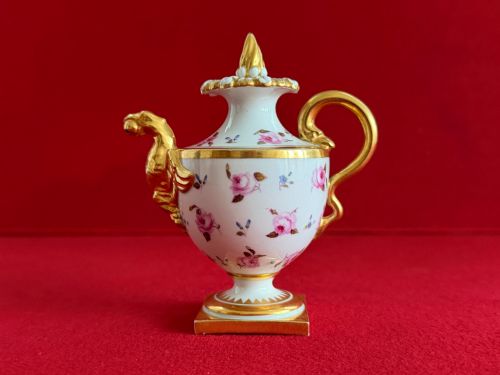

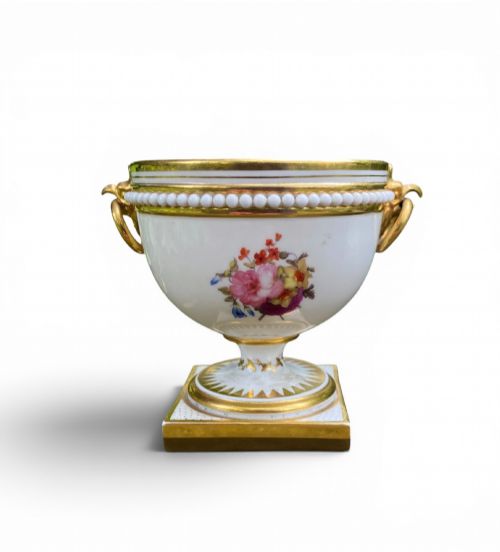


Flight Barr Worcester Urns
Flight barr worcester urns are porcelain vessels from the Georgian and Regency periods, prized by collectors for their classical forms and hand-painted detail.
Flight Barr Worcester Urns
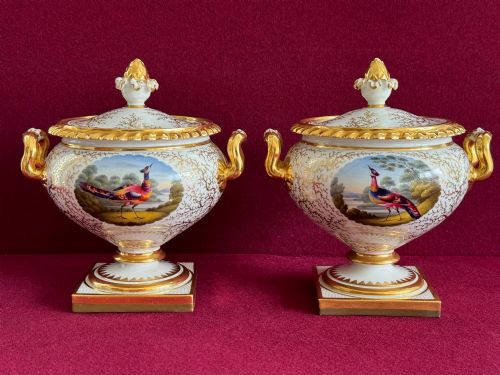
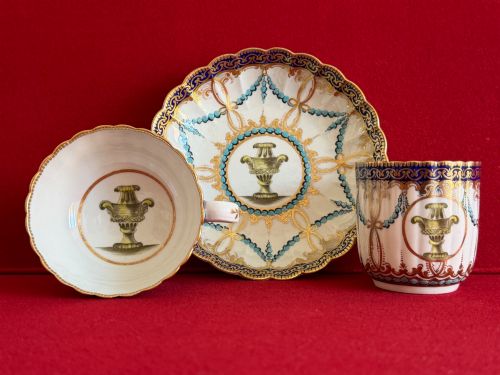
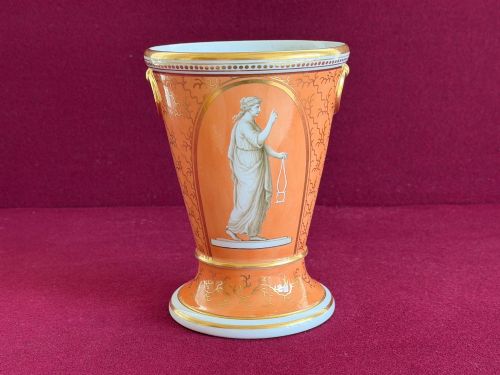
Flight barr worcester urns encompass a range of decorative vessels, vases, jardinières, and ice pails produced by the famous Worcester factory under its various partnerships. These pieces date principally from the Georgian and Regency eras, spanning the late eighteenth century into the nineteenth century.
How they were made
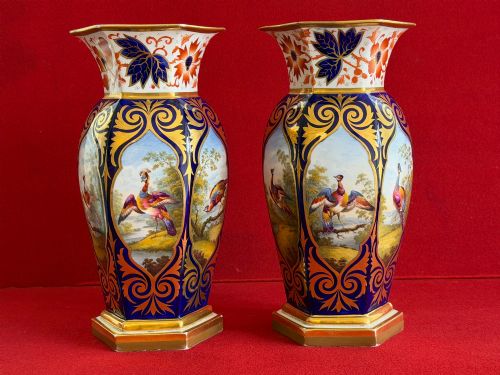
Makers utilised soft-paste porcelain as the primary body for these vessels, shaping them on the wheel or moulding them into complex classical silhouettes such as ice pails and urns. Artisans then applied enamel colours and gold leaf by hand, often incorporating detailed topographical scenes or Imari patterns.
The application of gilding and burnished gold highlights required skilled firing techniques to fuse the metals to the porcelain body. Subsequent enamel decoration added depth and colour to the vases and jardinières before final glazing.
Some pieces include intricate rose water sprinklers designed to mist polite drawing rooms with fragrance during long Georgian evenings.
What varies in quality
The standard of painting on flight barr worcester urns dictates much of their standing, with finely detailed topographical scenes or elaborate bird and flower subjects setting the best pieces apart from simpler monochrome or plain gilt examples. Hand-painted reserves executed by named decorators command particular attention.
The crispness of the porcelain moulding and the heaviness of the gold leaf also define the tier of a piece. Pairs and garnitures demonstrate higher ambition than solitary items, requiring uniform potting and matching decorative programmes across multiple vessels.
Flight Barr and Barr·Flight and Barr·Barr Flight and Barr·Thomas Lowe
The Flight Barr Worcester Urns Glossary
- Gilding
- The application of gold leaf or powdered gold onto the porcelain surface to create decorative borders and handles. This technique requires careful firing to achieve a lasting metallic shine.
- Jardinière
- A decorative ceramic pot or vessel designed to hold plants or flowers. These items often feature classical urn shapes and handles.
- Imari
- A decorative style inspired by Japanese export porcelain, featuring a palette of underglaze blue, iron red, and abundant gilt. Worcester factories adopted this aesthetic for various tureens and vases.
- Bough pot
- A ceramic vessel designed to hold flowering boughs or cut stems, typically fitted with a pierced cover. They form part of the wider array of decorative vessels from the period.
- Soft-paste porcelain
- A ceramic composition containing glass frit and clay, fired at lower temperatures than hard-paste porcelain. It provides a creamy ground that accepts enamel colours and gilding readily.
Flight Barr Worcester Urns: Frequently Asked Questions
How do I date a flight barr worcester urn?
Dating relies on the specific factory partnerships recorded in the painted or impressed marks on the base, such as Flight and Barr or Flight Barr and Barr. Stylistic indicators like the heavy classical revival forms of the Regency era also help narrow the decade of production.
Changes in porcelain body composition and gilding styles further distinguish Georgian pieces from later nineteenth-century examples.
Where were flight barr worcester urns made?
These pieces were produced at the historic porcelain works in Worcester, England, which operated under various ownership families including the Flights and the Barrs. The manufactory supplied high-status households with decorative ceramics and tableware.
Local artisans and trained painters executed the intricate enamel work and gilding on site before dispatching the wares to the London market and wealthy patrons.
How should I display a porcelain urn?
Porcelain urns and vases require stable placement away from direct sunlight and high footfall to protect their delicate enamel and gold leaf decorations. Placing them on secure side tables or within dedicated cabinets ensures they remain safe from accidental knocks.
Pairs and garnitures look best displayed together on mantelpieces or pier tables, echoing their original Georgian and Regency interior arrangements.