

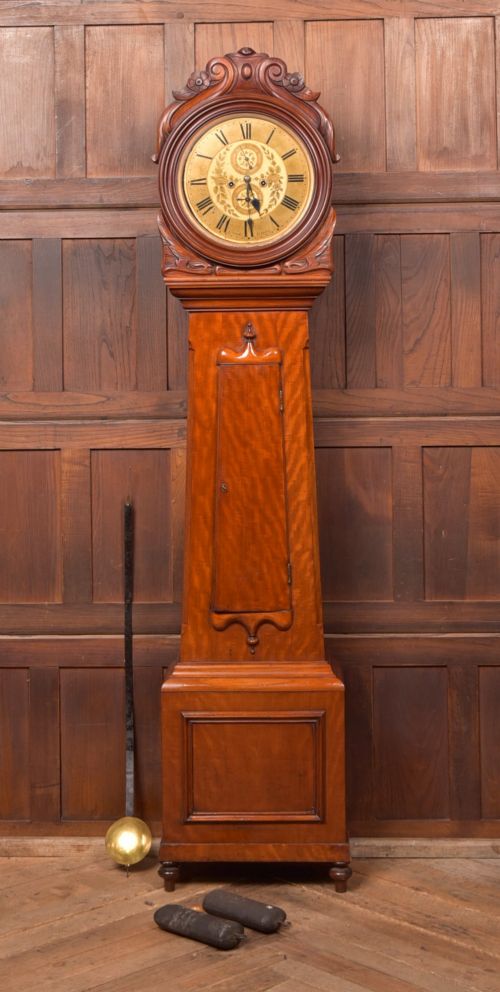

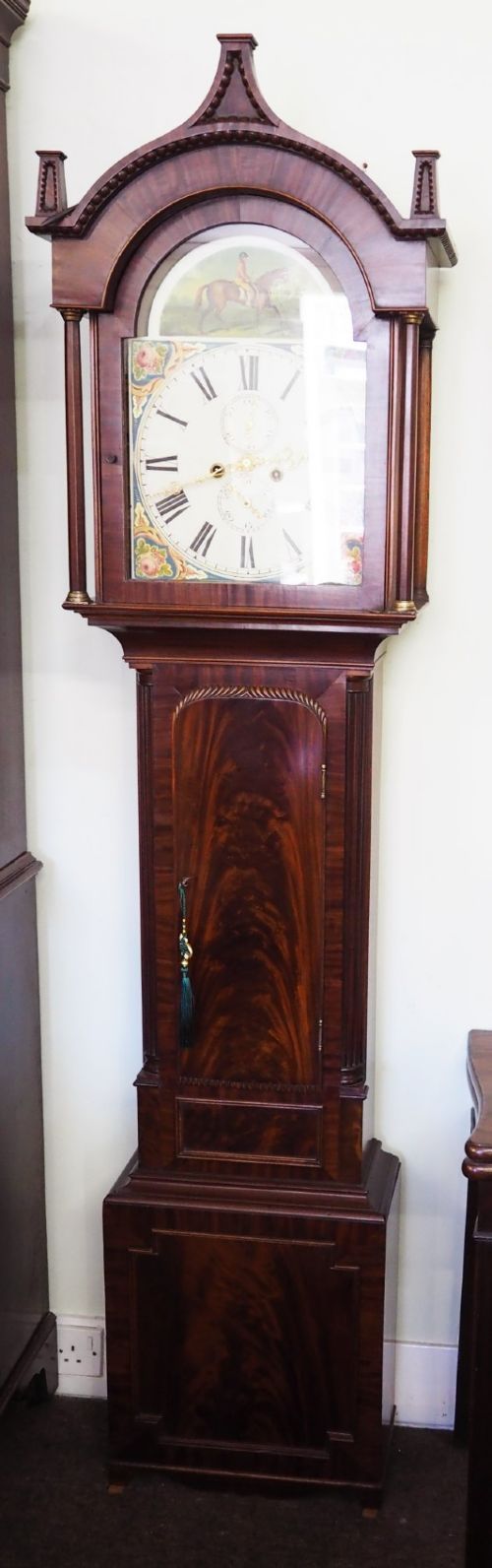
Flame Mahogany Tallcase Clock
A flame mahogany tallcase clock brings architectural presence and precision engineering into a room through figured timber and tall proportions.

Flame Mahogany Tallcase Clock
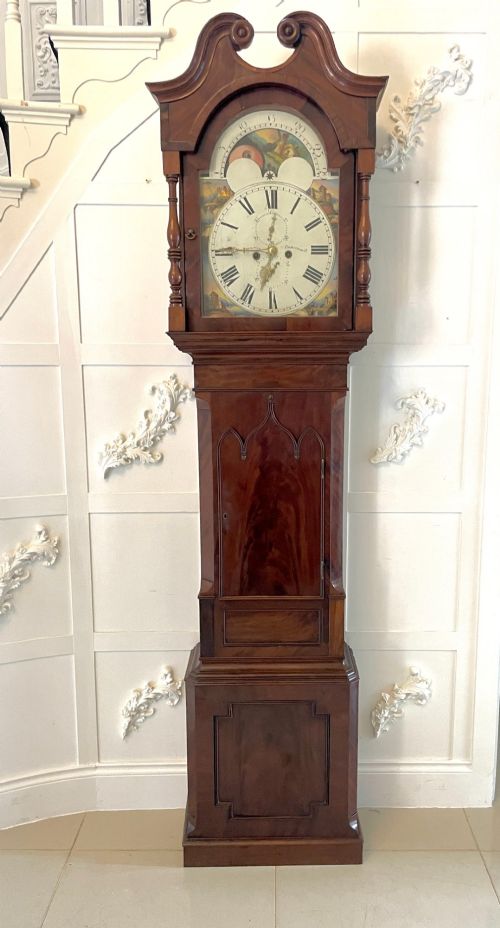
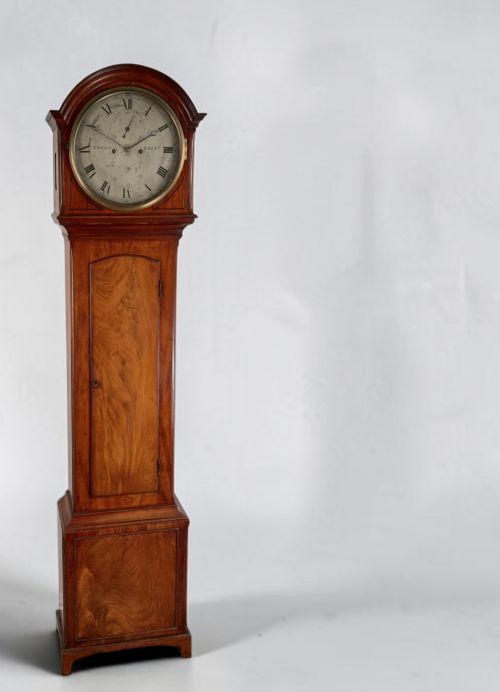
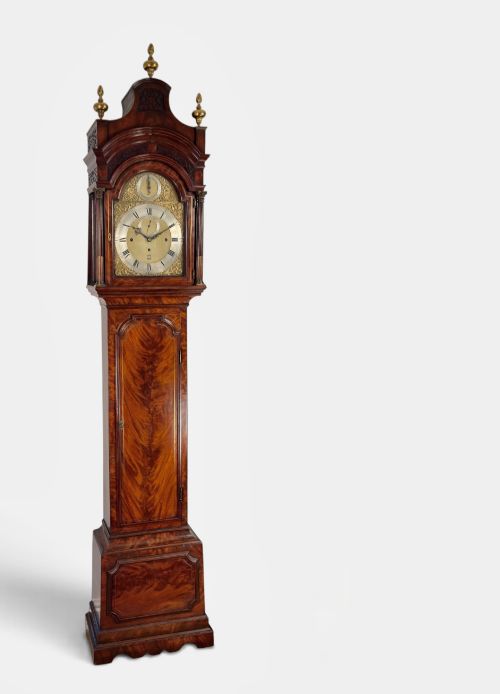
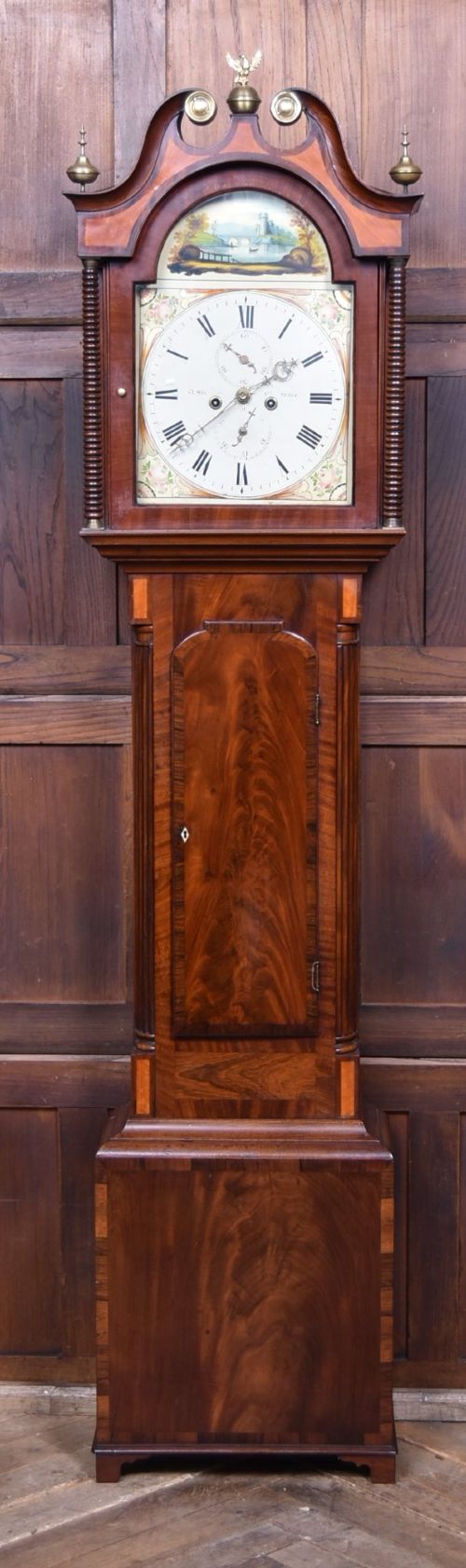
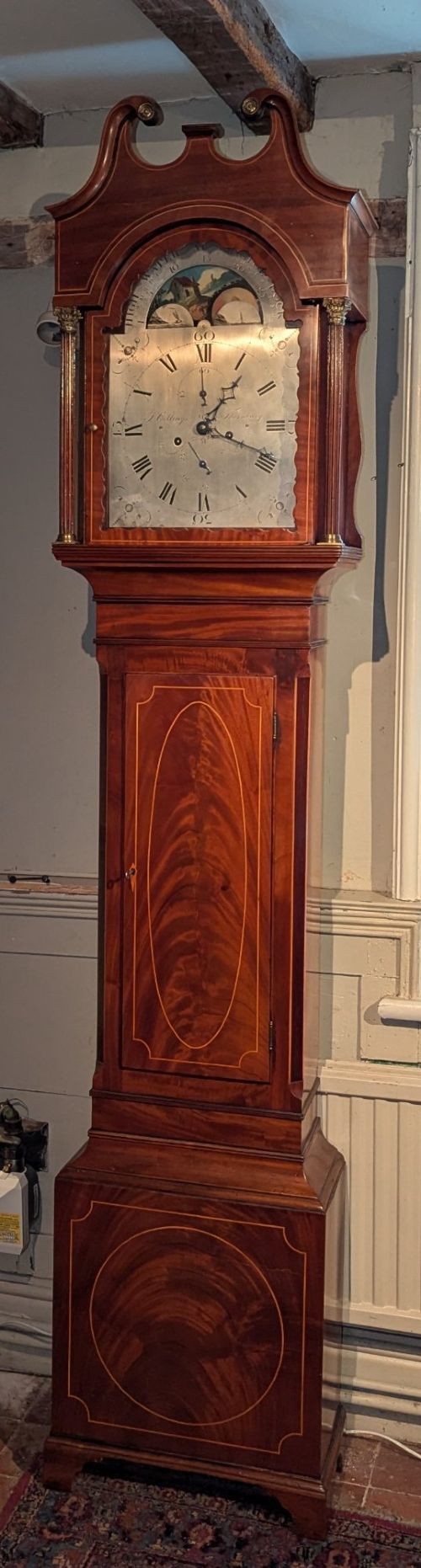
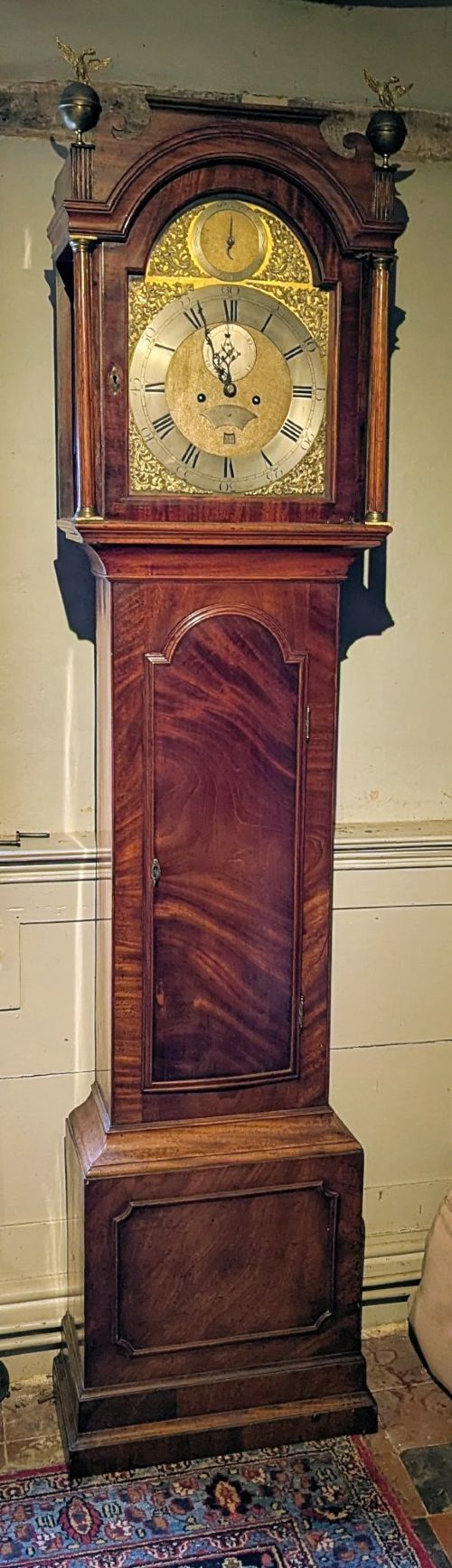
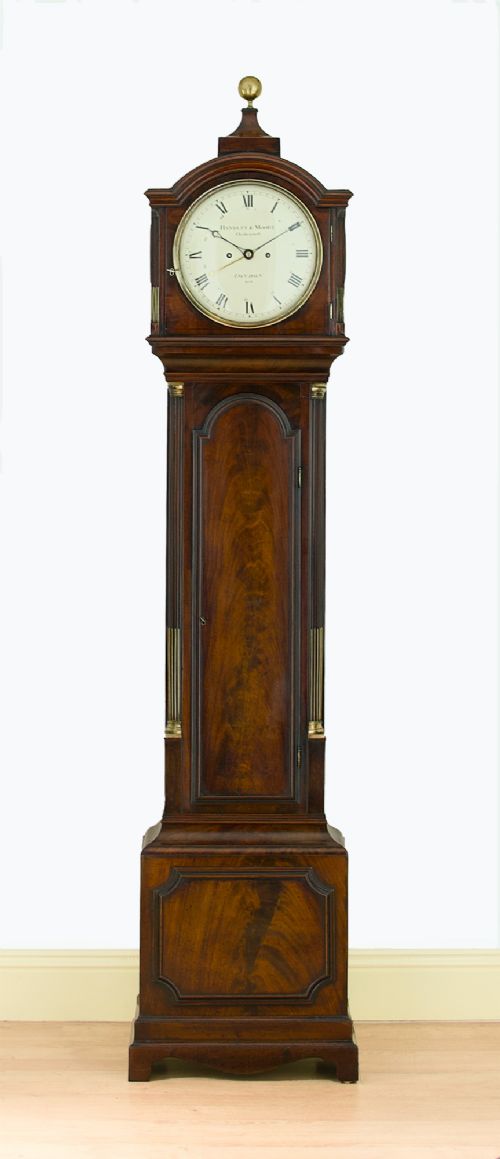
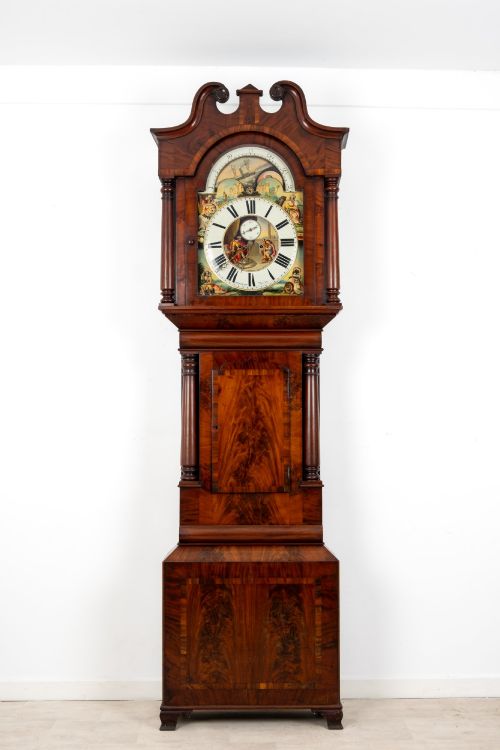
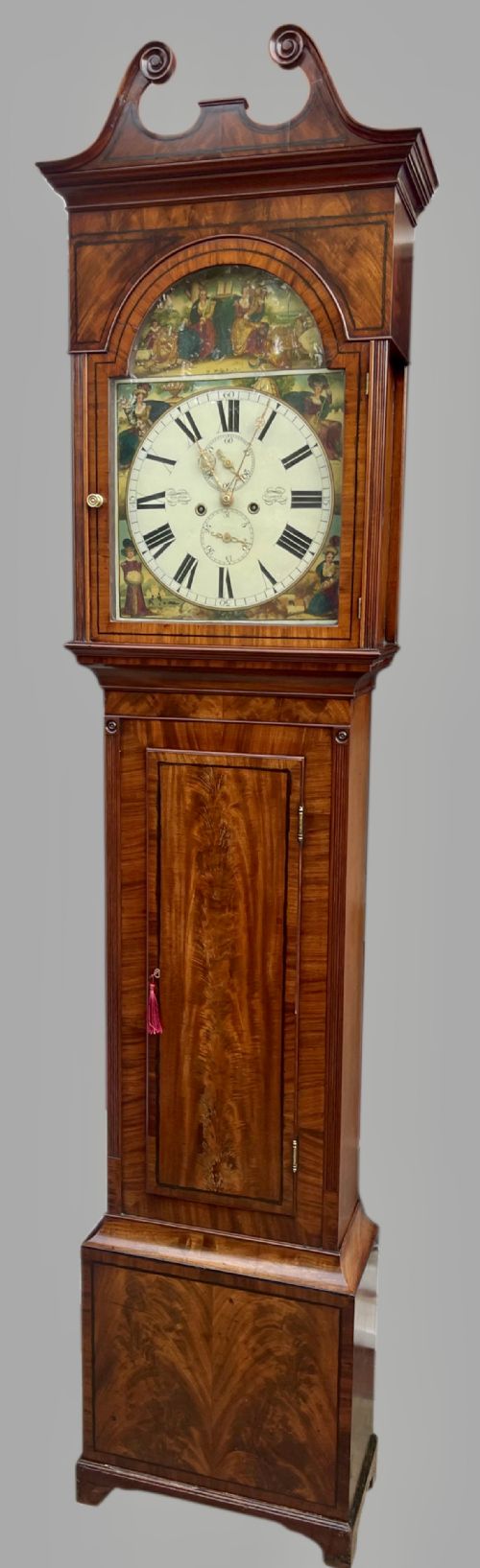
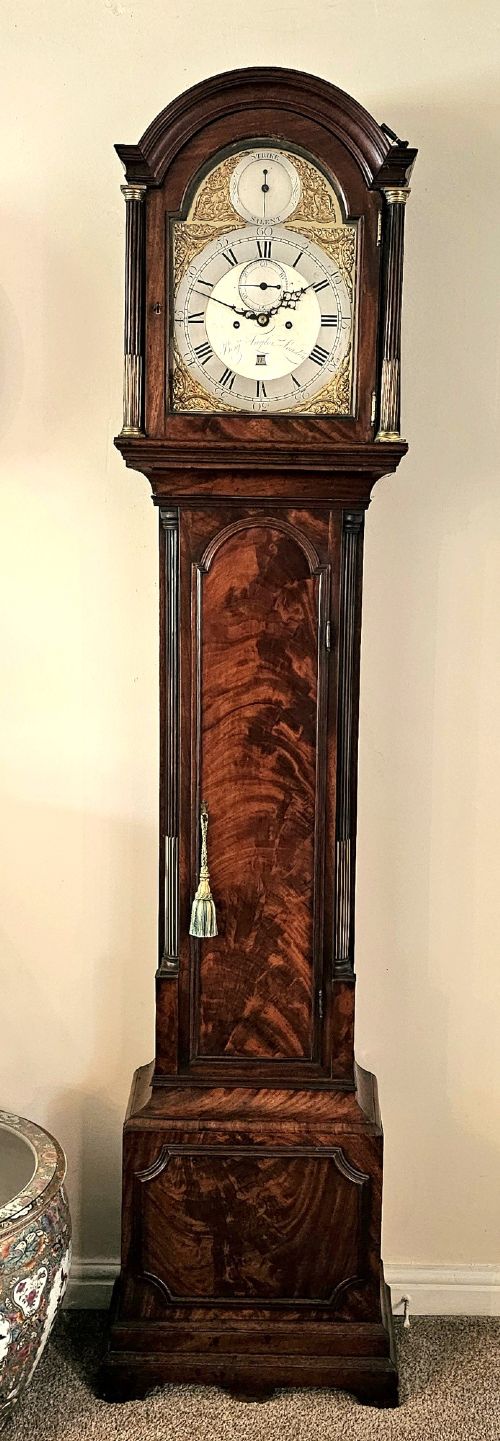
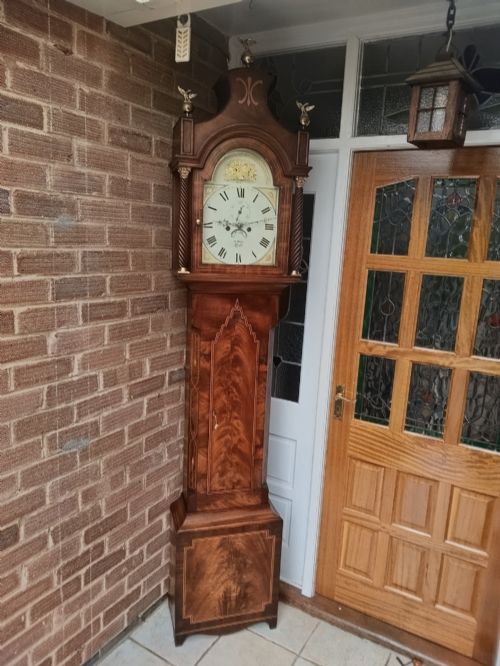
A flame mahogany tallcase clock stands upright as a tall floor-standing timepiece, enclosing a weight-driven movement behind a glazed door and dial face. These pieces appear predominantly from the Georgian, Regency, and Victorian periods, originating from English, Scottish, and Welsh makers.
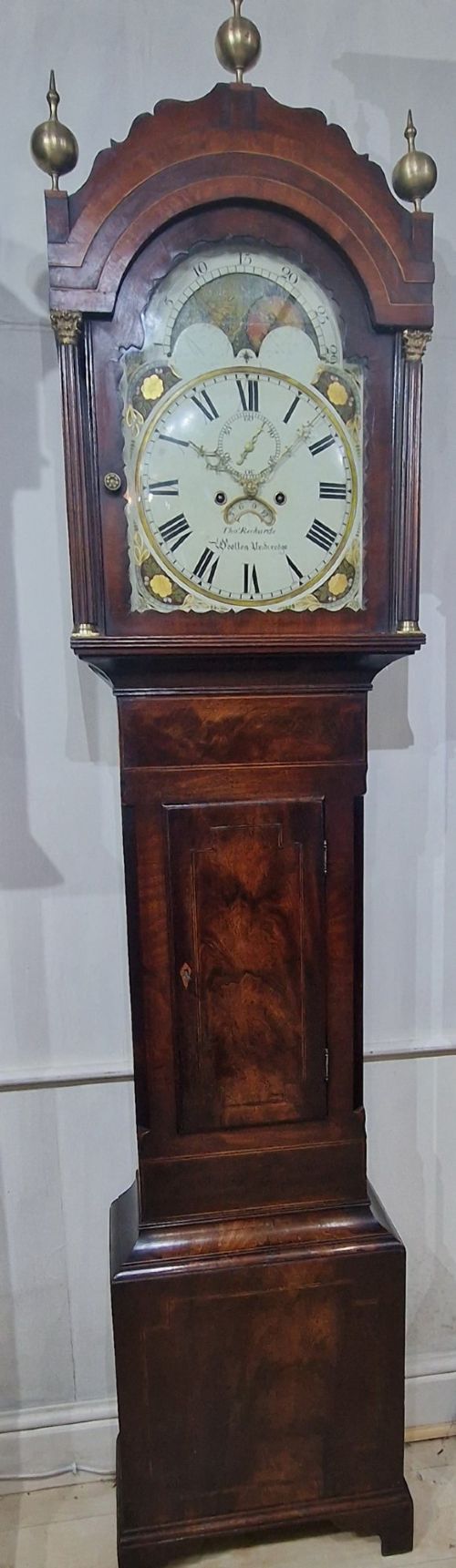
The form encompasses regional variations such as Scottish drumhead styles and London longcase clocks with arched dials. Buyers encounter traditional 8-day movements alongside moon phase and rolling moon displays housed in mahogany and flame mahogany veneer cases.
What varies in quality
The intensity and bookmatching of the flame mahogany veneer dictate the visual impact of the case. Highly figured timber requires expert craftsmanship to apply symmetrically across the long door and base.
Movement complexity separates standard models from exceptional examples. Quarter-striking mechanisms, automata, moon phase displays, and signatures from noted makers elevate the horological significance of the piece.
Flame Mahogany Tallcase Clock Retail Price Guide 2026
Typical asking prices for flame mahogany tallcase clock among the pieces listed under this phrase on Sellingantiques today, from the lower quarter to the upper quarter. They describe what is for sale here now, not the wider market.
Some London makers incorporated automata into their longcase clocks, setting miniature figures in motion across the dial as the hours struck.
John Ellicott·Handley and Moore·James Tregent·Parkinson and Frodsham·John Shelton
The Flame Mahogany Tallcase Clock Glossary
- Flame mahogany
- A veneer cut from the branch forks of the mahogany tree, displaying a distinctive feather-like or flame pattern. This highly figured wood was reserved for the most prominent exterior surfaces of quality furniture.
- Moon phase
- A dial mechanism tracking the lunar cycle through a rotating disc painted with two moons. It appeared on sophisticated longcase clocks to aid navigation and tide calculation.
- Longcase clock
- A tall, weight-driven pendulum clock enclosed in a wooden case consisting of a hood, trunk, and base. Also commonly referred to as a grandfather clock.
- Drumhead clock
- A style featuring a circular dial housing resembling a drum mounted on a trunk, particularly characteristic of Scottish regional cabinetmaking.
Flame Mahogany Tallcase Clock: Frequently Asked Questions
How do I wind an 8 day clock?
An 8-day movement requires winding every week using a specialised key inserted into the winding holes on the dial face. Turning the key draws the internal weights back to the top of the trunk.
Care must be taken not to over-wind the movement, stopping when firm resistance is met to prevent damage to the brass teeth and cords.
Where should I place a tallcase clock?
A tallcase clock requires a stable, dry interior location away from direct sunlight, heating vents, and exterior walls that experience temperature fluctuations. Placing the piece on a firm, level floor ensures the pendulum swings evenly.
Securing the tall case to the wall using hidden brackets provides stability and prevents accidental tipping in busy hallways or living spaces.
How do I date a mahogany clock?
Dating relies on stylistic clues in the case architecture, such as the transition from straight architectural hoods in the 18th century to swan-neck pediments and inlaid flame mahogany veneers in the 19th century. Dial materials also offer evidence, moving from engraved brass plates to painted iron faces.
Signatures painted or engraved on the dial often reference recorded makers whose working decades establish a reliable window of manufacture.
Why does the clock stop ticking?
A stopped clock usually indicates that the weights have reached the bottom of the case and need winding, or that the pendulum has slipped out of beat. The beat can be adjusted by listening to the cadence of the tick and shifting the crutch wire until the rhythm sounds uniform.
Accumulated dust in the brass movement or dried oil can also halt the mechanism, requiring professional cleaning by a horologist.