




Silvered Dial Longcase Clock
A silvered dial longcase clock brings architectural presence and precision timekeeping into a room, combining polished metal chapter rings with stately timber cases.
Silvered Dial Longcase Clock
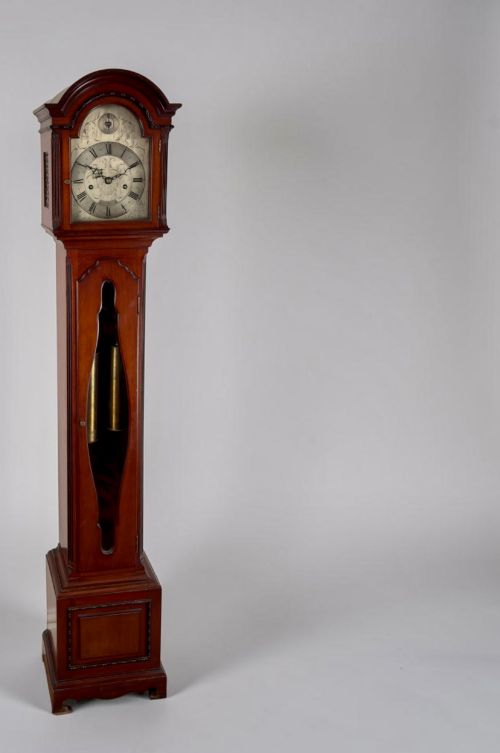
A silvered dial longcase clock is a tall, floor-standing timepiece featuring a metal face treated with silver to create a pale, reflective finish that highlights the engraved numerals and maker signatures. Buyers searching for a silvered dial longcase clock encounter forms ranging from full-height Georgian mahogany examples to smaller Edwardian and Victorian grandmother clocks.
The evidence shows pieces spanning the eighteenth century through to the nineteen twenties, with Georgian and Regency periods heavily represented alongside later iterations. Cases appear in mahogany, flame mahogany, walnut and oak, often housing brass movements alongside the distinctive silvered metal dials.
Makers recorded across the periods include notable provincial and London names such as William Allam, James Tregent and Gillett & Johnston, offering variations from standard eight-day movements to specialised regulators and chiming mechanisms.
Distinguishing quality
Quality in these timepieces rests upon the crispness of the dial engraving and the uniform application of the silvered finish, which should remain clear and legible against the metal ground. The execution of the cabinetwork dictates value, where figured timbers, balanced proportions and fine joinery separate standard examples from finer metropolitan pieces.
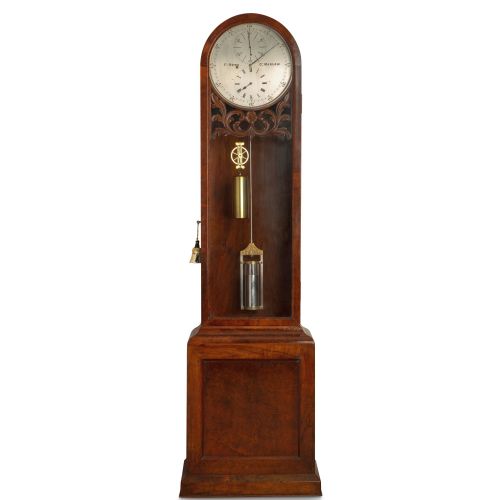
The sophistication of the internal movement further defines the hierarchy, distinguishing simpler thirty-hour or standard eight-day clocks from complex regulators, twin fusee systems or chiming mechanisms produced by accomplished makers.
Listings feature movements ranging from early eighteenth-century brass mechanisms to nineteenth-century precision regulators housed in mahogany and oak.
Gillett and Johnston·William Allam·James Tregent·William Chisholm·Standring of Bolton·Pearce and Sons·Frederick Rowe·Archibald Collier·Richard Rowell·Thomas King·John Taylor
The Silvered Dial Longcase Clock Glossary
- Silvered metal
- A metal plate treated with a silver compound to produce a pale, matte-reflective surface that enhances engraved clock numerals. It forms the readable face of the dial.
- Chapter ring
- The circular band on a clock face that bears the hour and minute numerals. On these pieces, it is typically silvered brass.
- Regulator
- A precision pendulum clock designed for exact timekeeping and often used as a standard for setting other timepieces. They frequently feature simplified, highly legible silvered dials.
- Break arch
- A dial shape featuring an arched top section above the square dial plate. This space often houses subsidiary dials, maker signatures or decorative brasswork.
- Grandmother clock
- A smaller, more slender version of the traditional longcase or grandfather clock, appearing frequently in Edwardian and later periods. They suit rooms with lower ceilings while retaining full mechanical movements.
Silvered Dial Longcase Clock: Frequently Asked Questions
What is a silvered dial longcase clock?
A silvered dial longcase clock is a tall floor-standing timepiece featuring a metal face treated with silver to provide a bright background for engraved black numerals.
These clocks combine tall wooden cases in mahogany, oak or walnut with mechanical movements driven by weights or springs.
How do I tell an 18th-century clock from a later one?
Eighteenth-century examples often feature square or break-arch brass dials with silvered chapter rings housed in solid oak or mahogany cases. Later nineteenth-century and Edwardian pieces frequently introduce refined veneers, slender proportions or specialised regulator movements.
Examining the construction of the case timber and the style of the engraved lettering on the dial helps indicate the period of manufacture.
Where should I place a longcase clock?
Longcase clocks require a stable, dry interior wall with a firm floor to ensure the pendulum swings evenly and the case remains plumb. Hallways, living rooms and studies provide suitable environments where temperature fluctuations are minimal.
Sufficient vertical clearance is essential, matching the height of the specific piece, whether it is a full-sized Georgian floor clock or a smaller grandmother clock.
What is the difference between a grandfather and grandmother clock?
A grandfather clock is a full-sized longcase clock standing typically over six feet tall, designed to house long weights and pendulums. A grandmother clock is a smaller, scaled-down version produced in the late nineteenth and twentieth centuries.
Both utilise similar silvered dial and mechanical movement principles, but the grandmother clock offers a more compact footprint for smaller spaces.