


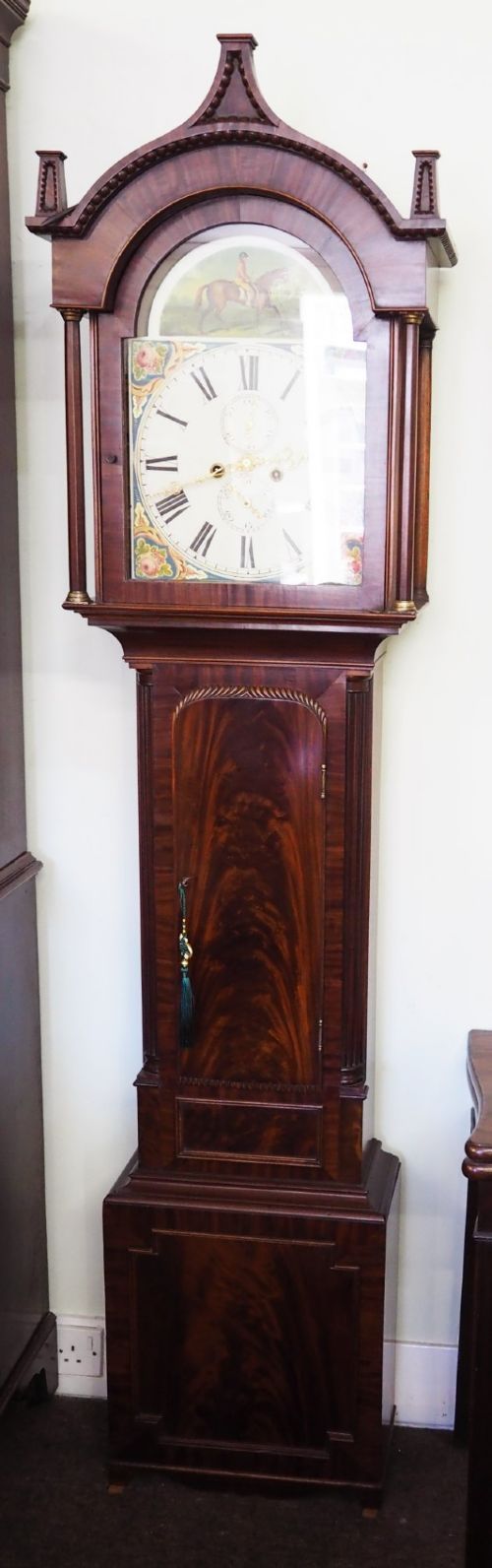


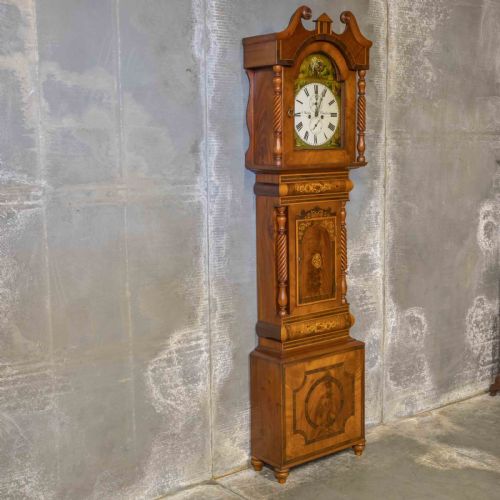
Regency Mahogany Tall Clock
A regency mahogany tall clock brings the measured presence of the early nineteenth century into a room through rich timber and precise timekeeping.
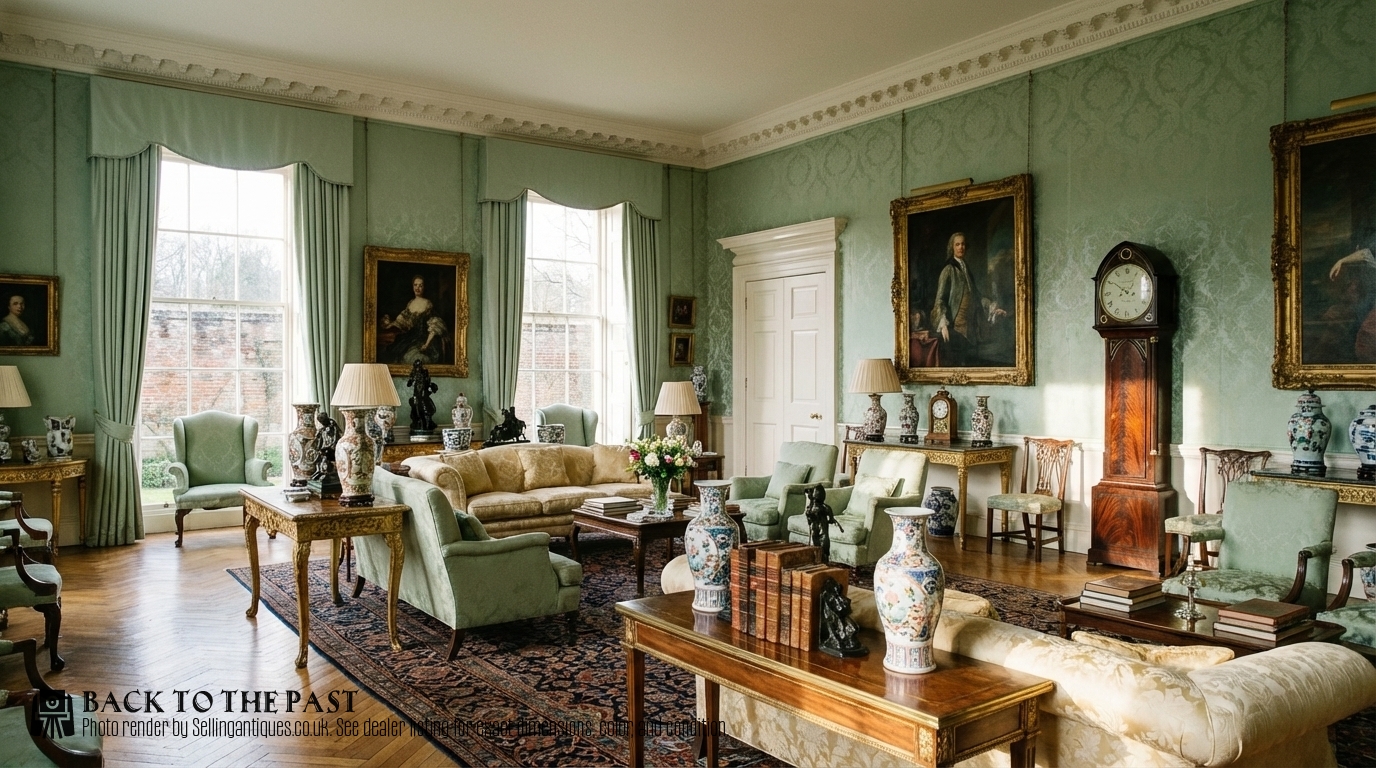
Regency Mahogany Tall Clock
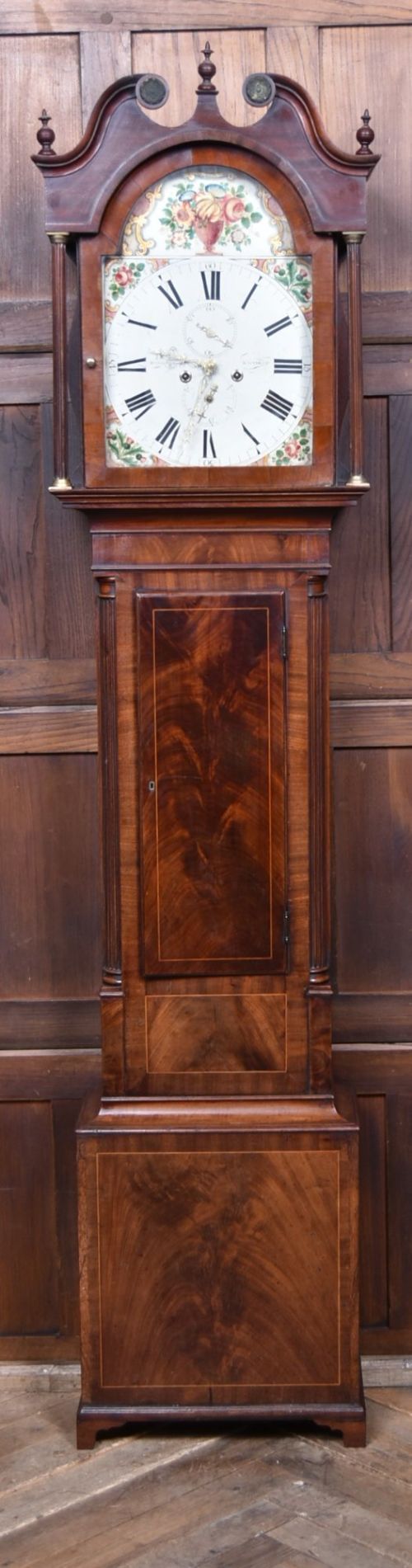
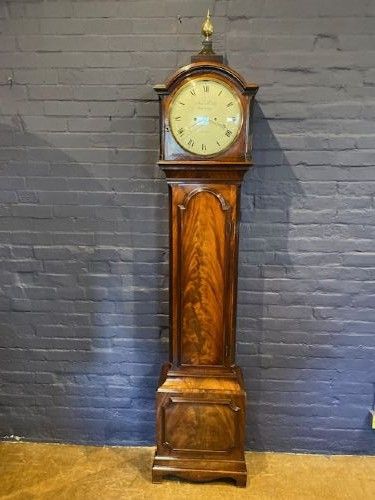
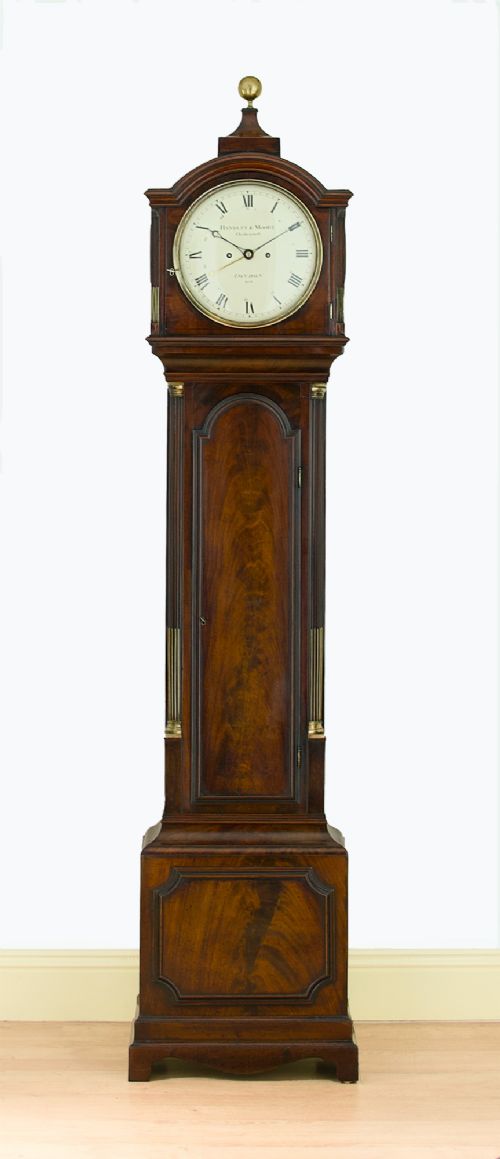
A regency mahogany tall clock stands as a commanding domestic timepiece, uniting architectural proportion with mechanical precision. These tall clocks, frequently termed longcase or grandfather clocks in the record, reflect the cabinetmaking standards of the Georgian and Regency eras.
Most examples encountered here date from the nineteenth century, spanning periods from George III through the Regency and into Victorian times. Makers from London, provincial English towns, and Scottish burghs signed these works, placing regional clockmaking traditions on display.
The standard form comprises a tall wooden trunk housing the weight-driven movement, surmounted by a glazed hood protecting the painted iron, enamel, or brass dial. Regional variations emerge clearly, from Scottish longcase clocks to London regulators and moonphase models.
Materials and construction
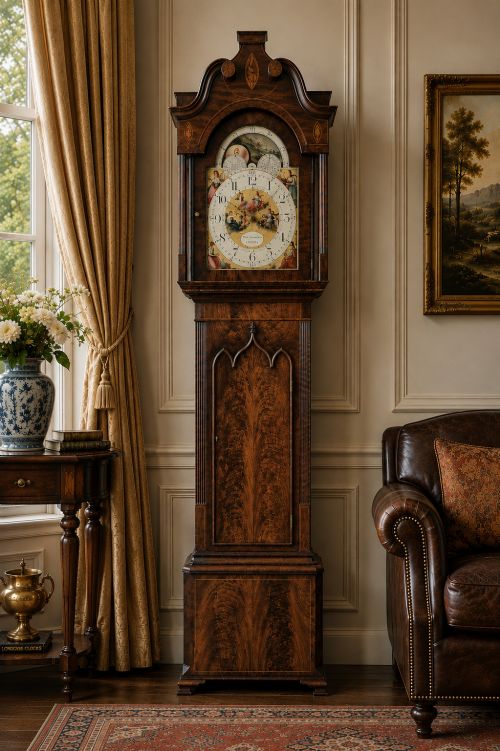
Cabinetmakers utilised solid mahogany and flame mahogany veneer over secondary timbers, often incorporating fine stringing, inlay, or lancet tops. The figured grain of flame mahogany provided surfaces with deep optical movement, particularly on the door and base panels.
Dial construction combined brass, painted iron, and enamel, housing complex eight-day, quarter-striking, or rocking-seesaw movements. Glazed brass bezel frames protected the dial faces while allowing clear visibility of the subsidiary seconds and calendar hands.
The evidence records regional variations from Scottish longcase clocks to London regulators across the nineteenth century.
Distinctions in quality
Quality rests upon the crispness of the cabinetwork, the depth of figuring in the mahogany veneer, and the reputation of the horologist named on the dial. London firms and noted regional makers achieved higher standards of movement finish and casework architecture.
The integration of regional dials with complex complications, such as moonphase indicators or quarter-striking trains, elevates certain examples above standard time-only pieces. Preservation of the original dial signatures and movement components governs the long-term integrity of each clock.
Hendrie Ogg·James McCabe·Handley & Moore·Samuel Kellett·William Moon·David Morice·Parkinson & Frodsham·Dwerrihouse & Carter·Jno Lane·Ganthony Of London·Hampston Prince & Cattles·John Harvey·Perigal·Thos Newsom·Charles Denham
The Regency Mahogany Tall Clock Glossary
- Flame mahogany
- A veneer cut from timber where branches join the trunk, producing a distinctive flickering flame pattern. This highly figured wood defines the facade of better Regency cases.
- Longcase clock
- An alternative designation for a tall clock driven by weights suspended within the trunk. These floor-standing timepieces are also widely known as grandfather clocks.
- Moonphase
- A dial mechanism tracking the lunar cycle through a rotating disc behind the painted face. It appears on more ambitious longcase clocks.
- Regulator
- A precision timekeeper designed for exact time measurement, often featuring a deadbeat escapement and a heavy pendulum. These movements prioritise accuracy above domestic chiming.
- Quarter-striking
- A train mechanism that sounds the quarters on a set of bells in addition to striking the hours. This complication requires greater mechanical intricacy within the movement.
Regency Mahogany Tall Clock: Frequently Asked Questions
Where were these clocks made?
Makers operated across London, provincial English counties, and Scottish burghs, signing dials from towns such as Edinburgh, York, and Durham.
Local timber choices and regional dial painting styles often identify the specific workshop origin of a piece.
What is an eight-day movement?
An eight-day movement requires winding once every week, driven by weights suspended on cords or chains inside the trunk.
This movement type was standard for higher-quality domestic tall clocks of the period.
How do I identify a Regency case?
Regency cases exhibit architectural restraint, architectural mouldings, and the extensive use of figured flame mahogany veneer.
Details such as lancet heads and brass inlay help distinguish them from earlier Georgian iterations.
How should I care for a tall clock?
Position the clock on a stable floor away from direct sunlight and temperature fluctuations that affect wood and metal.
Professional setup ensures the pendulum beats evenly and the weights hang clear of the case interior.