
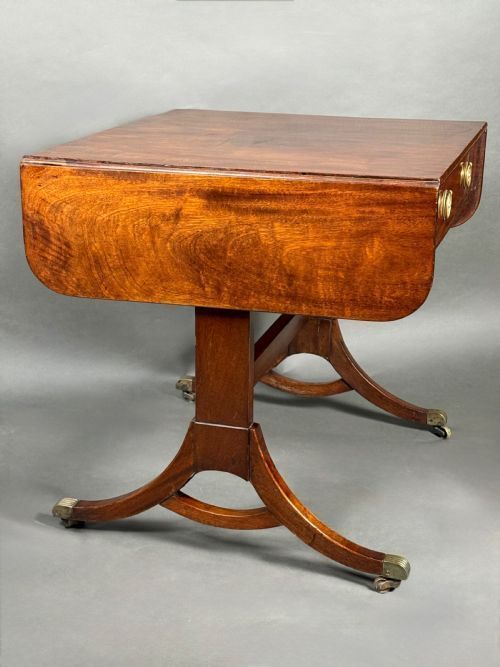
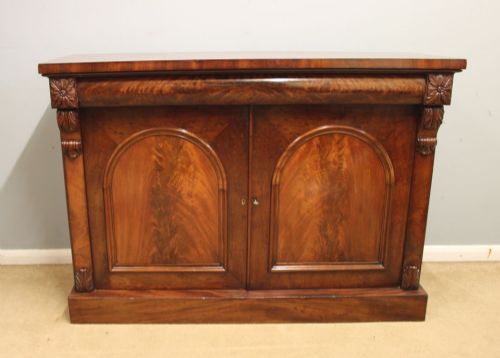
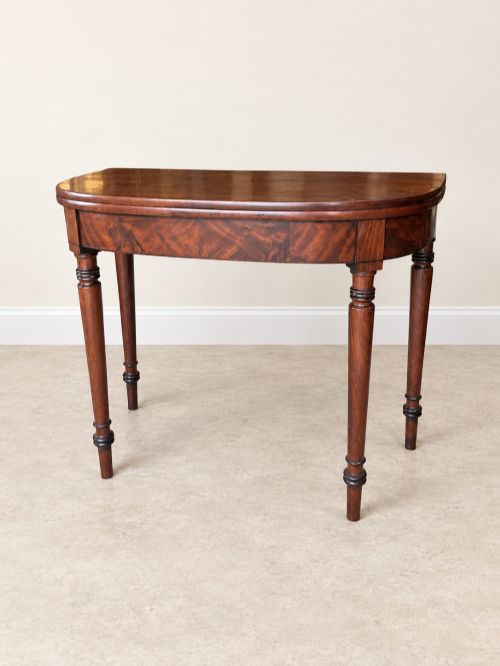
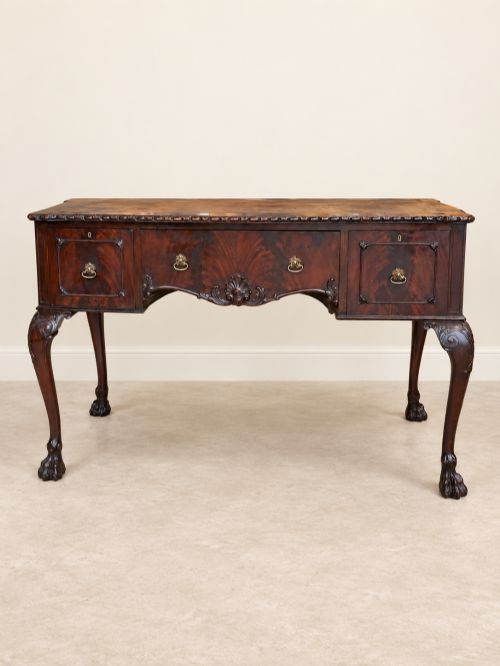
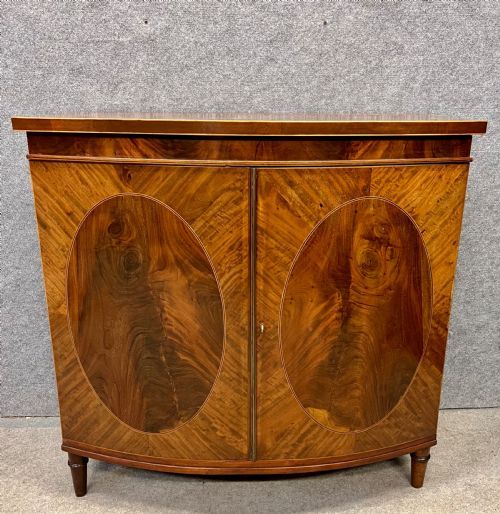
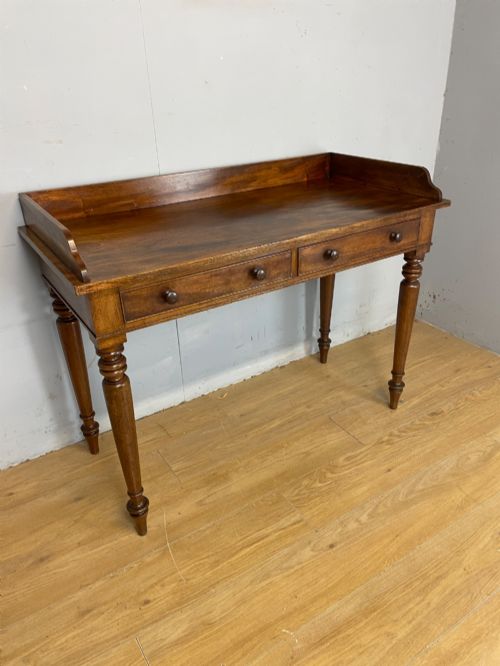
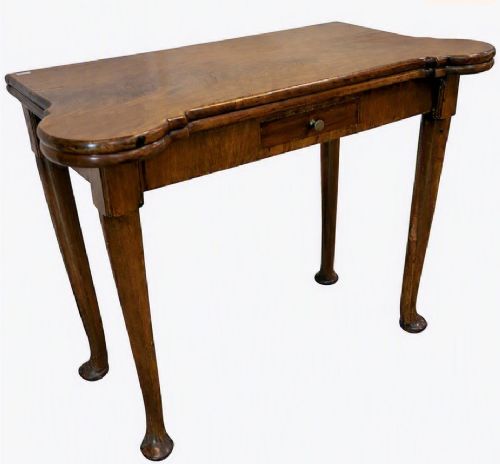
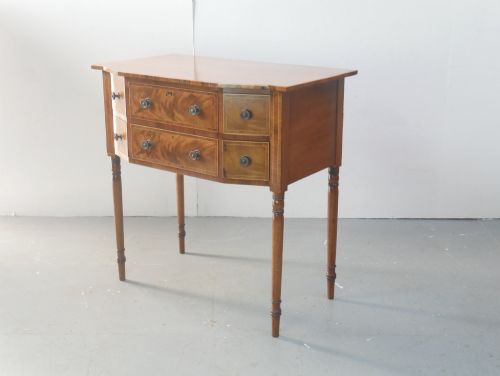
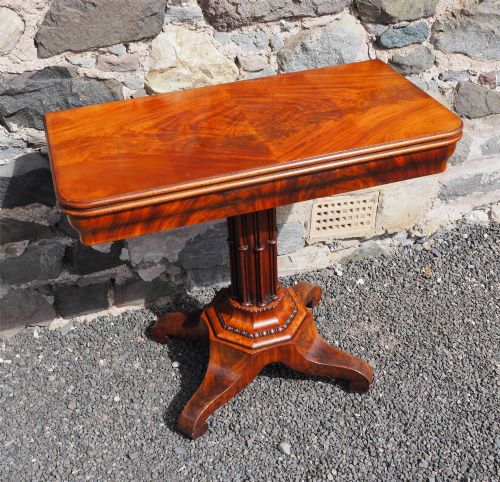
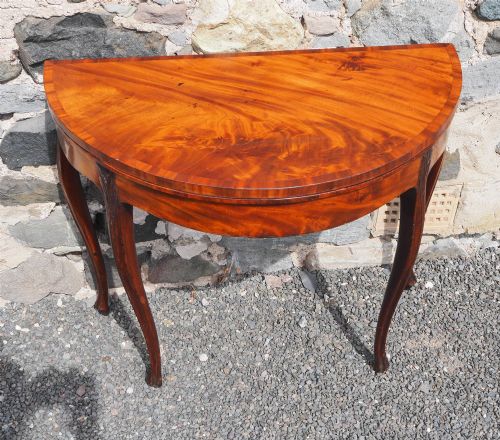
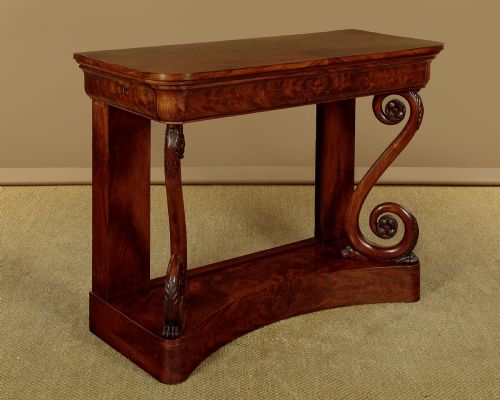
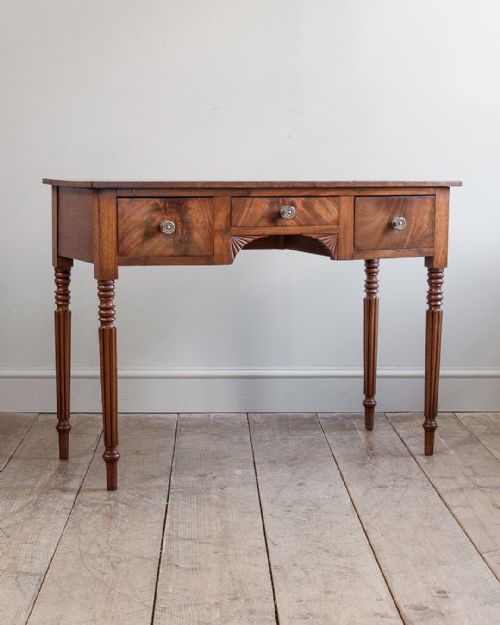
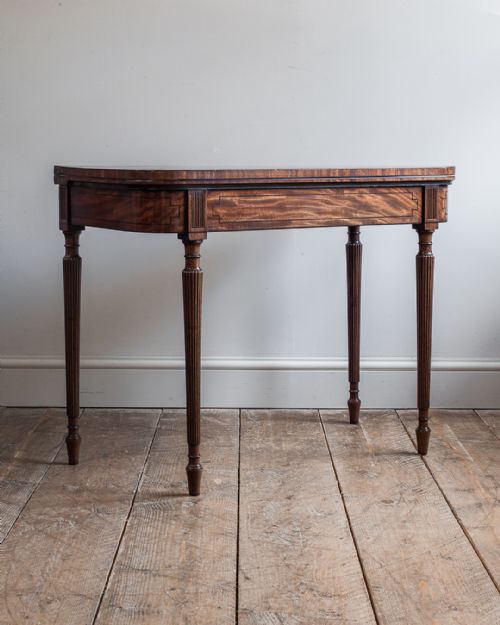
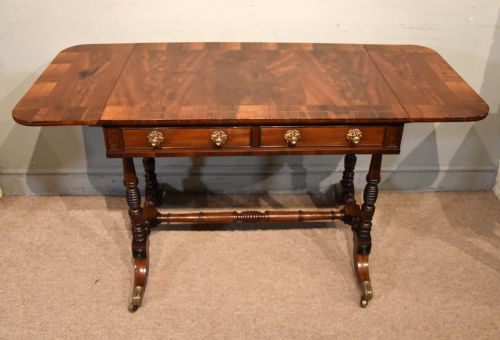
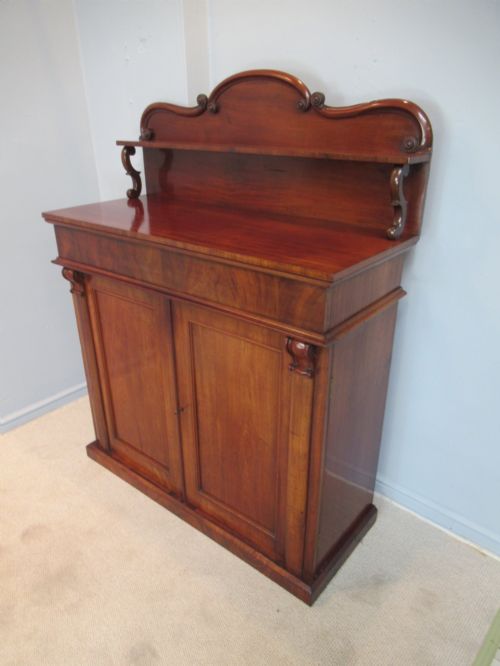
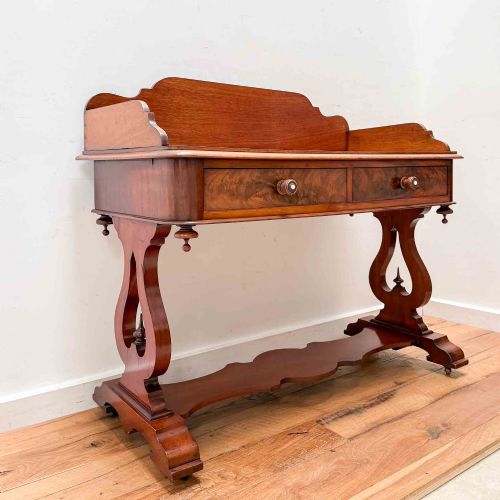
Flame Mahogany Console
A flame mahogany console brings striking figured timber and architectural presence to a hallway or reception room.
Flame Mahogany Console
A flame mahogany console is a foundational piece of period furniture designed to stand against a wall in a hallway, drawing room or dining space, often taking the form of a console table, serving table or sideboard.
Buyers seeking this phrase encounter pieces spanning the Georgian, Regency, William IV and Victorian eras, alongside French Empire designs that frequently incorporate imported marble tops.
The version met most often on this page is the 19th-century console or serving table, exhibiting rich figuring across the front apron and top surface.
Materials and construction
Cabinetmakers constructed these tables using a solid secondary timber carcase, such as pine or oak, onto which thin veneers of flame mahogany were applied with animal glue to create dramatic grain patterns.
Makers selected timber cut from the branching points of the mahogany tree, where the grain twists to produce the characteristic feather or flame effect.
Higher-tier examples incorporate secondary materials such as white marble tops, giltwood carvings, or cast brass mounts and feet.
Flame Mahogany Console Retail Price Guide 2026
Typical asking prices for flame mahogany console among the pieces listed under this phrase on Sellingantiques today, from the lower quarter to the upper quarter. They describe what is for sale here now, not the wider market.
Listings span the 18th, 19th, and early 20th centuries, featuring Georgian, Regency, William IV, and Victorian periods alongside French Empire styles.
Factors of quality
Quality rests principally in the selection and matching of the flame mahogany veneer, where symmetry and intensity of the figuring dictate visual impact.
The crispness of carved details, such as dolphin supports or classical feet, separates standard production from exceptional cabinet work.
Structural integrity, original surface patination, and the retention of period mounts or marble tops further distinguish finer examples.
The Flame Mahogany Console Glossary
- Flame mahogany veneer
- A thin slice of wood cut from the fork of a mahogany tree that displays a distinctive feather-like or flamelike grain pattern. Cabinetmakers prized this veneer for its decorative brilliance on prominent surfaces like tabletops and drawer fronts.
- Console table
- A table designed to be fixed against a wall, traditionally supported by two or four legs or scroll brackets. These tables often served decorative or functional roles in grand entrance halls.
- Serving table
- A large, sturdy table used in dining rooms for holding dishes before service or during meals. They frequently share architectural profiles with console tables.
- Marble top
- A slab of polished stone fitted to the upper surface of a table or cabinet. French Empire consoles frequently utilised white or coloured marble tops.
- Giltwood
- Wood that has been coated with gold leaf or gold paint for decorative effect. It often appears on carved base supports of continental console tables.
Flame Mahogany Console: Frequently Asked Questions
Where should a console table go?
A flame mahogany console is traditionally placed against a prominent wall in a hallway, reception room, or dining space where it provides a surface for lamps and decorative objects.
Because these tables are shallow by design, they fit well in narrow passages without obstructing movement.
How do I clean flame mahogany?
Dust the timber regularly with a soft, dry cloth to prevent particulate accumulation on the delicate veneer surface.
Avoid commercial silicone sprays or excessive moisture, applying traditional beeswax polish sparingly to maintain the natural lustre.
Are marble top consoles heavy?
Consoles featuring stone inserts carry significant weight due to the density of the marble slab fitted into the timber frame.
When moving these pieces, lift them from the base structure rather than the top surface to protect the joints.
How can I tell a Regency console from a Victorian one?
Regency pieces often display restrained classical proportions with brass inlay or carved paw feet, reflecting early nineteenth-century taste.
Victorian examples frequently introduce heavier proportions, bolder scrollwork, and darker finishes typical of later production.