
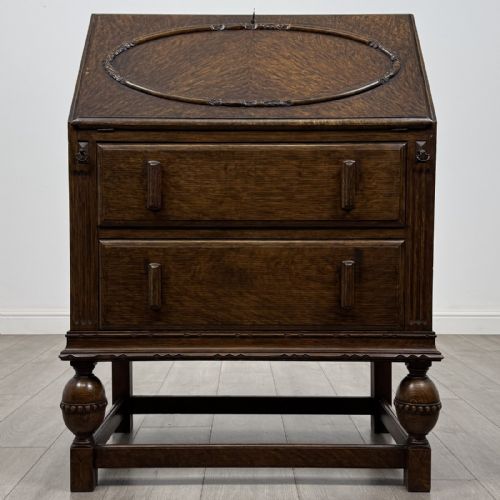
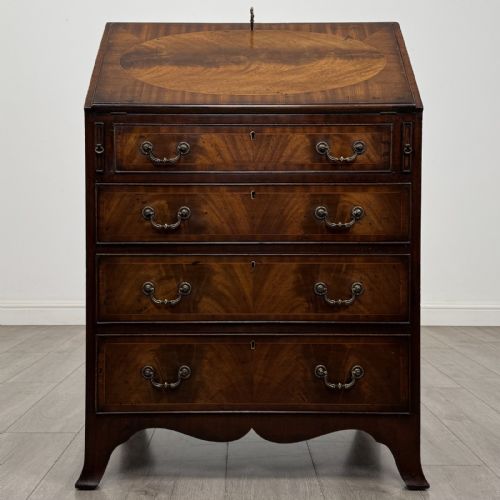
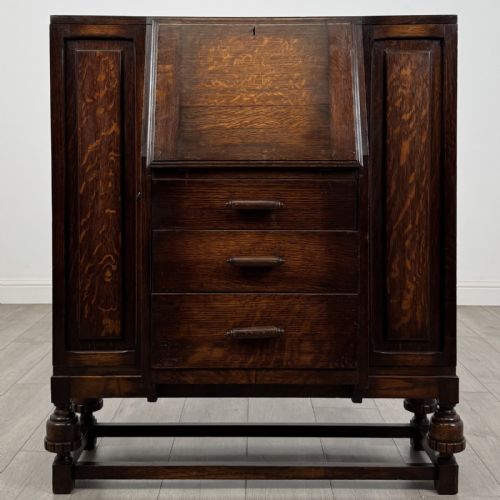
Fitted Bureau Desk
Fitted bureau desks bring together practical writing compartments and concealed storage, offering a traditional workspace built with cabinet-making skill.
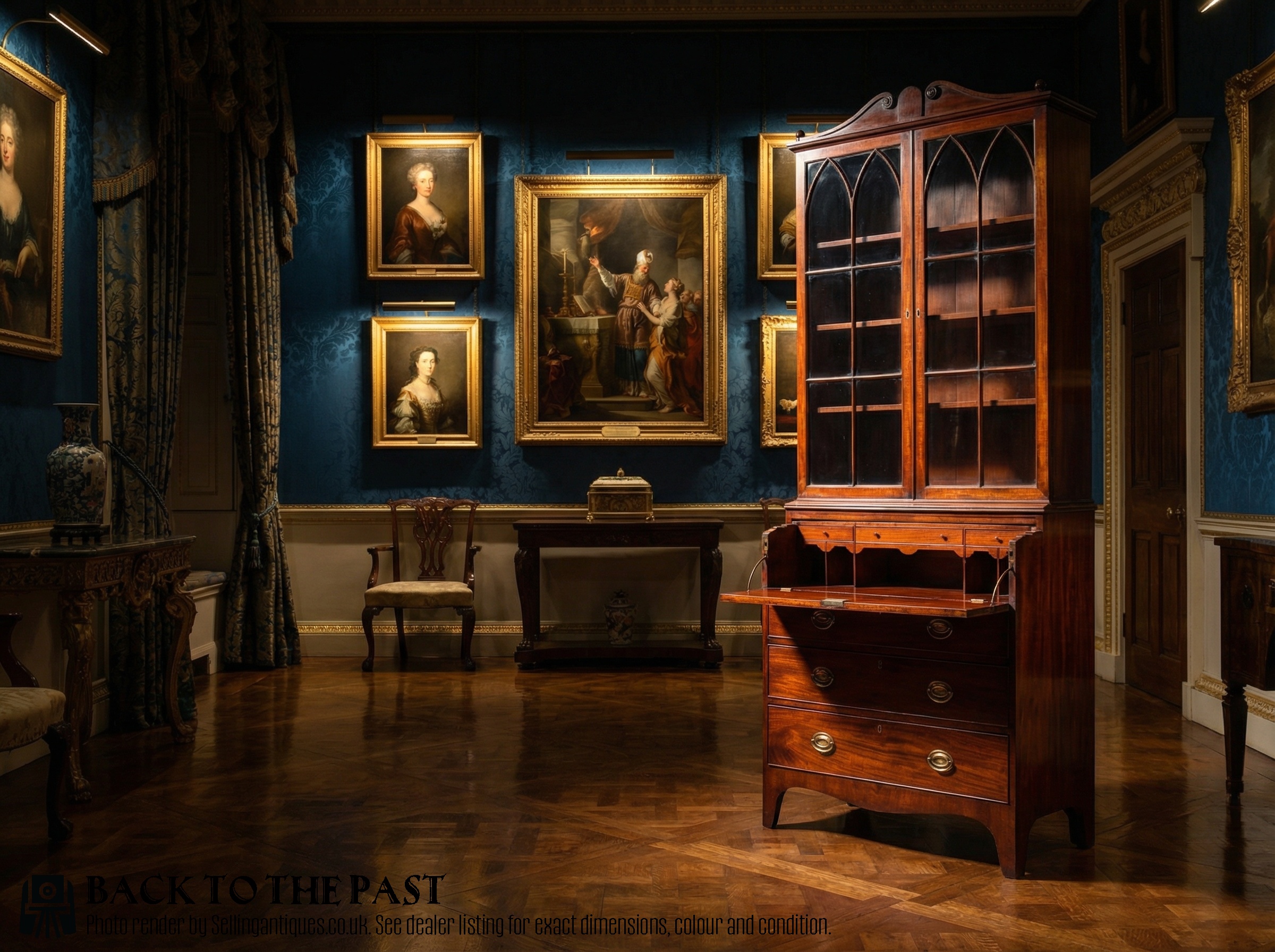
Fitted Bureau Desk
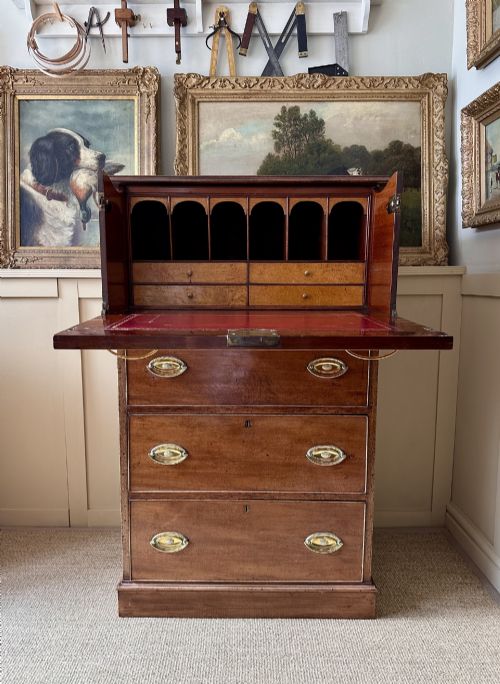
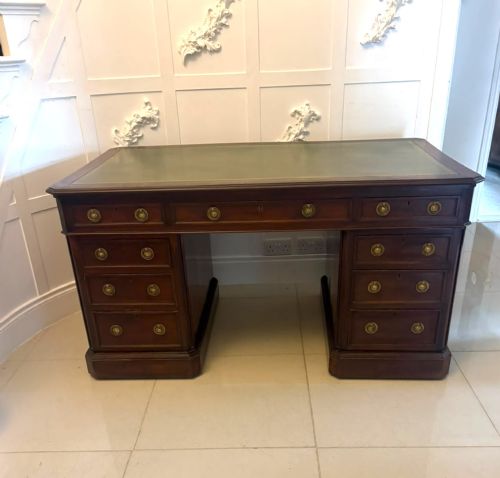
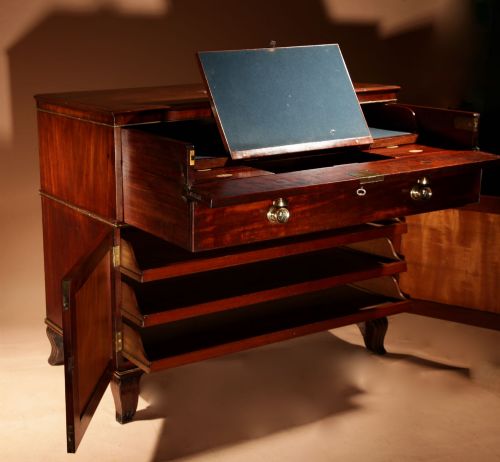
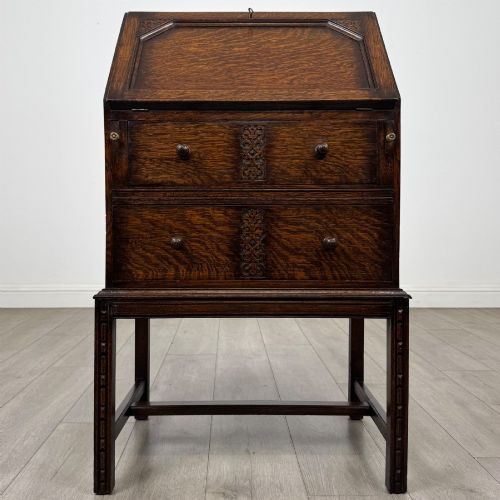
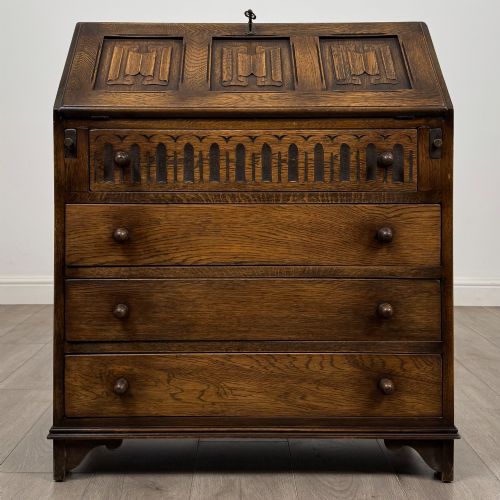
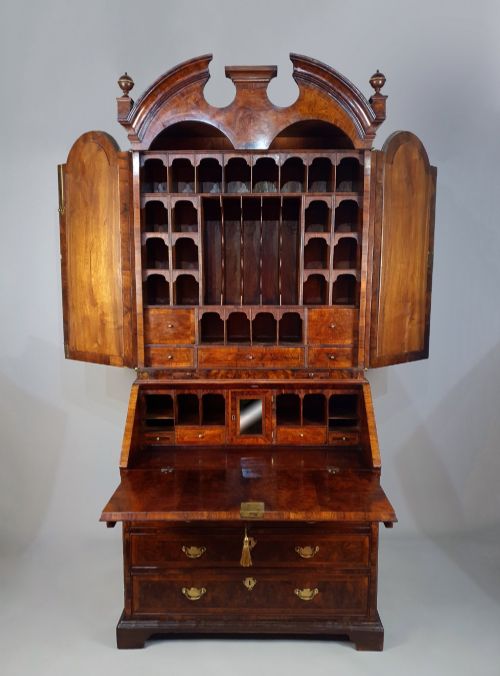
A fitted bureau desk serves as a private writing surface that conceals internal compartments, pigeonholes, and small drawers behind a drop-down fall front or cylinder lid. These pieces combine workspace and storage into a single item of furniture designed for correspondence and household administration.
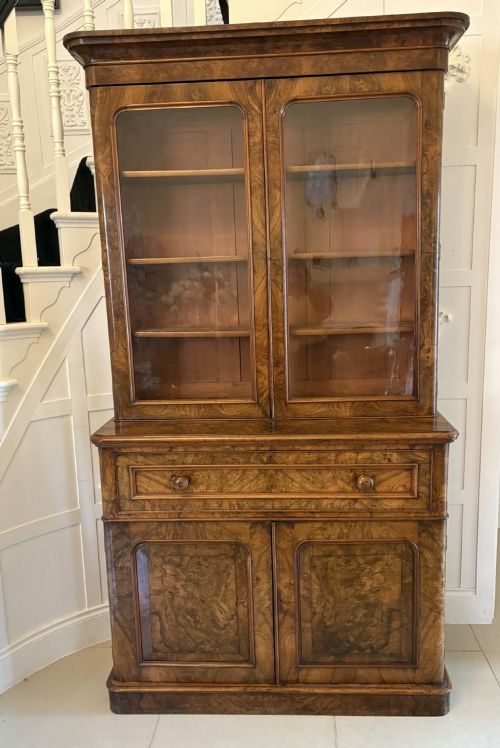
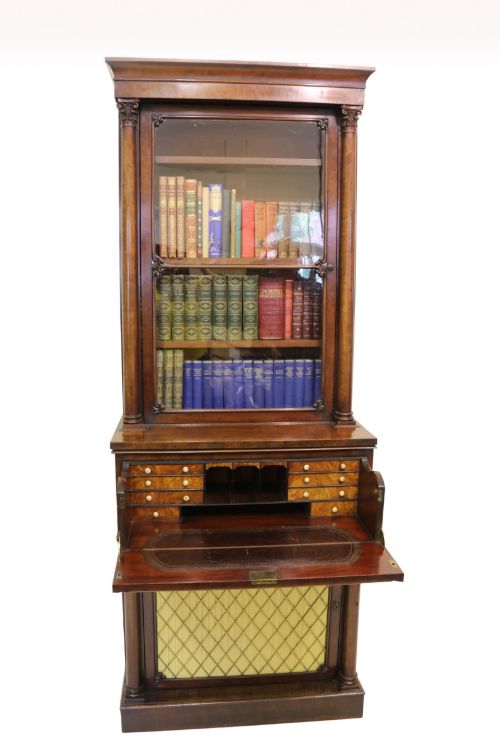
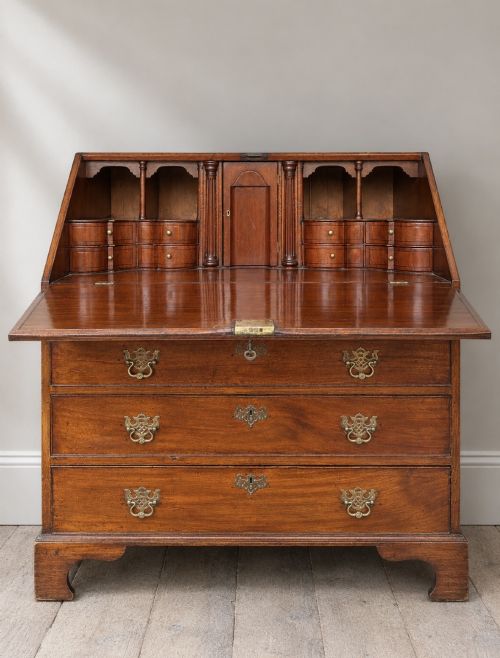
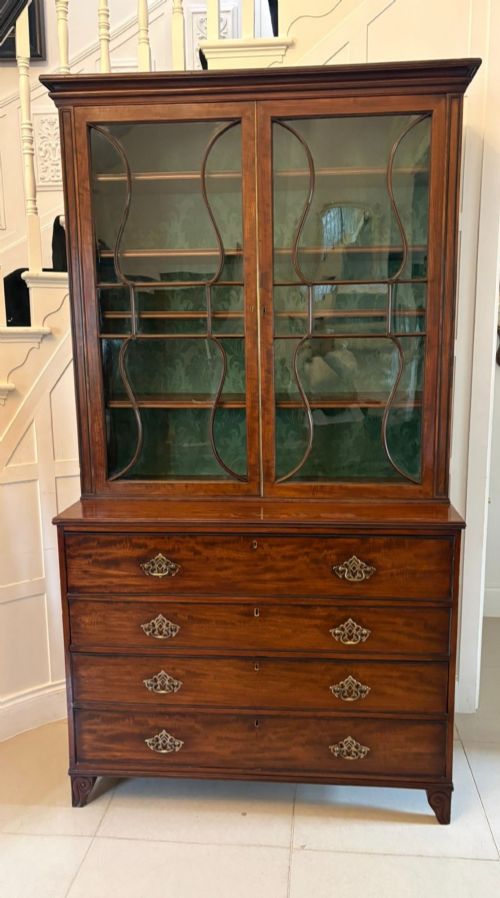
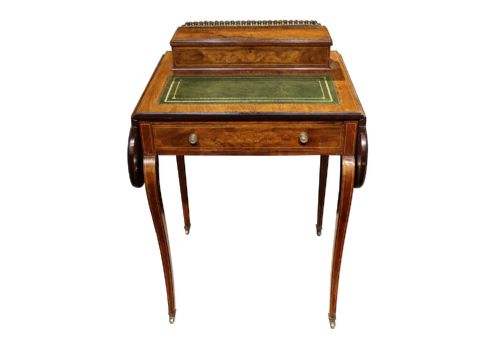
The version most commonly encountered on this page is the Georgian or 18th-century mahogany bureau, alongside later variants from the Victorian, Edwardian, and Art Deco periods. Many examples incorporate upper bookcases with glazed doors, chest of drawers bases, or compact proportions suited to smaller rooms.
Materials and construction methods
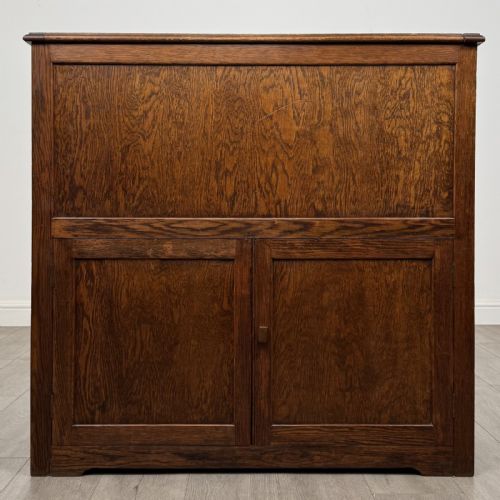
Cabinet-makers relied heavily on mahogany, walnut, and oak as structural and decorative timbers, frequently selecting figured veneers, burr walnut, flame mahogany, and satinwood for drawer fronts and writing surfaces. Secondary woods like pine or oak were used for internal drawer linings and backboards.
Joinery techniques included dovetailed drawer construction, panelled fall fronts, and specialised internal pigeonholes assembled with thin partitions. Hardware consisted of cast brass handles, escutcheons, and bracket or plinth feet supporting the main carcase.
Listings feature periods spanning from the 18th century and Georgian era through the Regency, Victorian, Edwardian, and 1930s Art Deco periods.
Assessing quality and execution
Quality rests in the selection of timber veneers and the precision of the internal stationery fittings, where secondary woods and secondary drawers reveal the maker's attention to detail. Superior pieces maintain crisp proportions, seamless movement in the drop-down writing flap, and well-organized internal compartments.
The integration of upper bookcases, matching grain patterns across drawer fronts, and original brass hardware distinguish finer workshops from standard production. Minor alterations to internal fittings or replaced feet alter the integrity of an antique piece.
Gillows of Lancaster·Heal's·Tudor & Burrey
The Fitted Bureau Desk Glossary
- Fall front
- A hinged writing flap that pulls down to create a horizontal desk surface. It conceals the internal drawers and pigeonholes when closed.
- Secretaire
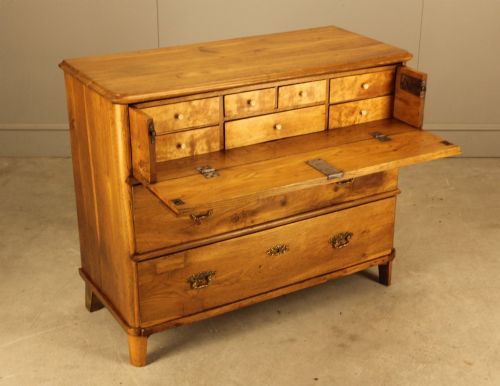
- A piece of furniture containing a built-in writing drawer or compartment with a fold-down front. It often appears disguised as a standard chest of drawers or bookcase base.
- Pigeonhole
- A small, open compartment within the fitted interior used for sorting letters and papers. These compartments are characteristic of traditional bureau desks.
- Bracket foot
- A structural foot shape attached to the bottom corners of a cabinet carcase. It typically forms a simple architectural bracket profile in 18th-century pieces.
- Escritoire
- An alternative term for a writing cabinet or bureau desk. The name derives from the French word for writing.
Fitted Bureau Desk: Frequently Asked Questions
What is a fitted bureau desk?
A fitted bureau desk is a cabinet featuring a hinged writing surface that opens to reveal internal compartments, pigeonholes, and small drawers. These pieces provide both a concealed workspace and general storage.
Most examples date from the 18th to the early 20th centuries, utilising timbers like mahogany, walnut, and oak. They range from compact freestanding desks to large bureau bookcases.
How do I date a bureau desk?
Dating relies on observing timber choices, construction techniques, hardware, and stylistic details. 18th-century pieces often feature solid walnut or mahogany with dovetailed drawer linings and bracket feet.
Later Victorian and Edwardian examples introduce machine-cut elements, satinwood stringing, or cylinder fronts. Comparing the internal woodwork and secondary timbers helps confirm the period.
How were these desks used?
These desks served as private spaces for writing letters, managing household accounts, and storing important documents. The drop-down flap provided an immediate writing surface.
Internal drawers and pigeonholes kept stationery organised, while the lockable fall front secured confidential papers when not in use.
Where should I place a bureau desk?
A bureau desk suits studies, living rooms, or bedrooms due to its compact footprint and dual function as a cabinet and a desk. Placing it away from direct sunlight protects polished wood surfaces and veneers.
Sufficient clearance must be allowed in front of the piece for the fall-down flap or pull-out writing surface to open fully.