
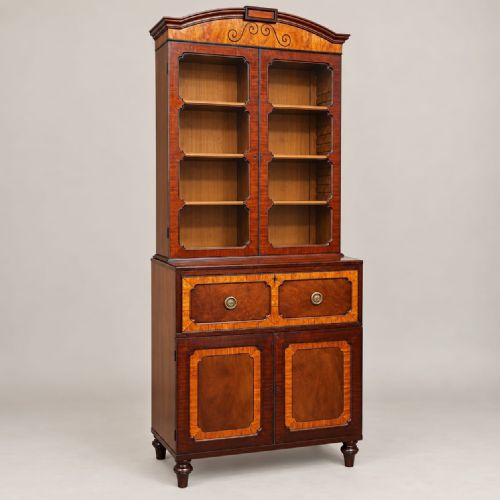
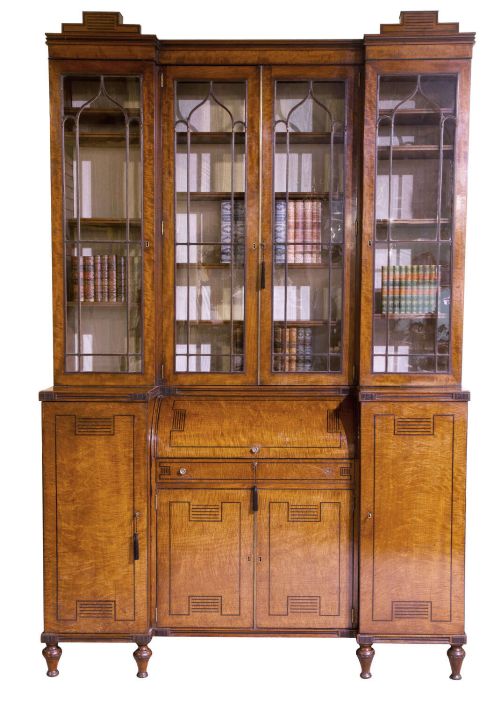
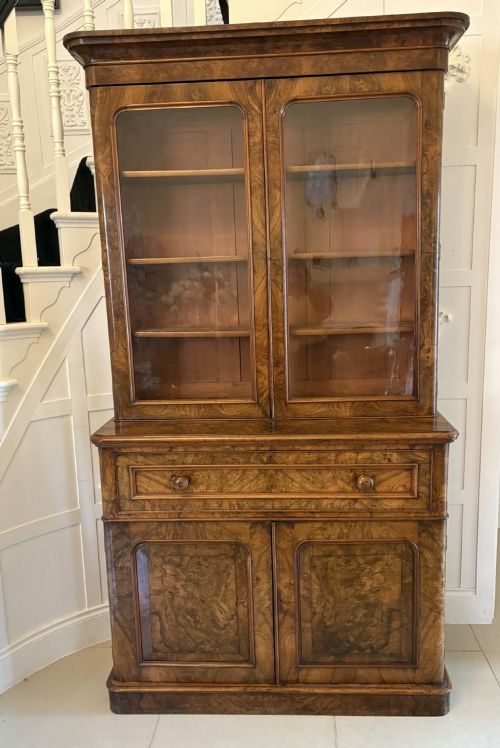
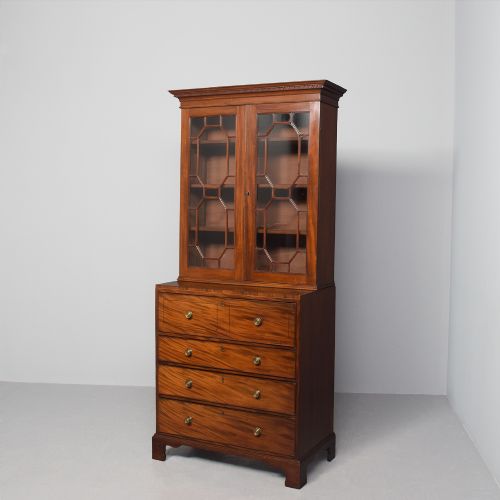
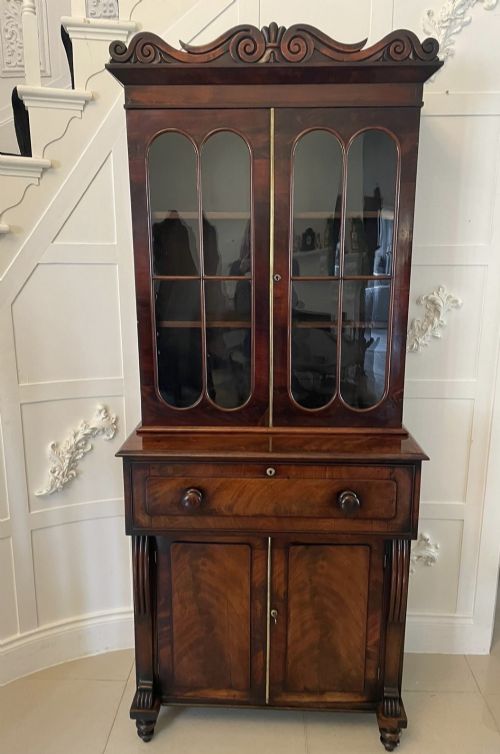
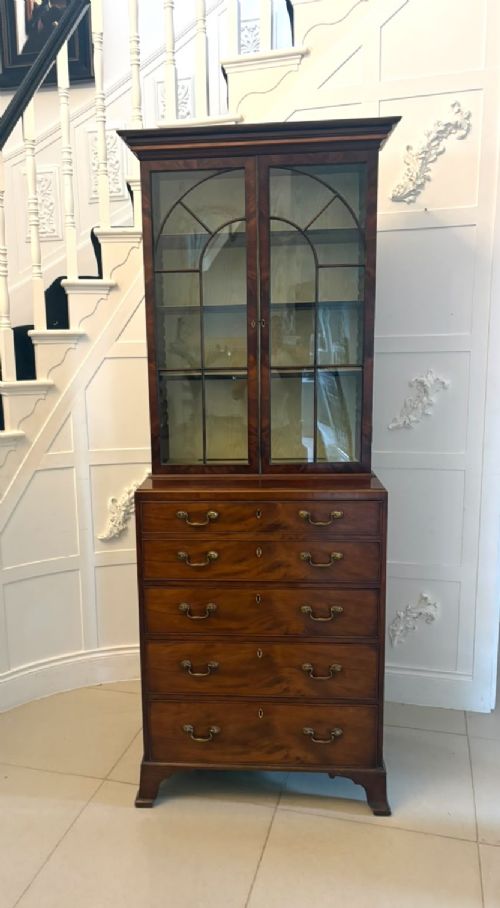
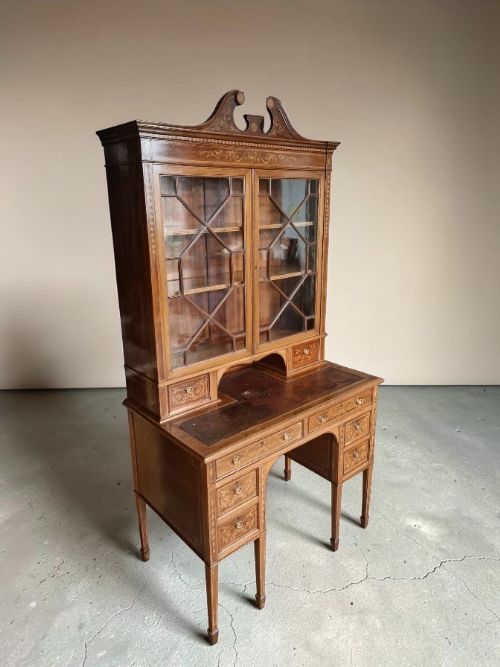
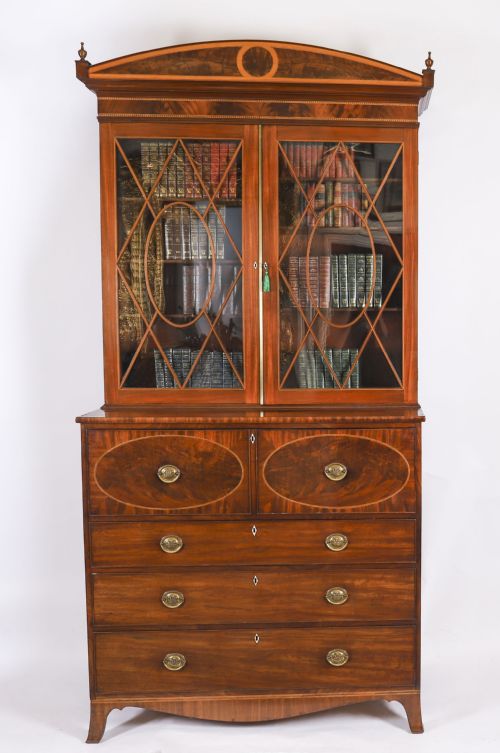
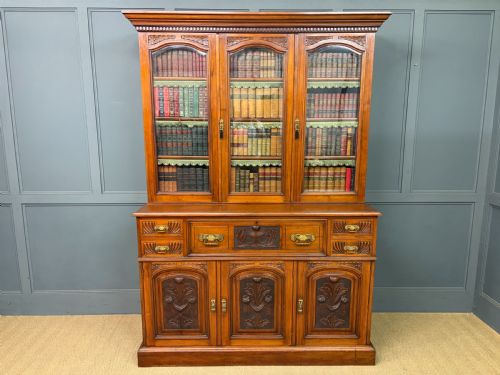

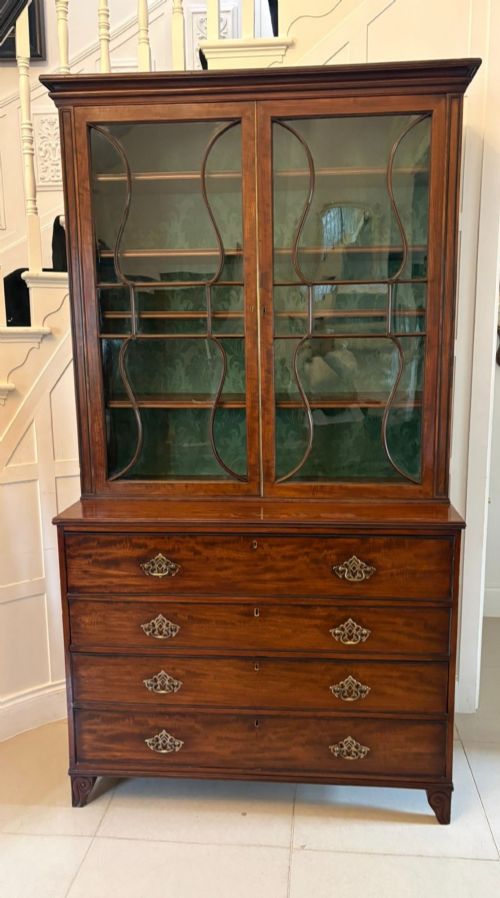
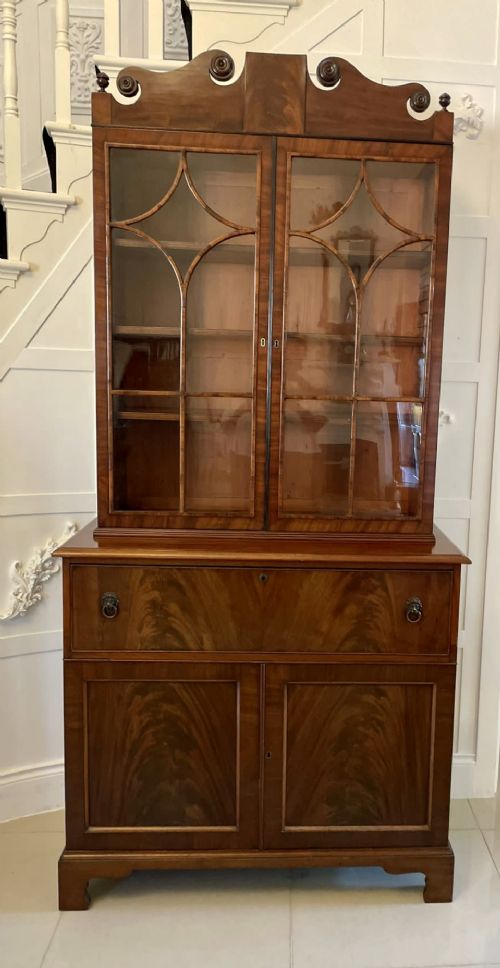
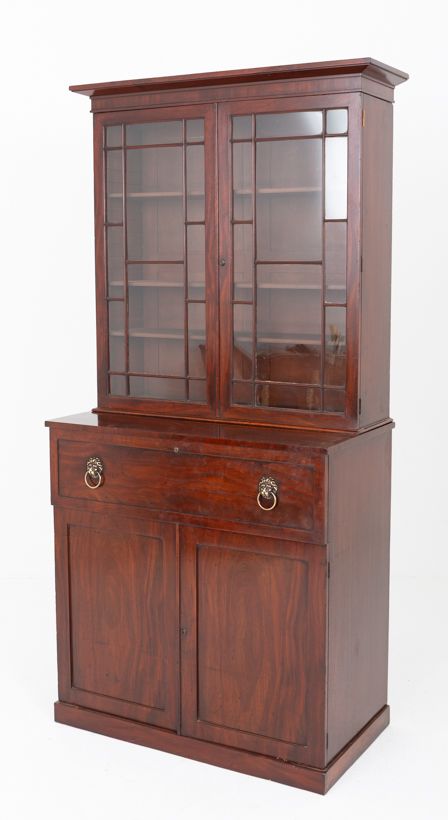
Glazed Display Bookcase Desk
A glazed display bookcase desk combines upper shelving behind glass doors with a drop-front writing surface, serving as a dual-purpose library and writing station.
Glazed Display Bookcase Desk
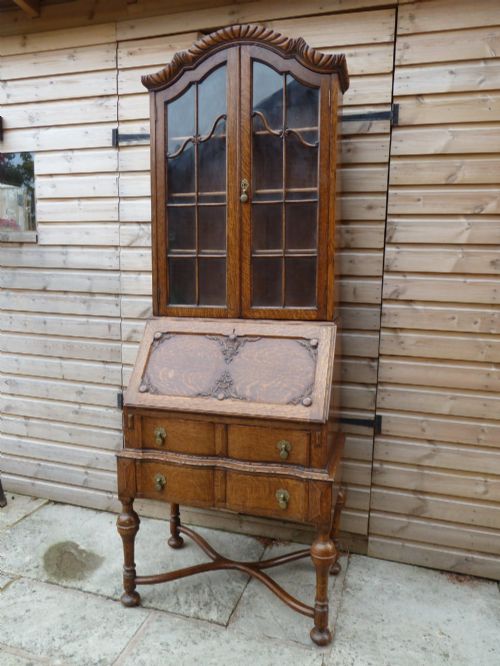
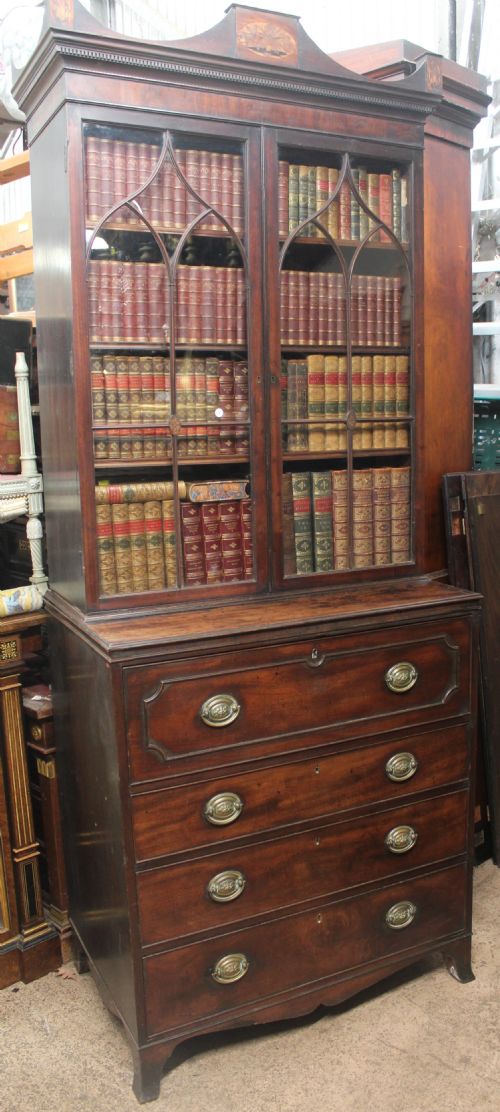
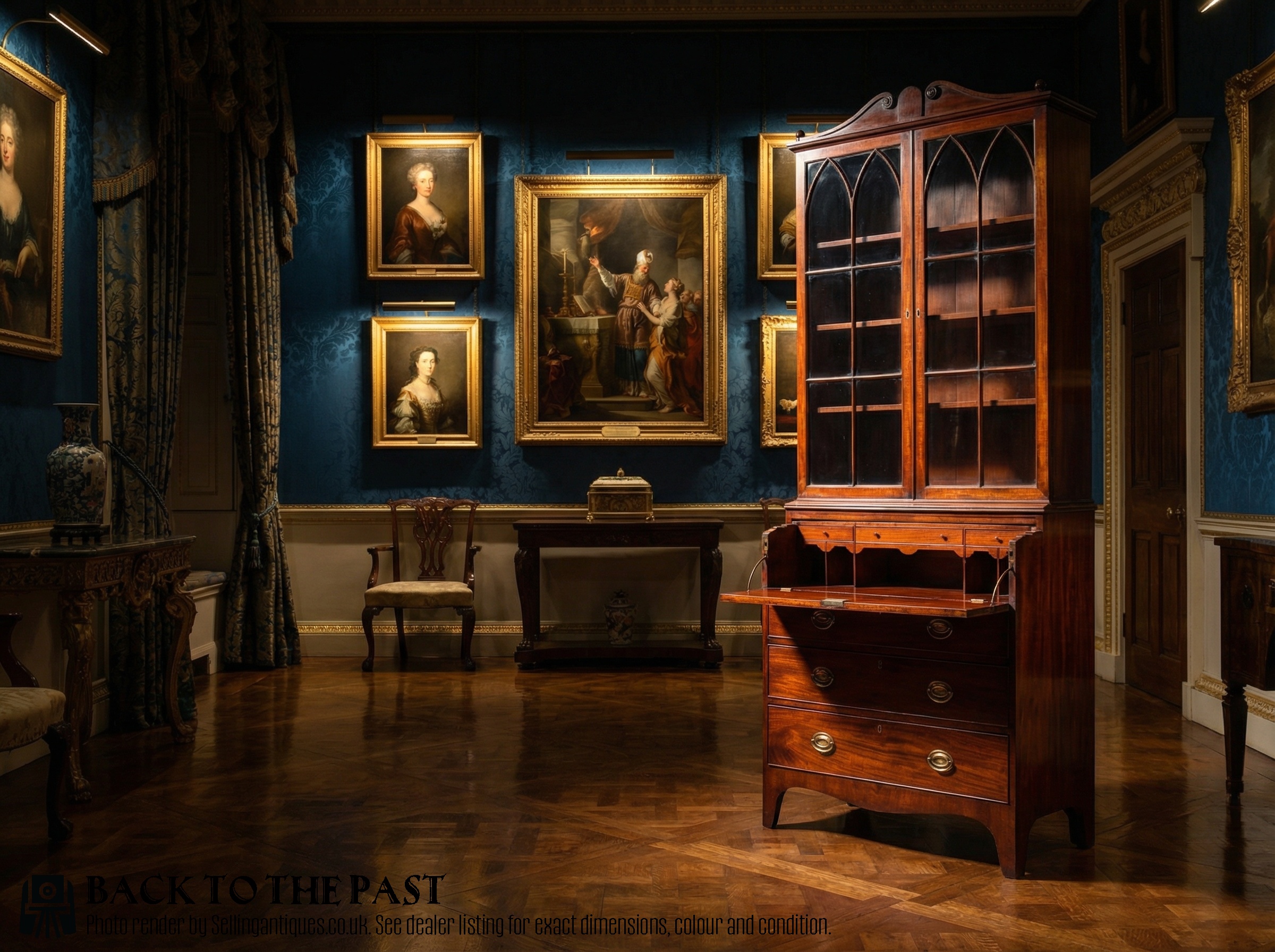
A glazed display bookcase desk unites a shelved upper cabinet enclosed by glass with a lower section housing a fitted writing drawer or drop-front desk. These combination pieces appear across the Georgian, Victorian, and Edwardian periods.
The standard form encountered here relies on mahogany, walnut, or oak, pairing glazed upper doors with a fitted interior of small drawers and pigeonholes above lower storage cupboards.
Makers adapted this format across multiple eras, ranging from George III mahogany library pieces to Edwardian satinwood designs and later Arts and Crafts oak cabinets.
Materials and construction methods
Cabinetmakers constructed these pieces primarily in solid timber and veneers, frequently employing figured mahogany, flame mahogany, walnut, burr walnut, satinwood, and oak.
Glazing takes the form of individual glass panes held within wooden frames or astragal bars, while brass hardware secures doors and fitted desk compartments.
Some secretaire drawers hide secret compartments behind miniature pigeonholes designed for private correspondence.
Assessing quality in construction and detail
Quality shows in the choice of timber figurations, such as matched flame mahogany or intricate satinwood marquetry, alongside the precision of the glazed astragal bars.
Interior execution distinguishes standard examples from finer works, visible in the complexity of the fitted writing compartment, secret drawers, and the use of secondary woods.
Gillows·Mercier Frères·Maple and Co·Morris and Co
The Glazed Display Bookcase Desk Glossary
- Secretaire
- A writing drawer with a drop-front that conceals a fitted interior of pigeonholes and small drawers.
- Astragal glazed
- Glass doors divided into smaller panes by narrow wooden mouldings or bars.
- Flame mahogany
- Timber veneer cut to display a distinctive flame-like grain pattern.
- Inlay
- Material inserted into cavities within a wood surface to form decorative patterns.
- Fitted interior
- The arrangement of small drawers, compartments, and pigeonholes revealed when a desk flap opens.
Glazed Display Bookcase Desk: Frequently Asked Questions
What is a glazed display bookcase desk used for?
These pieces function simultaneously as a bookcase for displaying volumes behind glass doors and as a practical writing desk via a pull-out or drop-down secretaire drawer.
The upper section protects books from dust while keeping them visible, and the lower desk provides a dedicated surface for correspondence.
How do I tell a Georgian piece from a Victorian one?
Georgian examples often utilise proportioned mahogany with fine astragal glazing bars and subtle inlay, reflecting neoclassical restraint.
Victorian pieces tend to feature heavier timbers, including burr walnut and carved oak, alongside bolder mouldings and wider proportions.
What woods are most common?
Mahogany remains the dominant timber across the 18th and 19th centuries, frequently selected for its rich colour and stability.
Walnut, satinwood, and oak also appear regularly, particularly in specific revival styles and later Edwardian variations.
How do I integrate one into a modern room?
The dual storage capacity makes these cabinets practical for home offices or living rooms where books and writing materials require organised space.
Positioning them away from direct heat sources helps protect antique wood veneers and historical glass panes.