
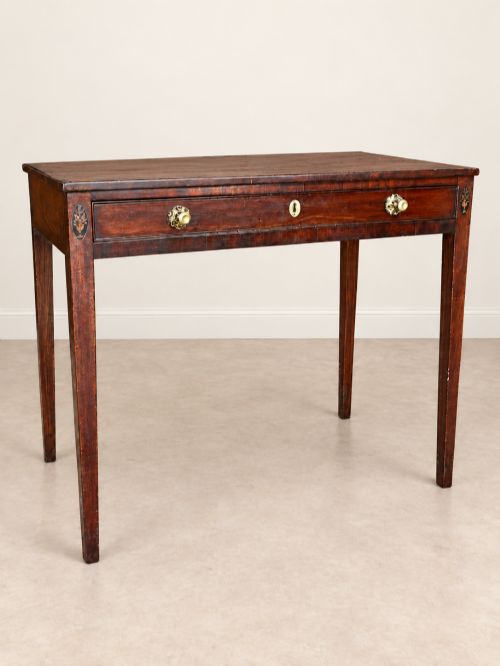
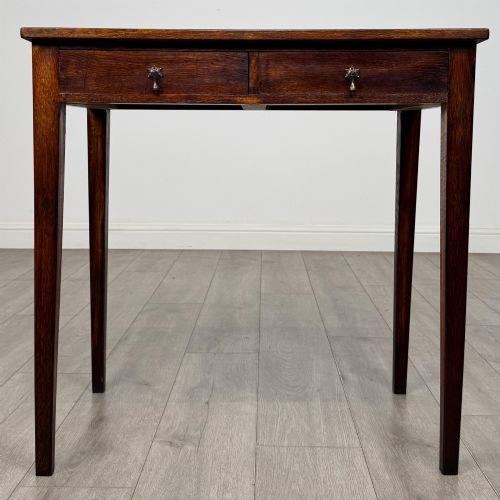
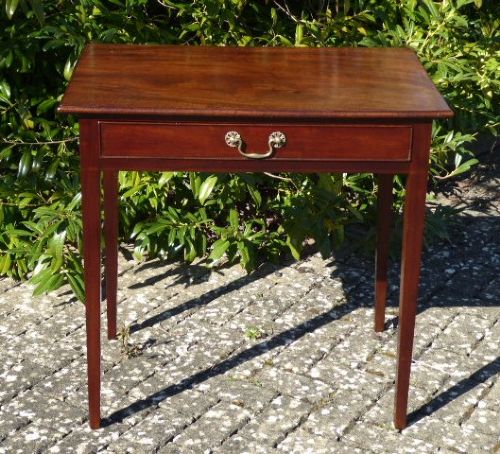
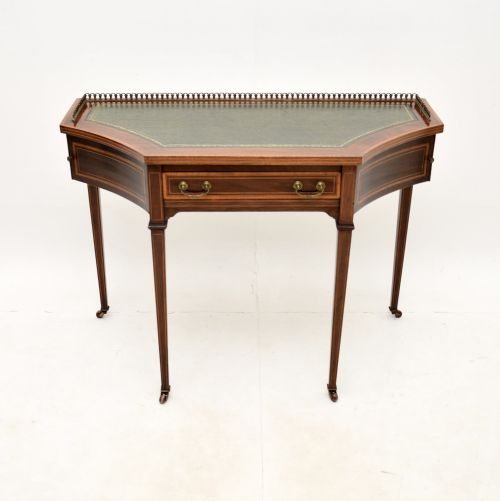
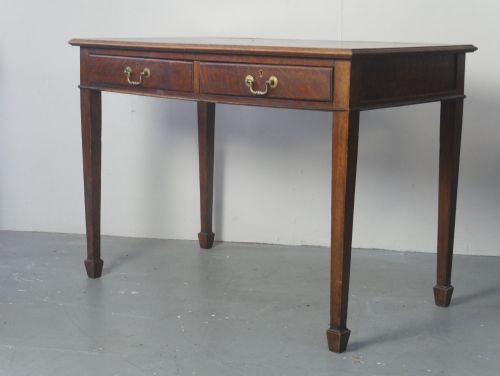
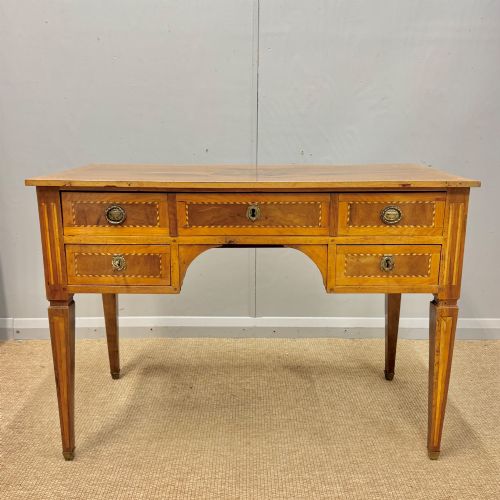
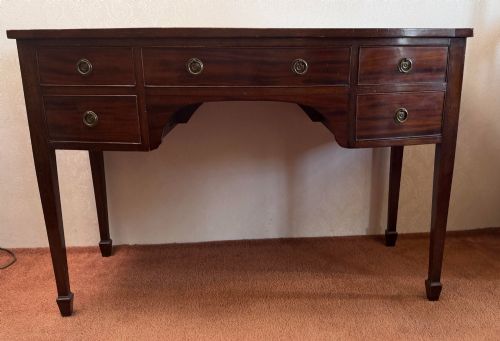
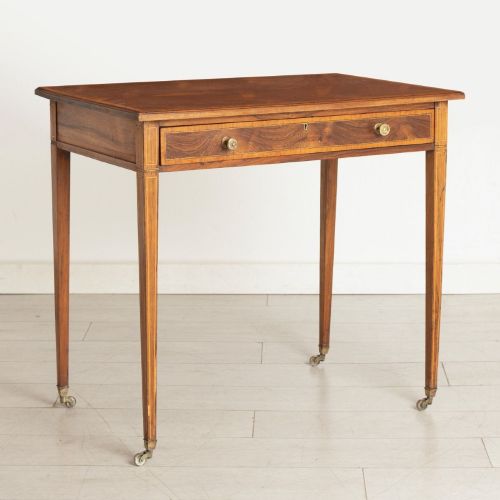
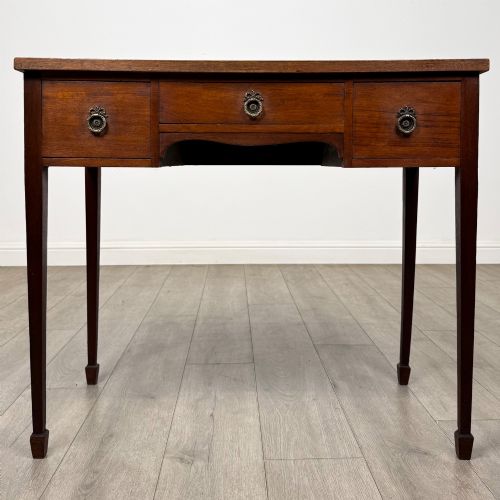
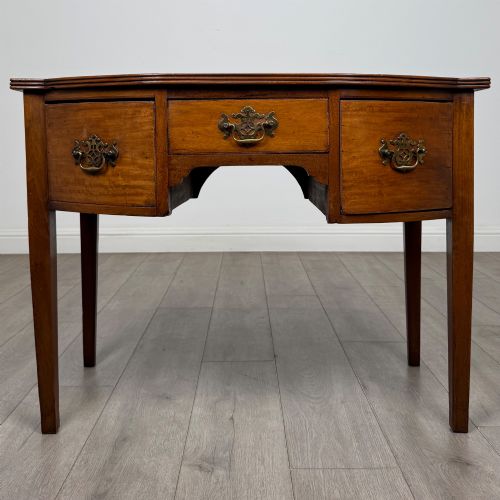
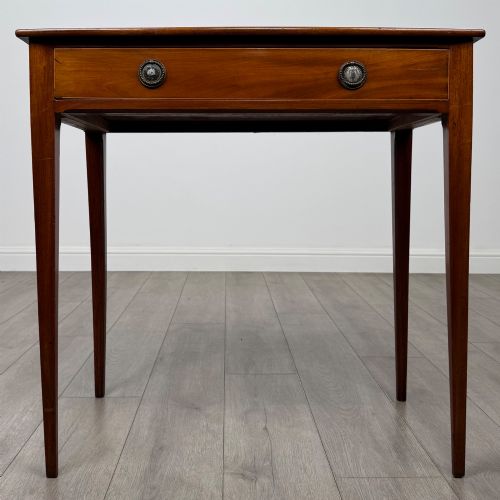
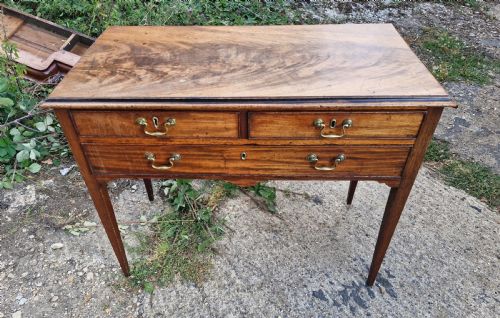
Tapering Leg Writing Table
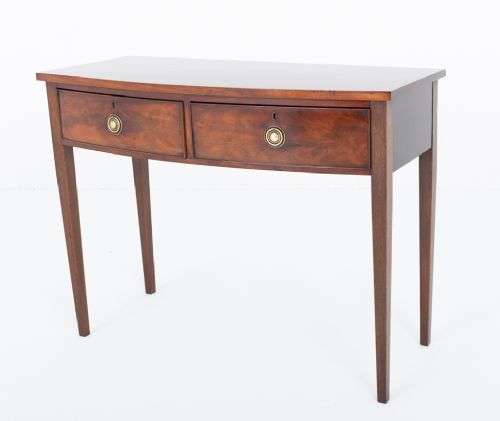
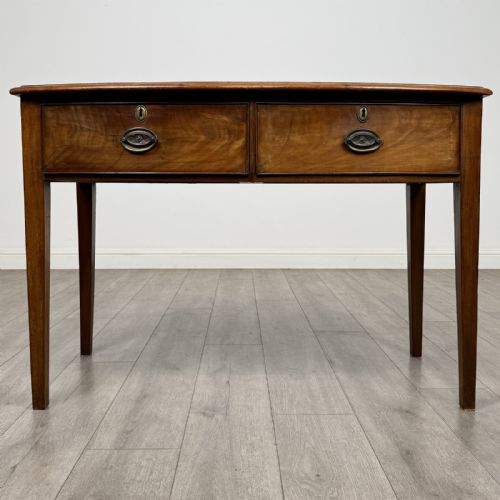
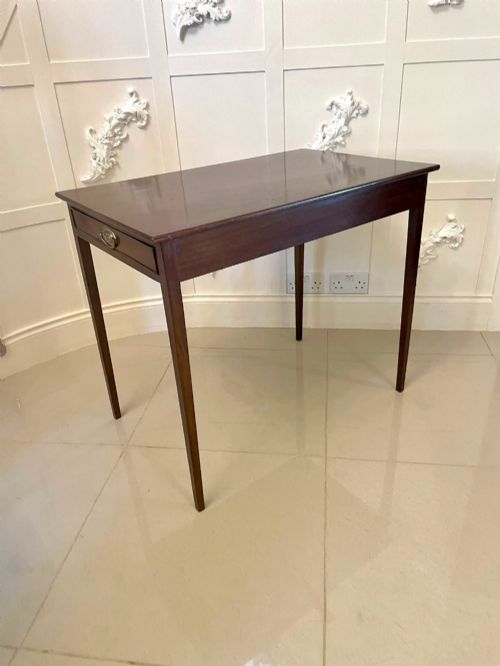
A tapering leg writing table offers a slim, practical surface for correspondence, most commonly found here in mahogany from the Georgian and Edwardian eras.
Tapering Leg Writing Table
A tapering leg writing table is a dedicated surface for letters and paperwork, typically elevated on slender supports that narrow toward the floor. When browsing this selection, you will encounter pieces ranging from compact Georgian and George III examples to Edwardian revivals.
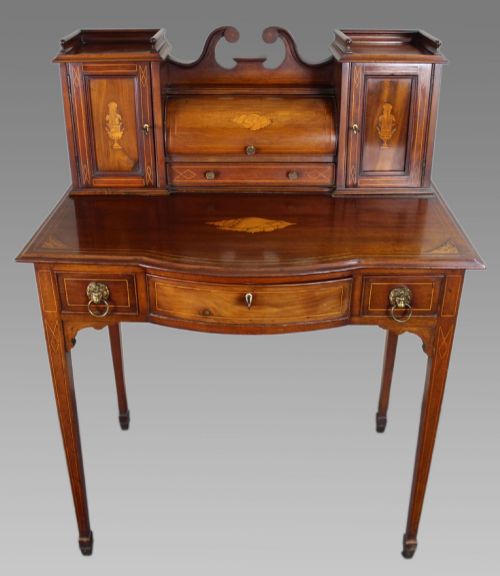
The forms vary from simple two-drawer desks and side tables to more elaborate bureau plats and Carlton House desks. Mahogany is the predominant timber, often enhanced with satinwood or subtle wood inlay.
Many of these tables date from the eighteenth and nineteenth centuries, alongside early twentieth-century interpretations. They bridge the gap between functional workspaces and refined household furniture.
Materials and construction methods
Cabinetmakers relied heavily on mahogany, oak, and walnut as primary timbers for these tables, occasionally employing rosewood or amboyna for finer surfaces. Pine and secondary softwoods appear in drawer linings and internal framing.
Decoration often involved delicate wood inlay, marquetry, and brass fittings, while some specific desks incorporated fitted leather writing surfaces. Legs were painstakingly shaped by hand to achieve the characteristic taper seen across these periods.
Some nineteenth-century French tables hide metamorphic mechanisms that transform side tables into fully functional desks with a single hidden motion.
Distinguishing quality in construction and detail
The standard of a writing table rests upon the crispness of its joinery and the selection of timber veneers. Superior examples display carefully matched grain patterns and finely executed inlay rather than painted surface decoration.
Hardware integrity and the smooth operation of drawers dictate the functional grade of each piece. Tables retaining their original brass handles and supple leather inserts command greater appreciation among discerning buyers.
The Tapering Leg Writing Table Glossary
- Tapering leg
- A support column that gradually narrows as it descends toward the floor. This feature lightens the overall profile of the desk.
- Inlay
- Pieces of contrasting timber or other materials fitted into recesses within the primary wood surface. It creates decorative geometric or floral motifs.
- Carlton House desk
- A U-shaped writing desk featuring a stepped superstructure of small drawers and compartments. It usually incorporates a leather-lined writing surface.
- Marquetry
- Elaborate veneer work arranged in pictorial or decorative patterns using various tinted woods. It requires immense skill to execute smoothly.
- Lowboy
- A small dressing or writing table featuring one or more rows of drawers beneath the top. They typically stand on four long tapering legs.
Tapering Leg Writing Table: Frequently Asked Questions
What is a tapering leg writing table?
A tapering leg writing table is a domestic desk designed for correspondence, characterised by slender legs that narrow towards the foot. These pieces frequently feature one or more drawers and flat writing surfaces.
They emerged as popular furnishings during the Georgian period and continued through the Edwardian era in various revival styles. Their compact proportions make them versatile additions to modern rooms.
How do I date a wooden writing desk?
Dating relies on observing construction methods, timber choices, and hardware styles. Georgian and early nineteenth-century pieces often utilise solid mahogany or oak with hand-cut dovetails in the drawer construction.
Later Edwardian versions frequently employ machine-sawn components and brighter satinwood stringing. Comparing the secondary woods inside the drawers also reveals the period of manufacture.
Where were writing tables placed historically?
Historically, writing tables stood against walls, in the centre of studies, or within private drawing rooms for managing personal correspondence. Freestanding versions allowed owners to sit away from the wall while working.
Their finished backs indicate they were intended to be viewed from all angles within a room. Smaller variants functioned easily as side tables when not in active use.
Are these desks suitable for daily laptop use?
Many antique writing tables possess sufficient depth and sturdy construction to accommodate modern laptops and paperwork. However, older drawer heights can occasionally sit lower than contemporary desk standards.
Checking the specific knee clearance and surface dimensions ensures comfortable daily use. Protecting leather inserts with a blotter preserves the antique surface during routine work.