



Antique Carlton House Desk
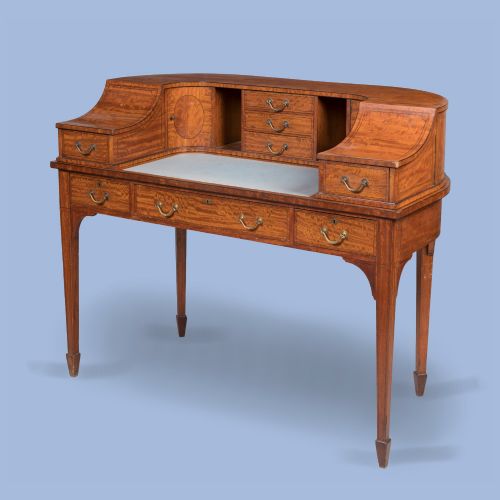
An antique carlton house desk is a distinguished writing table defined by its tiered superstructure of small drawers and compartments, offering both elegance and practical organisation.
Identifying an antique carlton house desk
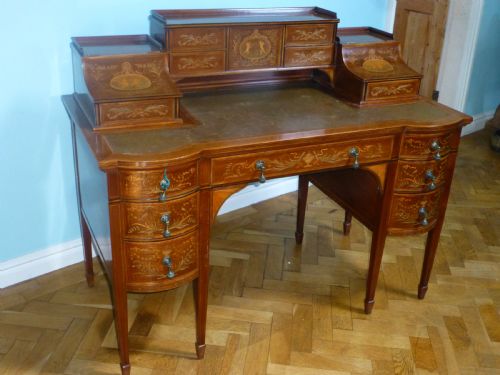
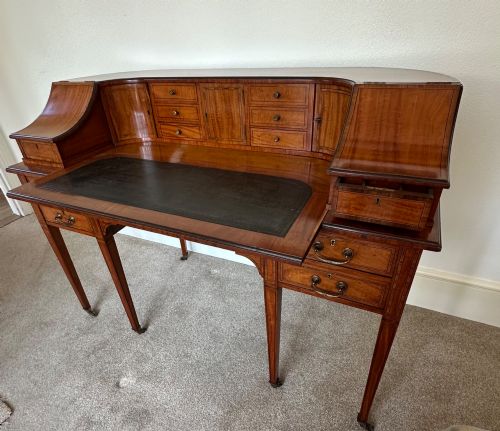
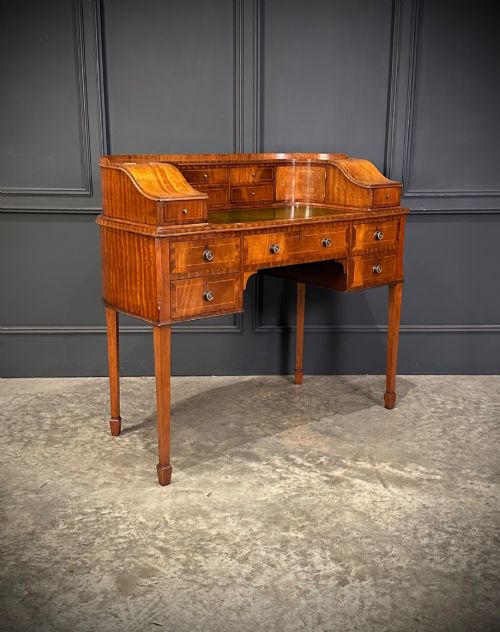
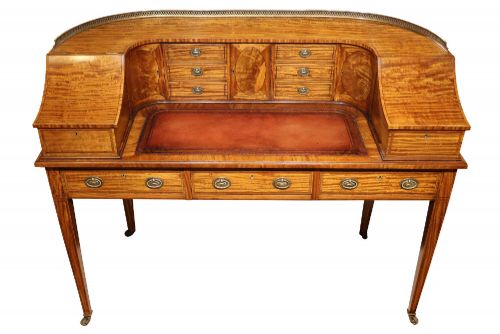
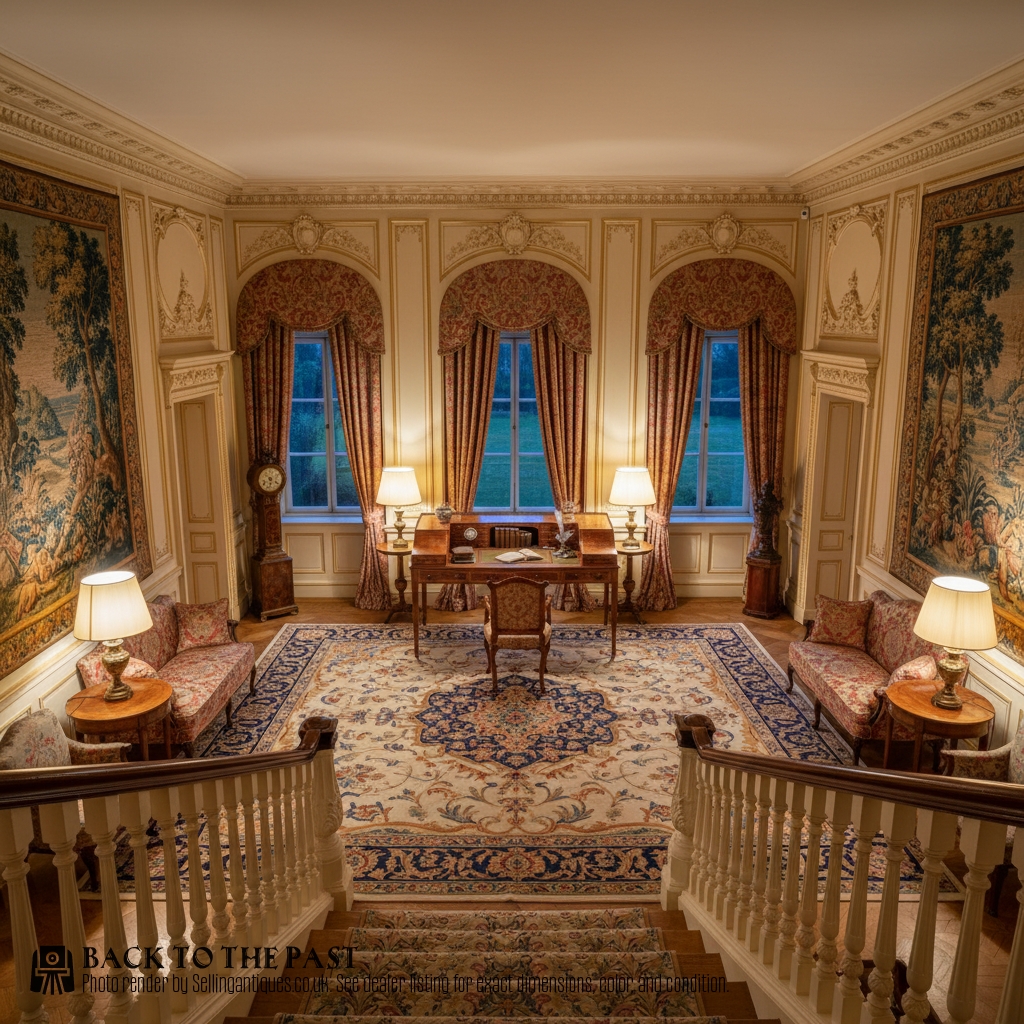
An antique carlton house desk is a sophisticated form of writing furniture distinguished by its curving superstructure of small drawers and pigeonholes that encloses the rear and sides of the writing surface. This signature layout allows for extensive correspondence storage while maintaining a refined silhouette suitable for principal rooms.
Pieces originating from the Edwardian period and Victorian eras predominate among current and archival selections, often displaying Sheraton Revival influences. Earlier examples spanning the 18th century, specifically the George III period, represent the foundational designs of this form.
The primary forms recorded include desks, writing tables, and bureaux, frequently featuring fitted interiors and leather-lined writing surfaces. Buyers encounter both freestanding models intended to command the centre of a room and variations designed to sit against a wall.
Materials and construction
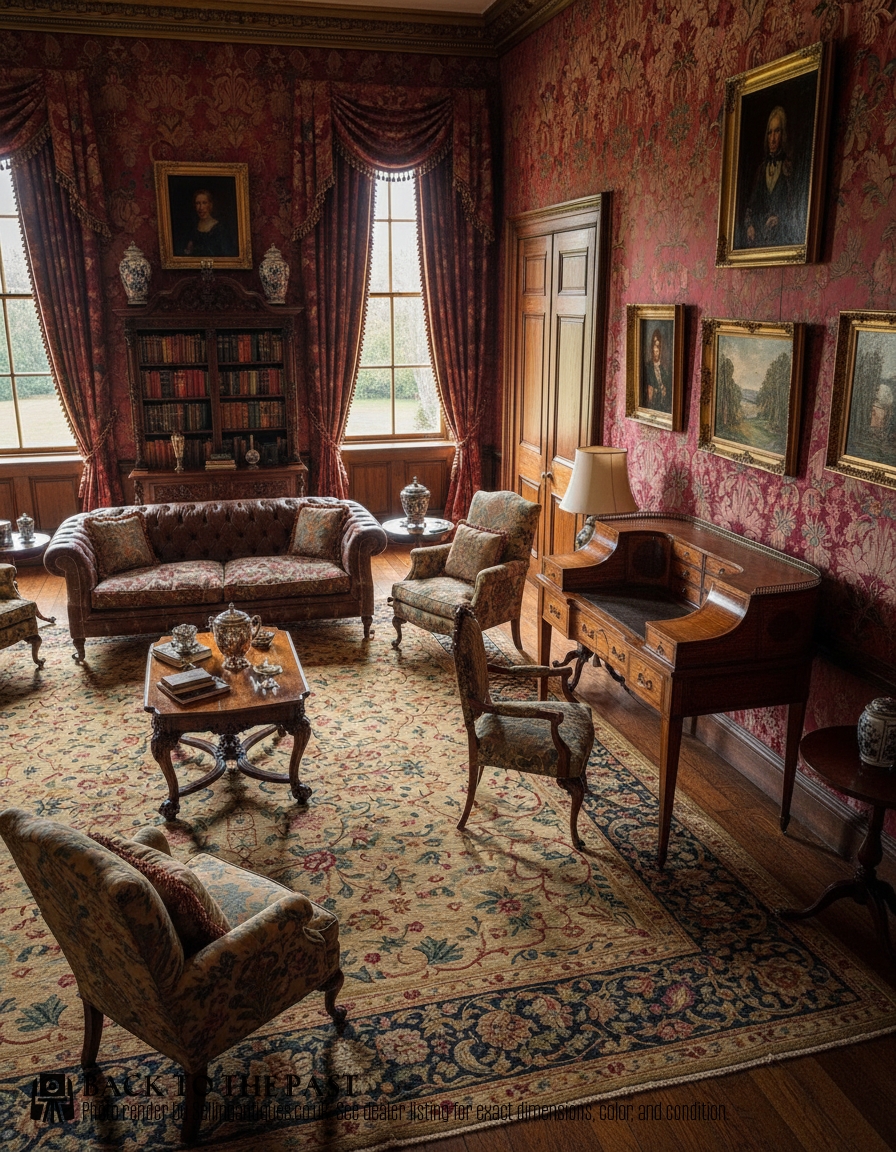
Cabinetmakers constructed these desks using fine timber veneers and solid woods, with mahogany and satinwood appearing most frequently across the record. Artisans also utilised burr walnut, burr yew, and rosewood to achieve striking grain patterns on drawer fronts and writing surfaces.
Decorative techniques include intricate marquetry inlay and contrasting stringing that accentuate the curved superstructure and tapered legs. Hardware typically incorporates cast brass handles and fittings, complementing the inset leather writing panels.
Retail Price Guide 2026
Typical UK retail prices for carlton house desk, calculated from the Sellingantiques database of over a million retail prices indexed since 2003. This retail price guide relies exclusively on Sellingantiques data; no external sources or auction records are used, so the figures do not describe the wider market.
Some models hide tiny secret compartments behind the stationary drawers, perfect for keeping love letters safe from prying eyes.
Factors influencing quality
The refinement of the timber selection dictates the visual impact of the piece, particularly where figured veneers and detailed marquetry inlay are employed across the curved superstructure. Superior examples exhibit harmonious grain matching and meticulous hand-cut stringing.
Construction integrity is visible in the smooth operation of the numerous small drawers and the quality of the internal pigeonhole arrangement. The choice of secondary woods and the execution of the original brass hardware further distinguish the finer pieces from standard production.
Maple of London·Druce and Co·Edwards and Roberts
The Antique Carlton House Desk Glossary
- Superstructure
- The tiered arrangement of small drawers and compartments built onto the rear and sides of the desk top. This curved bank of storage defines the distinctive profile of the form.
- Marquetry
- The decorative technique of applying fine pieces of veneer to form picture-like or geometric patterns on furniture surfaces. It frequently embellishes the main writing surface and drawer fronts.
- Stringing
- Thin inlay lines of contrasting wood used to outline panels, drawers, and legs on refined case furniture. This linear detail provides visual definition to the timber.
- Freestanding
- A descriptor for furniture finished on all sides so that it can be placed away from a wall in the middle of a room. These models display finished back panels matching the primary timbers.
Frequently Asked Questions
What is a carlton house desk?
A carlton house desk is a specialised writing table featuring a curved, stepped superstructure of small drawers and pigeonholes enclosing the rear and sides of the writing surface.
First created in the late eighteenth century, this form provides structured storage for stationery while maintaining a compact and decorative profile.
How were these desks used?
These desks served as private writing spaces for correspondence, document organisation, and personal accounts in formal reception rooms and libraries.
The numerous small drawers and compartments allowed users to sort letters and papers systematically before the proliferation of modern office furniture.
Where should I place one?
Many examples are designed to sit flat against a wall, while freestanding variants are finished on all sides to stand out in the centre of a room.
Consider the lighting in your study or drawing room to protect the leather writing surface and polished timber veneers from direct sunlight.
How do I distinguish Edwardian from earlier periods?
Edwardian and Sheraton Revival pieces often utilise lighter satinwood veneers and delicate inlay, frequently reflecting late nineteenth and early twentieth-century revival tastes.
Earlier George III examples rely more heavily on solid mahogany or rich figured veneers with restrained brass hardware and structural proportions true to the eighteenth century.