


Fireplace Overmantel Mirror
A fireplace overmantel mirror is a large, architectural wall glass designed to anchor the hearth, bringing scale and reflected light into a room.
Fireplace Overmantel Mirror
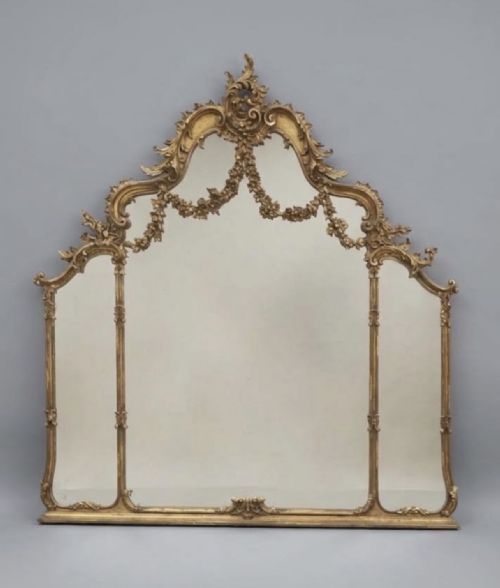
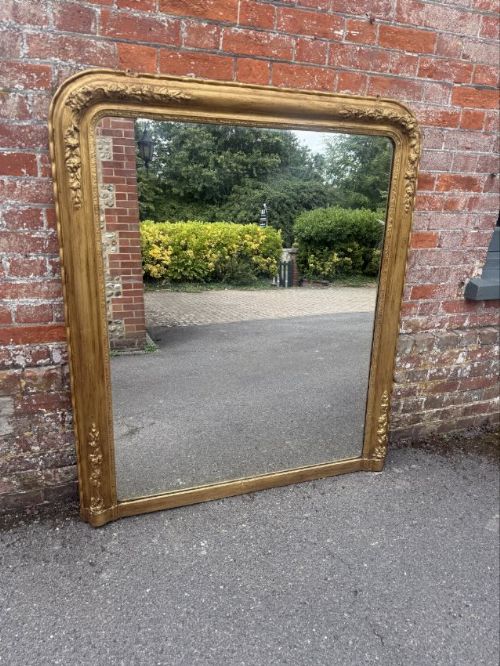
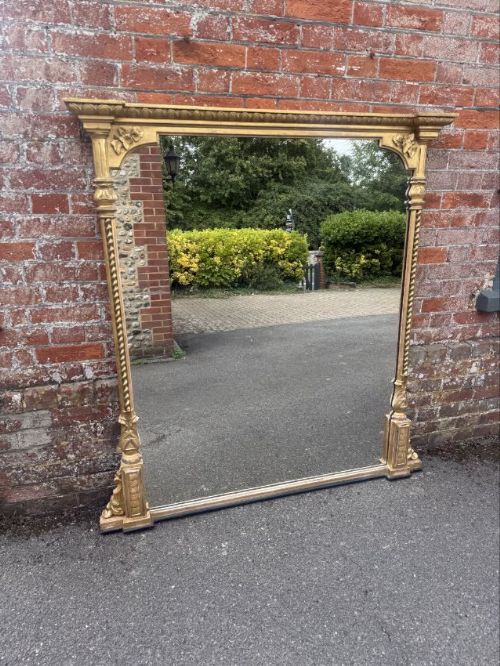
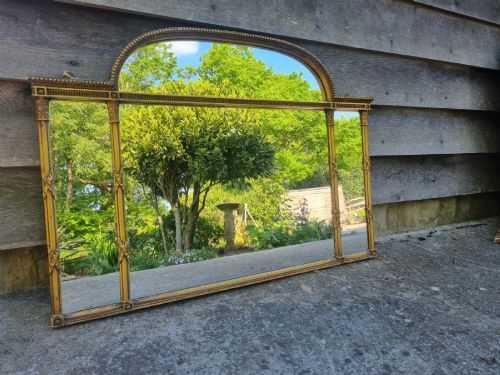
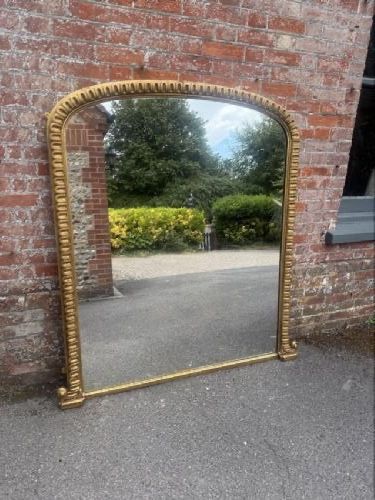
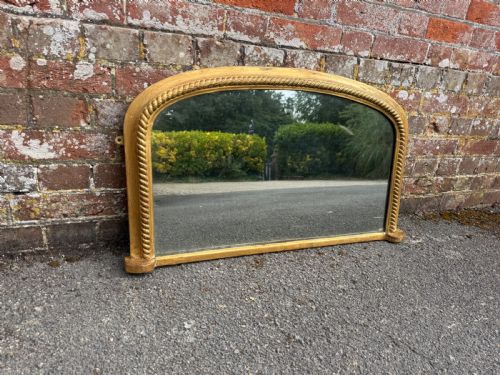
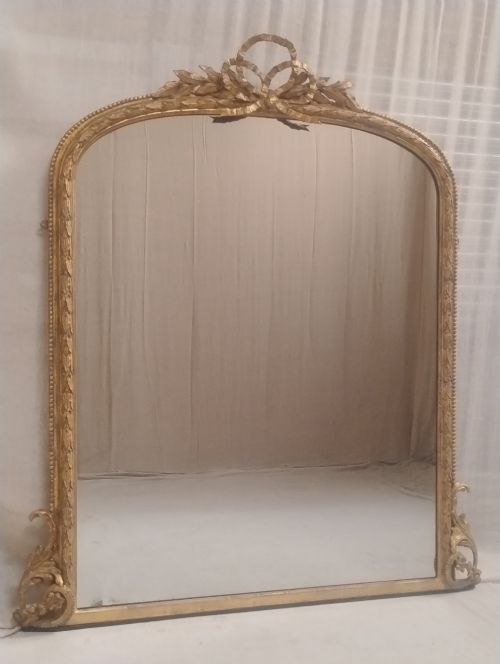
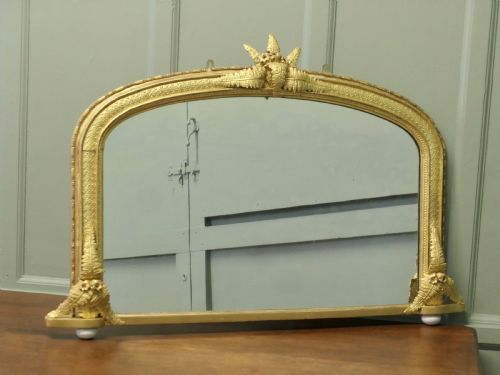
A fireplace overmantel mirror sits directly above a mantelpiece, bridging the gap between hearth and ceiling in nineteenth-century interiors. These substantial plates take various architectural forms, from arched tops to tripartite frames designed to span wide chimney breasts.
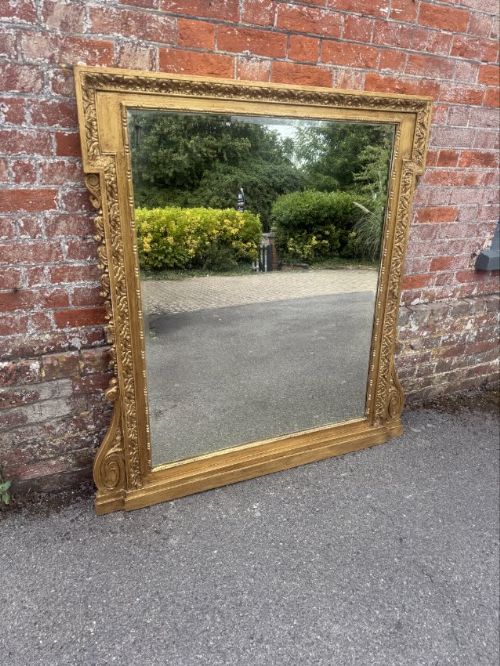
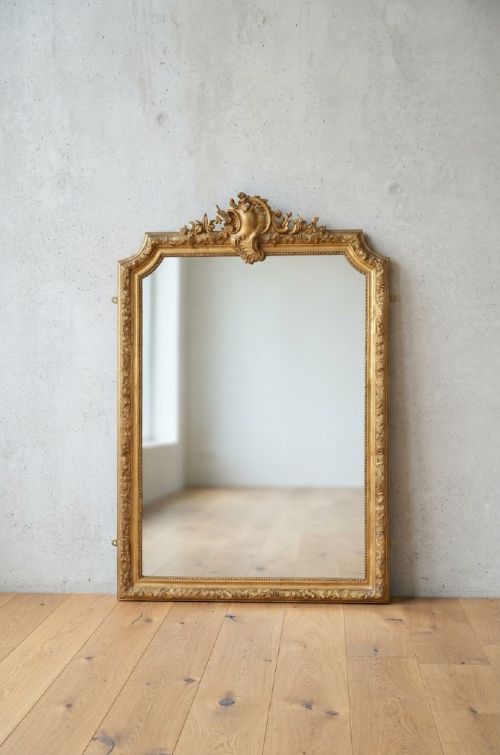
English and French examples dominate the selection, showing the heavy influence of Victorian and Regency design. The most common pieces encountered on this page date from the middle to late nineteenth century, finished in bright or burnished gilding.
Construction and Materials
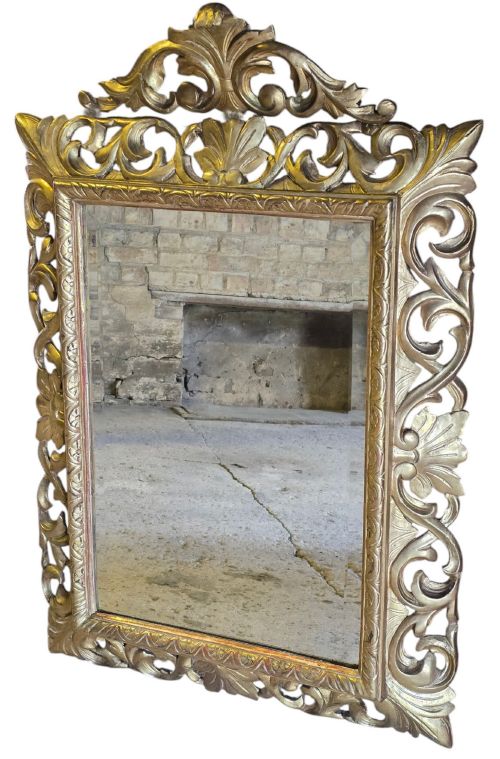
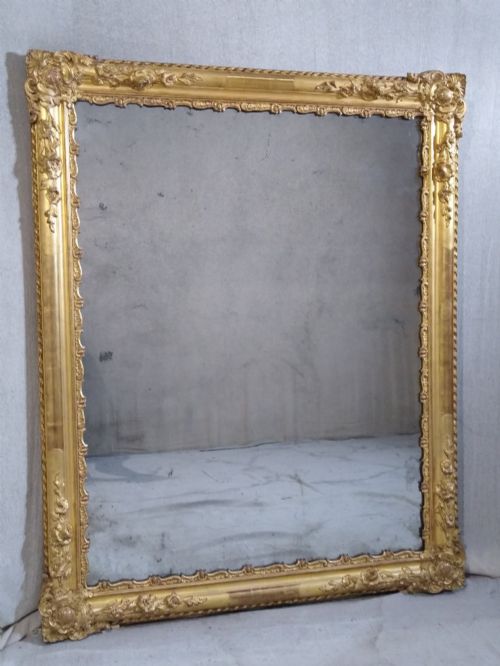
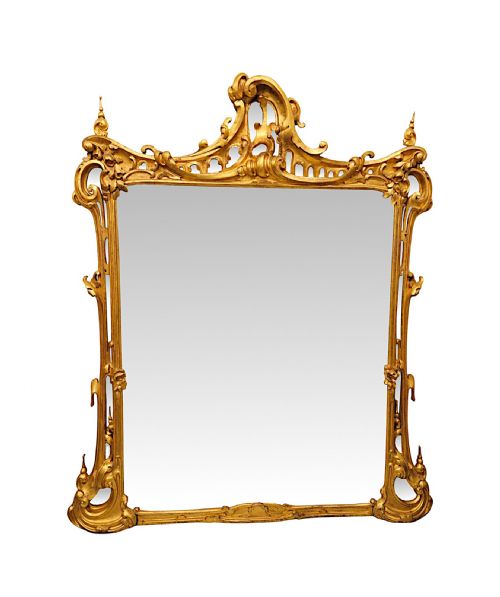
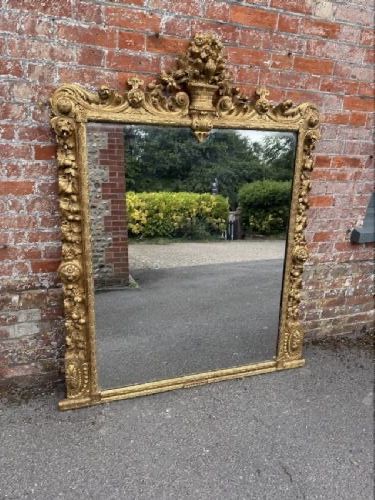
Carved wood frames provide the structural carcass, overlaid with gesso to build up intricate relief ornaments such as rope twists, columns, and floral motifs. Composition ornament, a mouldable paste pressed into shape, frequently appears on repetitive borders and crests.
Gold leaf and liquid gilding finish the surfaces, reflecting the nineteenth-century preference for luminous reception rooms. Silvered mirror glass is held within the rebate, sometimes showing age through foxing and dark spots.
Several Victorian mirrors retain their original foxed glass, offering a slightly hazy view of past centuries.
Distinctions in Execution
The crispness of the carved wood and moulded gesso dictates the visual success of the frame. Finer pieces retain sharp undercutting and delicate relief work, whereas simpler versions rely on plain mouldings or heavy composition casts.
Proportion relative to the mirror plate also matters. Superior examples integrate the frame and glass with balanced mass, while lesser objects display heavy surrounds that overpower the reflective surface.
The Fireplace Overmantel Mirror Glossary
- Gesso
- A mixture of chalk, gypsum, and binder applied to wooden frames to create a smooth surface for gilding. It allows craftsmen to carve or stamp intricate relief details.
- Overmantel
- A large mirror or painting specifically scaled to hang on the wall above a fireplace mantel. They typically feature wide horizontal or vertical proportions to suit chimney breasts.
- Foxing
- Small dark spots and discolouration within the mirror plate caused by the degradation of the silver backing over decades. Collectors often value this sign of age.
- Giltwood
- Timber that has been coated with thin sheets of gold leaf over a prepared ground. It provides a warm, reflective metallic finish.
- Composition
- A moulded mixture of whiting, resin, glue, and linseed oil pressed into decorative shapes. It offered a faster alternative to hand-carved wood during the nineteenth century.
Fireplace Overmantel Mirror: Frequently Asked Questions
How do I hang a heavy overmantel mirror safely?
These mirrors carry significant weight due to their wooden frames and thick glass plates. Professional wall fixings tied into the masonry studs are essential for secure installation.
Resting the weight of the frame directly on the mantel shelf while anchoring the top to the wall provides additional security.
Can I place an overmantel mirror anywhere besides a fireplace?
While originally proportioned for chimney breasts, these large glasses work effectively on any blank reception room wall. Their height helps to bounce natural light deep into the space.
Ensure the wall construction supports the considerable weight before mounting away from a traditional hearth.
How do I clean antique mirror glass?
Gentle dusting with a soft, dry cloth prevents the accumulation of grime on the frame and glass. Avoid harsh chemical sprays that can seep behind the silver backing.
If moisture is necessary, use a damp microfibre cloth sparingly and dry the surface immediately to protect vulnerable edges.
What indicates a Victorian date on these mirrors?
Victorian overmantels frequently incorporate heavy architectural framing, arched crests, and giltwood or ebonised finishes. Stylistic cues include Rococo Revival curves and classical column supports.
Construction methods, such as pegged joints and older backing boards, further confirm nineteenth-century origins.