


Vintage Triple Mirror
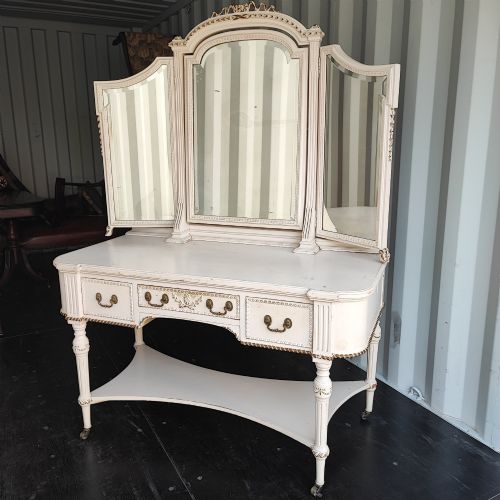
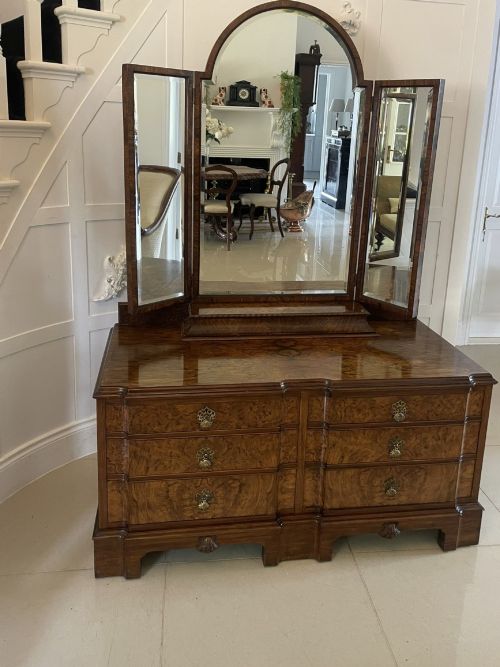
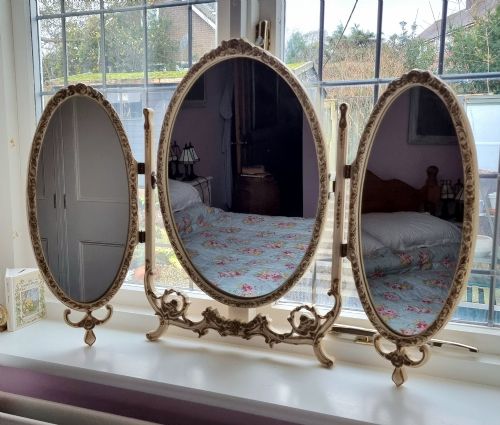
A vintage triple mirror offers three hinged panels for dressing, found inset into large wardrobes or standing upon dressing tables from the Victorian era onward.
Vintage Triple Mirror
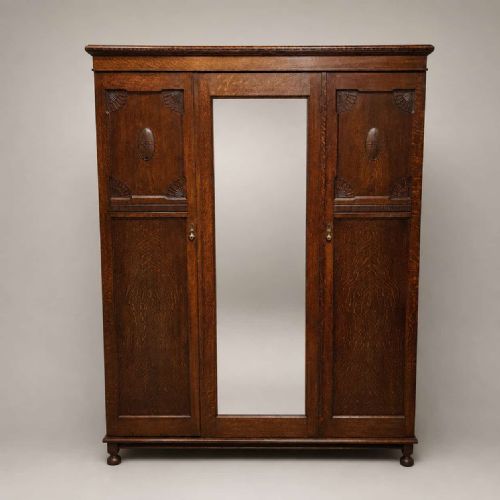
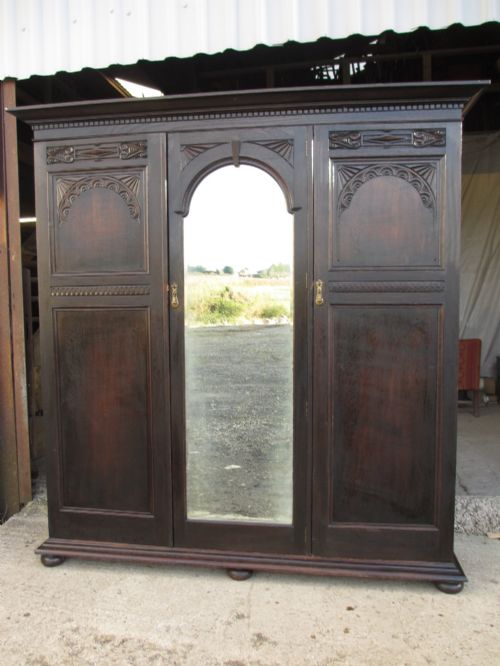
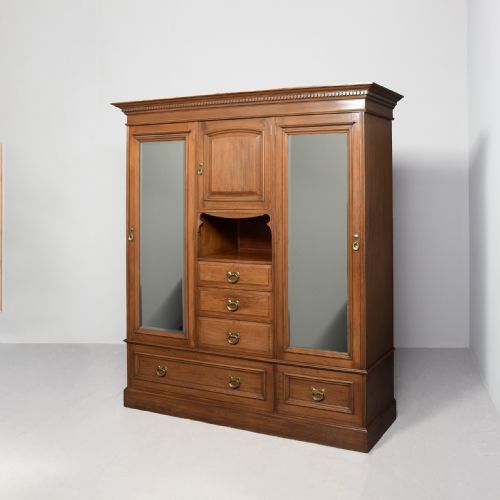
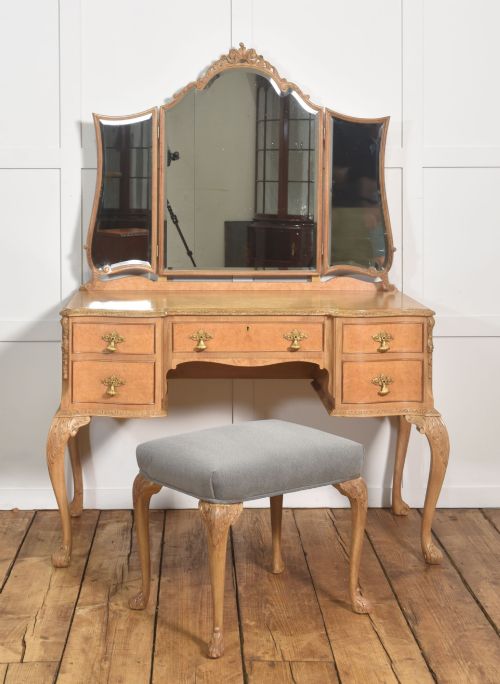
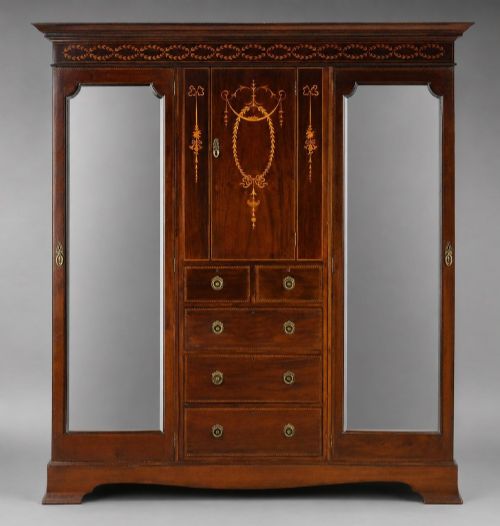
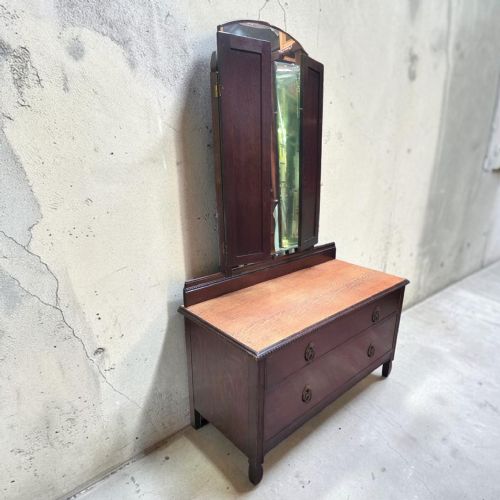
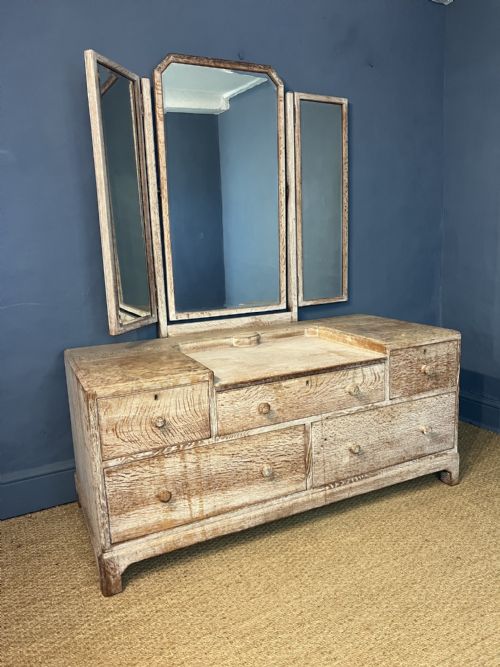
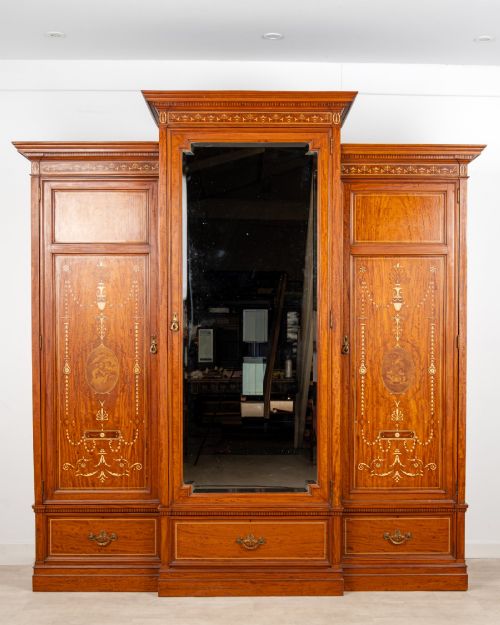
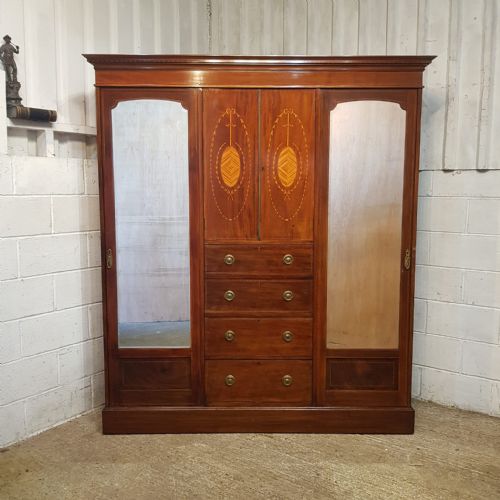
When you search for a vintage triple mirror, you encounter two distinct forms: folding glass plates mounted upon dressing chests, or central swinging doors fitted with mirrored glass on large wardrobes and armoires. These pieces span the Victorian, Edwardian, and Art Deco periods, drawing on styles from French Provincial to Louis XVI Revival.
The version most likely to meet you on this page is the Edwardian dressing table mirror or the matching triple door wardrobe, constructed in mahogany, oak, or walnut. Makers such as Maples and Co and Heal's produced these substantial items for bedrooms, alongside smaller triptych vanity glasses and overmantel mirrors.
Beyond bedroom furniture, the selection includes specialised adjustable wall-mounted variants and shop dressing glasses from the early twentieth century. Each design uses side wings that pivot to adjust the angle of reflection, providing practical utility alongside period character.
How they were made
Makers built these pieces using solid timbers like oak, mahogany, and walnut, frequently applying decorative veneers such as burr walnut, satinwood, and straight-grained walnut to larger flat surfaces. Inlays of lighter woods and brass fittings add detail to wardrobes and dressing tables alike.
The mirror glass is typically bevelled at the edges and held within wooden frames or brass hinges that allow the side panels to fold inward or outward. Carved ornamentation, hand-painted floral motifs, and gilt bronze mounts appear across Edwardian and French Revival examples.
Listings feature pieces spanning from the nineteenth century through the 1930s, using materials including brass, mahogany, oak, satinwood, and walnut.
What varies in quality
The standard of timber selection and cabinetmaking determines the grade of a piece, separating workshops like Maples from lesser makers. Heavier gauge brass hinges, clean bevelling on the mirror glass, and tightly fitted drawer box construction indicate finer manufacture.
Design ambition also marks out the superior examples, where proportions remain balanced and carving or marquetry inlay is executed with depth and precision rather than superficial stamping.
Maples and Co·Heals·Maurice Adams·Maples of London and Paris
The Vintage Triple Mirror Glossary
- Triptych
- A piece made in three sections, commonly applied to folding mirrors or screens with a larger central panel flanked by two narrower wings.
- Armoire
- A large wardrobe or cupboard used for hanging clothes, often constructed in the French style with double or triple panelled doors.
- Compactum
- A fitted wardrobe that combines hanging space with interior drawers, shelves, and sliding trays.
- Inlay
- A decorative technique where contrasting pieces of wood or metal are inserted into depressions within a solid timber surface.
- Overmantel
- A large mirror or decorative panel designed to be hung specifically above a fireplace mantelpiece.
Vintage Triple Mirror: Frequently Asked Questions
What is a vintage triple mirror?
A vintage triple mirror consists of three reflective glass panels hinged together, allowing the side wings to angle inward. They appear either mounted on dressing tables or integrated into the doors of large wardrobes.
These pieces date predominantly from the late nineteenth century through to the Art Deco period, spanning Victorian and Edwardian aesthetics.
How do I date a triple mirror wardrobe?
Dating relies on the combination of timber, hardware, and prevailing design style. Edwardian pieces often feature inlaid mahogany or satinwood, whilst 1920s examples show cleaner lines in oak or walnut.
Examining the construction of the interior drawers and the thickness of the mirror glass also helps establish the era of manufacture.
Were these mirrors made separately or with furniture?
They were produced in both formats. Many were manufactured as integral doors for large triple wardrobes or fixed to the backs of dressing chests.
Other variants were designed as independent tabletop pieces, overmantels, or wall-mounted folding glasses for dressing rooms.
How do I care for vintage mirror glass?
Maintain the glass by using gentle cleaning methods that avoid harsh chemicals seeping behind the silvered backing. Care must also be taken with the antique brass hinges to ensure the folding panels move without undue strain on the wood.