
Fireplace Log Dogs
Fireplace log dogs support heavy timber safely above the hearth, holding the burning wood clear of the floor to draw air beneath the fuel.
Fireplace Log Dogs
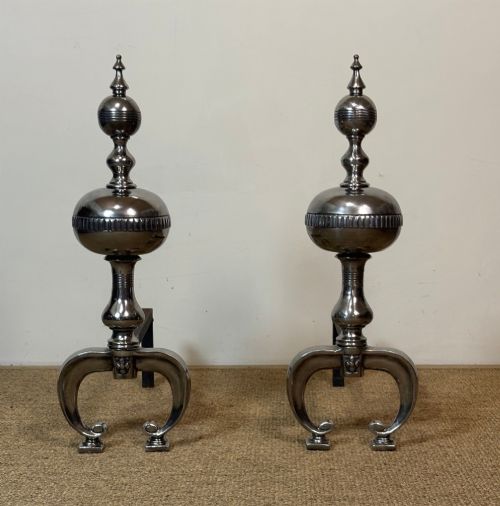
When buyers search for fireplace log dogs, they encounter pairs of metal supports designed to hold logs within an open hearth. These heavy iron, brass, or steel pillars elevate the fuel to improve combustion and airflow.
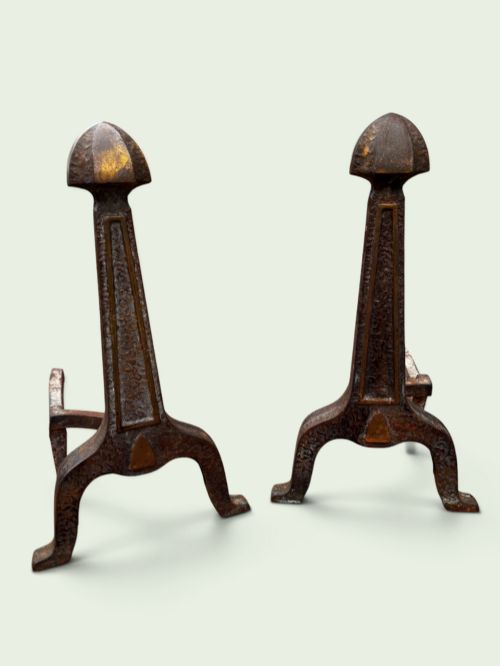
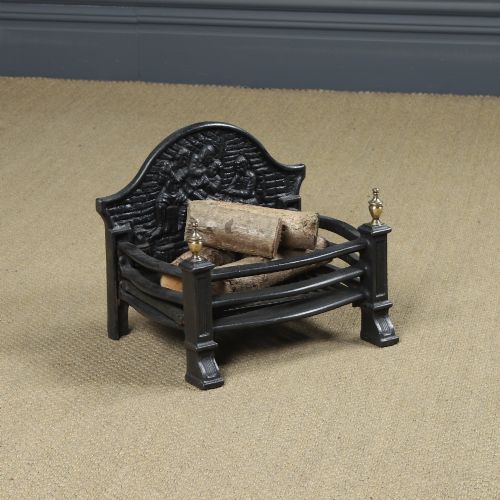
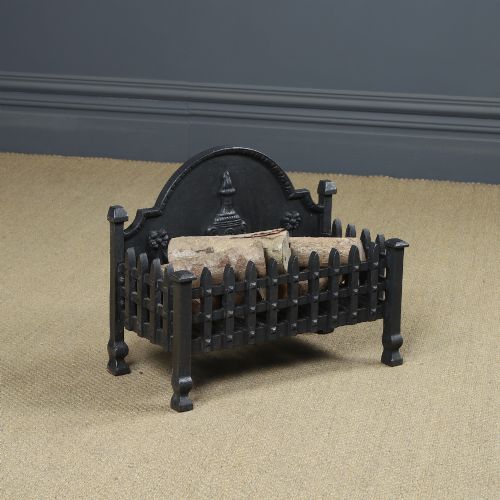
The pieces appearing most frequently across this selection span the nineteenth century, including Victorian, Edwardian, and Arts and Crafts examples, alongside earlier revival styles. Alongside dedicated andirons, the listings include compatible fire grates and fire baskets configured to hold timber.
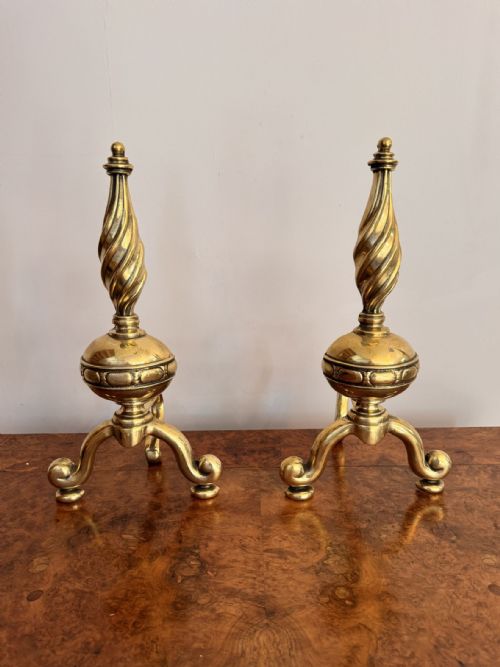
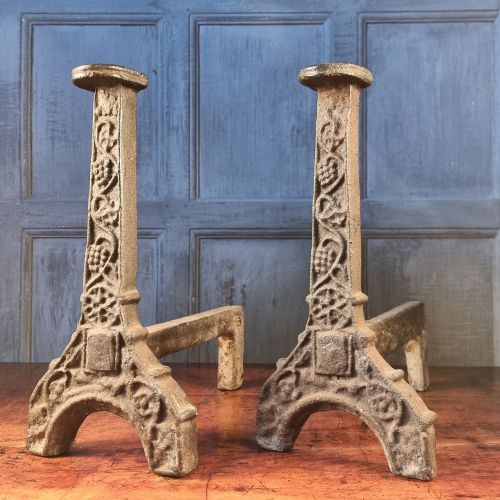
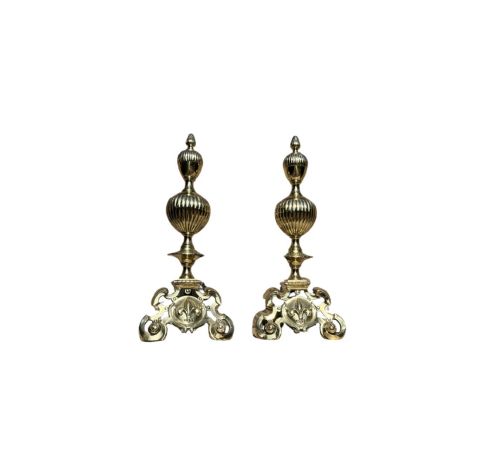
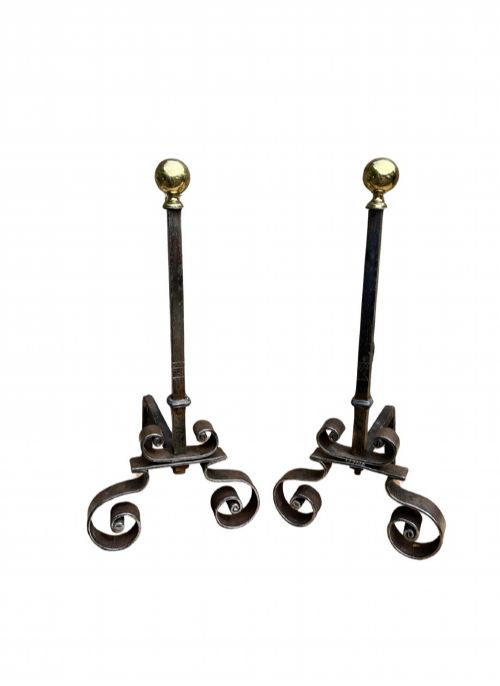
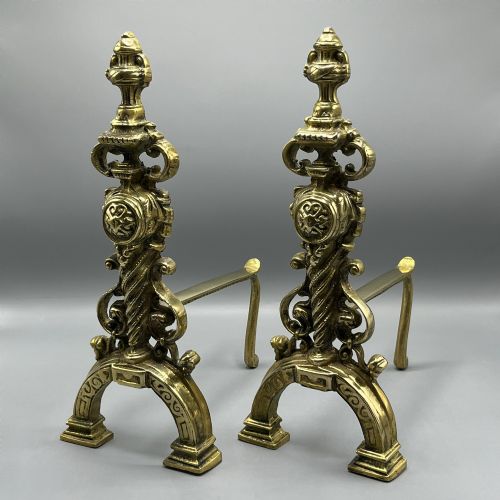
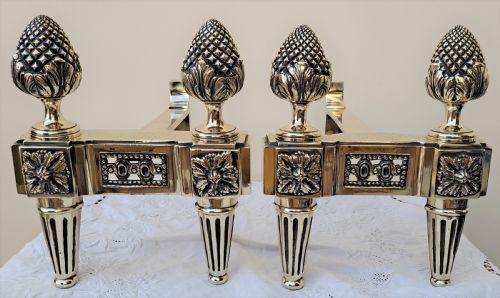
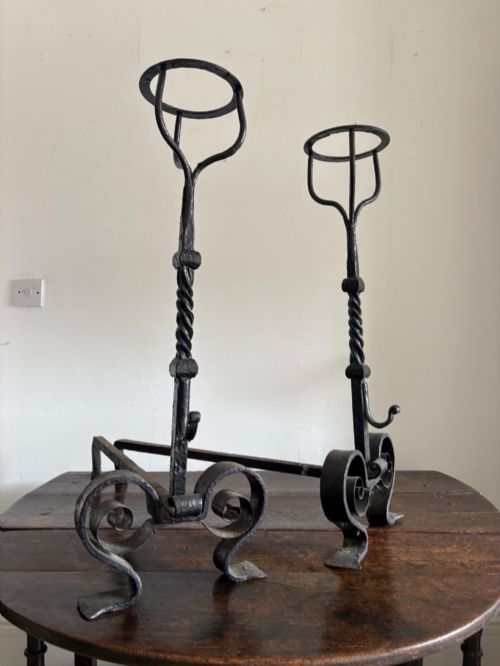
Originating in English, French, and American workshops, these hearth furnishings range from simple hand-forged utility items to ornate cast designs featuring Gothic Revival, Neoclassical, and Renaissance motifs. Buyers find both monumental pairs intended for large inglenook fireplaces and smaller versions suited to modest grates.
Construction and Materials
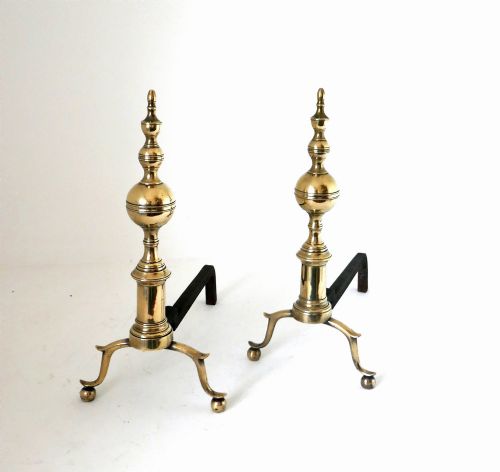
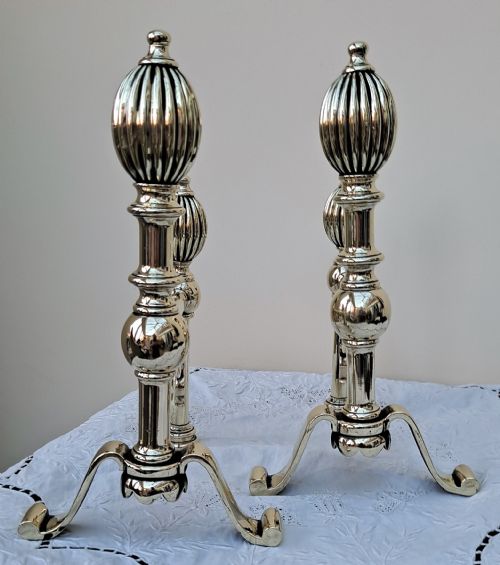
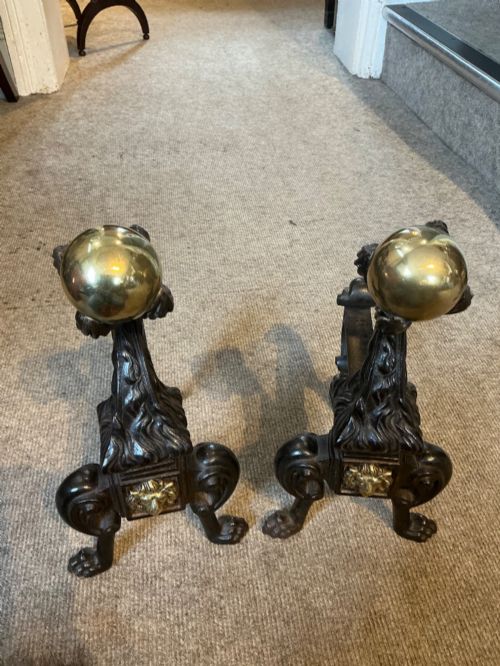
The construction of these hearth supports relies heavily on cast iron, wrought iron, and brass, often paired to balance structural strength with decorative appearance. Blackened and polished iron provides the robust framework necessary to bear the weight of heavy logs and intense heat.
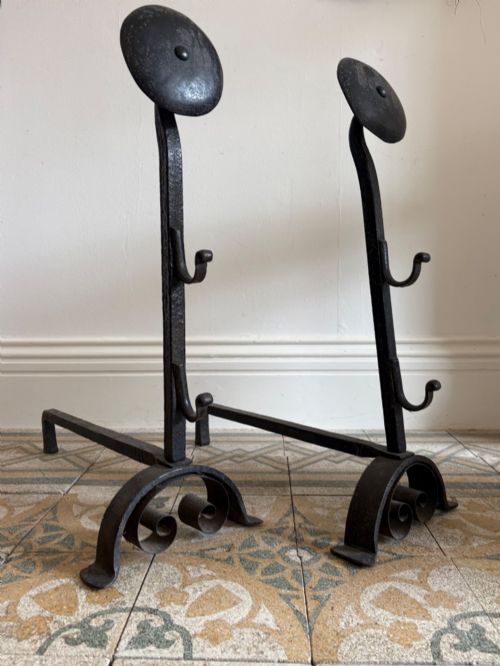
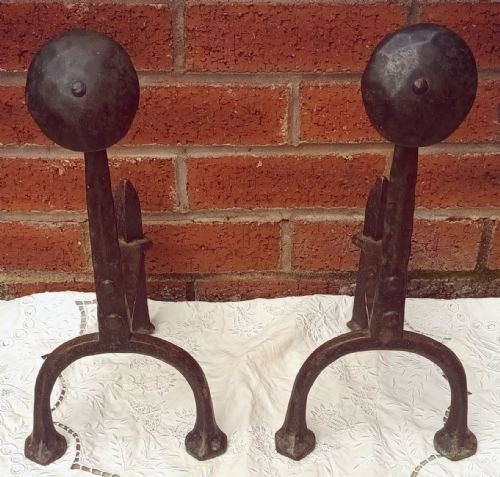
Surface ornamentation is achieved through varied foundry and metalworking techniques, ranging from sand casting for intricate brass heads to hand-forging for wrought iron scrolls. Artisans shaped these metals using traditional hammering, joining, and turning methods, producing robust upright standards joined to horizontal billets.
Listings feature materials including solid brass, cast iron, wrought iron, copper, and steel across the nineteenth and early twentieth centuries.
Judging Quality
Quality in these hearth supports is determined by the weight of the metal, the crispness of the casting, and the integrity of the forged joints. Heavier sections of cast iron and solid brass indicate superior material substance, ensuring the pieces withstand intense thermal expansion without warping.
Refinement in surface finish and detail sets finer examples apart from utility items, evident in cleanly chased brass ornamentation and carefully hammered wrought iron details. The balance between the decorative front standard and the supporting horizontal billet reflects the maker's structural competence.
The Fireplace Log Dogs Glossary
- Andiron
- A horizontal metal support raised on legs, used in pairs to hold logs in an open fireplace. They often feature a decorative upright standard at the front.
- Fire Basket
- A metal grate designed to hold coal or wood above the hearth floor. It combines the functions of log dogs and a traditional grate.
- Gothic Revival
- An architectural and decorative style popular during the nineteenth century, characterised by pointed arches and medieval motifs. Pieces in this style often display robust cast iron tracery.
- Wrought Iron
- Iron that has been heated and hammered into shape by hand, resulting in a fibrous structure. This material yields durable, resilient hearth furniture with visible tool marks.
Fireplace Log Dogs: Frequently Asked Questions
What is the difference between log dogs and andirons?
Log dogs and andirons are terms frequently used interchangeably for the same hearth supports. Both refer to paired metal standards that hold logs above the hearth floor.
Historically, specific regional terms varied, but all share the primary function of elevating wood to improve the draw of the fire.
How do I choose the right size for my fireplace?
Selecting the correct size requires measuring both the depth of your hearth and the width of the fire opening. Monumental pairs suit deep inglenook settings, while shorter examples fit standard Victorian grates.
Ensure the horizontal billet length leaves adequate clearance around the logs for safe air circulation.
Can these be used in a working fireplace?
Most historic metal supports are constructed from robust cast or wrought iron designed for high temperatures. Solid brass and iron pieces handle regular fires well when used within their weight limits.
Careful positioning ensures the upright standards bear the load securely without tipping forward onto the hearth floor.
How do I identify the period of a set?
Dating relies on stylistic clues such as the decorative motifs, manufacturing marks, and the assembly methods used on the metal. Victorian and Edwardian examples often display revivalist detailing like Gothic tracery or Neoclassical urns.
Hand-forged surface textures and simpler lines frequently point toward earlier dates or Arts and Crafts production.