
Fireplace Hearth Accessories
Fireplace hearth accessories bring practical engineering and decorative ironwork directly to the fireside, turning a functional heating space into a finished room.
Fireplace Hearth Accessories
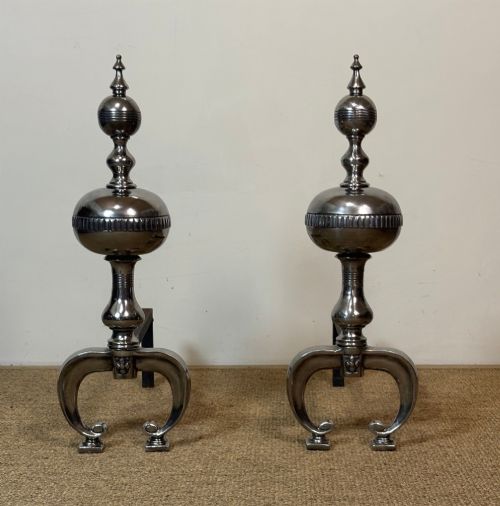
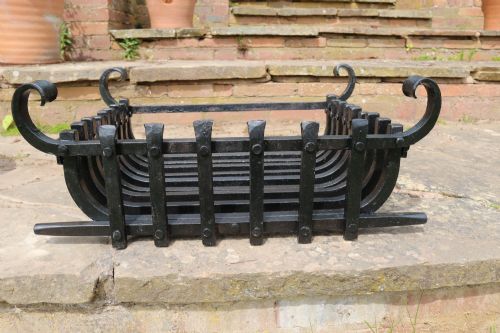
Fireplace hearth accessories encompass everything needed to tend, feed, and manage an open solid-fuel fire safely and cleanly. These items range from structural iron fire dogs and protective fenders to companion tool sets, coal scuttles, and foot stoves.
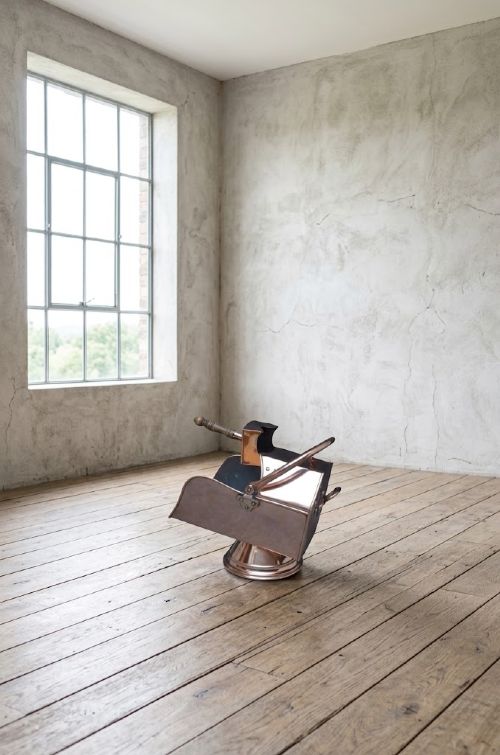
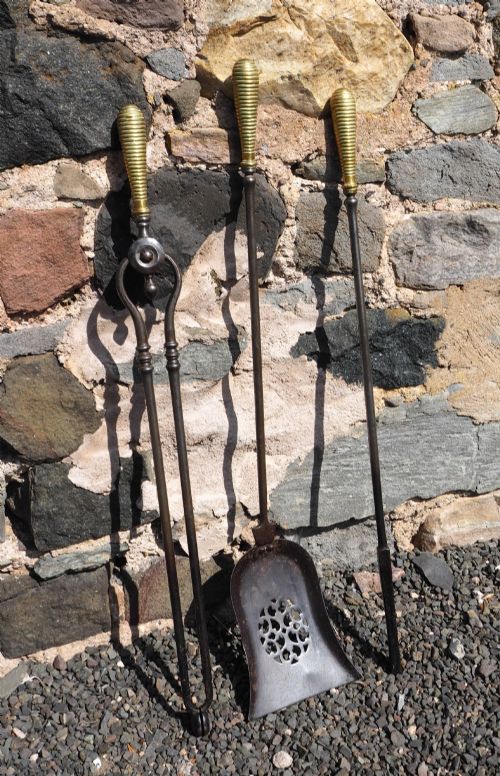
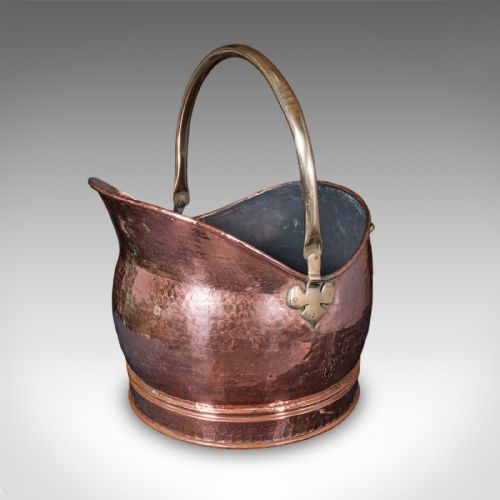
The objects span multiple centuries of domestic design, with the 19th century and Victorian periods heavily represented alongside earlier Georgian and sixteenth-century examples. Common forms include brass andirons, steel fire irons, copper coal helmets, and pierced metal fire screens.
Buyers will encounter utilitarian kitchen and parlour equipment alongside ornate decorative pieces meant to sit permanently on the hearthstone. The selection draws on English country-house traditions as well as French rococo and Gothic Revival aesthetic movements.
How they were made
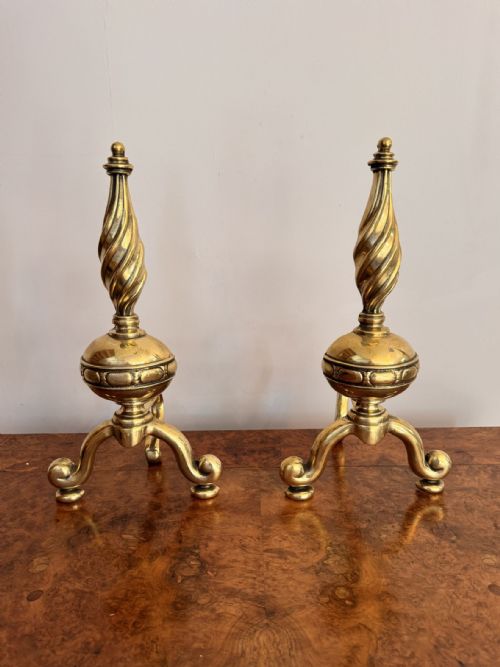
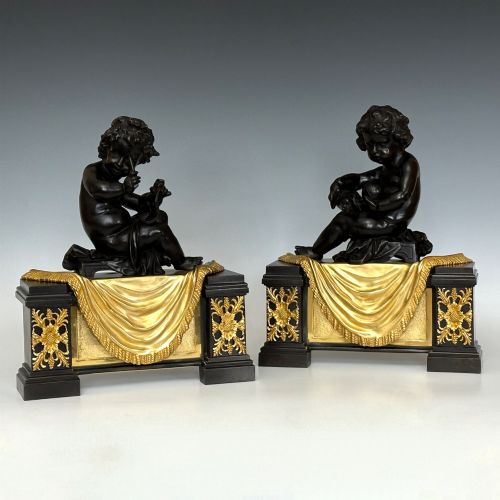
Metals dominate the construction of these pieces, utilising cast iron, wrought iron, and steel for structural strength and heat resistance. Brass and copper provide durable surfaces that take a high polish, while ormolu and bronze add heavier decorative detail to French chenets.
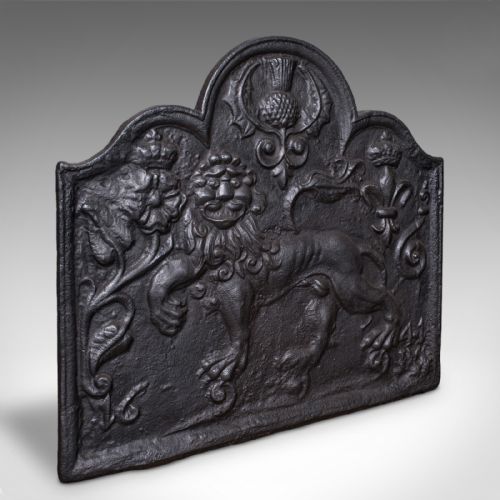
Blacksmiths shaped wrought iron by hand on the anvil, producing rigid bars for fire dogs and footmen, while foundries cast molten iron and brass into intricate moulds for fenders and decorative fire backs. Hand-finishing techniques included piercing, chip-carving on wooden foot stoves, and applied brass banding on copper coal buckets.
A knight in shining metal stands ready to shovel your coal, guarding the fireside from stubborn ash.
What varies in quality
Quality separates mass-produced foundry work from individual hand-forged pieces, showing in the crispness of cast relief ornamentation and the weight of solid metals. Superior items maintain structural integrity under heavy daily use, with properly joined joints and balanced proportions.
The skill of the artisan defines the better examples, visible in hand-pierced brass patterns, delicate engraving, and carefully finished wooden details such as chip-carved Dutch foot stoves. Pieces that retain matching original companion tools or unified sets demonstrate higher preservation than later assembled groupings.
John Linwood of Birmingham·William Tonks
The Fireplace Hearth Accessories Glossary
- Andirons
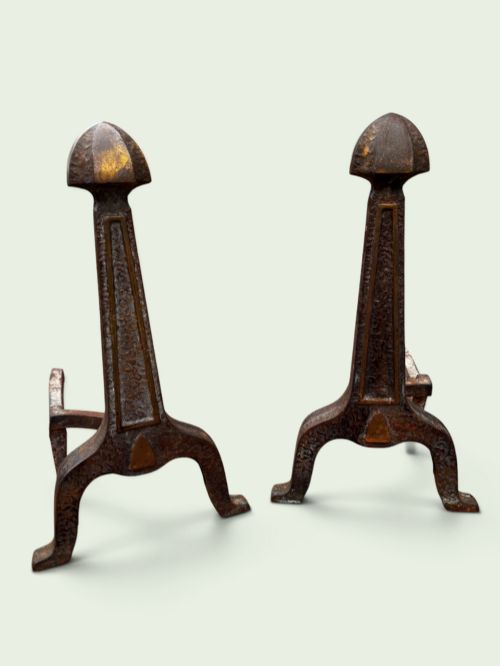
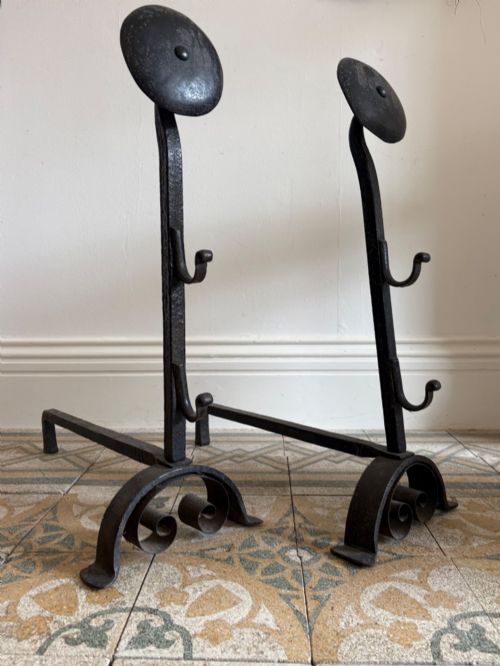
- Heavy metal supports used to raise logs off the hearth floor to improve air circulation. They often feature decorative front standards paired with horizontal log bars extending backward.
- Fire Fender
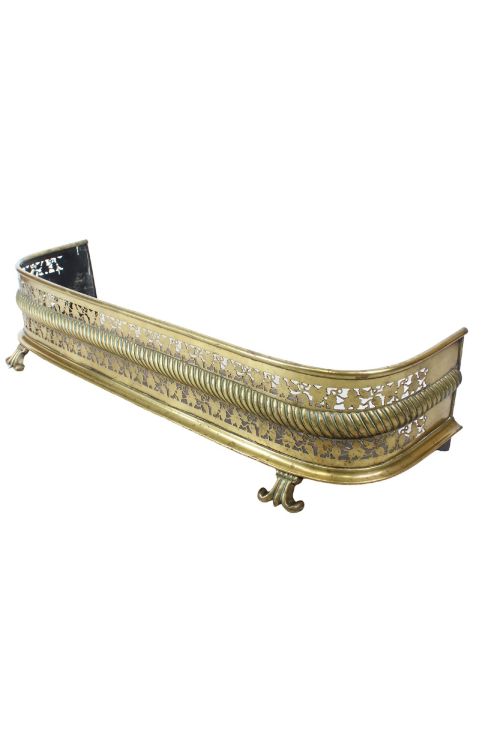
- A low metal barrier placed around the hearth to contain rolling embers and protect the floor covering. They frequently feature pierced brass galleries or heavy cast iron frames.
- Footman
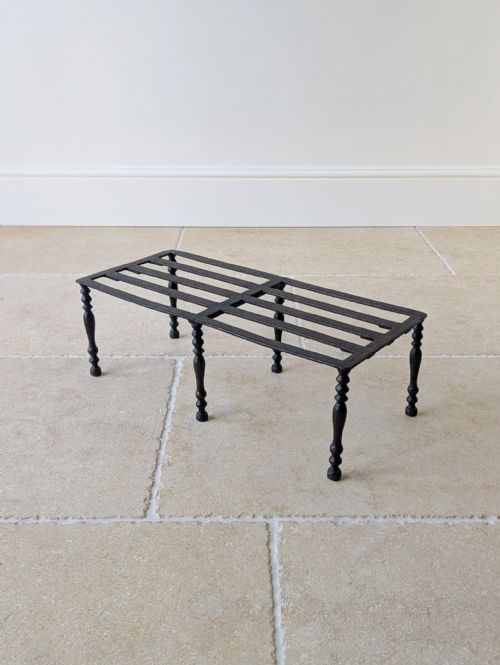
- A metal stool or stand placed in front of the fire to keep food or plates warm. Georgian examples are typically constructed from wrought iron or brass with sturdy legs.
- Coal Scuttle
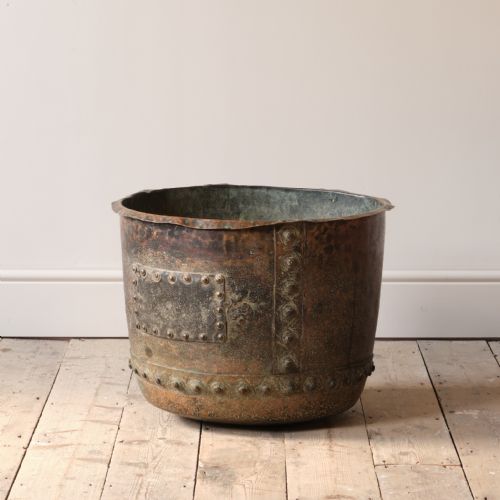
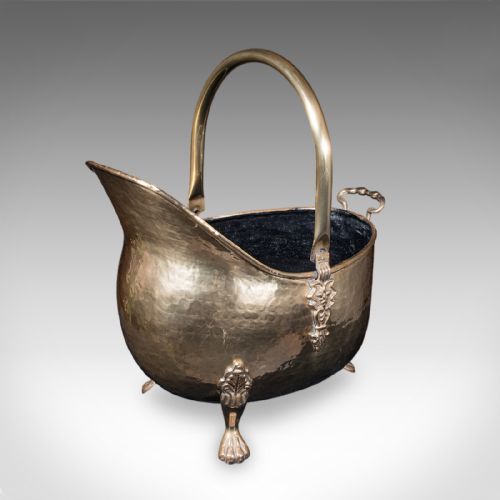
- A container designed for storing and transporting solid fuel to the fireplace. Common regional variations include the coal helmet and lidded copper buckets with brass swing handles.
- Fire Screen
- A decorative panel placed before an unused fireplace to block the dark opening. Victorian variants often employ iron frames with Gothic shield motifs.
Fireplace Hearth Accessories: Frequently Asked Questions
What are fire dogs used for?
Fire dogs support heavy logs above the base of the hearth to allow adequate airflow beneath the burning wood. This elevation helps the fuel burn more efficiently and protects the masonry floor.
Beyond simple utility, the vertical front standards provided a decorative focal point for the fireplace opening. They remained permanently in place even when the fire was unlit.
How do I use a foot stove?
Foot stoves were small wooden boxes containing a metal tray for hot embers, placed beneath heavy skirts or coats to warm the feet in cold rooms. They were common domestic items during the eighteenth and nineteenth centuries.
Modern buyers generally collect them as decorative wooden objects with pierced or chip-carved tops. The internal charcoal pans are typically removed or left empty for display.
What is a chestnut roaster?
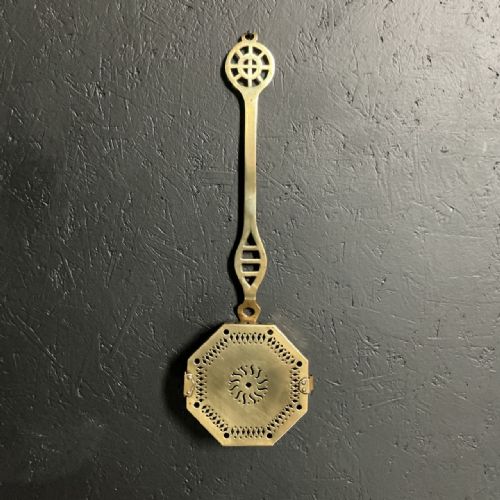
Chestnut roasters are long-handled utensils designed to hold edible nuts near the open flames for roasting. The brass pans often feature hinged lids to contain the chestnuts while they heat.
They hung beside the hearth when not in use as part of the daily food preparation equipment. The long iron or brass handles kept hands safely away from the active fire.
How do I tell cast iron from wrought iron?
Cast iron is brittle and formed by pouring molten metal into moulds, resulting in heavier pieces with crisp decorative relief details. It handles compressive weight well but can fracture under sharp impacts.
Wrought iron is worked by hand while hot, yielding a fibrous structure that bends rather than snaps. It shows subtle hammer marks and lacks the uniform finish of cast components.