
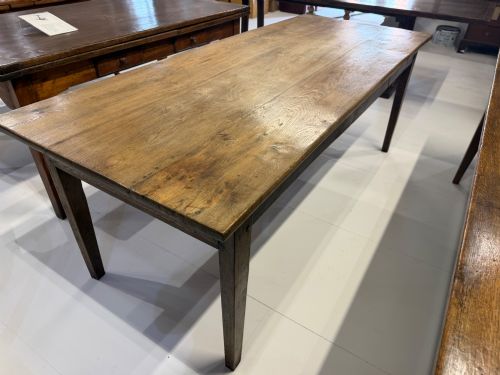
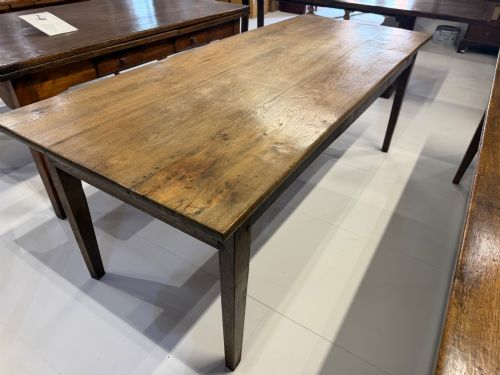
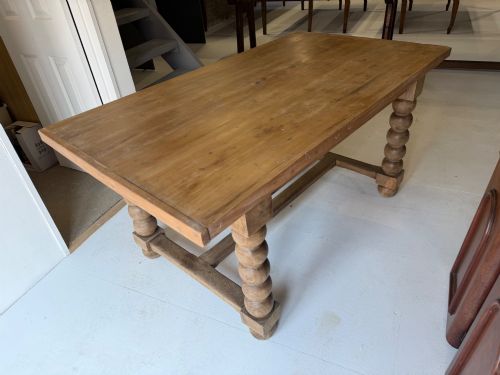
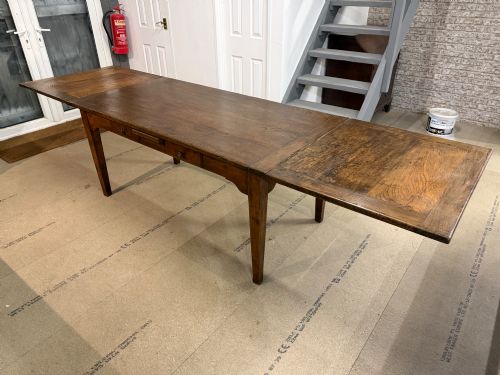
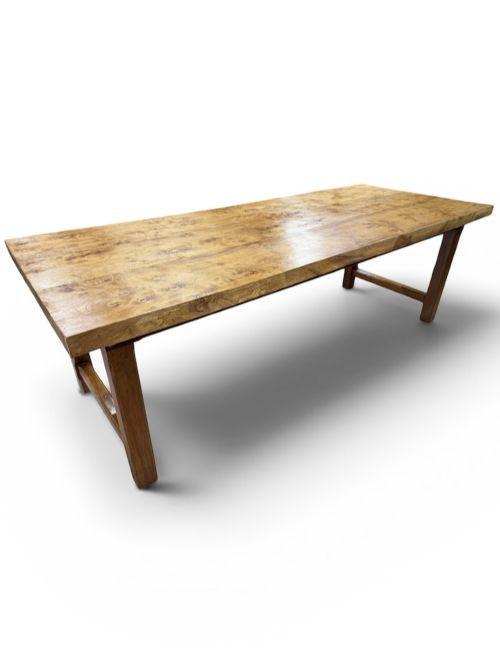
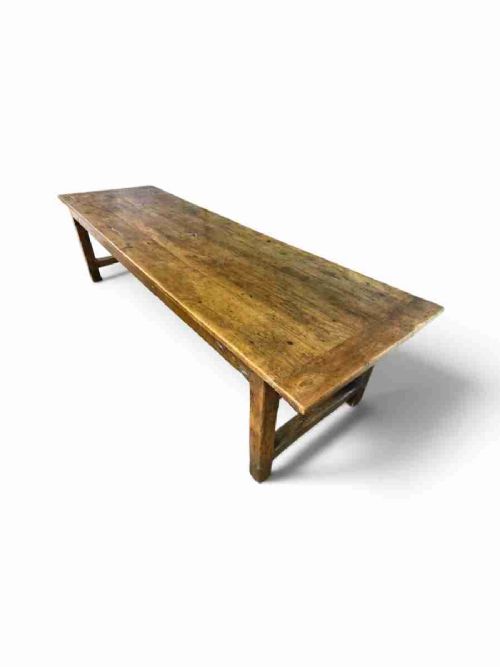
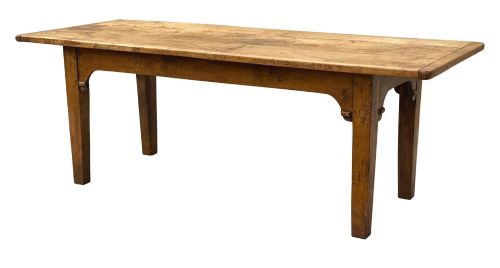
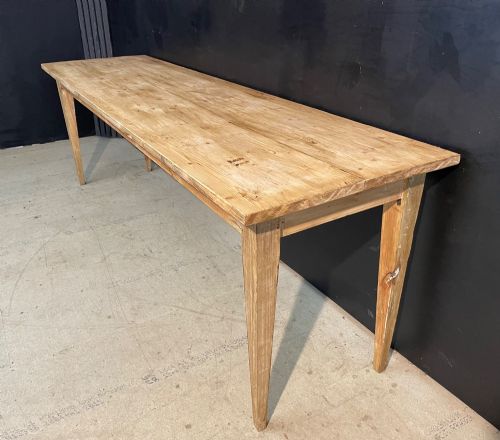
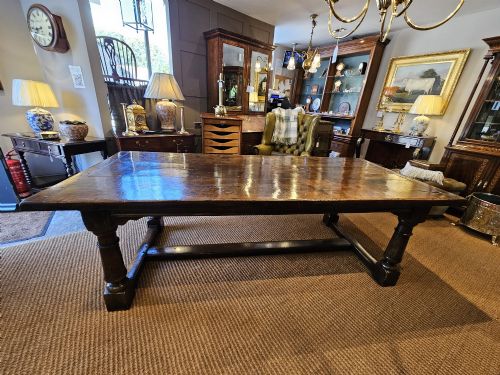
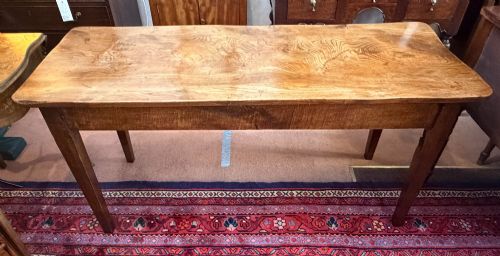
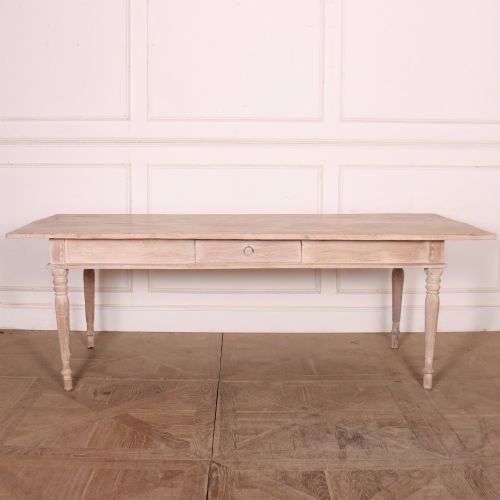
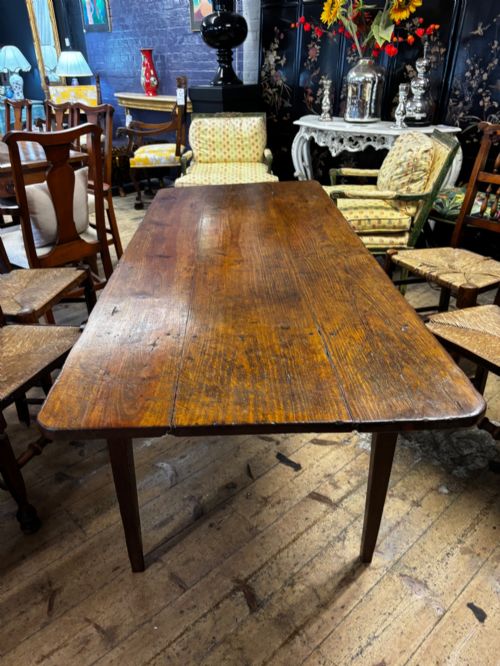
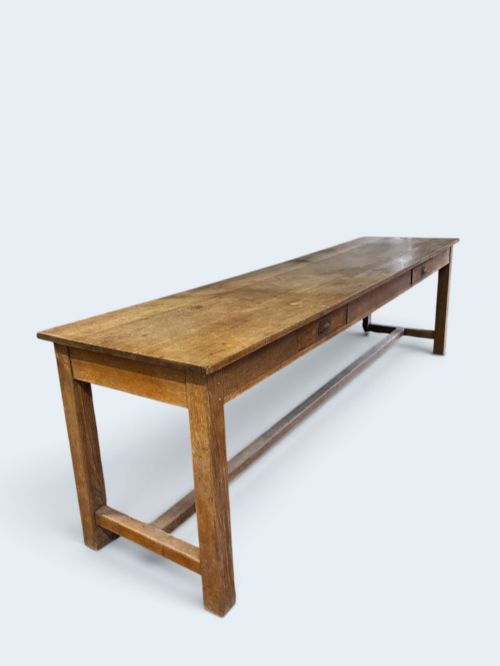
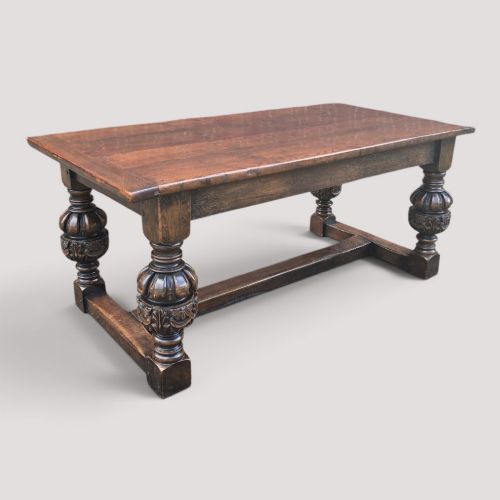
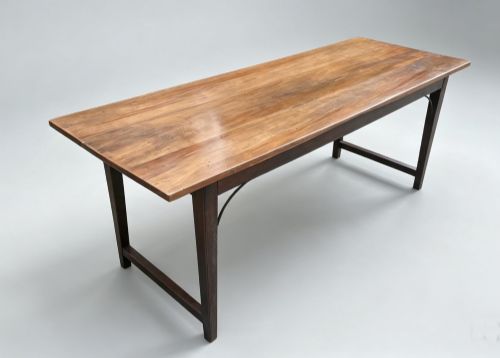
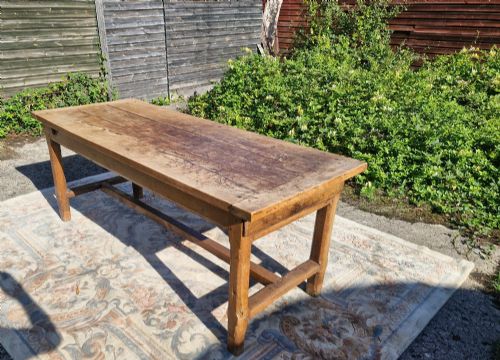
Farmhouse Refectory Table
When you need a farmhouse refectory table, you are looking for a long, sturdy board built to seat a crowd for decades of heavy daily use.
Farmhouse Refectory Table
A farmhouse refectory table combines the long, narrow proportions of traditional monastic dining boards with the practical utility of domestic kitchen furniture. When searching this phrase, buyers encounter large dining surfaces designed to anchor a room, with lengths frequently accommodating eight to twelve diners.
The pieces on this page span several centuries, drawing from Georgian, Victorian, and early twentieth-century traditions. English and French provincial examples dominate, ranging from rustic pine scrub-top boards to substantial oak and elm constructions intended for heavy daily gatherings.
Materials and construction methods
Makers relied heavily on native hardwoods like solid oak, elm, and fruitwoods such as cherry and pear, paired frequently with pine for scrub tops. Timber selection prioritised density and strength, ensuring the long horizontal boards could support weight without excessive sagging.
Joinery techniques relied on pegged mortise and tenon joints to secure the legs and underframes firmly to the top. Many versions employ multi-board tops joined cleanly, sometimes augmented by extending mechanisms or end drawers for practical storage.
Listings feature woods including oak, pine, fruitwood, elm, beech, sycamore, walnut, cherry, pear tree wood, teak, ash, and burr oak.
Distinctions in craftsmanship and survival
Quality rests in the integrity of the timber and the depth of natural patina accumulated through generations of use. Superior examples display dense, well-figured grain in woods like oak or burr oak, alongside hand-planed surfaces that retain the undulating texture of early toolwork.
Proportion and structural balance separate simpler utility boards from finer dining pieces. Well-made tables feature stable underframes with stretcher bases that remain rigid, while lesser examples may show timber shrinkage or poorly executed later alterations.
The Farmhouse Refectory Table Glossary
- Refectory table
- A long, narrow dining table traditionally used in communal dining halls and large country kitchens. These forms prioritise length and legroom beneath the top.
- Scrub top
- A plain wooden tabletop left unfinished or scrubbed clean with water and sand, common on pine and sycamore kitchen tables. This surface was designed for vigorous daily washing.
- Stretcher
- A horizontal wooden bar connecting the legs of a table to provide lateral stability. They often show wear where diners rested their feet.
- Monastic style
- A heavy, straightforward design inspired by medieval monastery furniture. These pieces feature thick oak beams and minimal ornamentation.
- Patina
- The surface sheen and colour developed by wood over decades of handling, polishing, and exposure to light. It signals age and gentle continuous use.
Farmhouse Refectory Table: Frequently Asked Questions
How do I choose the right size?
Consider both the length of your room and the number of people you intend to seat regularly. Long refectory boards require adequate clearance around all sides to allow chairs to pull out comfortably.
Measure your dining space carefully, leaving at least a metre of empty floor space between the edge of the table and surrounding walls or furniture.
Can I use these tables daily?
These pieces were built precisely for heavy domestic use, making them durable centerpieces for modern kitchens and dining rooms. Solid hardwood and thick pine tops handle daily meals and gatherings with ease.
Protect vulnerable antique finishes by using placemats and coasters, and clean wooden surfaces simply with a damp cloth rather than harsh chemicals.
What wood types are most common?
Oak is the most frequent material seen across English and French examples, valued for its strength and rich grain. Elm, fruitwood, and pine also appear regularly, particularly on continental and kitchen-specific pieces.
Pine and sycamore frequently form scrub tops designed for heavy washing, while walnut, teak, and cherry provide darker, highly figured alternative surfaces.
How do I date an antique table?
Dating relies on observing construction details, tool marks, and the type of timber used. Hand-sawn boards, pegged joinery, and the style of the legs point toward specific periods like the Georgian era or the nineteenth century.
Examine the underside and joints for signs of age, such as handmade wooden pins and uneven shrinkage that machine-made modern furniture lacks.