
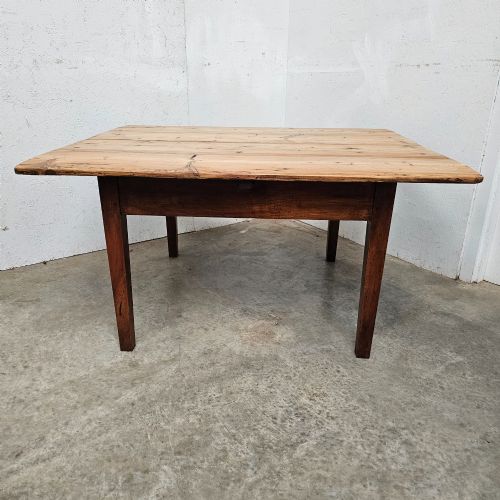
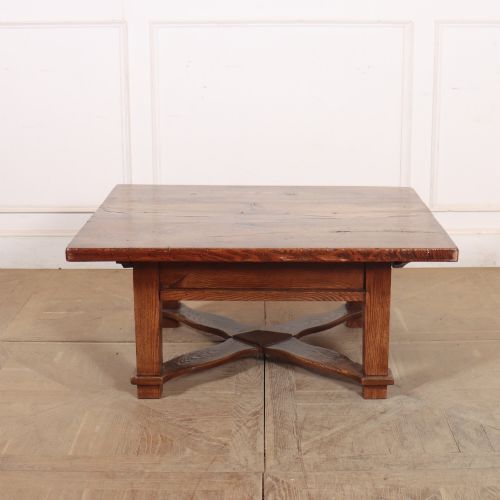


Farmhouse Low Table
A farmhouse low table brings practical, time-worn character to a sitting room through honest timber and grounded proportions.
Farmhouse Low Table
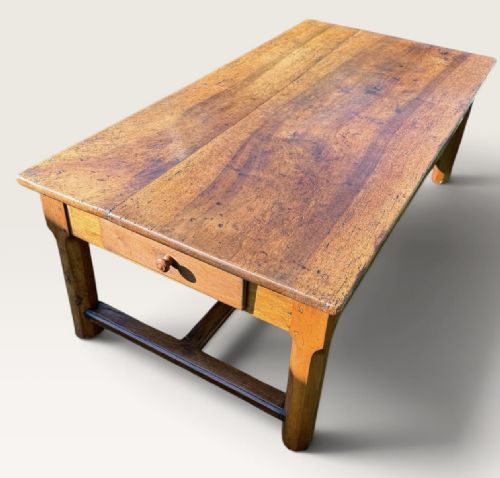
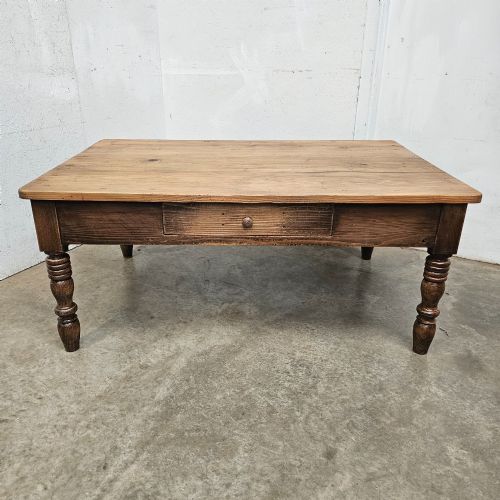
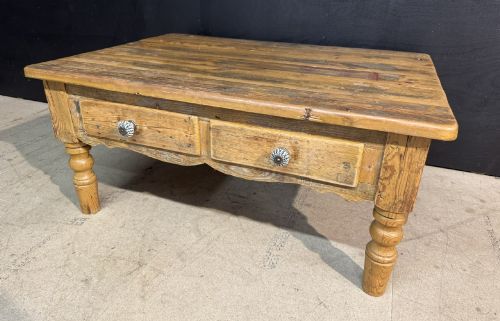
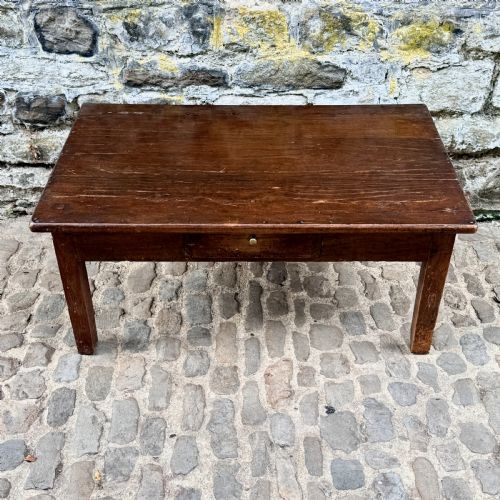
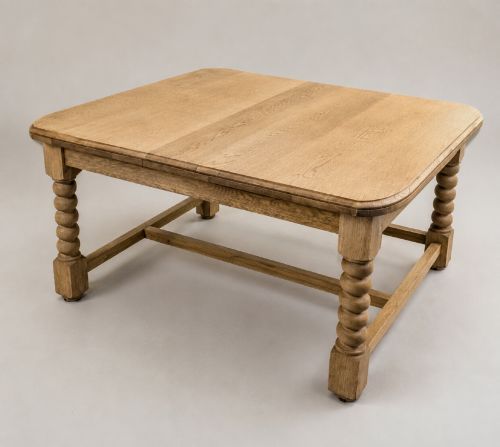
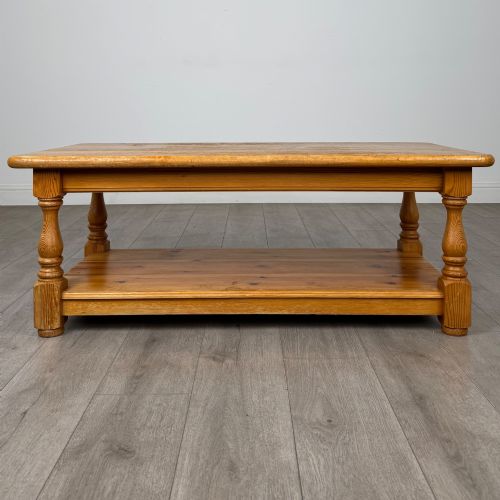
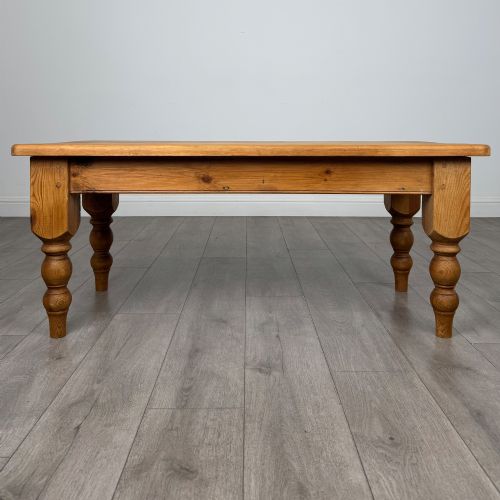
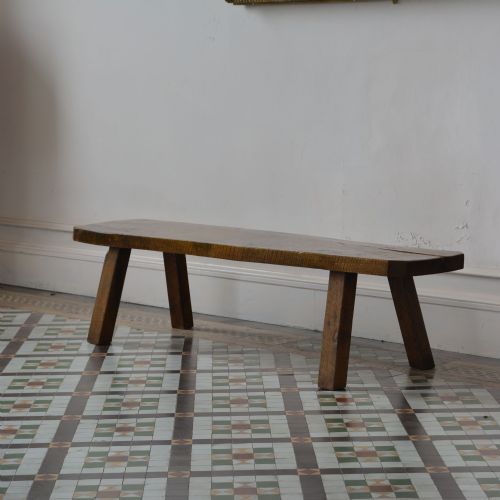
When searching for a farmhouse low table, buyers encounter sturdy pieces originally utilised for domestic tasks like baking, cheesemaking or butchery, now adapted as coffee tables and benches.
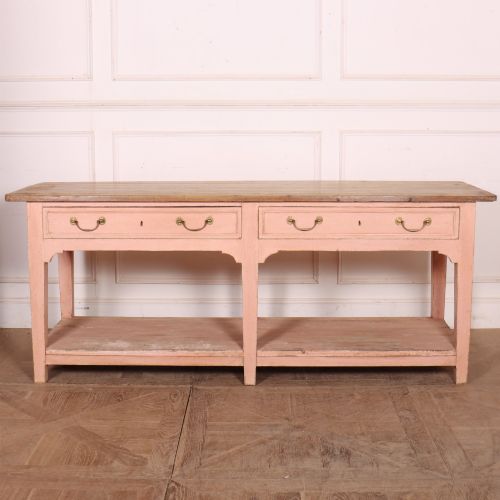
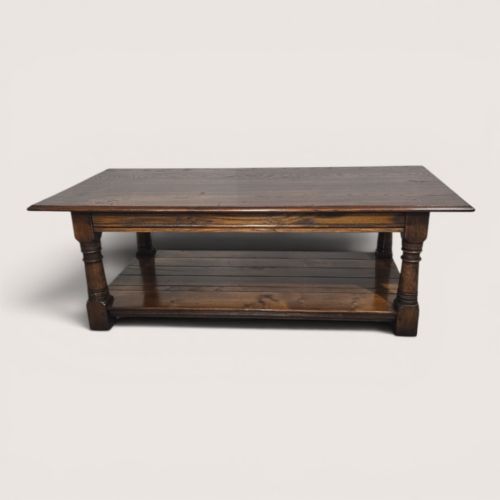
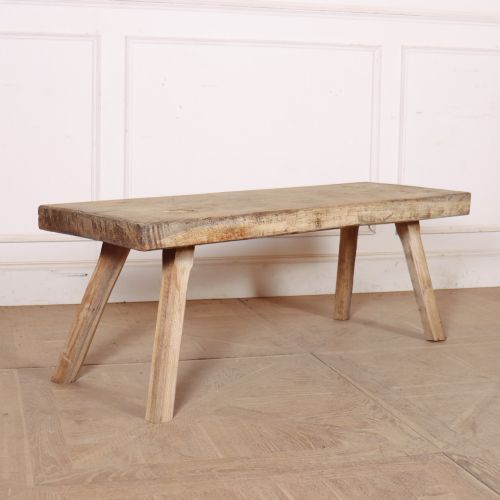
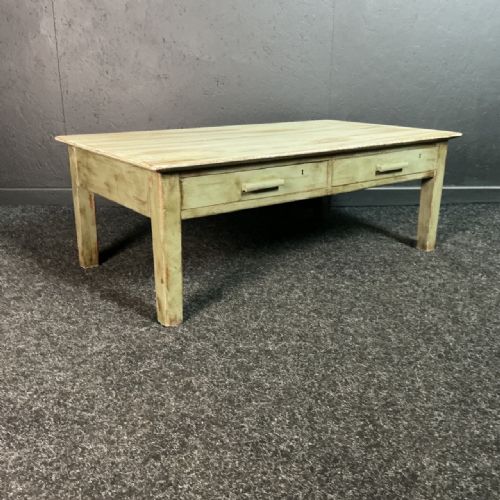
Most examples take the form of low coffee tables, pig benches and scrub-top boards, showing the straightforward construction typical of vernacular furniture.
How they were made
Joiners and country craftsmen built these pieces from solid domestic timbers such as pine, oak, elm, walnut, cherrywood, sycamore and fruitwood, often combining woods within a single frame.
Surfaces were designed for heavy daily use, featuring thick plank tops, turned legs, trestle supports and occasional drawers, with scrubbed finishes reflecting generations of washing and scrubbing.
Construction relied on straightforward joinery suited to rural workshops, prioritising structural endurance over decorative flourish.
Some nineteenth-century pig benches still bear the exact scars of the kitchen butcher's knife.
What varies in quality
The distinction between ordinary and exceptional pieces lies in the depth of natural patina, the character of the timber grain, and the integrity of the original construction.
Proportions and regional quirks elevate certain tables, such as deep scrubbed tops on fruitwood or elm, contrasted against more utilitarian pine examples.
Proportion and scale dictate the visual weight of a piece in a room, with older eighteenth and nineteenth-century examples displaying softer, hand-planed surfaces absent in later editions.
The Farmhouse Low Table Glossary
- Scrub top
- A wooden table top repeatedly scrubbed clean with water and sand or stone, resulting in a pale, textured, undulating surface.
- Pig bench
- A low, narrow wooden bench traditionally utilised in rural butchery and preparation, now repurposed as a low table.
- Trestle table
- A table consisting of two or more support frames connected by a horizontal beam holding a plank top.
- Potboard
- An open slatted lower shelf fitted beneath a dresser base or table for storing pots and domestic utensils.
- Patina
- The deep sheen and surface alteration developed on timber over decades of handling, cleaning and exposure to light.
Farmhouse Low Table: Frequently Asked Questions
How do I use a farmhouse low table in a modern room?
These low tables anchor a sitting room by introducing natural texture and history alongside contemporary upholstery. Their grounded proportions make them suitable for placing books, ceramics and daily items.
Allow enough clearance around the table for movement, letting the aged timber grain contrast cleanly with modern flooring and fabrics.
Are these tables sturdy enough for daily family life?
Built originally for rigorous rural labour such as bread preparation or butchery, these pieces possess inherent structural strength. Solid oak, elm and pine frames endure regular household use.
Minor wobbles or historical knocks are standard for vernacular furniture and rarely impair the overall stability of the frame.
How do I clean and care for a scrubbed timber top?
Dust the surface regularly with a dry cloth and clean spills promptly using a slightly damp cloth without harsh chemical detergents. Avoid soaking dry scrubbed tops, as excess moisture can raise the grain.
Occasional application of natural beeswax nourishes older woods like oak and walnut without obscuring the historic surface character.
How can I tell an older table from a later reproduction?
Examine the timber closely for hand-planed marks, pegged joints, and uneven wear patterns consistent with manual tool use. Eighteenth and nineteenth-century examples display natural shrinkage and patination that modern manufacturing cannot replicate.
Check underneath the top and around the legs for signs of age, tool inconsistencies and the specific regional characteristics of English, French or Hungarian workshops.