


Fall Front Secretary
A fall front secretary is a writing cabinet with a hinged writing flap, offering concealed compartments and sturdy drawers for practical study.
Fall Front Secretary
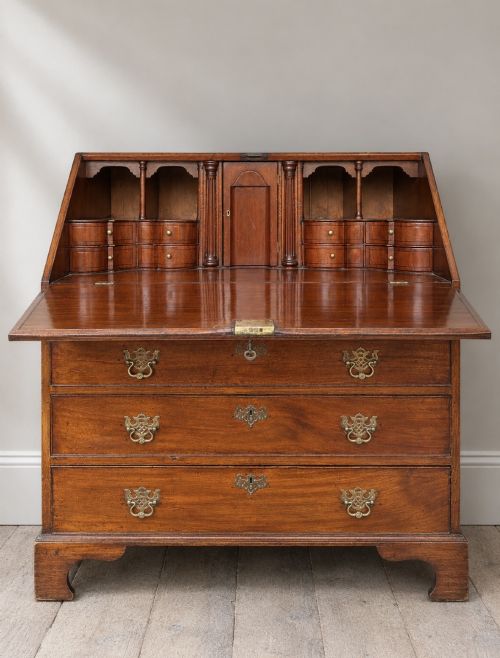
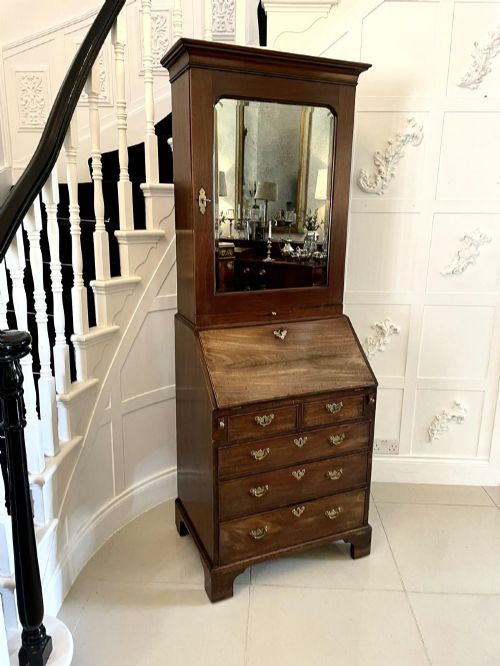
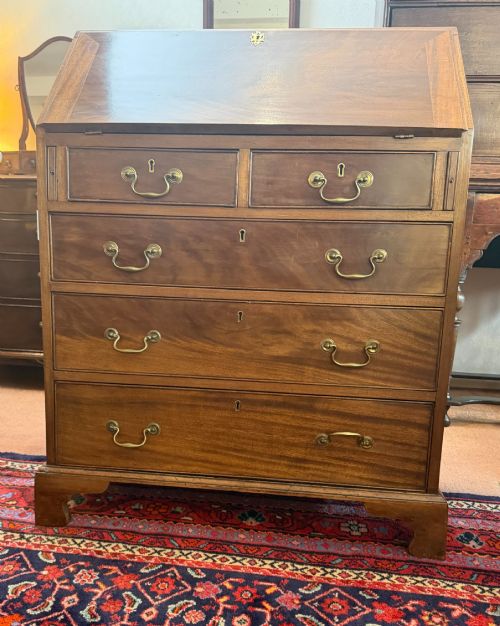
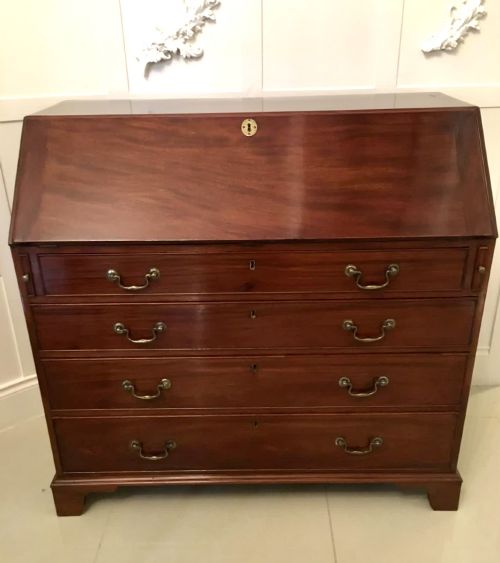
A fall front secretary combines a writing surface with compartmentalised storage behind a hinged panel. When closed, the piece resembles a chest of drawers or a tall cabinet, concealing the writing desk within.
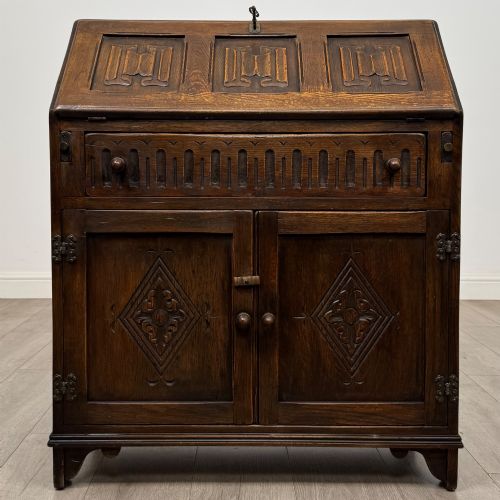
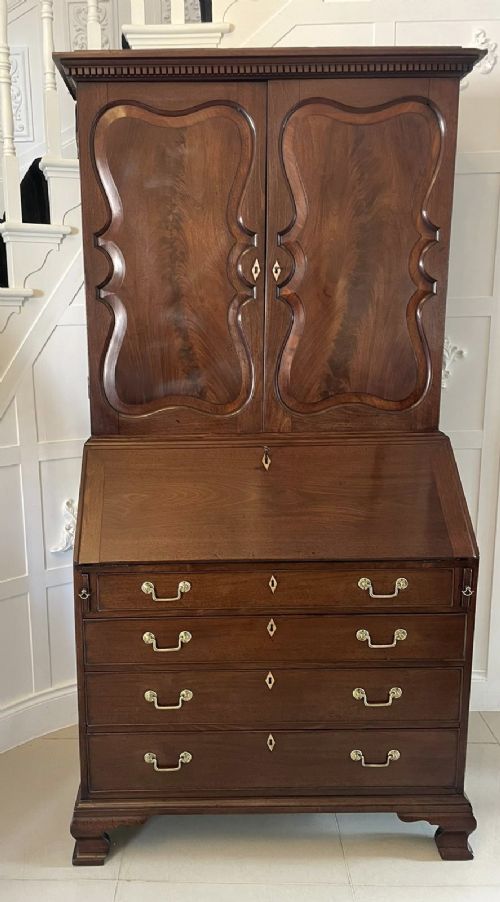
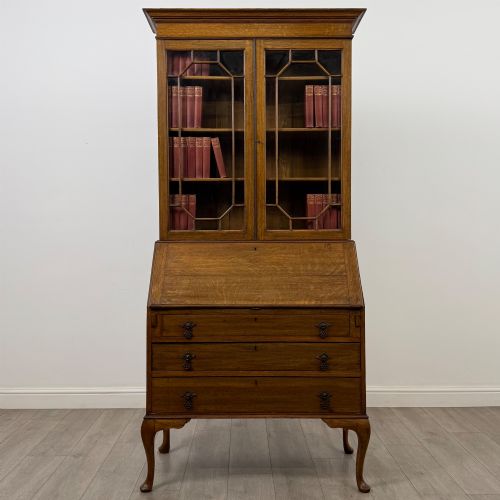
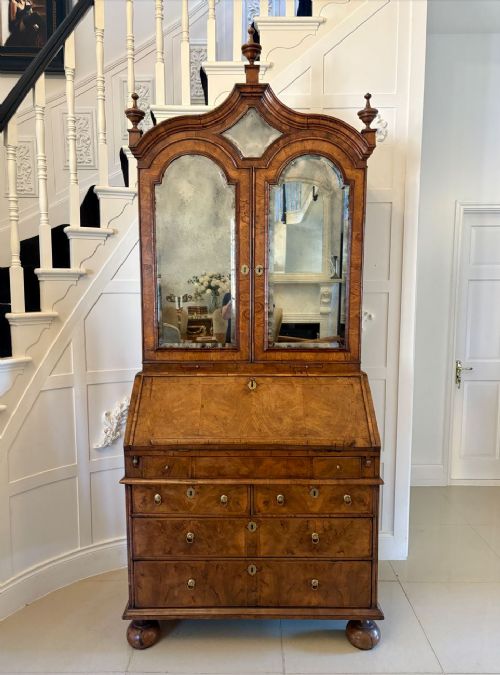
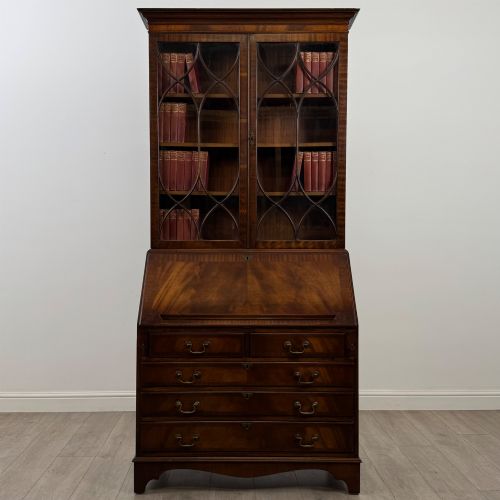
The varieties on this page span several centuries, encompassing compact oak pieces from the Edwardian era alongside substantial mahogany and burr walnut examples from the Georgian period. Bureau bookcases add upper display shelving enclosed by glass or timber doors.
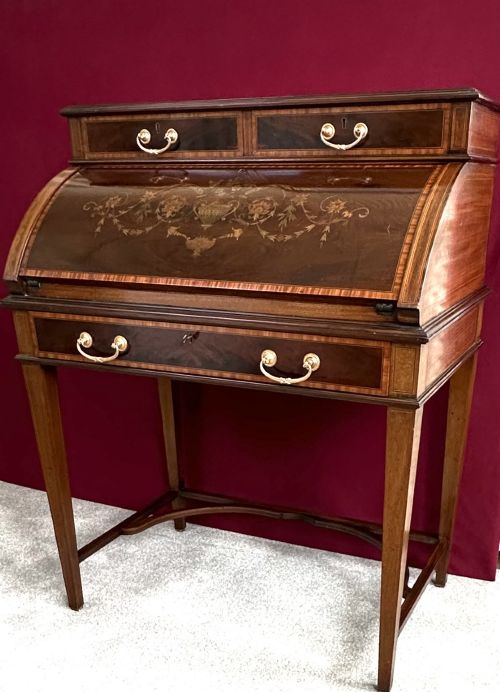
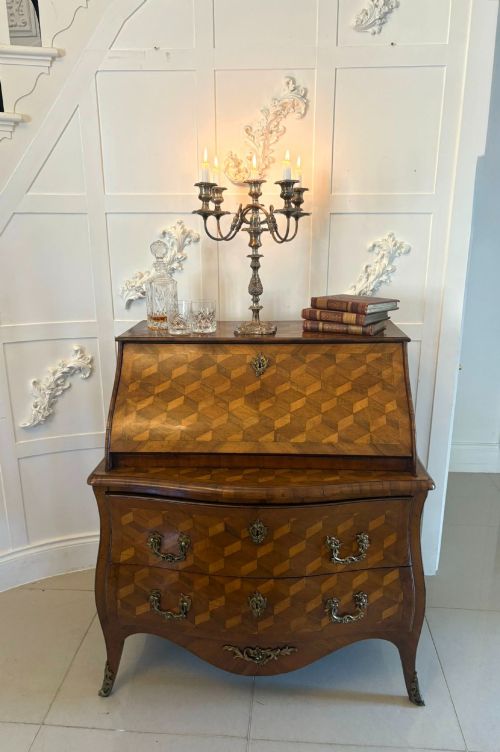
Makers utilised woods such as mahogany, oak, burr walnut, and yew, applying marquetry, featherbanding, and parquetry for decoration. Bracket feet, bracket bases, and carved paw feet support these structures.
Construction and Materials
Cabinetmakers constructed these pieces primarily in mahogany, oak, and walnut, often selecting burr walnut or satinwood for decorative veneers. Secondary timbers like cedarwood provide internal structure for drawers and pigeonholes.
Joinery techniques involve dovetailing for drawer construction and precise framing to support the heavy weight of the hinged writing flap. Brass handles, escutcheons, and hinges secure the moving parts and doors.
Surface decoration relies on natural wood grains enhanced by polishing, alongside detailed marquetry inlay depicting floral motifs or geometric parquetry patterns.
One early oak bureau bookcase has been converted to house a television, proving that antique cabinets adapt readily to modern habits.
Assessing Quality and Execution
The distinction between standard pieces and those of superior rank rests upon the selection of timber and the precision of internal joinery. Figured veneers, such as burr walnut or highly grained mahogany, demand careful matching across the fall front and drawer faces.
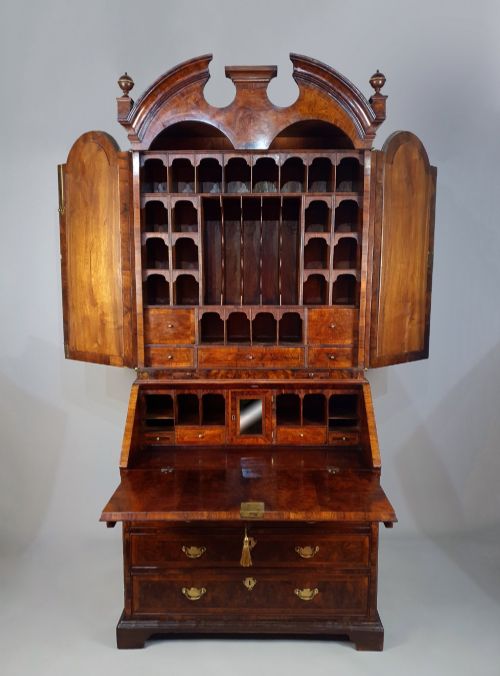
Interior architecture reveals the maker's skill through stepped pigeonholes, secret compartments, and fitted small drawers. The integration of fine brass hardware and the crispness of carved details further separate workshop standards.
Heals of London·Arthur Basil Reynolds·Larkin
The Fall Front Secretary Glossary
- Fall front
- A hinged writing flap that pulls down to form a horizontal desk surface. It conceals internal drawers and pigeonholes when closed.
- Featherbanding
- A decorative banding technique using veneer slices laid diagonally to form a herringbone pattern around drawer edges. This ornamentation appears frequently on high-status walnut pieces.
- Marquetry
- The art of applying veneer pieces in contrasting timbers and materials to create pictorial or floral designs. Dutch examples often display complex floral arrangements.
- Stepped interior
- An internal arrangement of pigeonholes and small drawers arranged in tiers that recede in steps. This feature adds complexity to the desk interior.
Fall Front Secretary: Frequently Asked Questions
What is a fall front secretary?
A fall front secretary is a desk featuring a hinged writing flap that opens downward for use and closes upward to conceal the interior compartments.
These pieces provide a compact workspace while keeping writing materials and stationery out of sight when not in use.
How do I date an antique secretary?
Dating relies on examining the timber species, construction methods, hardware, and stylistic details such as bracket feet or cornice designs.
Earlier examples from the eighteenth century typically employ oak or mahogany with hand-dovetailed drawers, whereas Edwardian pieces often utilise golden oak or machine-finished elements.
Where should I place a secretary in my home?
These cabinets suit studies, living rooms, or bedrooms where floor space is limited yet desk storage is required.
Ensure adequate clearance in front of the piece for the fall front flap to lower fully without blocking walkways.
What is the difference between a bureau and a bureau bookcase?
A standard bureau consists of a desk base with a fall front and lower drawers, standing alone as a compact writing cabinet.
A bureau bookcase incorporates an upper shelving unit or cabinet with doors, extending the height and storage capacity of the piece.