

Tall Mahogany Bureau
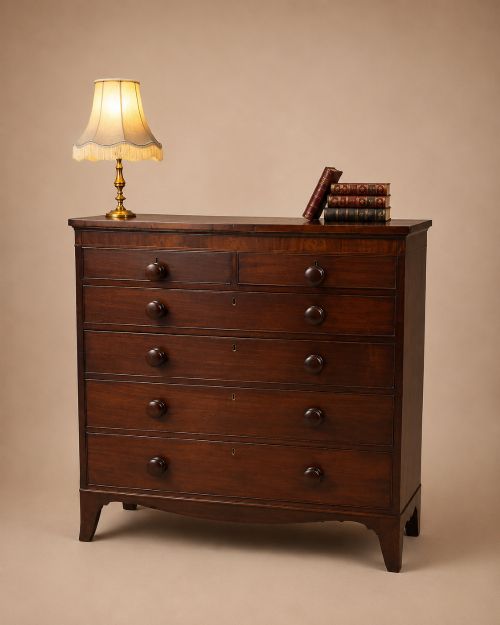
A tall mahogany bureau brings architectural scale and a fitted drop-front desk into a room, offering vertical storage alongside a private workspace.
Tall Mahogany Bureau
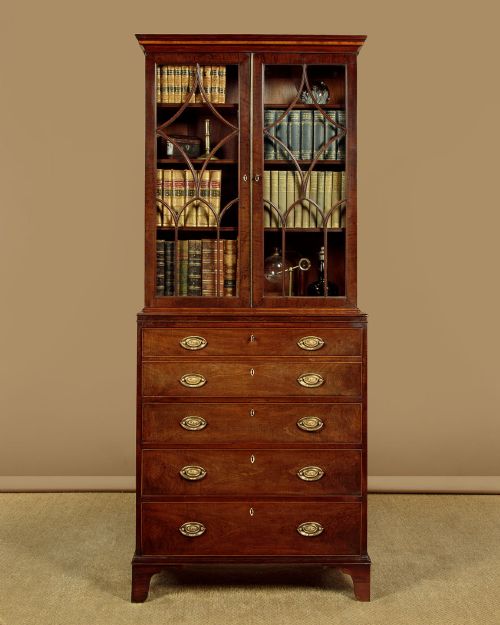
A tall mahogany bureau encompasses pieces reaching upwards, from Georgian bureau bookcases and tallboys to Victorian secretaire abattants and escritoires. These items combine a writing surface with extensive drawer or cabinet storage, often rising in slim proportions to suit higher ceilings.
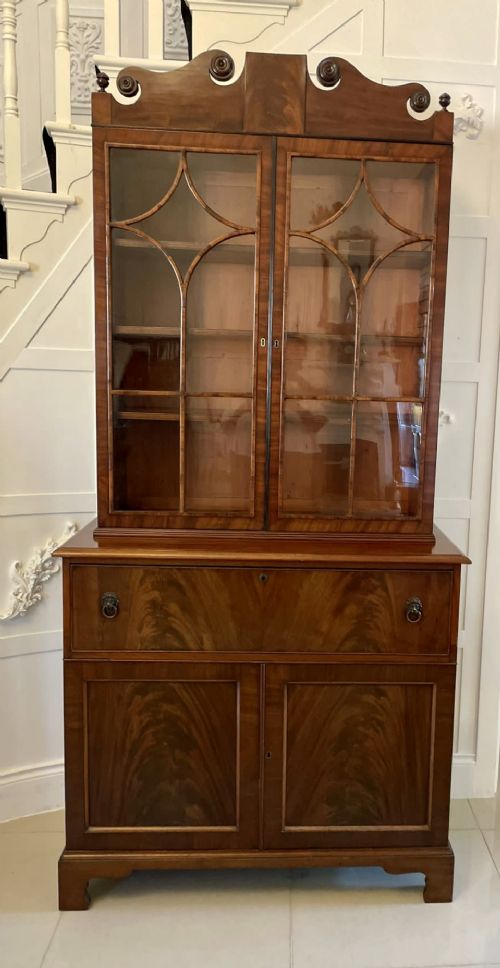
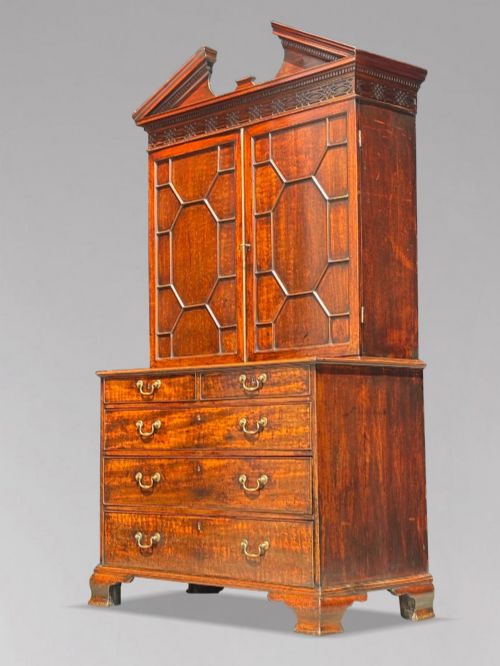
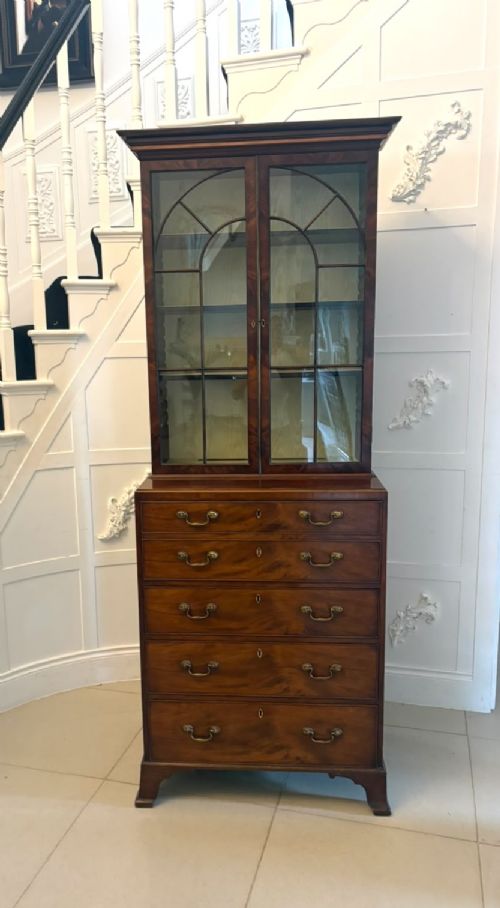
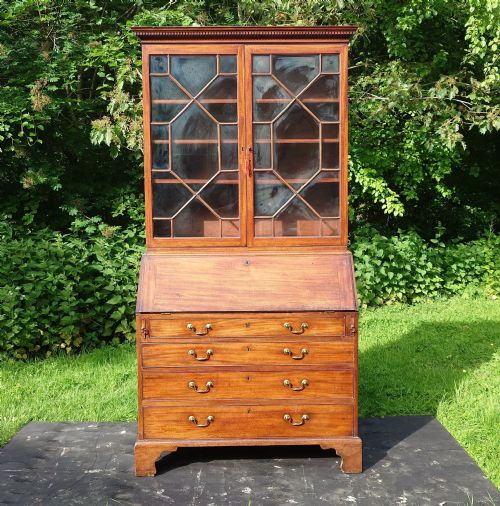
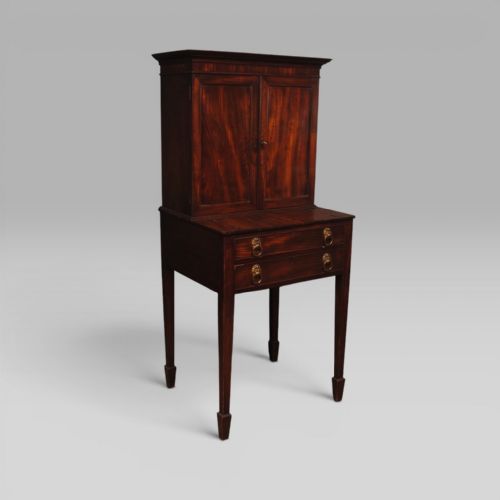
The version most commonly met on this page is the Georgian or 19th-century secretaire bookcase and bureau cabinet, constructed in rich timbers with fitted internal pigeonholes and small drawers behind the fall-front or drop-front writing flap.
Makers and workshops across England, Ireland, and France produced these tall storage units, incorporating styles from George III Chippendale and Sheraton Revival to French Empire and Biedermeier.
Materials and construction methods
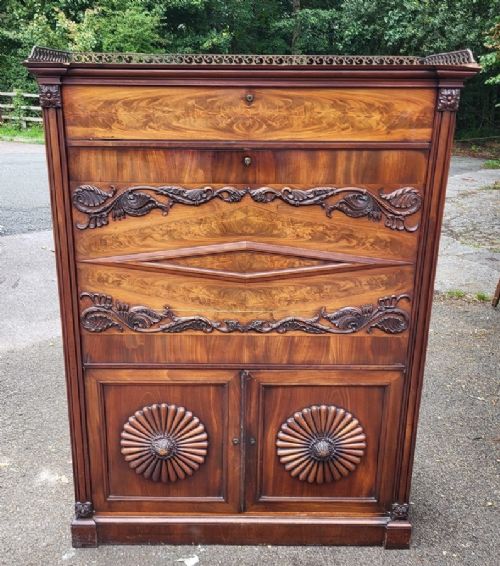
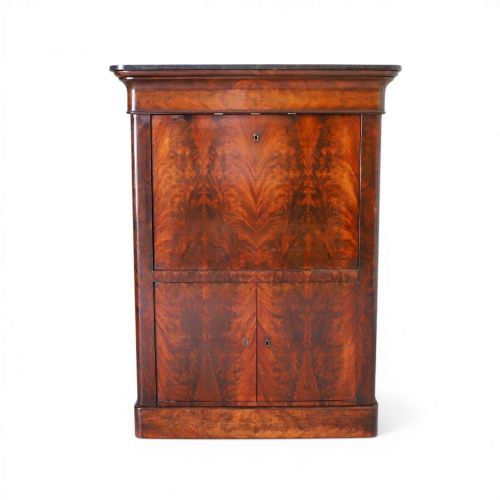
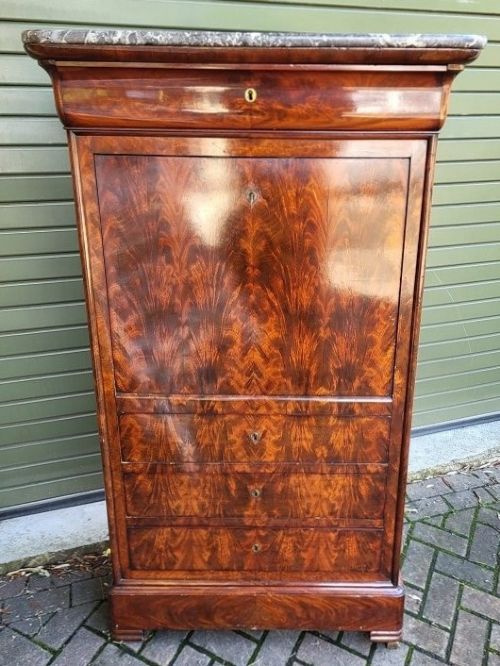
Makers utilised solid mahogany and flame mahogany veneer laid over secondary timbers such as oak, achieving dramatic grain patterns across the primary fall-fronts and drawer faces. Satinwood frequently appears inside the small internal compartments for contrast.
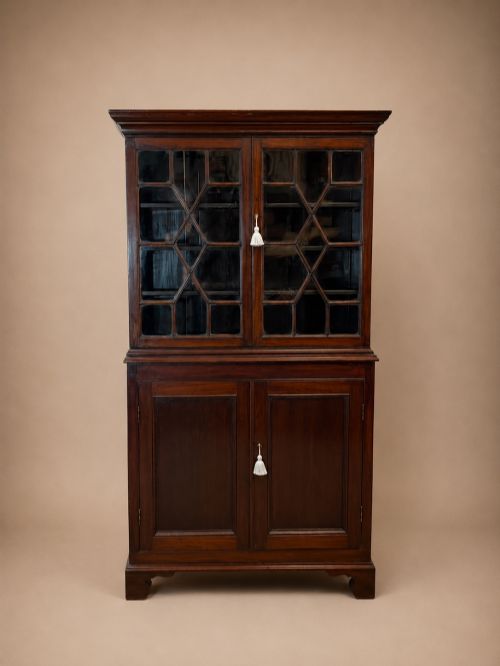
Structural integrity relied on dovetail joints for the drawers and robust frame-and-panel construction for the upper bookcases, while glass doors often featured wooden astragal glazing bars.
Hardware typically included brass handles, escutcheons, and working locks with secret drawers hidden within the architectural interior pigeonhole sections.
Listings feature tall mahogany bureaux spanning the 18th and 19th centuries, incorporating Georgian, Regency, Victorian, and Edwardian periods.
Assessing quality in tall bureaux
The hierarchy of quality rests primarily on the choice of timber and the handling of the veneer, where symmetrical flame mahogany figures command greater admiration than plain grain boards. The crispness of hand-cut dovetails and the complexity of the interior fitments further distinguish ambitious cabinet-making from standard output.
Proportion and scale dictate the visual success of a tall piece, with narrow and slender carcasses demonstrating superior design balance compared to heavier, bulkier carcases. Original glazing, intact brasses, and retained interior secret compartments elevate the standing of a piece considerably.
Thomas Chippendale·Gillows
The Tall Mahogany Bureau Glossary
- Secretaire abattant
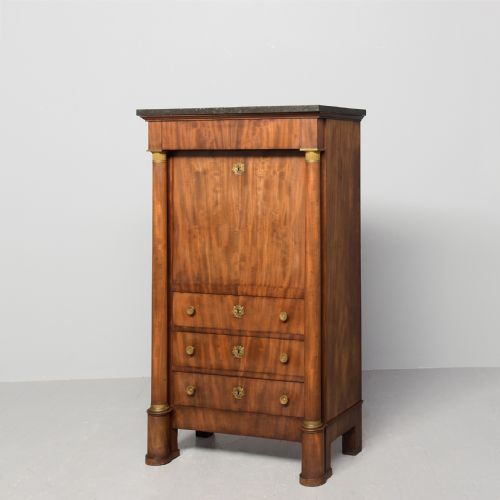
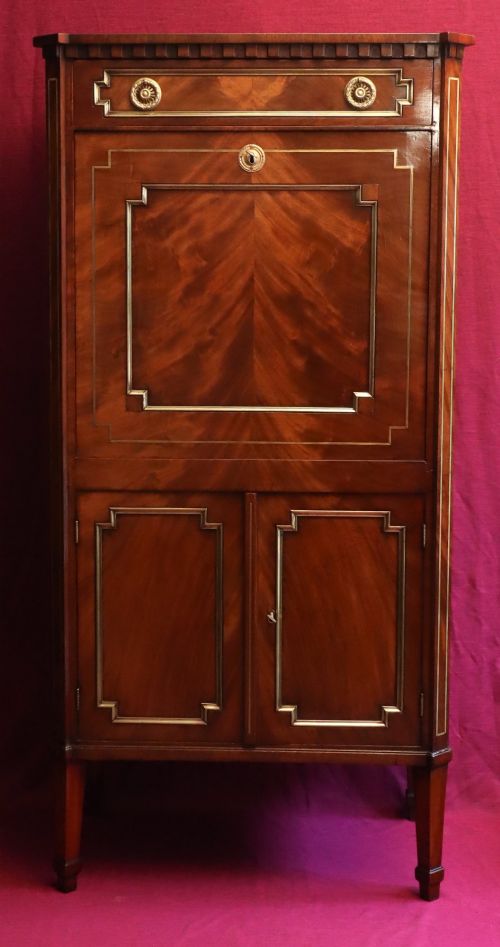
- A tall, vertical cabinet featuring a drop-front writing flap that conceals a fitted interior of drawers and pigeonholes. This continental form often includes a marble top.
- Escritoire
- A writing cabinet or desk, usually tall and narrow in profile, designed for correspondence and private documentation. The term is frequently applied to French and Biedermeier examples.
- Astragal glazing
- Wooden bars dividing the glass panes of a bookcase door into geometric lights. Georgian cabinet-makers favoured delicate mouldings for these intersecting frames.
- Flame mahogany
- A veneer cut from the fork of the mahogany tree where the branch meets the trunk. This method yields a distinctive, flamy, or feathery grain pattern.
- Tallboy
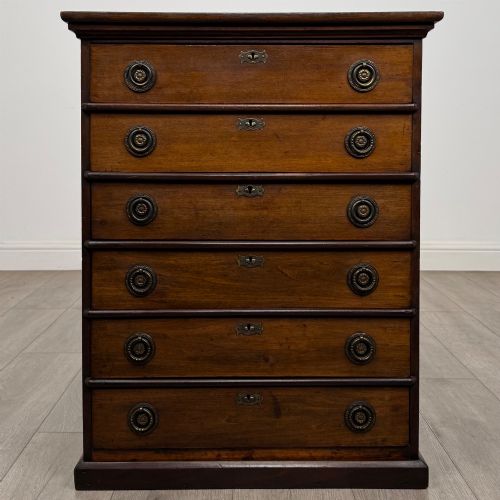
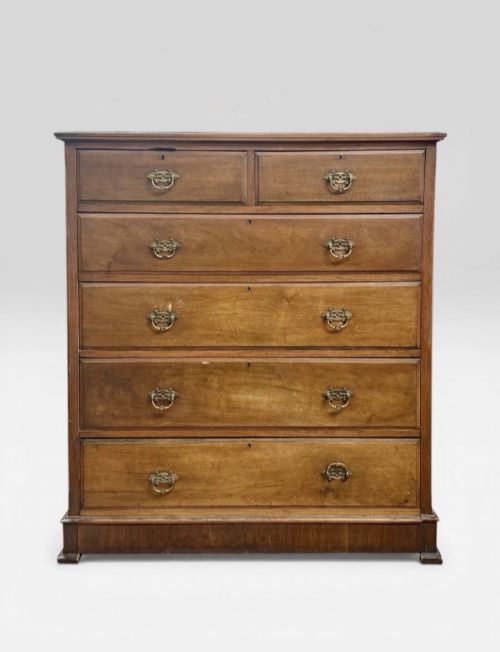
- A traditional English term for a tall chest of drawers standing one above the other, sometimes incorporating a secretaire drawer for writing.
Tall Mahogany Bureau: Frequently Asked Questions
What is a tall mahogany bureau?
A tall mahogany bureau is a vertical storage cabinet that incorporates a folding or drop-front writing desk, often topped with a bookcase or additional drawers. These pieces provide substantial vertical capacity while occupying a relatively small floor footprint.
They appear in various regional British and continental styles, ranging from simple 19th-century clerks' desks to elaborate Georgian secretaire bookcases with glazed upper doors.
How do I use a bureau in a modern room?
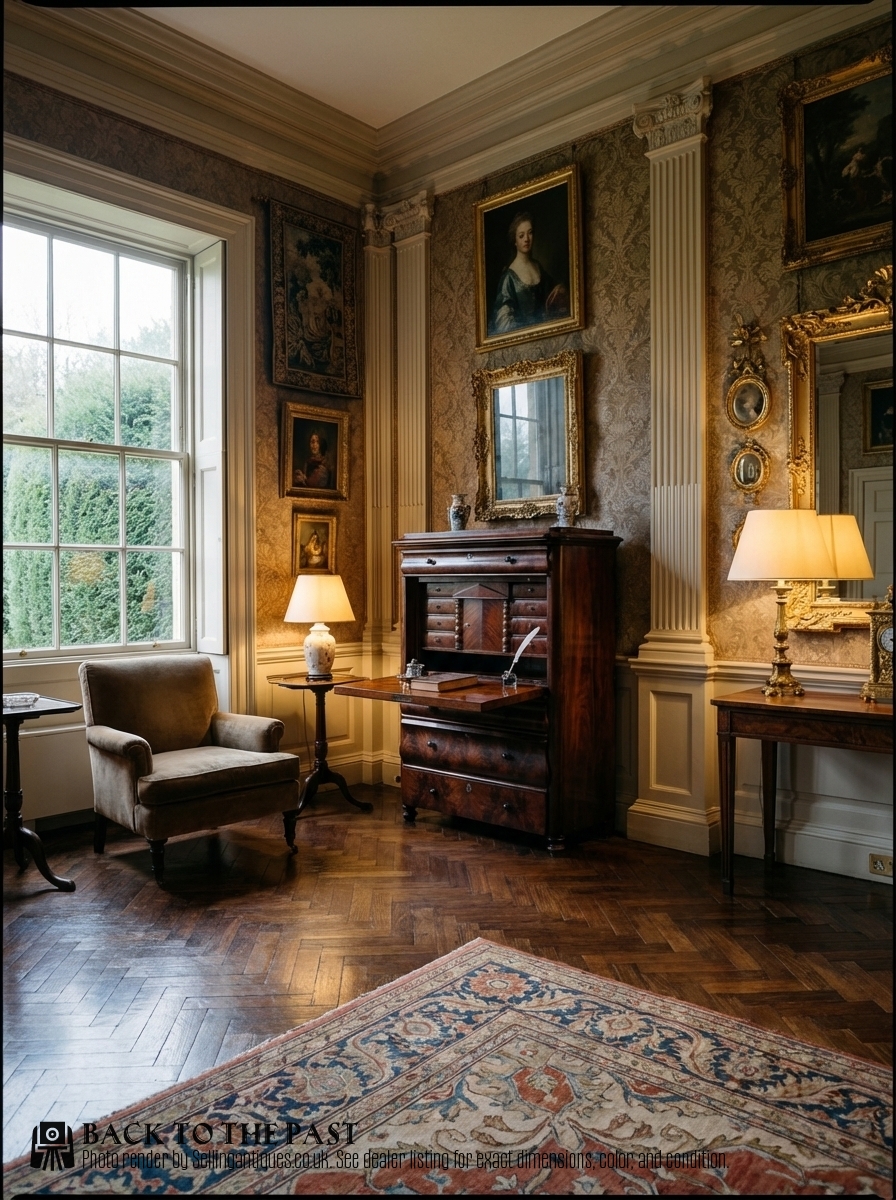
A bureau serves as a functional workspace that can be entirely concealed when the writing flap is closed, keeping rooms tidy. The upper shelves or lower drawers accommodate books, household storage, or display items.
Positioning requires attention to ceiling height and clearance for the drop-front flap when fully opened for writing.
What is flame mahogany?
Flame mahogany is a decorative veneer harvested from the junction where a branch joins the main tree trunk. The sawing process reveals a rippled, flickering grain pattern resembling flames.
Cabinet-makers reserved this striking timber for the most prominent surfaces, such as fall-front desks and primary drawer fronts.