



French Abattant Cabinet
A french abattant cabinet brings a drop-front writing surface and concealed drawers to a room, offering practical writing space alongside enclosed storage.
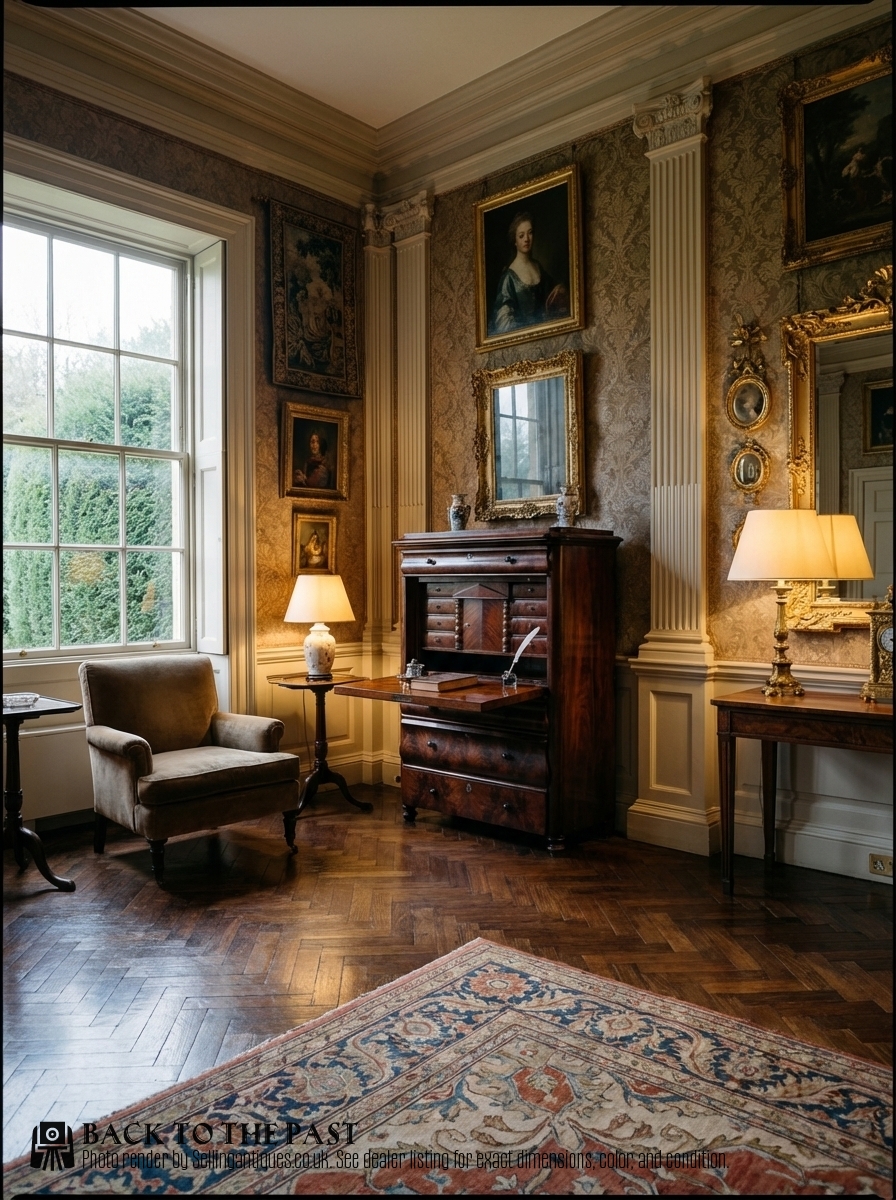
French Abattant Cabinet
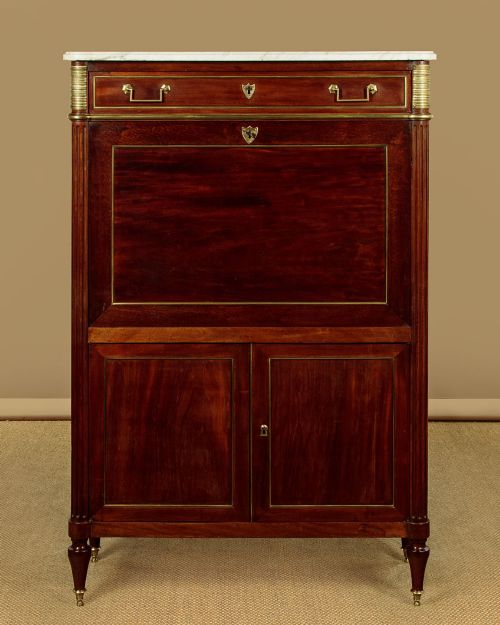
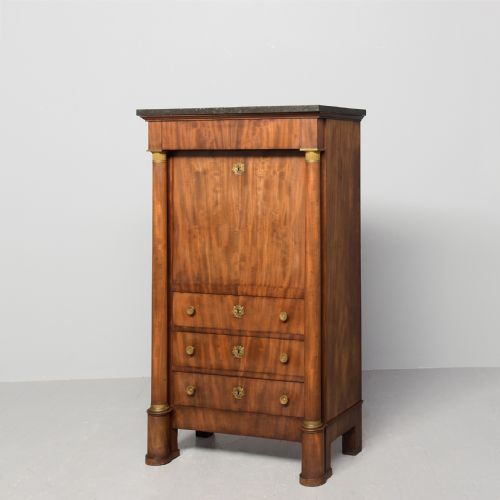
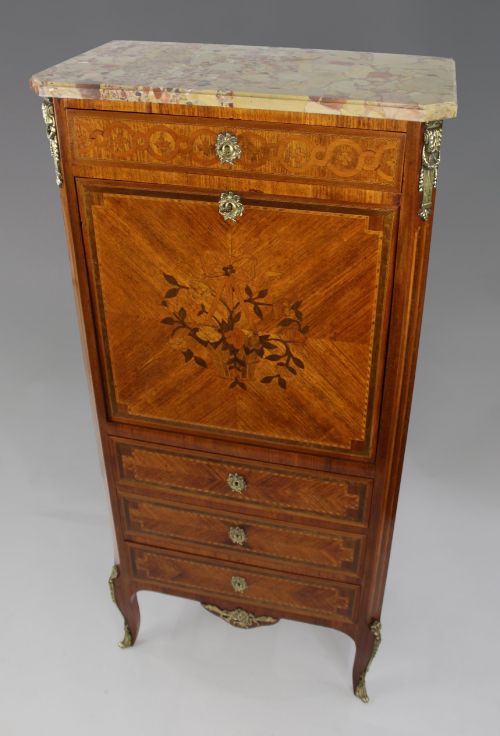
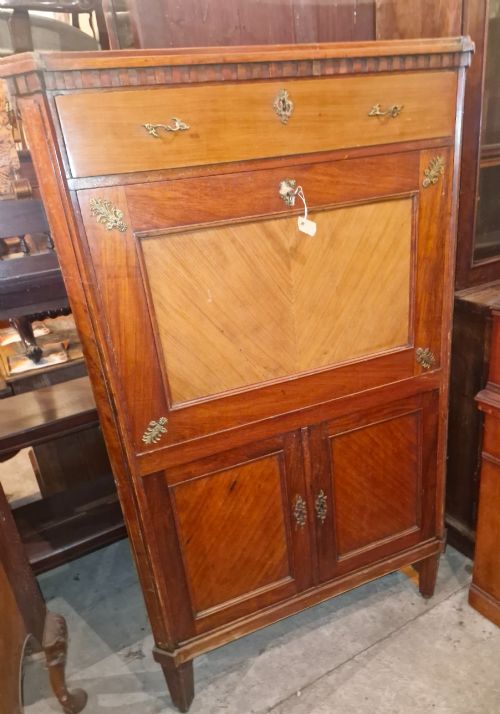
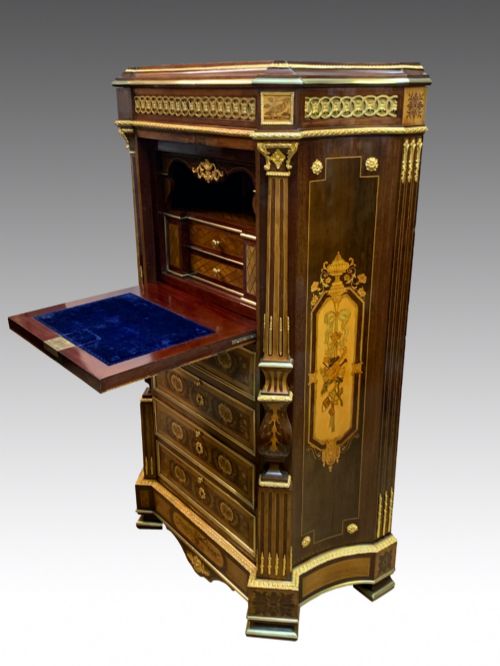
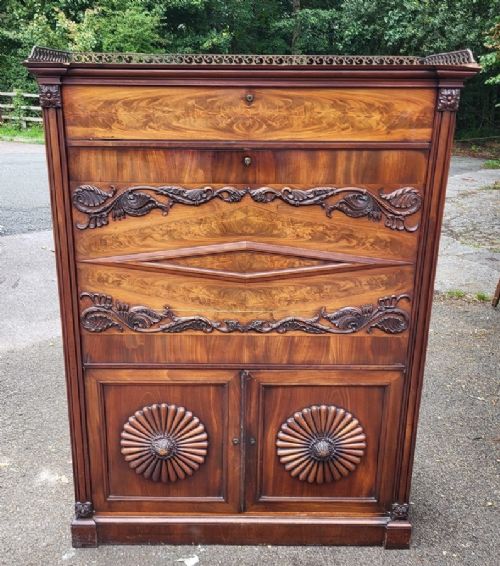
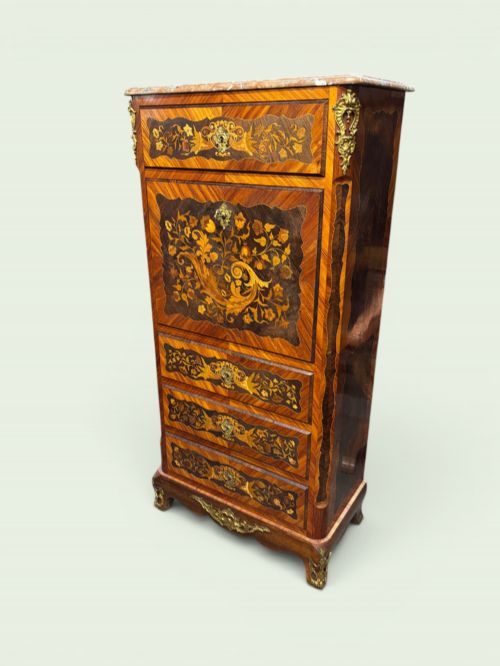
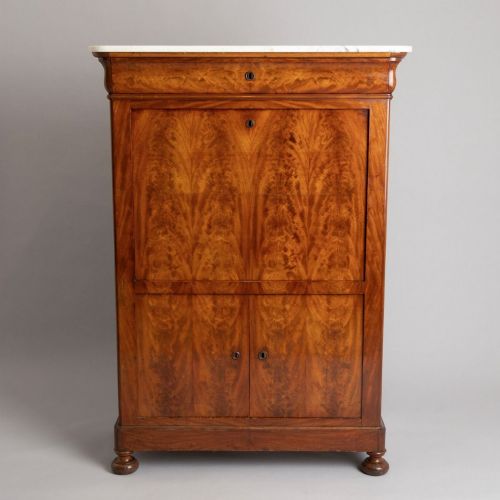
A french abattant cabinet stands as a tall, vertical piece of furniture featuring a hinged fall-front panel that drops down to form a writing desk. Inside this drop-front compartment, makers arranged small drawers and pigeonholes for correspondence and papers.
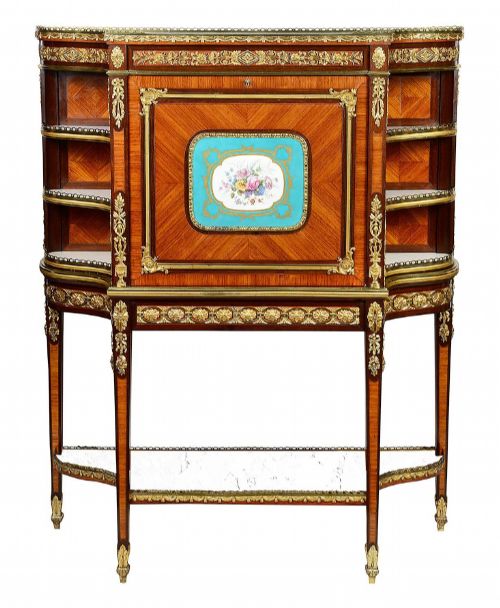
The pieces catalogued here span the eighteenth, nineteenth, and early twentieth centuries, encompassing styles from the French Empire, Louis XV and Louis XVI revivals, and the Bourbon Restoration. Buyers encounter variations including standard upright secretaires, variants adapted as drinks cabinets, and examples finished with marquetry or parquetry.
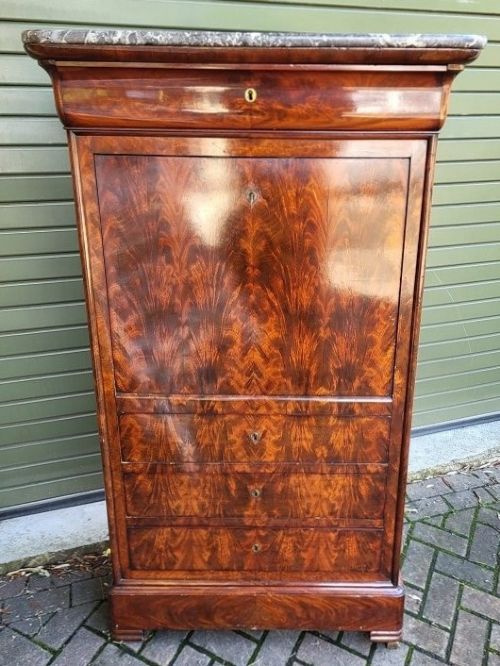
Forms in the current selection range from substantial mahogany carcases to lighter kingwood, walnut, and rosewood bodies. Many examples incorporate a fitted marble top and decorative metal mounts.
How They Were Made
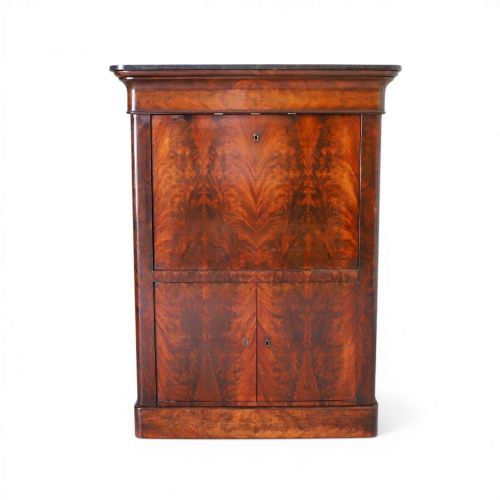
Cabinet makers built these pieces using solid timbers and supportive frame constructions, applying decorative veneers such as mahogany, flame mahogany, kingwood, tulipwood, and rosewood to the exterior surfaces. Marquetry and parquetry patterns were meticulously arranged using contrasting wood grains and tinted veneers.
Mounts cast in ormolu, gilt bronze, and brass were secured to corners, feet, and key escutcheons to frame the woodwork. Stone masons shaped thick marble slabs to sit flush on top of the timber carcases.
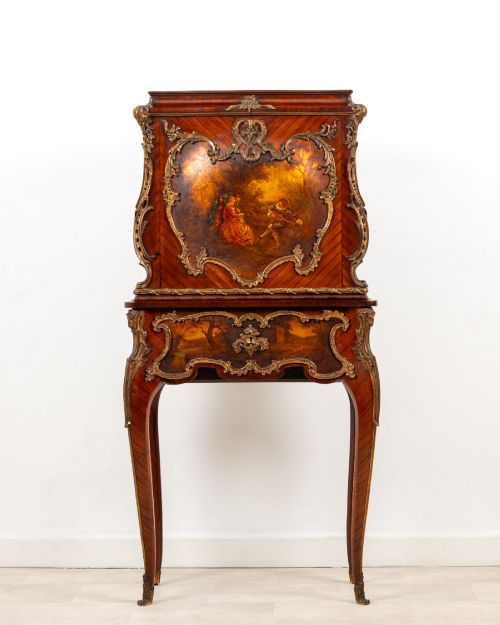
Interior compartments relied on precise joinery to conceal secret drawers behind sliding panels or dummy book spines. Surfaces were finished with polished lacquers, including Vernis Martin techniques on select decorated pieces.
Listings feature mahogany, kingwood, rosewood, walnut, and satinwood, frequently paired with marble tops and ormolu mounts.
What Varies in Quality
The crispness of the bronze or ormolu mounts distinguishes standard production from finer workshop output, as does the depth and precision of hand-cut marquetry and parquetry patterns. Timber selection plays a part, with figured flame mahogany and matched kingwood veneers indicating superior material grade.
Internal engineering marks the tier of a piece, particularly the smooth action of the fall-front mechanism and the clever concealment of secret drawers. The thickness, polish, and natural figuring of the fitted marble slab also reflect the original cost and ambition of construction.
Maison Krieger·Blake London·Millet
The French Abattant Cabinet Glossary
- Abattant
- A drop-front panel or fall-front door on a cabinet that opens downward to serve as a writing surface.
- Ormolu
- Gilt bronze mounts applied to furniture for decorative enrichment.
- Marquetry
- The art of forming decorative patterns using pieces of veneer arranged on a wood carcase.
- Parquetry
- Geometric wood mosaic work used for floors and furniture surfaces.
- Vernis Martin
- A type of translucent decorative lacquer finish developed in eighteenth-century France.
- Escritoire
- A small writing desk or cabinet designed for correspondence.
French Abattant Cabinet: Frequently Asked Questions
How do I use a french abattant cabinet today?
The drop-front panel opens to provide a sturdy surface for writing letters or placing a laptop. Interior pigeonholes and small drawers serve to organise stationery and household items.
Closed, the tall cabinet occupies minimal floor space while concealing desk clutter behind decorative wood veneers and metal mounts.
What is inside the drop-front section?
Opening the fall-front reveals a fitted interior containing multiple small drawers and open compartments for letters and pens. Many examples include a concealed secret drawer accessed by removing a false panel or sliding a partition.
The writing surface is often lined with leather or tooled fabric to provide a smooth plane for writing.
How do I identify the period of the cabinet?
Cabinet styles mirror the shifting tastes of French design periods, ranging from heavy Empire mahogany structures to ornate Louis XV and XVI revival marquetry. Wood choices such as kingwood and tulipwood point toward specific nineteenth-century revival phases.
Construction methods inside the secondary drawers and the weight of the bronze mounts offer further clues to the manufacturing decade.
Are the marble tops original to the furniture?
Most marble slabs on these cabinets were fitted during initial production to provide a durable, decorative surface. The edges of the marble are usually profiled to match the contour of the wooden carcase beneath.
Slight variations in the stone's veining and proper fit within the wooden gallery indicate whether the top belongs to the piece.