


19th Century Tall Desk
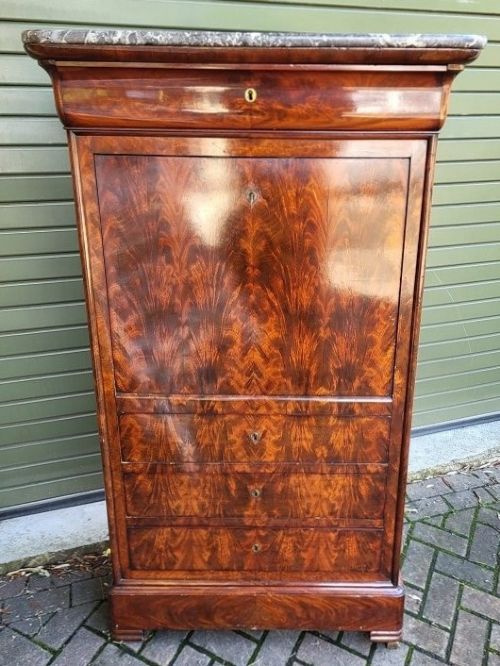
When you want a 19th century tall desk, you are looking at substantial writing furniture designed for standing or high seating.
19th Century Tall Desk
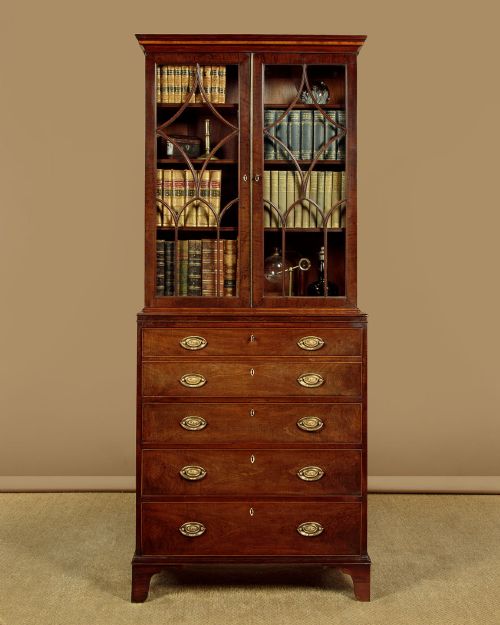
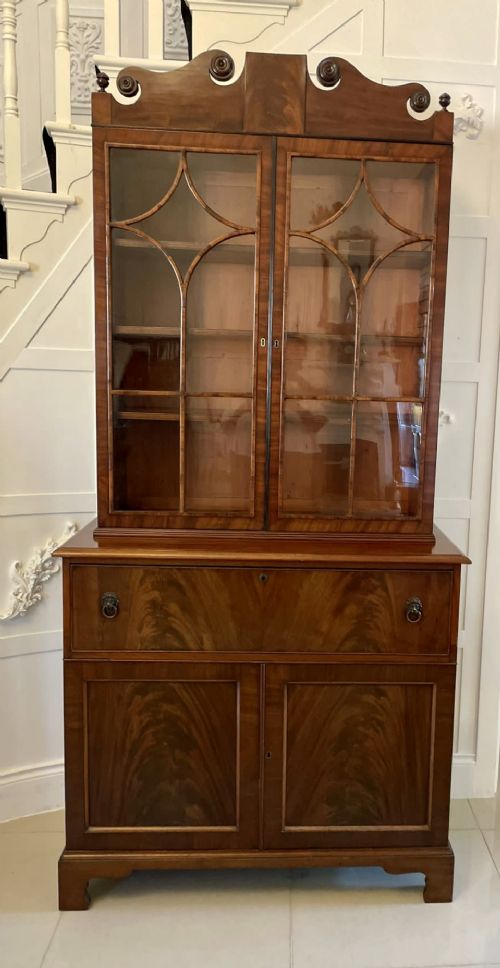
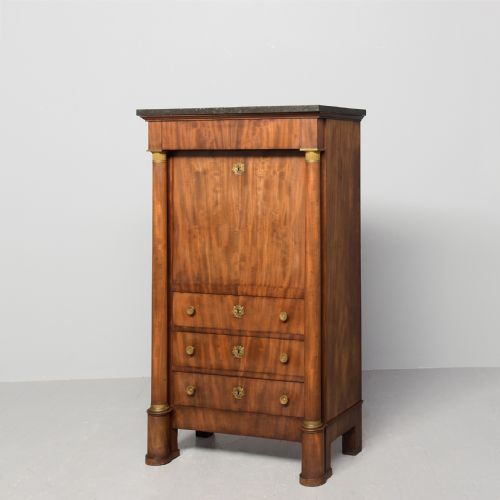
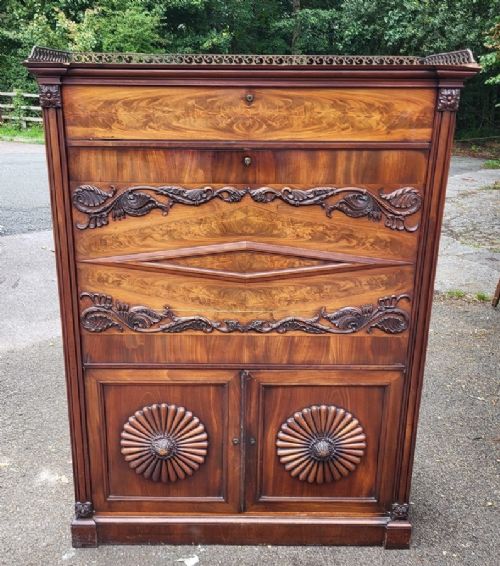
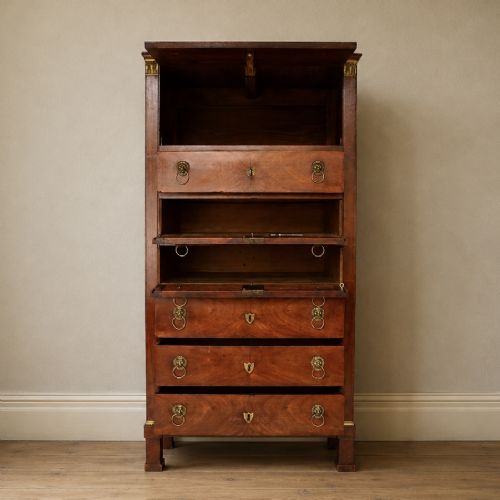
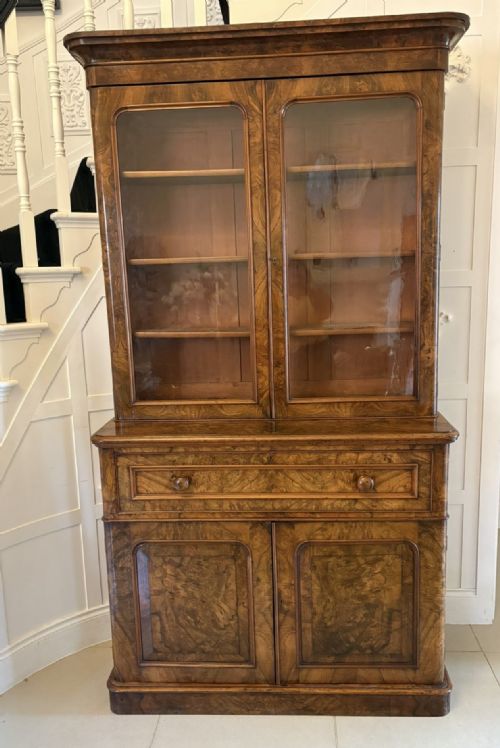
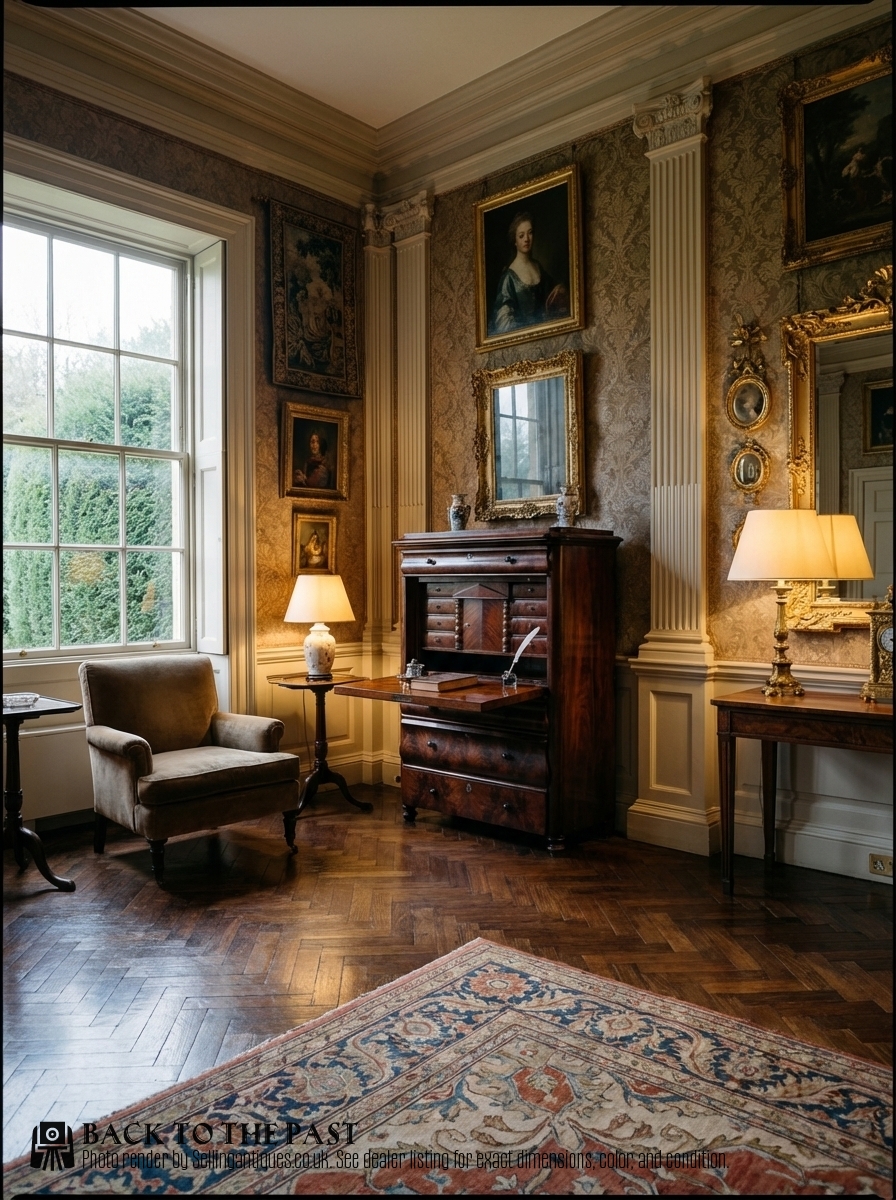
A 19th century tall desk encompasses high writing surfaces, clerk's tally desks, and upright secretaire cabinets built during the nineteenth century. Buyers searching this phrase meet various upright forms including fall-front secretaire abattants, slant-front bureaux, and tall clerk's desks designed for working from a standing position or a high stool.
The selections span distinct regional workshops from Regency England to provincial France and Biedermeier central Europe. Mahogany, flame mahogany, walnut, and pine dominate the structural timber, whilst specific forms incorporate integrated bookcases, marble tops, and internal secret drawers.
Tall writing furniture serves both practical study spaces and prominent reception rooms depending on the elegance of the timber and mounts. The surviving inventory reflects both utilitarian workplace items and grand reception pieces produced across the nineteenth century.
Materials and construction methods
Cabinetmakers utilised dense hardwoods including mahogany, flame mahogany, walnut, and pine as the primary carcass foundations. Veneers were applied with precision to create figured grain patterns across large vertical surfaces, particularly on secretaire falls and drawer fronts.
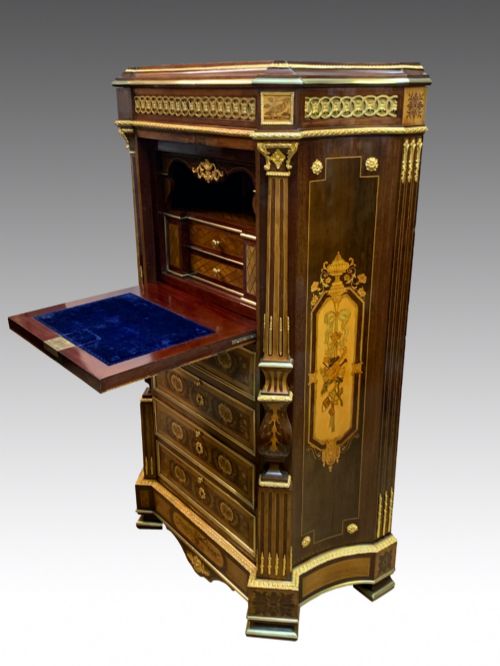
Many French and continental examples incorporate contrasting marble tops, brass mounts, and ormolu details that frame the dark timber. Internal compartments frequently feature concealed secret drawers and pigeonholes constructed with traditional dovetailed joinery.
Listings feature 19th century tall desks in mahogany, flame mahogany, walnut, and pine, alongside marble and ormolu accents.
Distinctions in craftsmanship
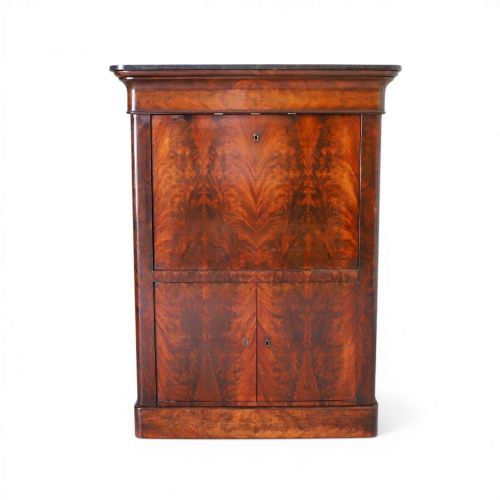
Quality reveals itself in the selection of timber figures, such as highly figured flame mahogany veneers matched symmetrically across the fall front. Superior examples display refined internal joinery, original brass hardware, and well-executed secret drawer mechanisms rather than later replacements.
The integration of decorative elements like marble slabs and ormolu mounts separates standard utility furniture from high-status salon pieces. Structural integrity in the fall-front hinges and the stability of the tall upright frame dictate the overall standard of preservation.
Maison Krieger
The 19th Century Tall Desk Glossary
- Secretaire abattant
- A tall, upright cabinet featuring a hinged drop-front writing surface that conceals internal drawers and pigeonholes. This continental form presents a flat vertical face when closed.
- Escritoire
- A traditional term for a writing desk or cabinet. These pieces provide dedicated storage for correspondence and writing materials.
- Flame mahogany
- A veneer cut from the fork of the mahogany tree to produce a distinctive flickering flame pattern. Cabinetmakers prized this grain for prominent exterior panels.
- Ormolu
- Gilded bronze applied as decorative mounts and hardware on French and Empire furniture. It accentuates the corners and key escutcheons.
- Biedermeier
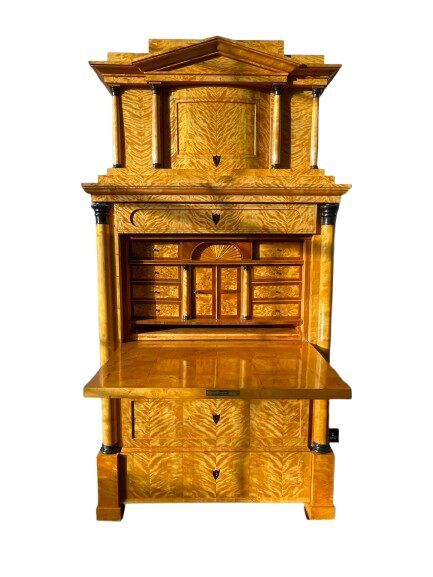
- A central European style characterised by utilitarian comfort and clean lines without excessive ornamentation. Walnut and mahogany woods feature prominently in these pieces.
19th Century Tall Desk: Frequently Asked Questions
How were 19th century tall desks used?
These tall pieces served merchants, clerks, and writers who required an elevated writing surface for ledgers and correspondence. The upright format kept documents organised while occupying minimal floor space in offices or studies.
Many incorporated locking fall fronts and secret compartments to secure confidential papers and valuables away from casual view.
Where were secretaire abattants made?
Surviving examples originate primarily from French workshops, English cabinetmakers, and Biedermeier makers in central Europe. Regional preferences dictated whether the pieces utilised native pine, figured mahogany, or walnut.
French pieces frequently incorporated marble tops and decorative brass mounts, whilst English versions often focused on figured mahogany veneers and fitted bookcase tops.
How do I identify a Biedermeier desk?
Biedermeier furniture emphasises clean architectural lines, minimal ornamentation, and the natural beauty of blonde woods or polished mahogany. These pieces date from the mid-nineteenth century and prioritise functional domestic comfort.
Unlike ornate French Empire designs, Biedermeier desks rely on balanced proportions and unadorned timber surfaces to create their visual impact.
What is a clerk's tally desk?
A clerk's tally desk is a utilitarian workspace built with a sloping top designed for standing accountants and clerks. These sturdy pieces were constructed from timbers like pine and oak for daily commercial use.
Their simple forms reflect the practical demands of nineteenth-century counting houses and public offices rather than domestic salons.