


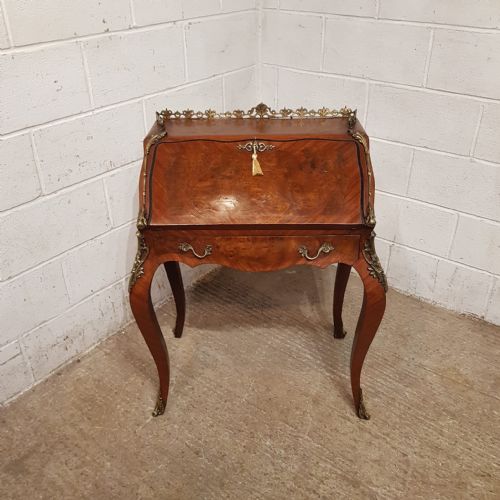
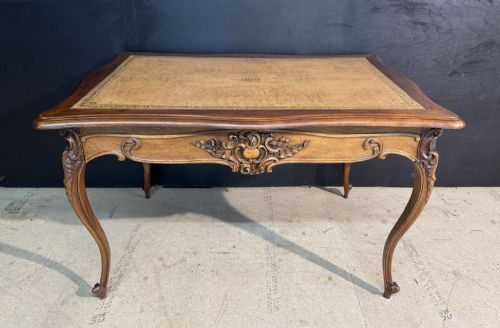
Vintage French Writing Desk
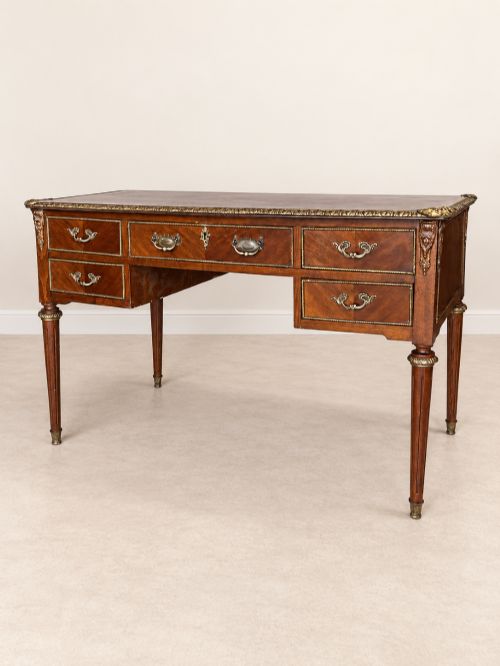
A vintage french writing desk brings continental elegance and practical surface space into a modern study.
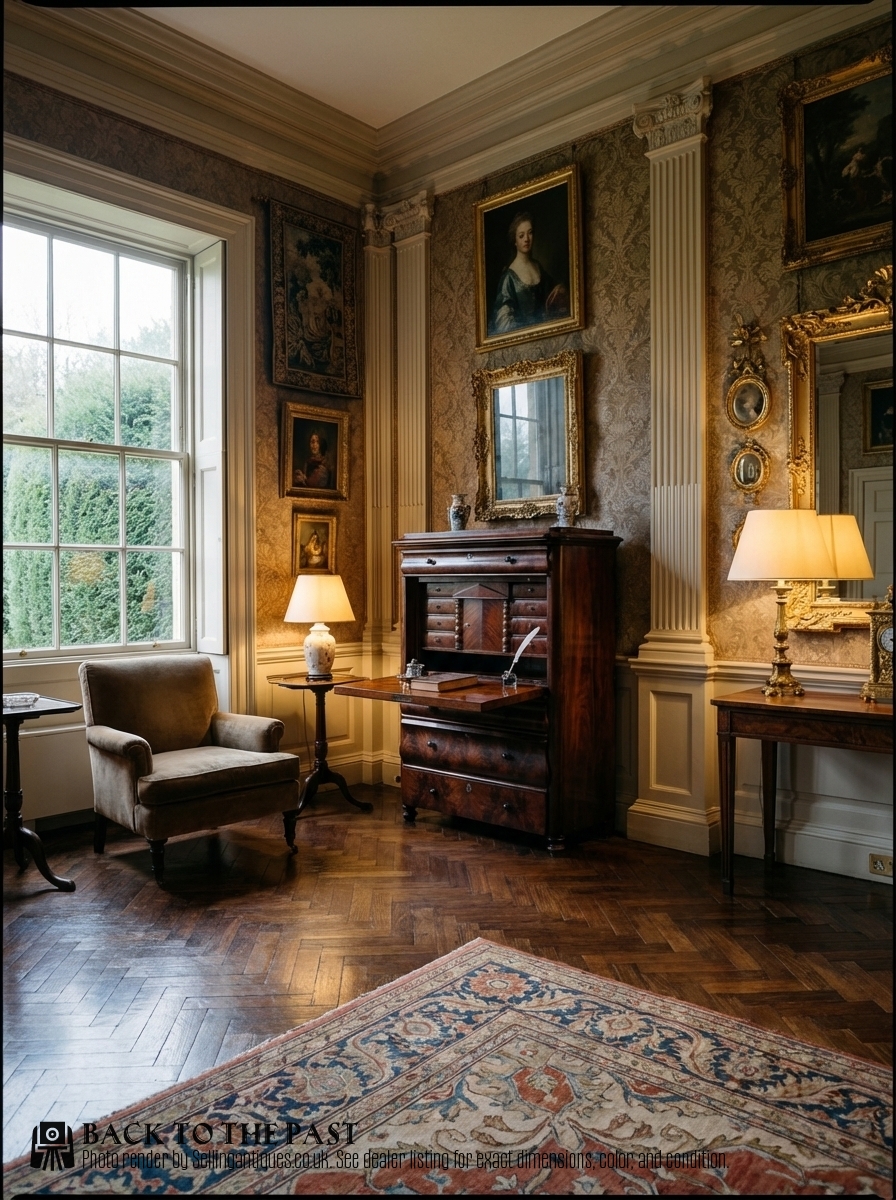
Vintage French Writing Desk
Buyers commonly encounter nineteenth-century mahogany, walnut, and marquetry examples fitted with inset leather or suede writing surfaces. Forms range from compact boudoir tables to substantial partners library desks and cabinets with drop-down flaps.
Materials and construction
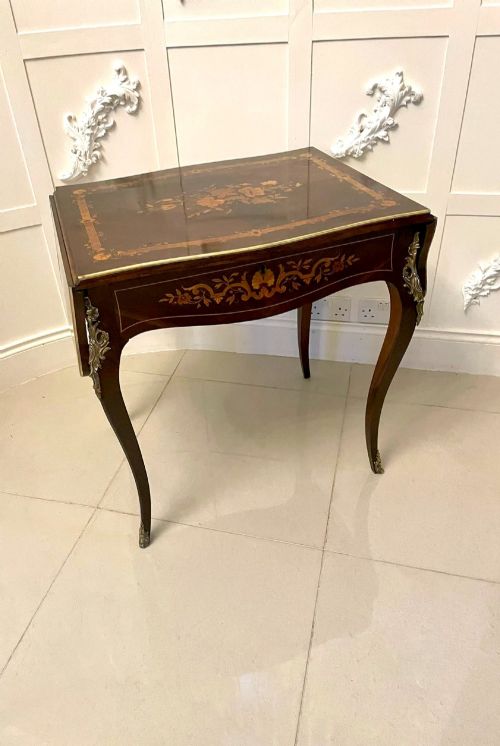
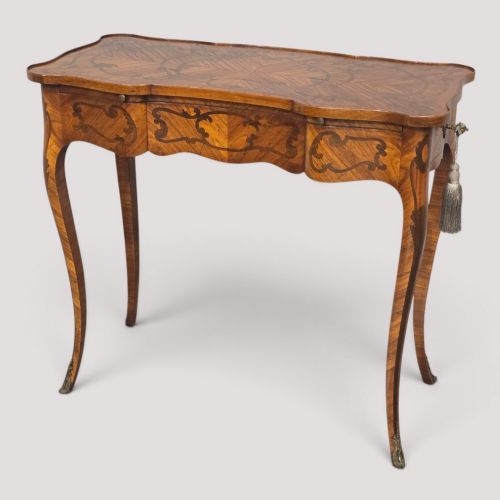
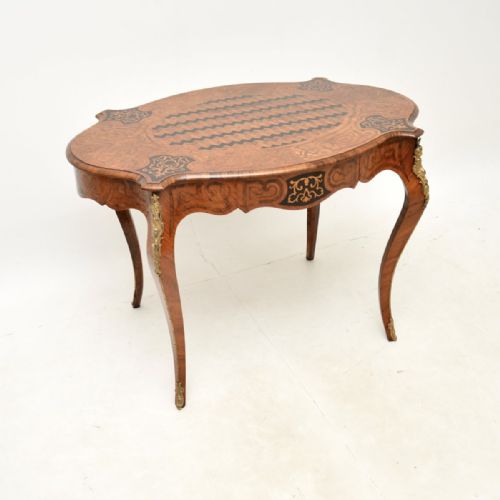
Cabinetmakers utilised dense hardwoods like mahogany, walnut, rosewood, and kingwood, frequently applying intricate marquetry and parquetry veneers in geometric or floral patterns. Finer surfaces incorporate contrasting satinwood or tulipwood inlay.
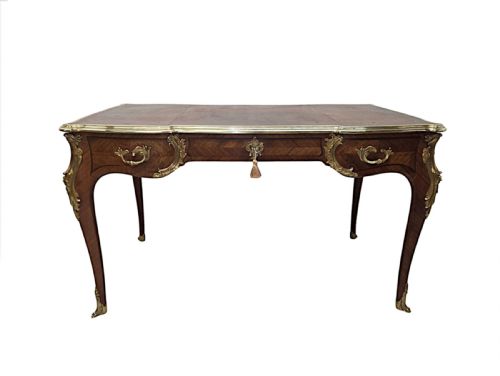
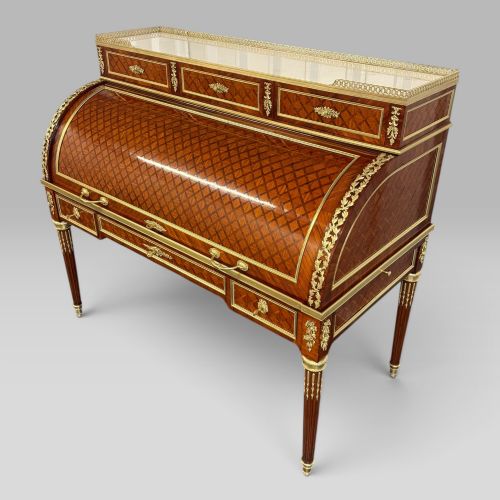
Structural embellishments rely on cast brass and gilt ormolu mounts framing drawers, corners, and legs. Writing surfaces are traditionally lined with tooled leather or suede inset into the timber frame.
Secret drawers hidden within compartments offer a private space for confidential letters and small treasures.
Craftsmanship and materials
The division between standard production and superior work rests on the precision of the veneer matching and the crispness of the gilt bronze or ormolu mounts. Finer pieces display hand-chased metalwork and carefully selected grain patterns across every elevation.
Internal construction reveals the standard of the piece, with solid secondary timbers, hand-cut dovetails in the drawer boxes, and retained original hardware indicating higher atelier origins.
CH. Jeanselme & Co·Étienne Kohlmann
The Vintage French Writing Desk Glossary
- Bureau plat
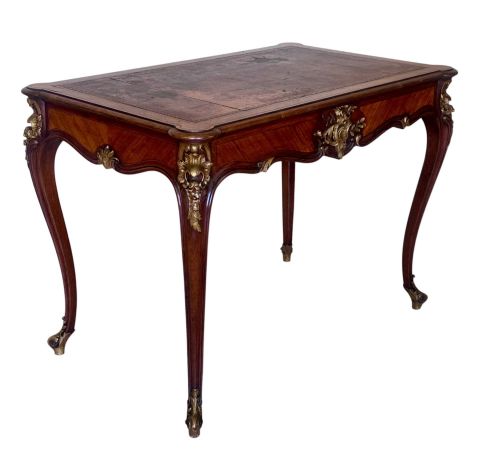
- A freestanding double-sided writing table fitted with drawers across the frieze. These pieces typically feature leather-inset tops and cabriole or tapered legs.
- Ormolu
- Gilt bronze mounts applied to furniture edges, corners, and feet for decorative contrast. This material defines many nineteenth-century revival pieces.
- Marquetry
- The art of forming decorative patterns on woodwork using thin veneers of different coloured woods. Artisans arrange exotic timbers to create floral or geometric motifs.
- Escritoire
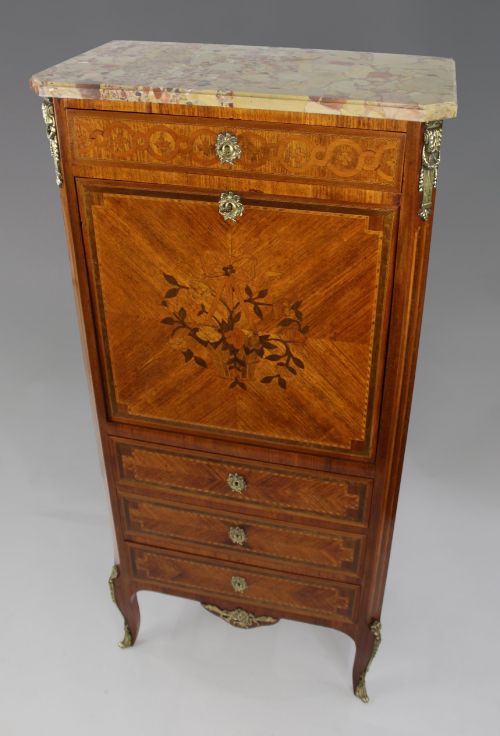
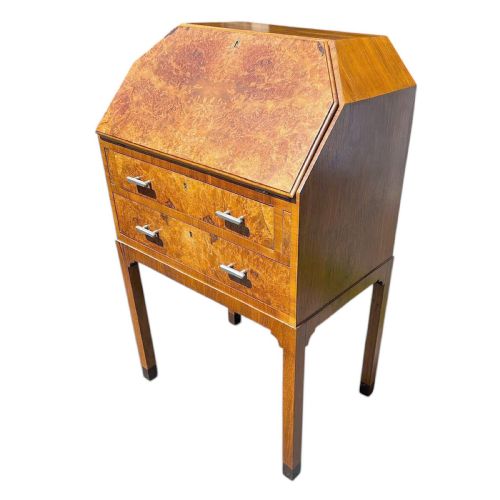
- A writing cabinet featuring a fall-front flap or slanted lid concealing internal compartments and small drawers. Many examples include a decorative marble top.
- Parquetry
- Geometric mosaic woodwork used for tabletops and drawer fronts. Pieces are arranged in repeating patterns such as cubes or chequers.
Vintage French Writing Desk: Frequently Asked Questions
How do I identify Louis XV style?
Louis XV style furniture is characterised by flowing asymmetrical lines, curved cabriole legs, and naturalistic scrollwork. Marquetry and delicate floral inlay frequently decorate the surfaces.
Revival pieces from the nineteenth century adopt these same characteristic curves and ormolu mounts. The overall silhouette avoids straight lines in favour of organic movement.
Are writing desks suitable for daily work?
Many vintage writing desks provide a practical surface for modern laptops and correspondence, particularly freestanding tables and kneehole desks. Their dimensions often match contemporary workspace requirements.
Interior compartments and small drawers help organise stationery and desk accessories. Care should be taken to protect antique leather or polished timber surfaces during daily use.
What is ormolu?
Ormolu refers to gilded bronze mounts applied to the corners, aprons, and legs of fine furniture. The technique provides a bright metallic contrast against dark hardwoods like mahogany and rosewood.
These cast metal elements were hand-finished and chased by skilled metalworkers. They serve both a decorative and a structural purpose on nineteenth-century tables and cabinets.