


Georgian Escritoire Cabinet
A georgian escritoire cabinet combines a drop-down writing surface with concealed drawers, offering a practical writing space and refined storage.
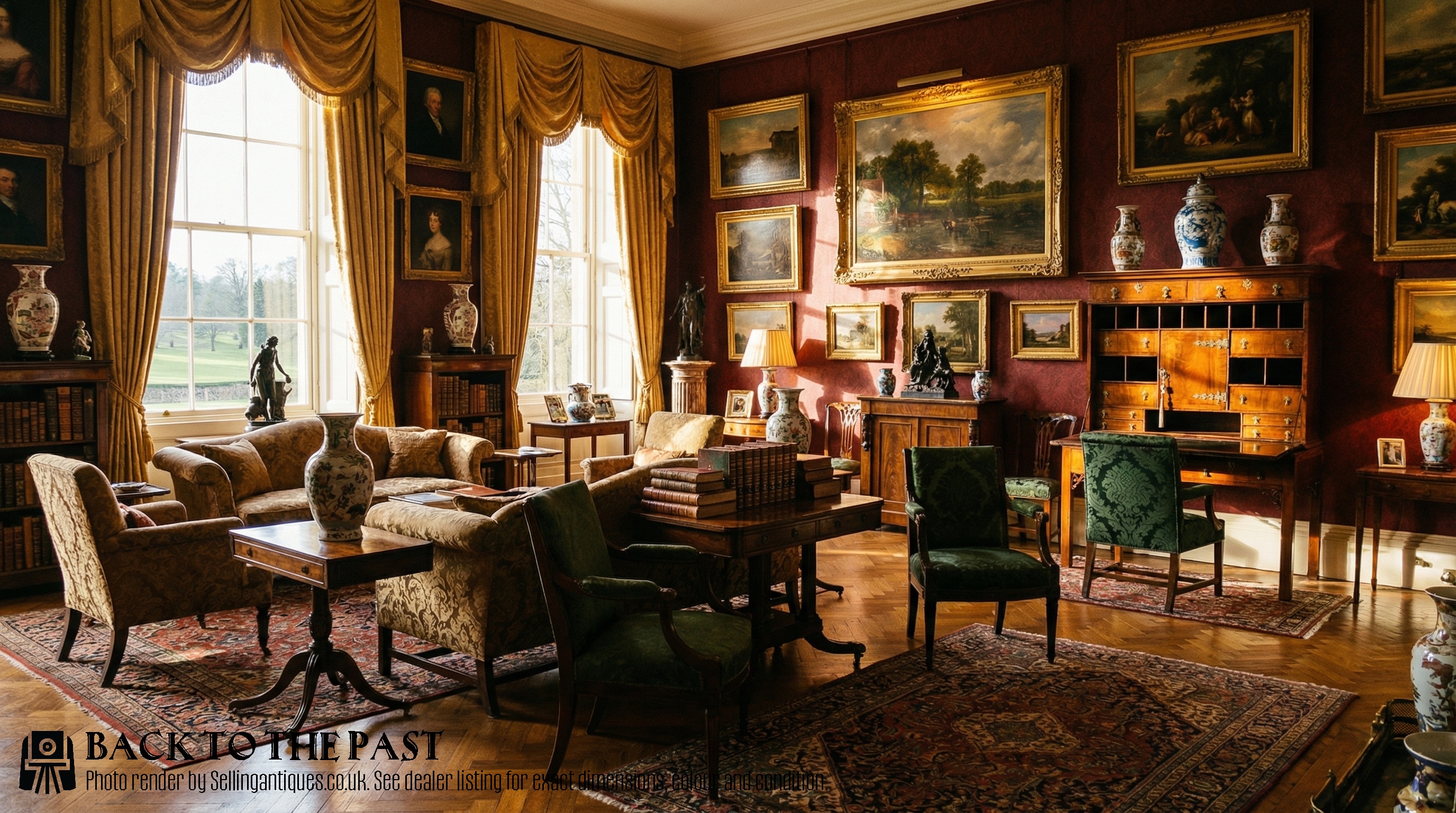
Georgian Escritoire Cabinet
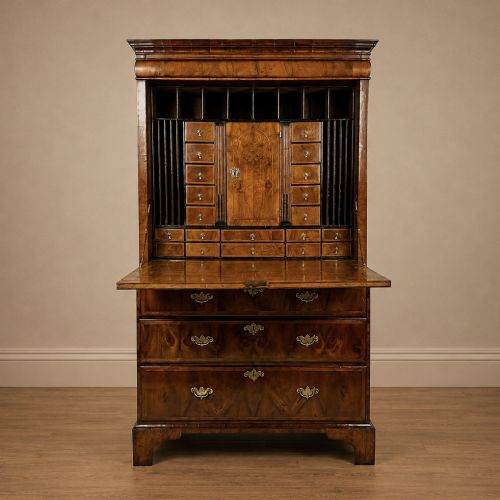
A georgian escritoire cabinet is a sophisticated form of writing furniture designed for correspondence and storage, appearing predominantly from the eighteenth century. These pieces combine a vertical cabinet structure with a hinged writing flap that conceals an interior arrangement of small drawers and pigeonholes.
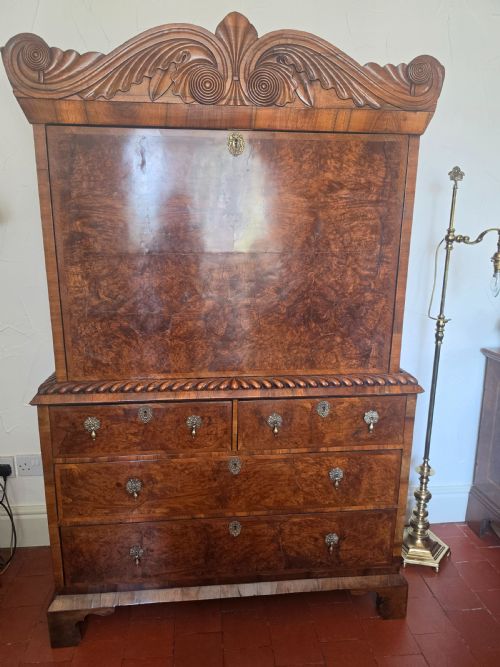
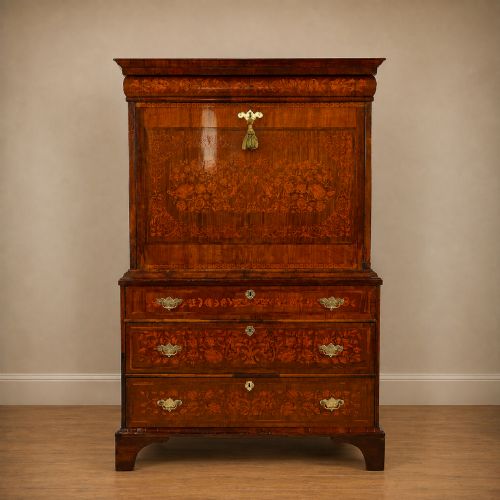
The most common examples on this page date from the eighteenth century, spanning the reigns of Queen Anne and George II. Walnut and mahogany predominate, often featuring figured veneers or floral marquetry alongside brass hardware.
Alternative forms include bureau bookcases and writing desks that share the characteristic drop-front writing compartment. Each piece reflects the changing domestic requirements for private writing spaces during the Georgian and Regency periods.
Materials and construction methods
Cabinetmakers utilised dense hardwoods such as walnut, mahogany, and rosewood, frequently applying burr walnut or figured veneers to the primary display surfaces. Secondary timbers like oak provided sturdy internal framing for the drawer linings and carcase construction.
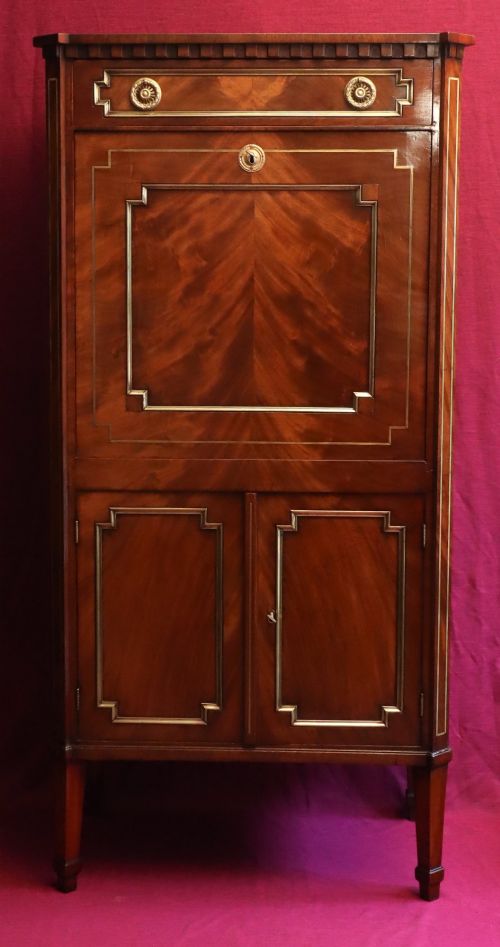
Surface ornamentation involved intricate floral marquetry, satinwood stringing, and precision brass inlay, particularly on Regency examples. Drop fronts and writing surfaces often incorporated fitted leather inserts to provide a durable writing plane.
Current listings feature walnut, mahogany, and rosewood escritoires spanning the eighteenth and nineteenth centuries.
Factors of distinction and refinement
Quality in a georgian escritoire cabinet rests upon the selection of timber veneers and the intricacy of the internal compartment layout. Master cabinetmakers balanced structural integrity with decorative restraint, ensuring that burr walnut or figured grain matched symmetrically across the facade.
The sophistication of the secondary drawers, secret compartments, and original brass hardware distinguishes finer workshops from standard production. Preservation of the original polish and the integrity of the fall-front hinges further determine the standing of each piece.
The Georgian Escritoire Cabinet Glossary
- Escritoire
- A writing cabinet featuring a fall-front flap that opens to reveal internal compartments and small drawers. This form bridges the gap between a chest of drawers and a dedicated desk.
- Marquetry
- Decorative veneer patterns formed by fitting together small pieces of various woods or other materials. Floral designs are especially common on early walnut examples.
- Secretaire
- An alternative term for a writing cabinet or desk containing a concealed writing surface. It often describes the specific drawer fitted with a drop-down front.
- Burr walnut
- Timber taken from a tree growth or burr, yielding highly figured and swirling grain patterns. It was favoured by cabinetmakers for high-status eighteenth-century furniture.
Georgian Escritoire Cabinet: Frequently Asked Questions
What is a georgian escritoire cabinet?
A georgian escritoire cabinet is an eighteenth-century writing furniture form featuring a drop-front writing flap and an internal arrangement of small drawers.
These pieces were designed for private correspondence and secure document storage within refined domestic interiors.
How do I date an escritoire?
Dating relies on timber selection, construction techniques, and stylistic markers such as bracket feet or walnut veneers.
Early eighteenth-century pieces typically employ walnut, while later Georgian and Regency examples favour mahogany and rosewood with brass inlay.
Where should I place an escritoire?
These cabinets suit studies, drawing rooms, or bedrooms where their vertical proportions make efficient use of wall space.
Keep them away from direct sunlight and heat sources to protect the delicate veneers and antique polishes.
What is the difference between an escritoire and a bureau?
While both provide writing surfaces, an escritoire typically presents as a vertical cabinet with a fall-front desk compartment.
Bureaux often feature a sloping lid that opens downward, though historical terminology frequently overlaps between the two forms.