

Mahogany Slant Front Bureau
These mahogany slant front bureau pieces offer clever writing spaces and deep drawer storage, combining Georgian utility with rich timber grain.
What a mahogany slant front bureau is
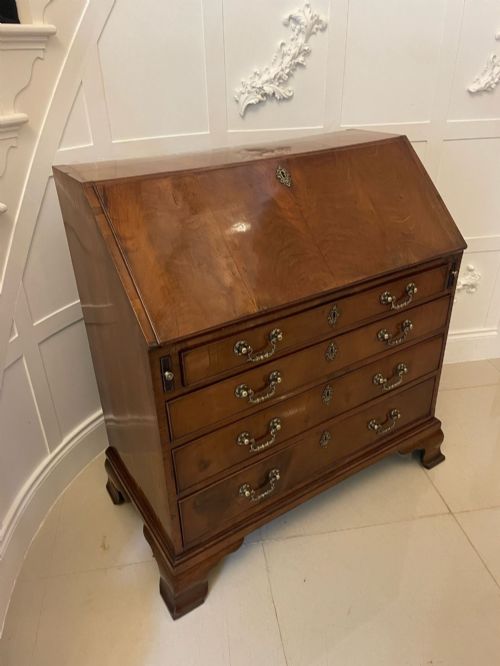
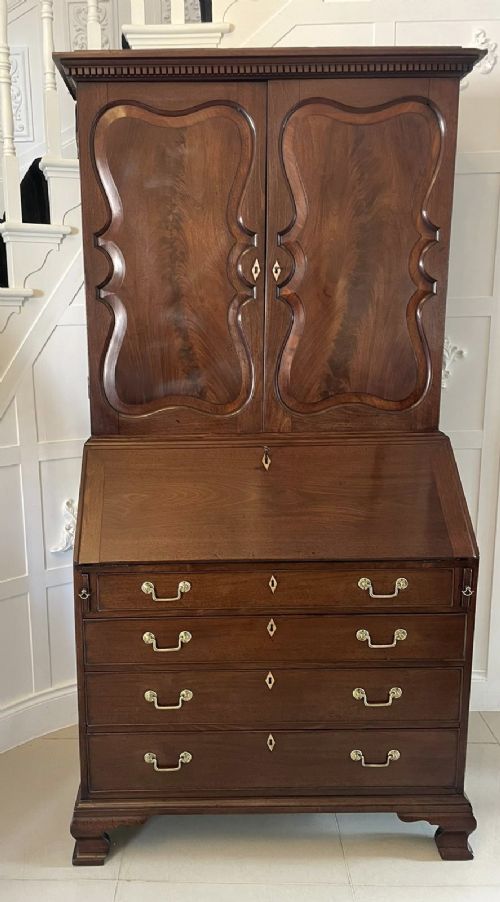
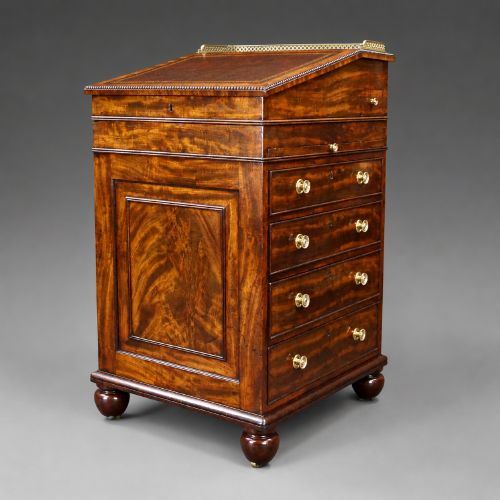
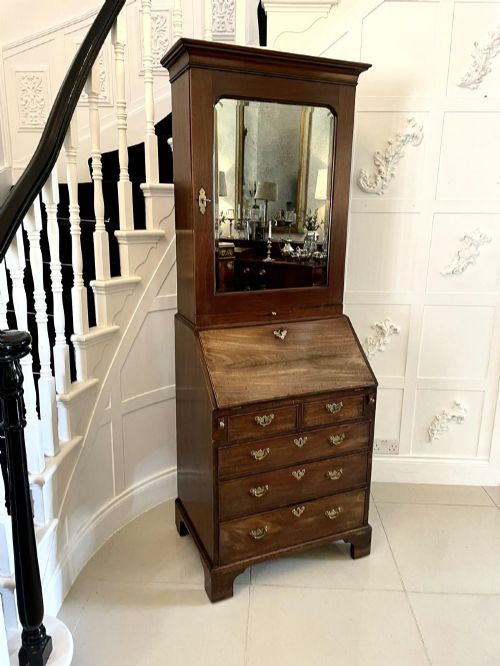
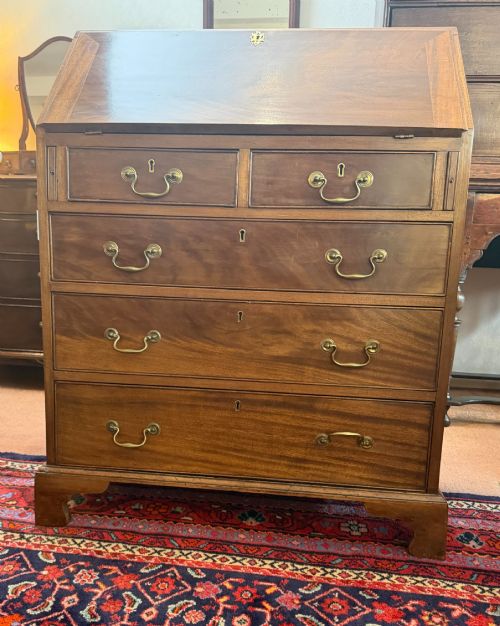
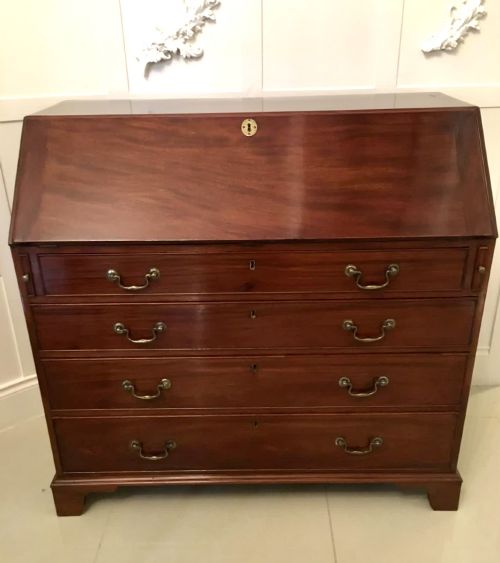
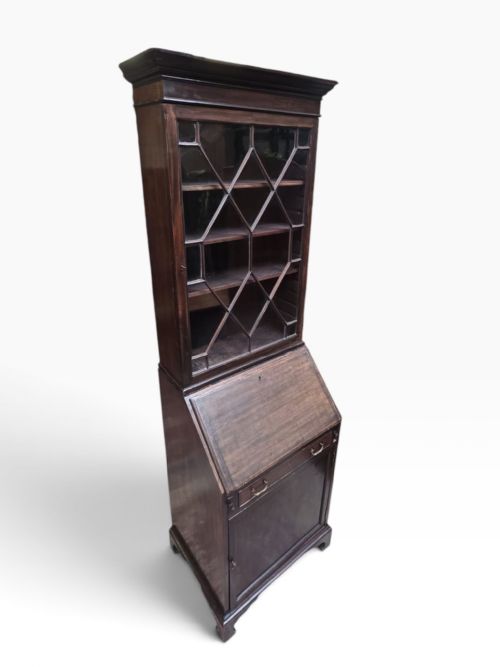
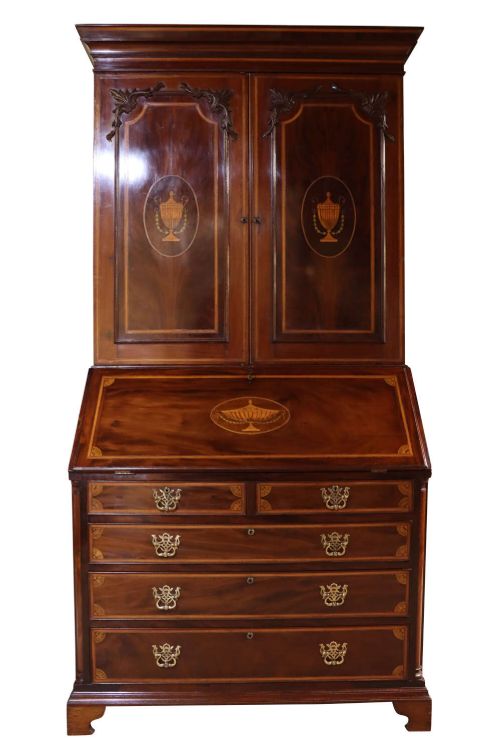
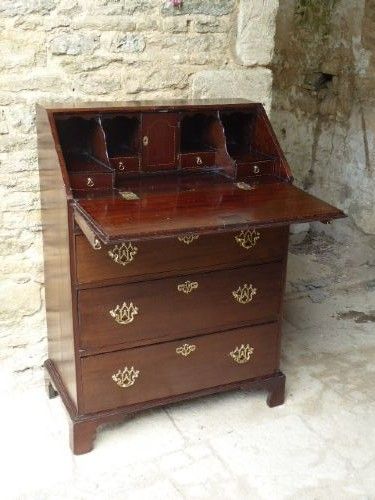
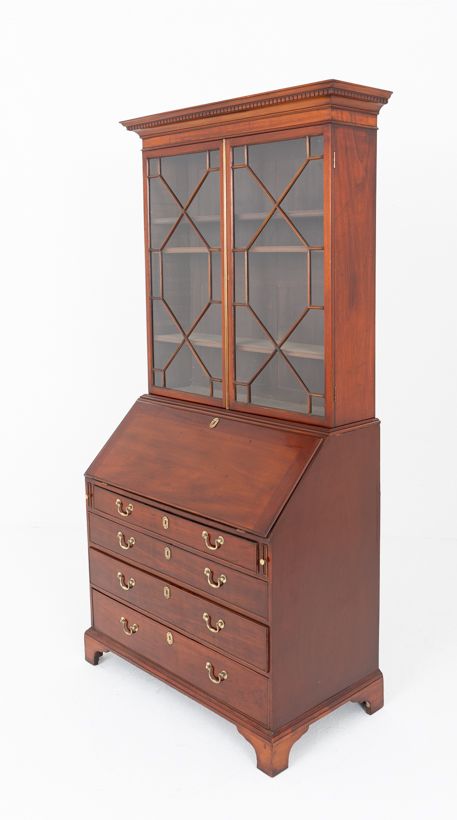
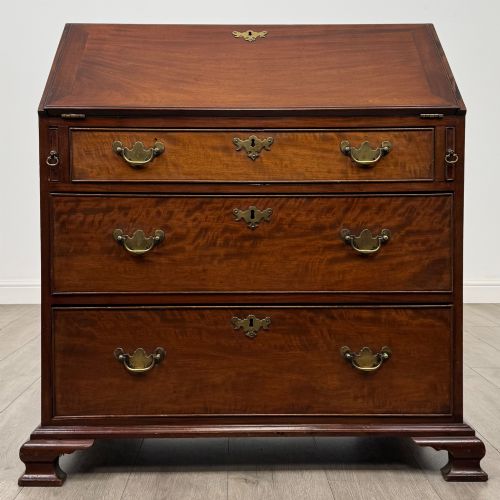
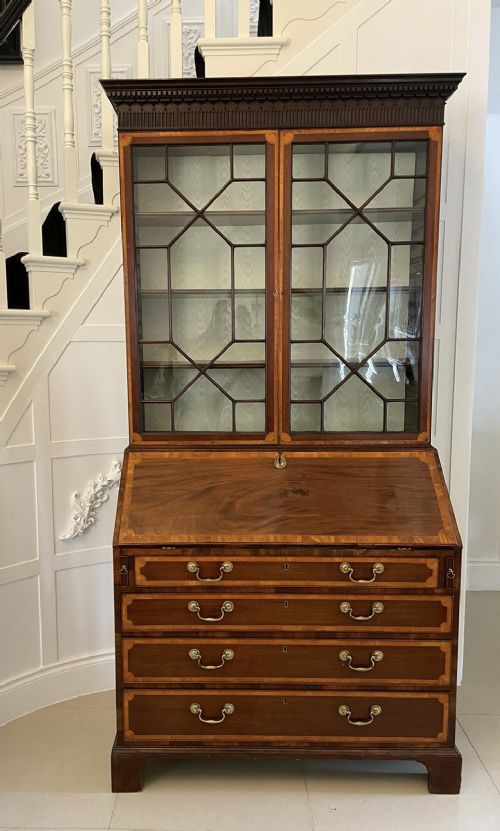
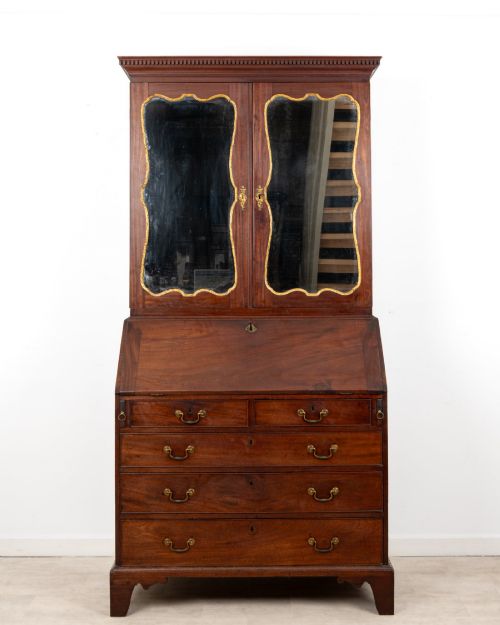
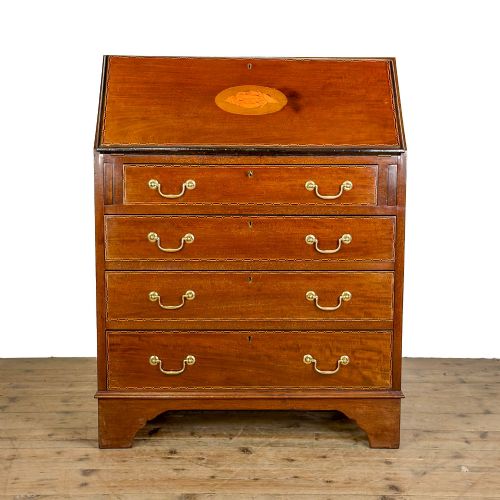
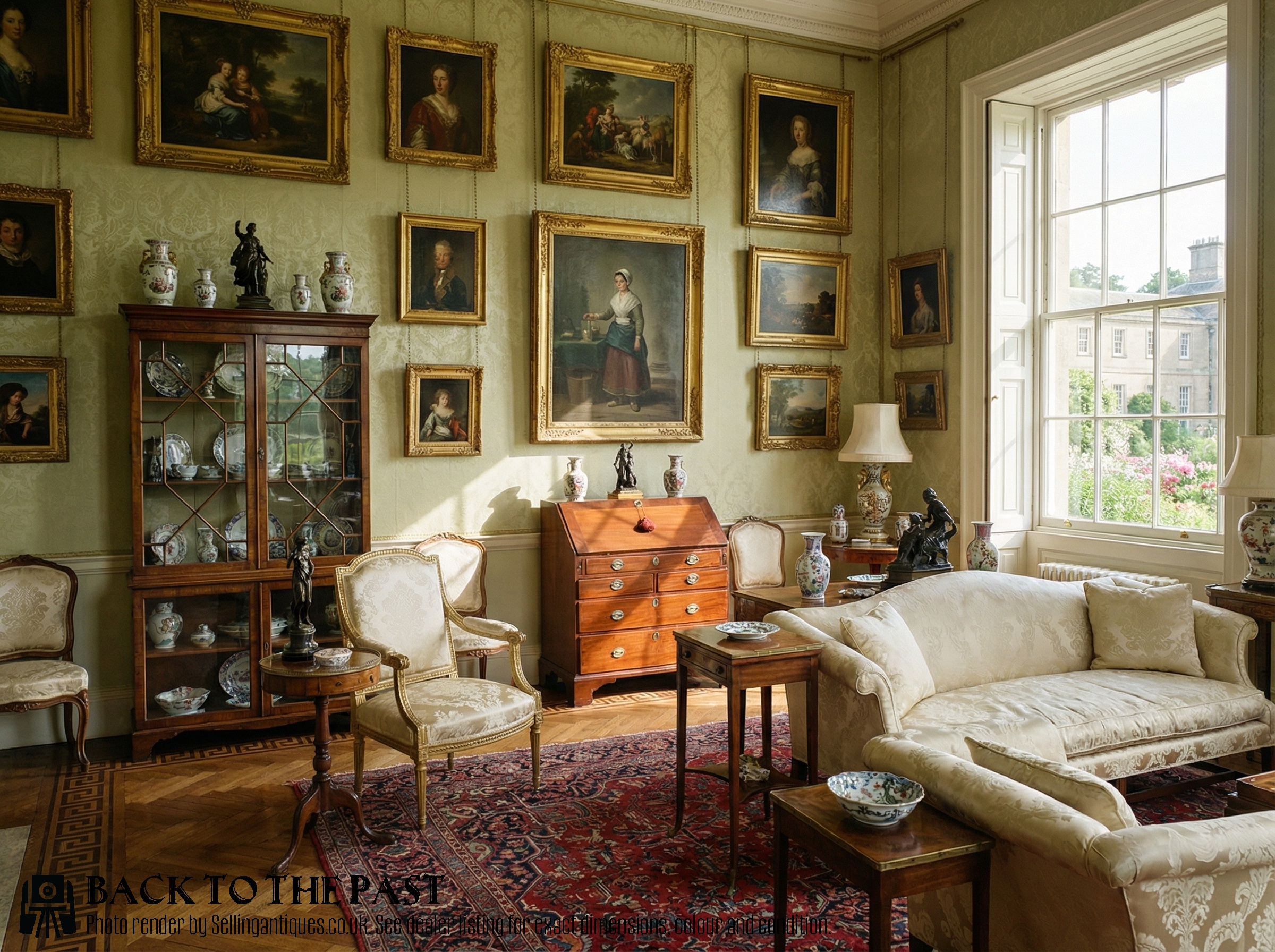
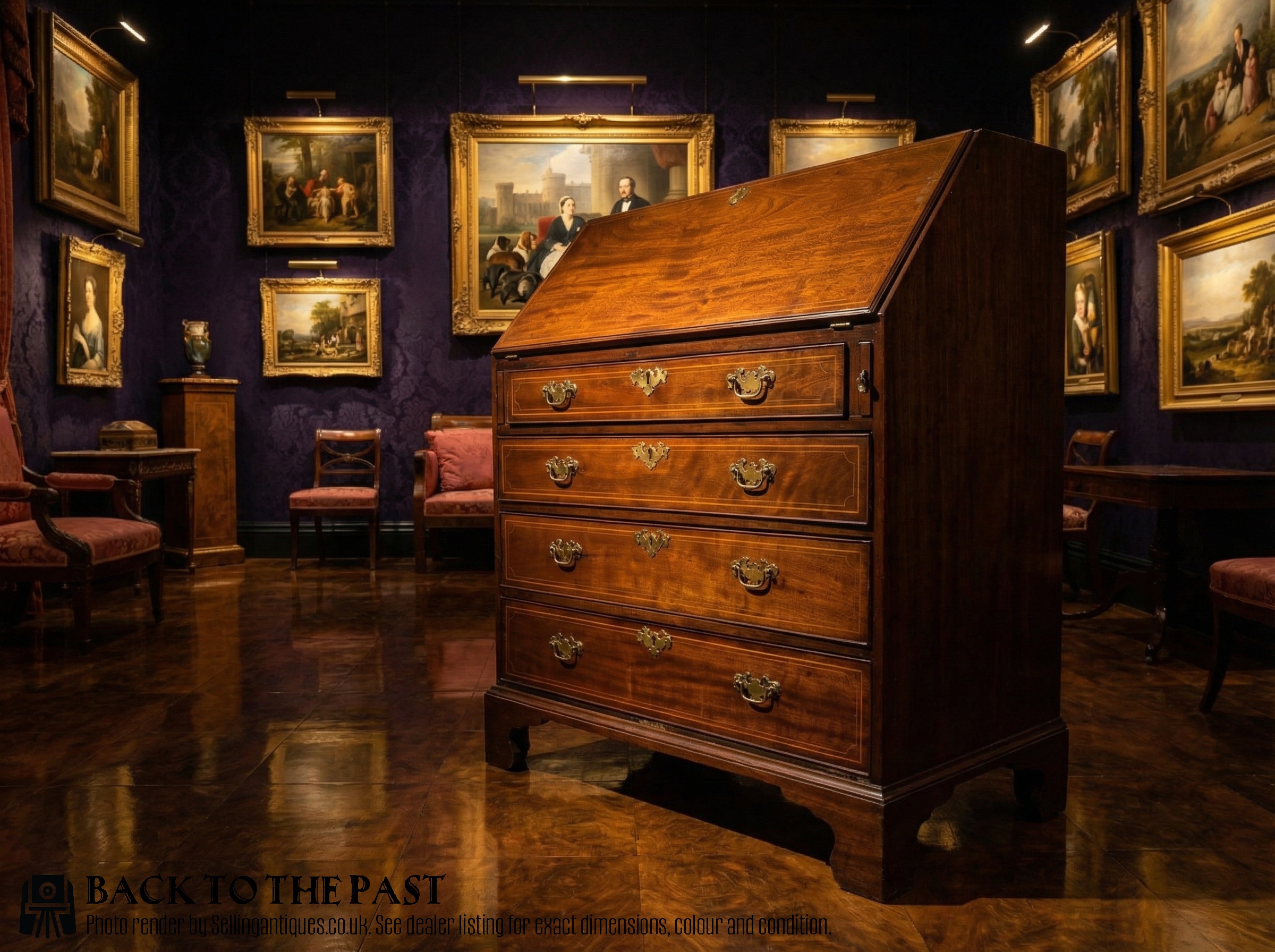
A mahogany slant front bureau provides a sloping writing flap that opens down to reveal internal drawers and pigeonholes, sitting atop a chest of drawers. These versatile writing desks emerge across the Georgian and 18th Century periods, appearing in forms ranging from simple four-drawer chests to grand bureau bookcases and bureau cabinets with glass doors.
The versions most commonly met on this page date from the Georgian era, constructed in solid mahogany with fitted interiors. Examples vary from compact small writing desks to taller bureau bookcases, sometimes incorporating satinwood, boxwood, and oak timbers alongside brass hardware.
How they were made
Cabinet makers utilised dense mahogany for the primary structure, occasionally incorporating oak and boxwood for internal drawer linings and secondary framing. Surfaces often display careful satinwood inlay work, bringing contrasting lighter tones to the dark mahogany ground.
Joinery techniques relied on dovetailed drawer construction and framed panels, supported by brass handles and escutcheons on the fall-front flaps and drawer fronts.
Retail Price Guide 2026
Typical UK retail prices for mahogany slant front bureau, calculated from the Sellingantiques database of over a million retail prices indexed since 2003. This retail price guide relies exclusively on Sellingantiques data; no external sources or auction records are used, so the figures do not describe the wider market.
Current listings feature pieces spanning the 17th Century, 18th Century, and Georgian periods, constructed in mahogany, oak, satinwood, and brass.
What varies in quality
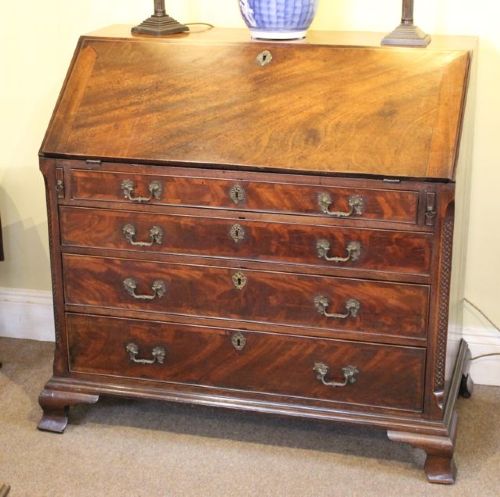
Quality separates simple utilitarian desks from finer display pieces through the choice of timber and the complexity of the interior fitments. Superior examples display figured mahogany grain on the fall front and drawer faces, alongside delicate stringing and inlaid satinwood details within the pigeonhole section.
Structural proportions and the clever arrangement of internal secret compartments also distinguish the work of skilled cabinet makers from standard regional production.
The Mahogany Slant Front Bureau Glossary
- Bureau
- A writing desk featuring a sloping hinged flap that serves as a desktop when lowered. It typically conceals small drawers and pigeonholes inside.
- Escritoire
- An alternative traditional term for a writing cabinet or desk. This French-derived word often describes refined 18th Century examples.
- Satinwood
- A durable, yellowish timber prized for its contrasting inlay and banding on mahogany furniture. Cabinet makers used it to create bright geometric borders.
- Escutcheon
- A protective brass plate surrounding a keyhole. These metal fittings add both security and decorative detail to drawer fronts and fall-front flaps.
Frequently Asked Questions
What is a slant front bureau?
A slant front bureau combines a chest of drawers with a hinged sloping writing surface. Lowering the flap reveals a fitted interior containing small compartments for papers and ink.
These pieces served as private writing stations in homes and studies throughout the 17th and 18th Centuries.
How do I date a Georgian bureau?
Dating relies on observing timber choices, construction methods, and hardware styles across different reigns. Earlier 18th Century pieces often show solid oak secondary timbers and simpler brasses.
Late Georgian versions frequently incorporate satinwood inlay and more refined mahogany veneers across the four-drawer carcasses.
Where were these desks used?
These desks found their place in private parlours, libraries, and bedrooms where correspondence and household accounts were managed. The lockable fall front kept private papers secure from family members and staff.
Bureau bookcases added upper shelving for the display and storage of bound volumes.
What is a bureau bookcase?
A bureau bookcase mounts a glazed cabinet directly onto the top of a standard writing bureau. This upper section provides shelved storage for books behind glass doors.
Such combination pieces represent grander furniture forms from the Georgian period.