

Brown Mahogany Writing Cabinet
A brown mahogany writing cabinet combines deep timber warmth with concealed writing surfaces, offering a practical workspace disguised as refined cabinetry.
Brown Mahogany Writing Cabinet
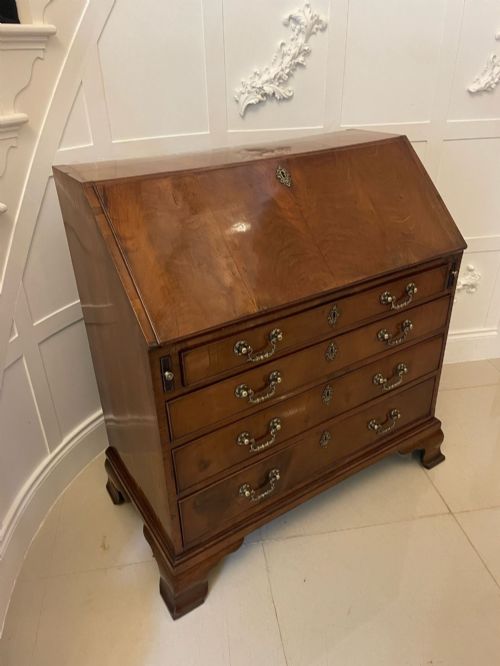
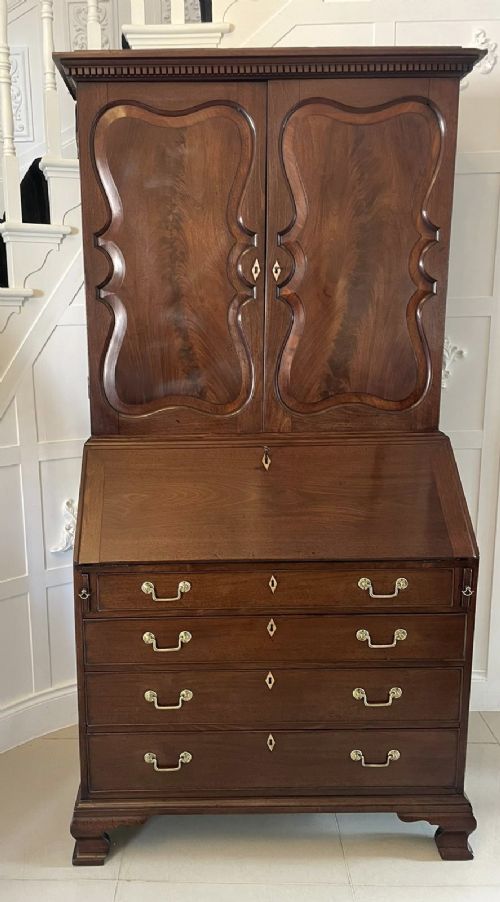
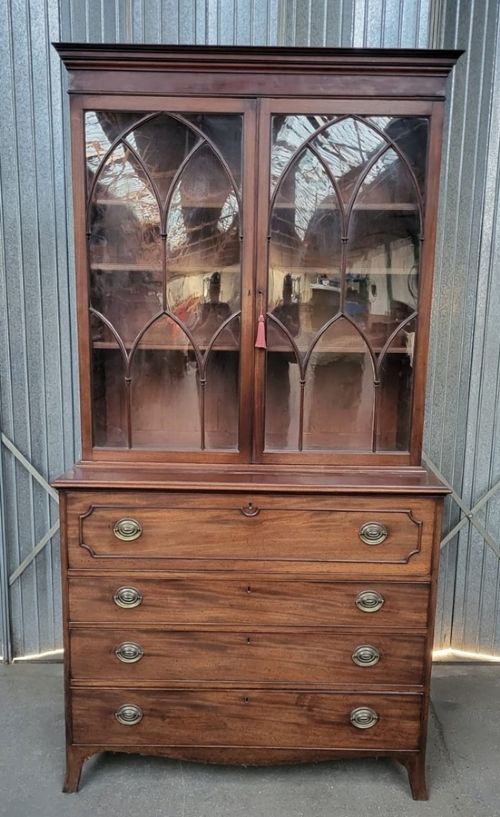
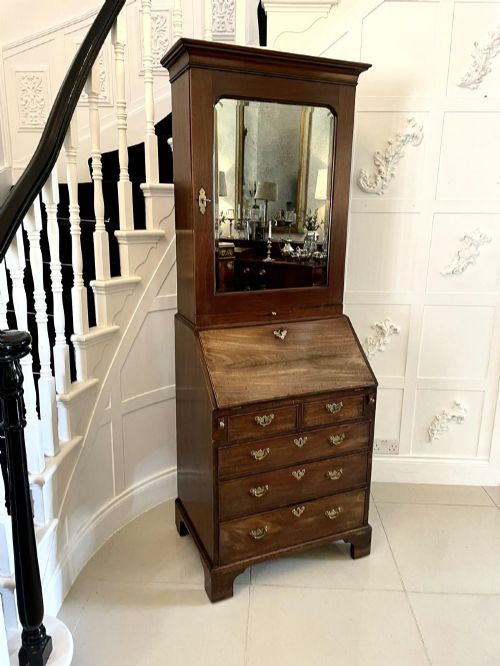
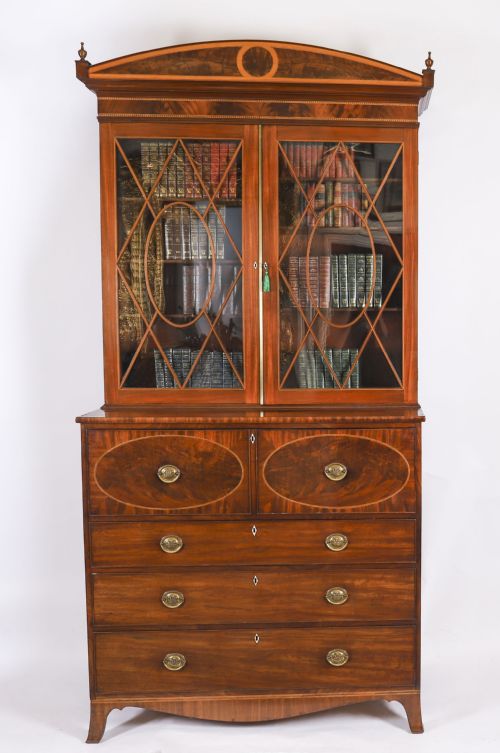
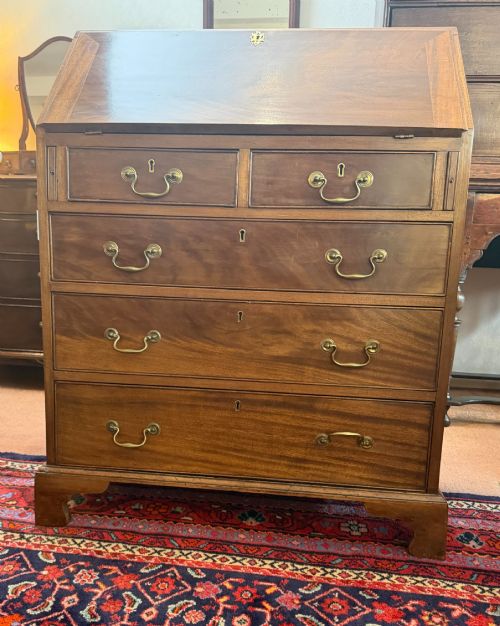
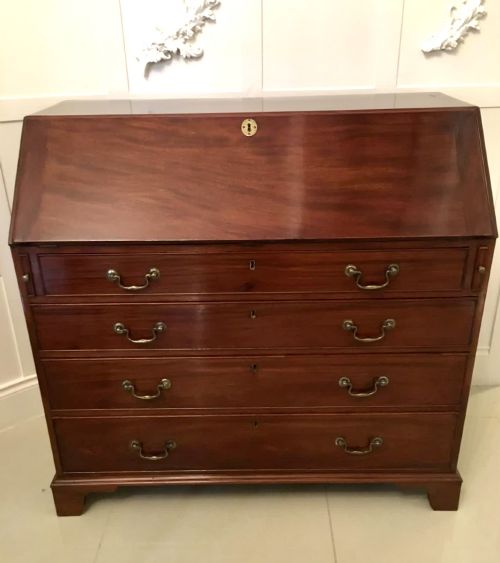
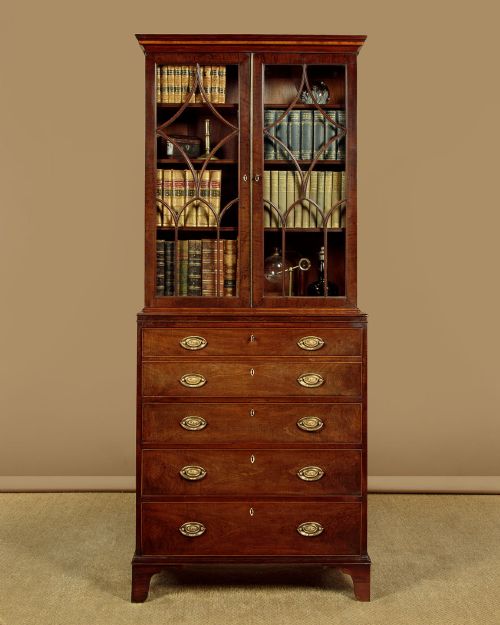
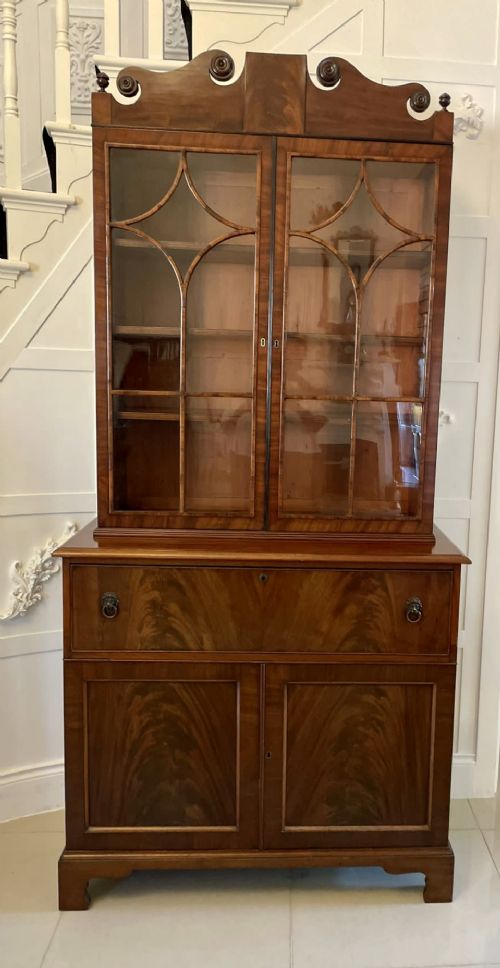
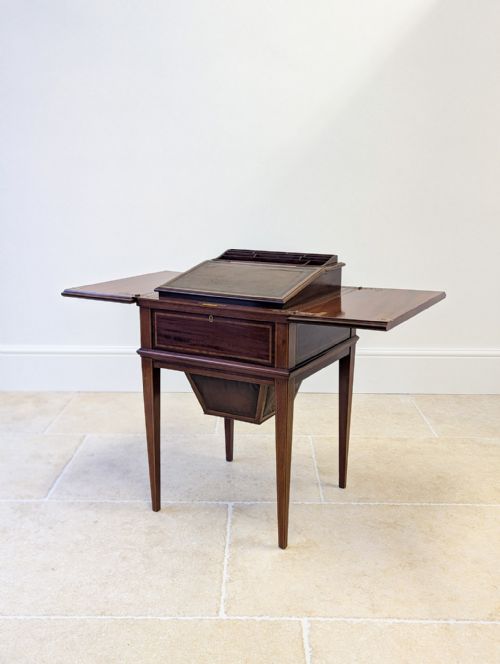
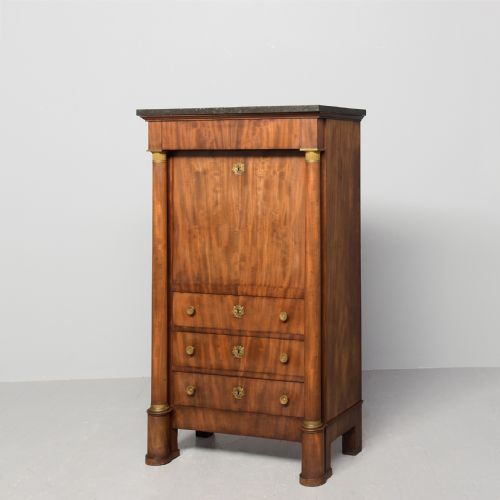
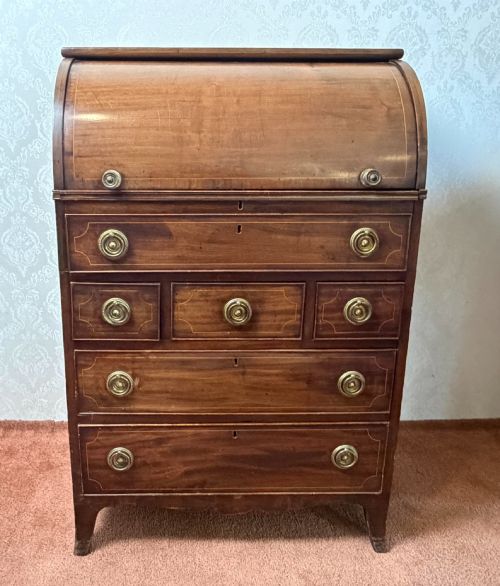
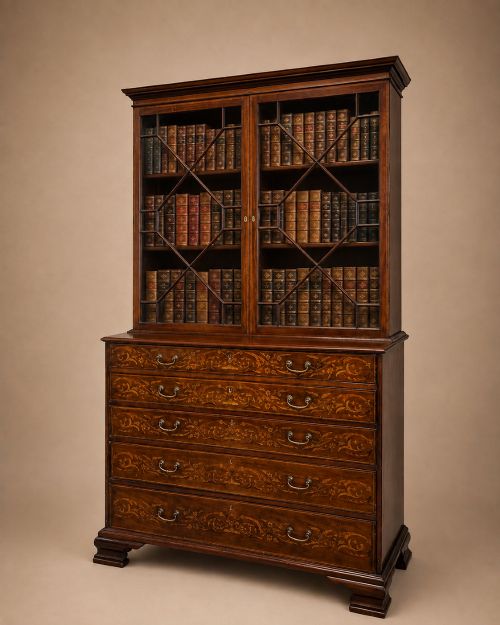
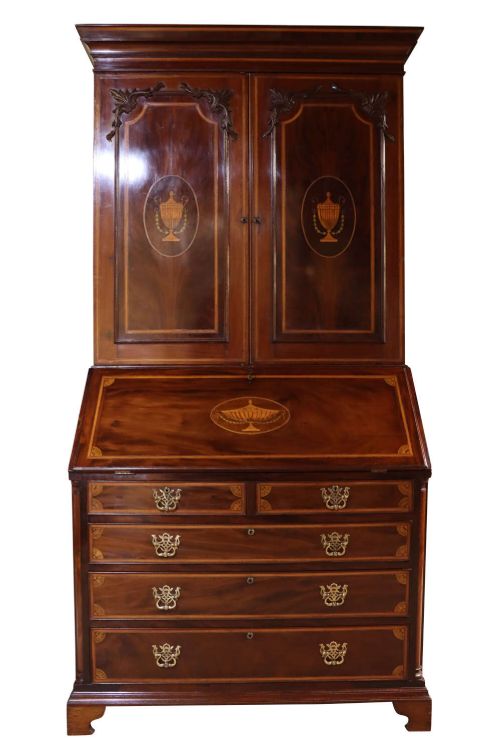
A brown mahogany writing cabinet encompasses several historic forms, most commonly appearing on this page as bureaus, secretaire bookcases, and writing tables spanning the eighteenth to early twentieth centuries. These pieces typically combine a bookshelf or cabinet top with a fall-front desk section containing small drawers and pigeonholes.
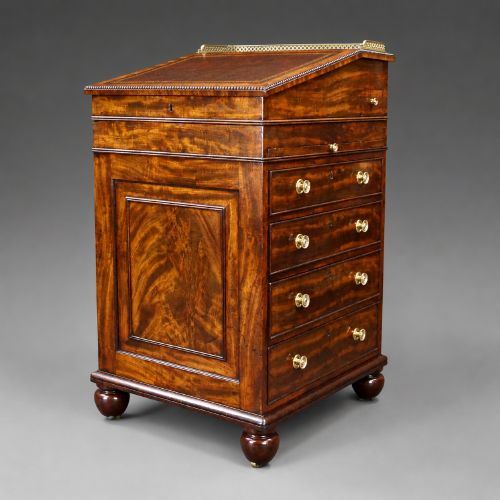
Georgian and Regency examples dominate the selection, showcasing proportion and cabinet-making skill through fitted interiors and figured timber surfaces. Buyers frequently encounter bureau bookcases from the George III period alongside compact Davenport desks and cylinder desks from later Victorian and Edwardian periods.
Materials and construction
Makers utilised solid mahogany and figured veneers such as flame mahogany, often pairing the primary timber with secondary woods for drawer linings and interior partitions. Brass hardware, including drop handles and escutcheons, provides functional contrast, while leather inserts frequently line the pull-out writing surfaces.
Construction techniques relied on dovetailed drawer boxes and mortise and tenon framing to support heavy bookcase tops and folding desk flaps. Inlaid details in satinwood and other contrasting timbers delineate borders and central motifs on pieces from the late Georgian and Regency eras.
Listings feature mahogany, brass, glass, and leather across Georgian, Regency, Victorian, and Edwardian periods.
Assessing quality and craftsmanship
The choice of timber grain dictates much of the visual appeal, with symmetrical flame mahogany veneers and rich, deep colour setting superior examples apart from plainer counterparts. Figured drawer fronts and well-matched cabinet doors demonstrate the maker's care in selecting and arranging timber.
Interior complexity marks the upper tier of these cabinets, where secret compartments, intricately shaped pigeonholes, and small satinwood-faced drawers reveal meticulous hand-carving. The crispness of inlaid borders and the precise integration of folding mechanisms further separate standard production from exceptional workshops.
Gillows of Lancaster·Tudor and Burrey·Maple and Co
The Brown Mahogany Writing Cabinet Glossary
- Secretaire
- A piece of furniture containing a concealed writing drawer or a drop-front panel that opens to reveal a desk surface and pigeonholes. This term frequently applies to bookcases and chests fitted with writing compartments.
- Bureau
- A desk with a sloping hinged lid that covers compartments and drawers for writing materials. Eighteenth-century examples often sit atop chest bases or tall bookcase sections.
- Flame mahogany
- A veneer cut from timber where the grain creates a distinctive undulating, flame-like pattern. Cabinet-makers reserved this highly decorative wood for prominent surfaces like fall-fronts and drawer faces.
- Davenport
- A compact writing desk featuring a sloping top and side drawers, popular during the Regency and Victorian periods. The design offers an enclosed workspace within a small footprint.
- Tambour
- A flexible shutter made of narrow vertical strips of wood glued to canvas, allowing it to slide around a curve. This mechanism conceals desk interiors on specific Georgian writing tables.
Brown Mahogany Writing Cabinet: Frequently Asked Questions
What is a secretaire bookcase?
A secretaire bookcase combines an upper shelving section enclosed by glass or wooden doors with a lower chest housing a pull-down writing drawer.
Inside the drop-front section, users find small drawers and pigeonholes for correspondence, concealing the working desk area when closed.
How do I identify a Georgian bureau?
Georgian bureaus feature a sloping fall-front desk lid that opens downward, supported by pull-out lopers, revealing an fitted interior of small drawers and compartments.
They typically rest on bracket feet and utilise solid mahogany or flame veneers with hand-cut dovetailing visible inside the drawers.
Where should I place a writing cabinet?
These cabinets suit studies, living rooms, or bedrooms where their enclosed design keeps writing materials and paperwork out of sight when not in use.
Keep them away from direct sunlight and heat sources to protect the mahogany polish and prevent veneer timber from drying out.
What distinguishes a Davenport desk?
A Davenport is a small, box-like writing desk featuring a sloping desk top with a leather writing surface and a set of drawers opening to one side.
Originating in the Regency era, their compact proportions make them suitable for smaller interior spaces while providing functional storage.