


Mahogany Tall Desk
A mahogany tall desk brings upright workspace and deep storage to a room, offering clever writing surfaces within a slender vertical footprint.
Mahogany Tall Desk
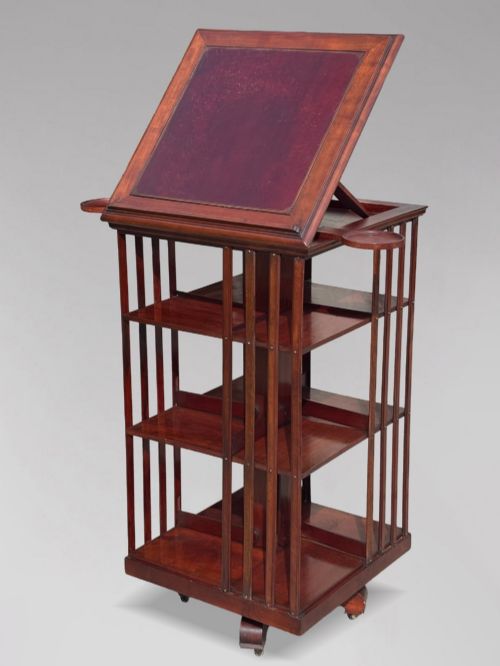
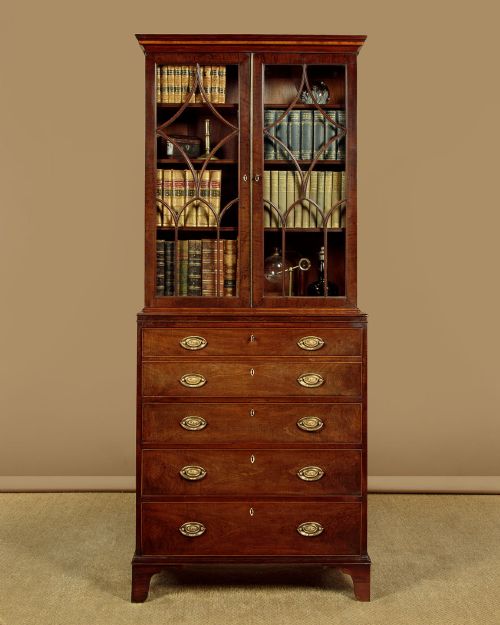
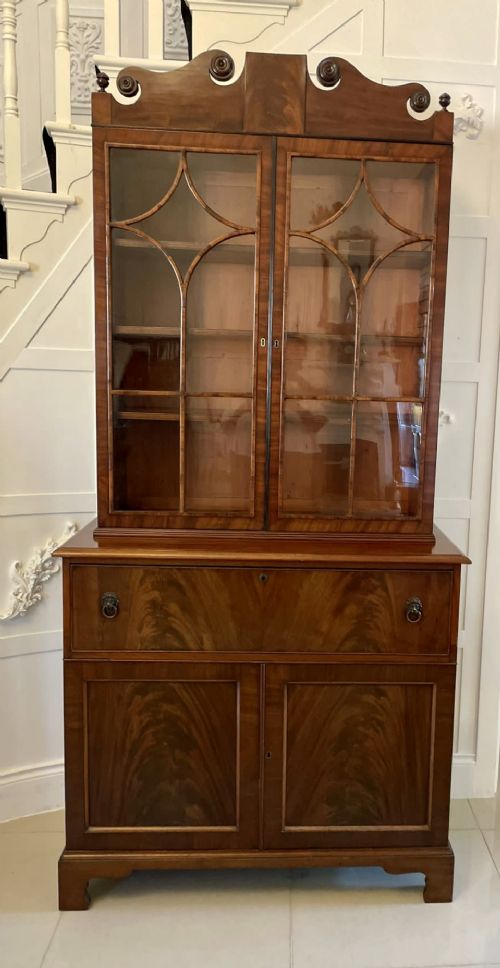
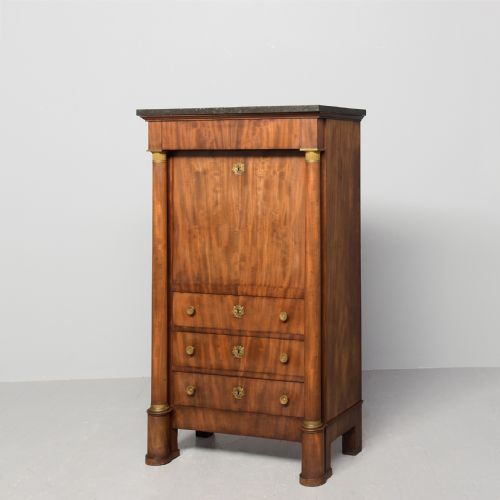
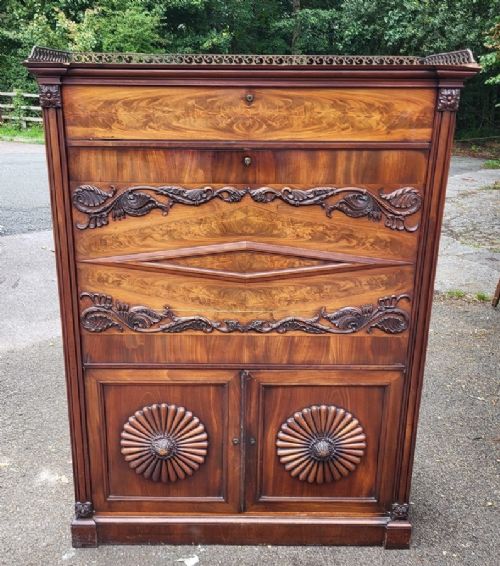
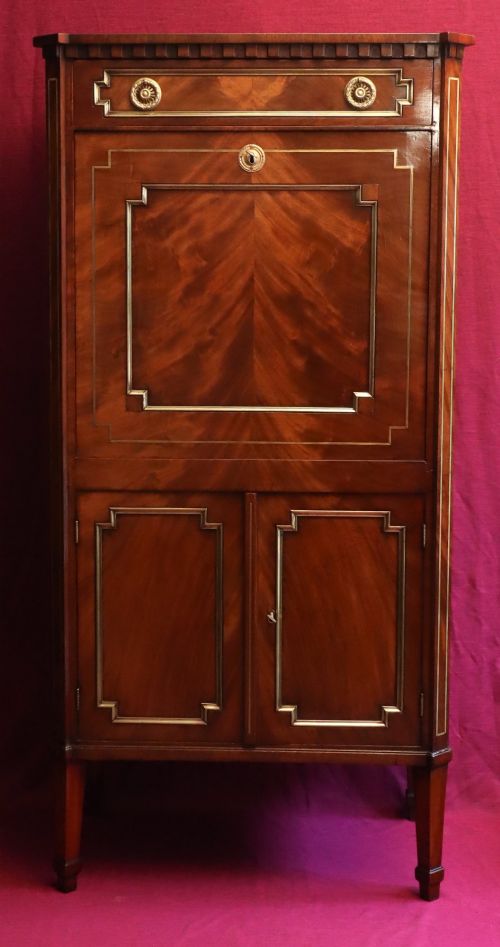
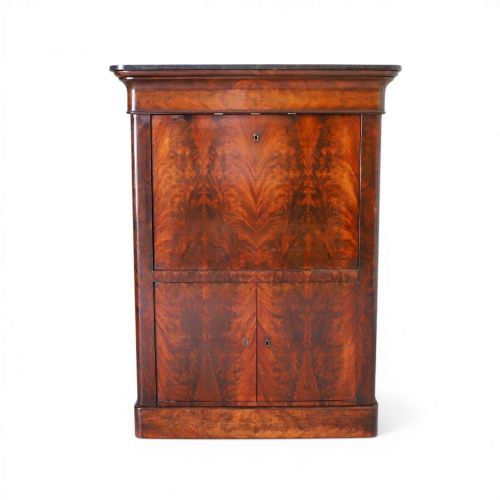
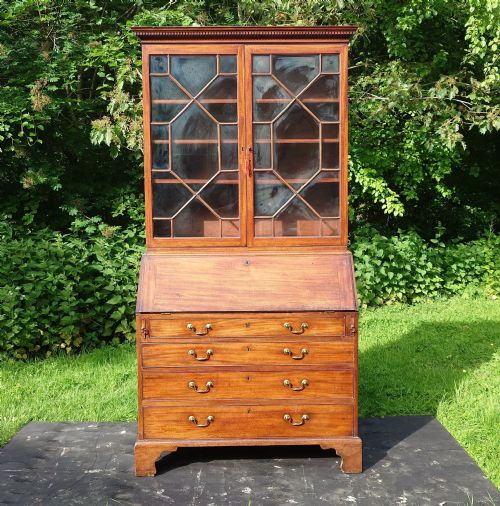
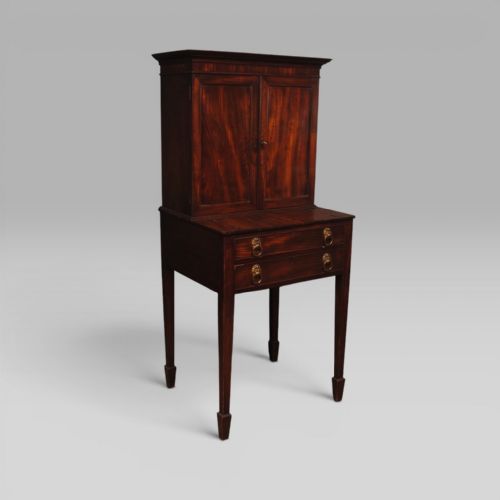
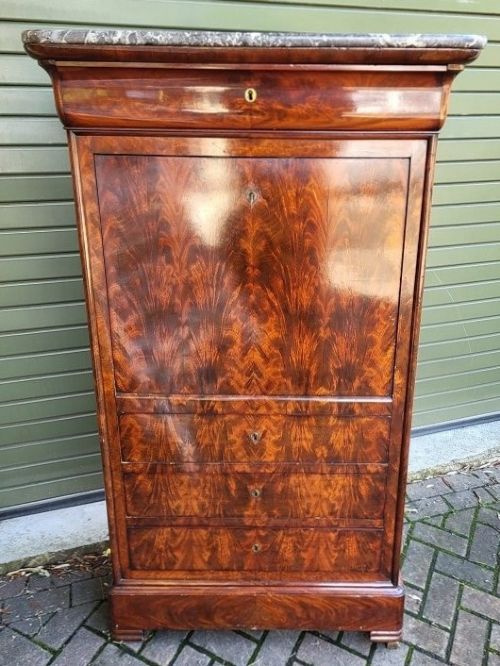
When you search for a mahogany tall desk, you encounter upright writing furniture that maximises vertical capacity while maintaining a narrow footprint on the floor. The examples listed here include secretaire bookcases, abattant cabinets, escritoires, and tall chests fitted with drop-front writing surfaces.
The pieces span the eighteenth century, the Georgian and Regency periods, and the Victorian era, alongside continental forms such as French secretaire abattants and Biedermeier escritoires. Many incorporate secondary compartments, pigeonholes, and secret drawers concealed behind fitted writing flaps.
Makers and workshops across England, France, and beyond built these items to serve clerks, merchants, architects, and readers who needed dedicated workspace without losing valuable floor area. The dominant timber across the selection is mahogany, frequently enhanced with flame mahogany veneer, oak linings, and brass hardware.
Assessing quality and craftsmanship
Quality rests in the crispness of the timber selection, particularly where book-matched flame mahogany veneers wrap smoothly around drawer fronts and fall-front writing surfaces. Superior pieces maintain straight vertical lines and tight joints in the secondary timbers, ensuring the tall carcase remains stable over centuries of use.
Internal complexity dictates much of the distinction between standard and exceptional examples, visible in the depth of the pigeonholes, the cleverness of secret drawers, and the integration of writing surfaces lined with original leather or cloth. Original brass hardware, working locks with keys, and untouched patination further elevate the standing of a piece.
The listings here combine English Georgian and Regency pieces with French nineteenth-century abattants, utilising mahogany, flame mahogany, and satinwood.
Gillows·Druce and Co
The Mahogany Tall Desk Glossary
- Secretaire abattant
- A tall, vertical cabinet featuring a drop-front writing flap that conceals a fitted interior of small drawers and pigeonholes. This continental form often includes a marble top and lower storage drawers.
- Escritoire
- A writing cabinet or desk designed for correspondence, usually combining a fall-front writing surface with internal compartments. The term applies broadly to upright writing furniture across French and English traditions.
- Flame mahogany
- A decorative veneer cut from wood taken from the fork of the mahogany tree where branches meet the trunk. This timber yields a distinctive, fiery wave pattern prized by cabinet makers.
- Astragal glazed
- A method of dividing glass panels in bookcase doors using slender wooden mouldings. These bars form geometric grids across the upper display section.
- Wellington chest
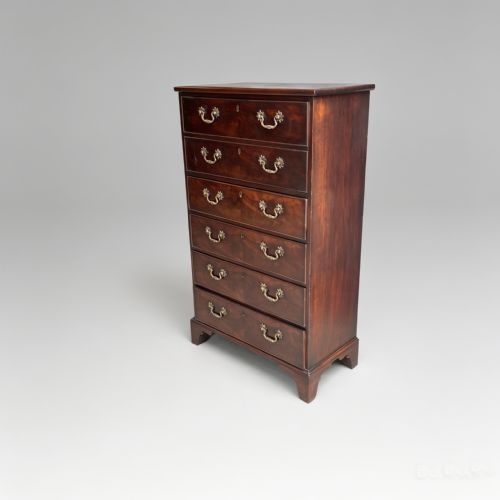
- A tall, narrow chest of drawers secured by a hinged locking stile on one side that fastens over the drawer edges. It derives its name from a traditional military association.
Mahogany Tall Desk: Frequently Asked Questions
How were tall desks used originally?
These pieces served merchants, clerks, and scholars who needed to manage correspondence and ledgers while standing or sitting on high stools. The fall-front flap dropped down to create an immediate writing surface while keeping unfinished work concealed inside.
Upper bookcase sections provided secure storage for reference volumes, account books, and private papers, keeping essential materials organised within a single compact footprint.
Where should I place one at home?
A tall desk fits well in a home study, library, or hallway where floor space is limited but vertical capacity is useful. Because the design draws the eye upward, it works effectively against blank walls or in corners.
Ensure there is sufficient clearance in front of the piece for the drop-front writing flap to open fully and for a chair or stool to sit comfortably underneath.
How do I tell Georgian from Victorian pieces?
Georgian examples generally display restrained classical proportions, understated bracket feet, and simpler internal arrangements. The mahogany used in eighteenth-century pieces often exhibits a quieter, deeper grain.
Victorian pieces frequently introduce bolder flame mahogany veneers, richer golden tones, more elaborate brass fittings, and sometimes marble tops on continental-inspired forms like the secretaire abattant.