



Neoclassical Mahogany Bureau
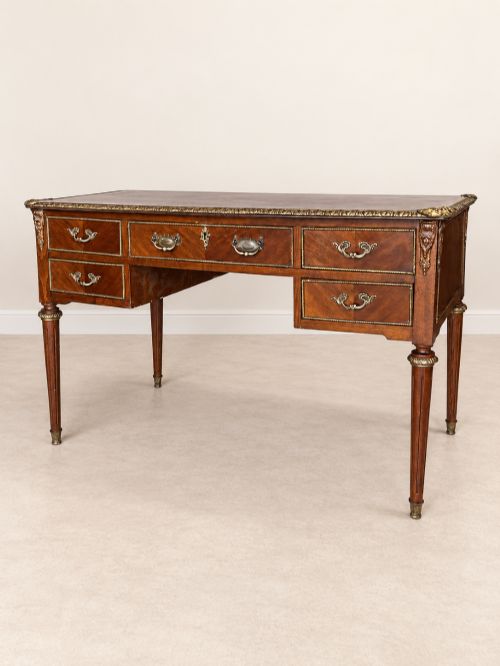
These neoclassical mahogany bureau pieces are sophisticated writing furniture defined by classical restraint, bringing architectural dignity and organised workspace into a room.
Neoclassical Mahogany Bureau
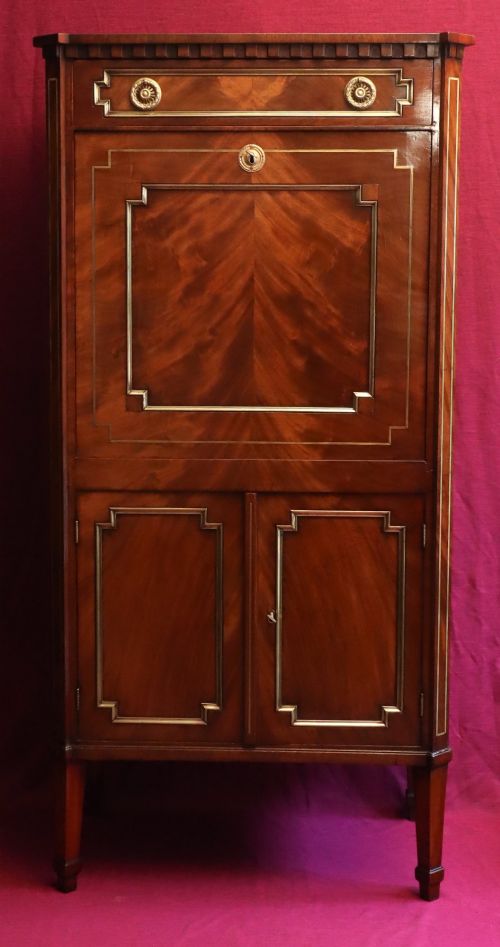
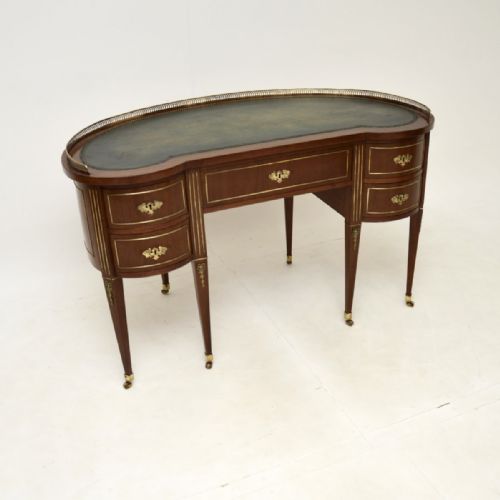
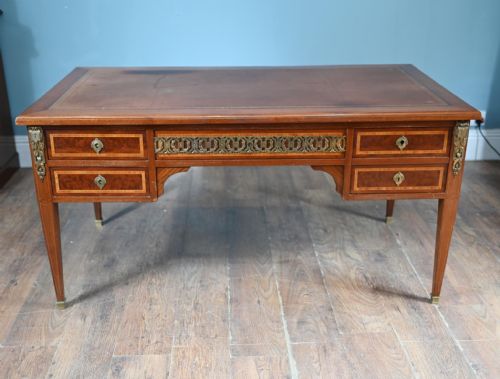
A neoclassical mahogany bureau encompasses writing cabinets, cylinder desks, and free-standing writing tables known as bureaux plats, alongside related seating. The pieces on this page span the eighteenth century, the nineteenth century, and the Edwardian era, incorporating Victorian interpretations.
Originating styles stretch across English Sheraton design and continental movements including French Empire, Directoire, Louis XVI, and Austrian Empire forms. Buyers frequently encounter French mounted examples alongside English cabinetwork featuring mahogany timbers.
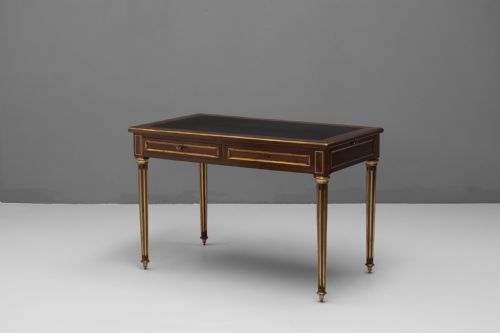
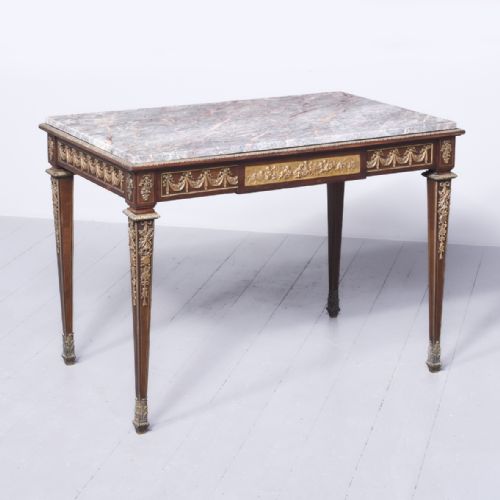
The selection extends from compact ladies writing desks and tambour desks to large freestanding writing tables mounted with gilt bronze or ormolu. Certain pieces adopt revival aesthetics, channelling earlier royal workshops through nineteenth-century execution.
Standards of Execution
The calibre of a neoclassical mahogany bureau rests upon the crispness of its gilt mounts and the selection of the mahogany veneer. Finer examples display meticulous matching of timber grains across drawer fronts and writing surfaces.
Attribution elevates certain items, particularly those associated with master makers such as François Linke or Henry Dasson, whose workshops produced exceptional mounts. Structural integrity and the original integration of leather inserts and brass hardware further distinguish superior pieces from standard production.
Tambour shutters slide in secret grooves so smoothly that even nineteenth-century letters felt like top-state secrets.
Henry Dasson·Francoise Linke
The Neoclassical Mahogany Bureau Glossary
- Bureau plat
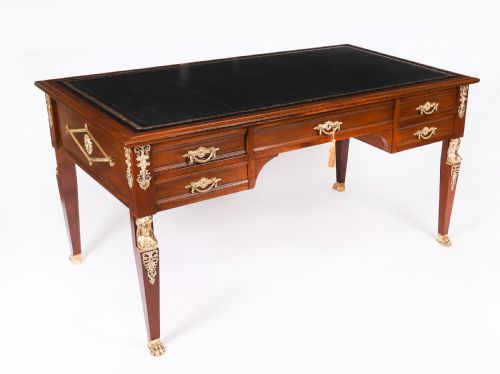
- A freestanding double-sided writing table, usually featuring drawers in the frieze and mounted in ormolu. This form originated in France and is designed to sit in the centre of a room.
- Escritoire
- A writing cabinet containing a sloping or drop-front flap that conceals inner compartments and drawers. It combines storage with a dedicated writing surface.
- Ormolu
- Gilded bronze ornamentation applied to furniture mounts, cast and chased by hand to create sharp architectural details. It provides bright contrast against dark mahogany surfaces.
- Tambour
- A flexible shutter formed of narrow strips of wood glued to canvas backing, allowing curved compartments to slide open smoothly. Sheraton period pieces often employ this clever mechanism.
- Fauteuil du bureau
- A specific type of desk chair designed to match writing furniture, offering comfortable seating while maintaining period styling. These chairs support prolonged writing tasks.
Neoclassical Mahogany Bureau: Frequently Asked Questions
What is a bureau plat?
A bureau plat is a freestanding writing table designed to be viewed from all sides, typically featuring a leather-lined top and multiple frieze drawers. These tables sat in the middle of formal rooms rather than against walls.
Continental examples often showcase elaborate gilt bronze mounts, while English interpretations rely more on timber grain and restrained inlay.
How do I care for the leather top?
Leather writing surfaces require gentle dusting and occasional treatment with appropriate balms to prevent drying and cracking. Avoid using harsh chemical cleaners that can strip the original colour or gold tooling.
Keep these desks away from direct sunlight and strong heat sources to protect both the leather insert and the mahogany timber.
Are these desks suitable for daily work?
Many of these pieces function well for contemporary writing and laptop use, provided the writing height and knee clearance suit the user. Cylinder desks and tambour desks offer the added benefit of concealing work when not in use.
Care should be taken with antique leather surfaces, using blotters or pads for heavy writing.
How do I distinguish French from English pieces?
French pieces from the Empire, Directoire, and Louis XVI styles frequently incorporate heavy ormolu mounts, marble tops, and exotic veneers like mahogany. English Sheraton and Regency pieces emphasise clean architectural lines, contrasting stringing, and timber figure.
Construction methods and secondary woods inside the drawers also point towards the workshop's geographic origin.