



Equine Bronze Sculpture
An equine bronze sculpture captures the power and tension of the horse, shifting from French realism to Japanese foundry work.
Equine Bronze Sculpture
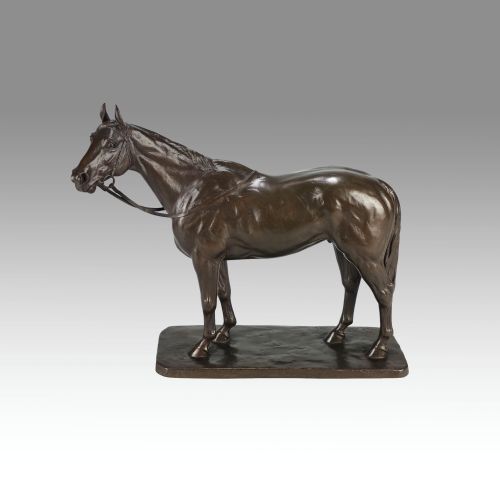
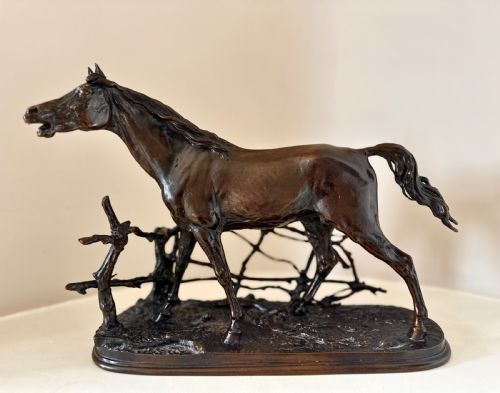
These pieces are cast metal figures of horses, ranging from small desk ornaments to life-size statues. The search phrase equine bronze sculpture brings up everything from spirited stallions on marble plinths to detailed Japanese Meiji and Taisho period castings.
Buyers most frequently meet nineteenth-century French Animalier school bronzes alongside early twentieth-century Viennese cold-painted pieces and Japanese works. The selection spans energetic racing scenes, quiet studies, and monumental pairs.
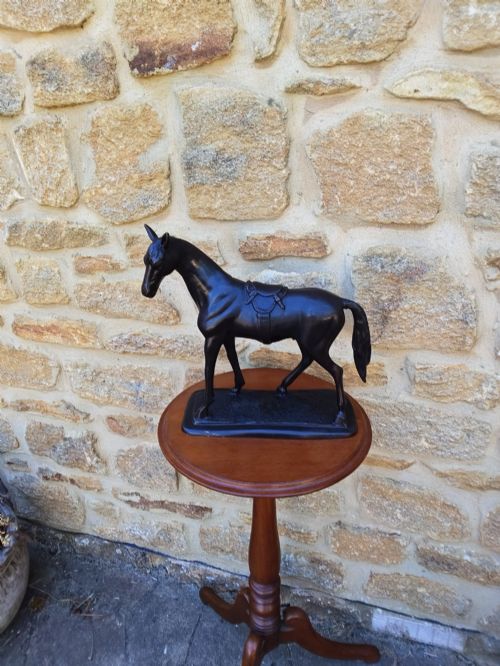
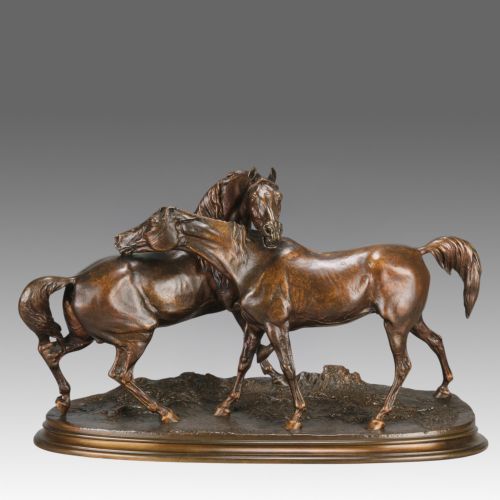
Subjects include solitary stallions, saddled mounts, racehorses with jockeys, and classical groupings such as the Marly horses. Forms vary from realistic anatomical studies to stylised Art Deco interpretations.
Materials and Casting Methods
Foundries utilised the lost-wax casting method to capture fine muscular detail and texture in the metal. The primary material is bronze, frequently paired with bases of marble, brass, or onyx.
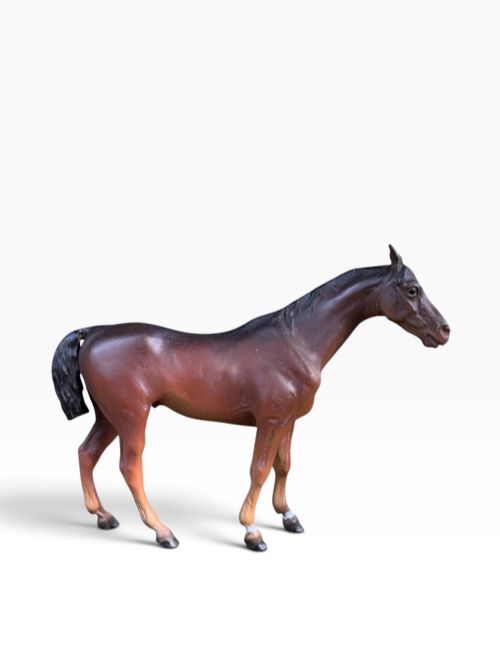
Surface finishes vary significantly across regions and periods, including rich patinated bronze and intricate cold-painted polychrome decoration on Austrian pieces. Paint is sometimes applied directly over the metal surface to render markings and harness details.
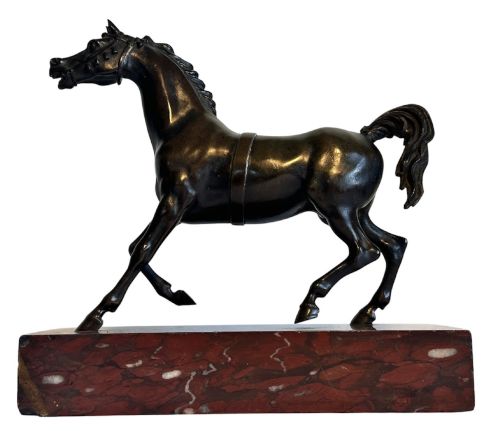
Listings feature bronzes set upon marble, brass, and onyx bases, spanning the nineteenth and twentieth centuries.
Judging Quality and Execution
Quality rests entirely on the precision of the casting and the sensitivity of the chasing work done after the metal cools. Superior examples retain crisp muscle definition, clean hoof detail, and smooth integration where separate parts join.
The finish of the base and the depth of the patina also separate standard foundry production from master works. A heavier cast with a stable marble or onyx plinth indicates a more substantial commission.
P J Mêne·Kunio Itô·Franz Bergman·Sakai Kōzan·Pierre Jules
The Equine Bronze Sculpture Glossary
- Animalier
- A nineteenth-century artistic movement focused on the realistic depiction of animals. Sculptors in this tradition studied anatomy closely.
- Cold painted bronze
- A Viennese technique where bronze figures are painted with layers of cold enamel. The paint is delicate and easily chipped.
- Lost-wax casting
- A process where a molten metal is poured into a mould created by a wax model. This method allows for intricate undercuts and fine textures.
- Patina
- The surface coloration and sheen acquired by bronze over time or through chemical treatment. It protects the metal and adds visual depth.
- Marly horses
- Large sculptural groups of horse tamers commissioned for Louis XV. Copies appear frequently in bronze and other metals.
Equine Bronze Sculpture: Frequently Asked Questions
How do I clean an antique bronze horse?
Dust the sculpture gently with a soft, dry brush to prevent the accumulation of dirt in the recesses of the casting. Avoid using water, soap, or commercial metal polishes, which can strip away the historic patina.
Apply a very thin coat of microcrystalline wax if the surface appears dry, then buff it lightly with a clean cloth. This protects the bronze from atmospheric moisture without altering its finish.
Are cold painted bronzes fragile?
Austrian cold painted bronzes require careful handling because the polychrome paint sits on top of the metal without being kiln-fired. Friction and knocks cause the enamel to flake off over time.
Keep these pieces out of direct sunlight and away from heat sources to prevent the paint from cracking. Display them in a cabinet where they remain undisturbed.
How can I tell a nineteenth-century cast from a later reproduction?
Examine the underside of the piece and the quality of the chasing work for signs of age and hand-finishing. Earlier bronzes show crisp chisel marks and heavier, denser metal composition.
Check how the horse is secured to its base, as older mounts often use threaded bolts or peened pins rather than modern screws. A genuine antique also carries a deeper, stable patina accumulated over decades.
What is the difference between French and Japanese bronze horses?
French bronzes from the nineteenth century focus heavily on anatomical realism, dramatic movement, and athletic tension. They often emerge from the Animalier tradition with deep, warm patinas.
Japanese bronzes from the Meiji and Taisho periods emphasise meticulous surface texture, decorative harness work, and precise realism. These pieces frequently bear foundry marks or artist signatures reflecting specialised casting traditions.